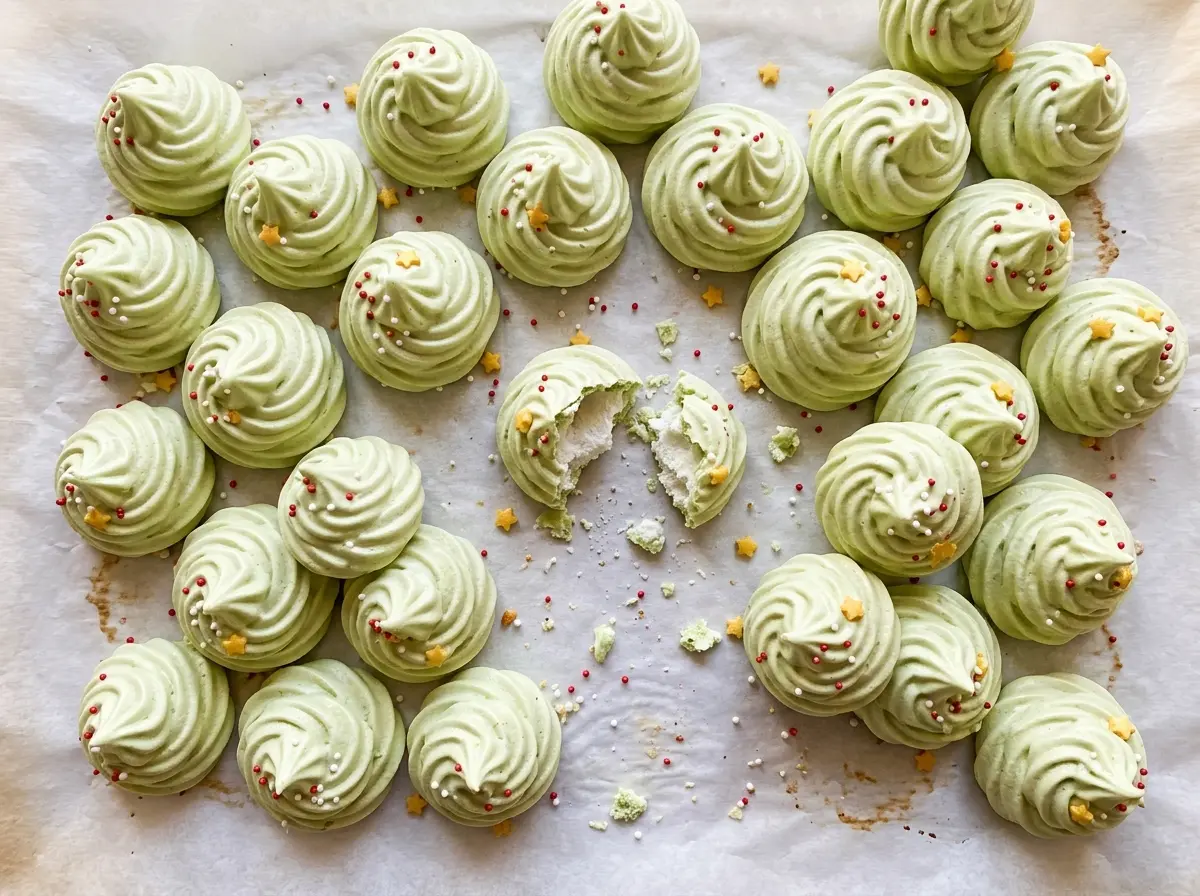
Ingredients
Equipment
Method
Make the meringue
- Heat the oven to 200°F.
- Line a large rimmed baking sheet with parchment paper.
- In a clean, dry bowl, beat the egg whites with an electric mixer on medium speed until foamy, about 1 minute.
- Add the cream of tartar and beat on medium-high until soft peaks form, 2 to 3 minutes.
- With the mixer on high, add the sugar 1 tablespoon at a time.
- Beat until the meringue is glossy and holds stiff peaks, 7 to 10 minutes.
- Rub a little meringue between your fingers to check that the sugar has dissolved.
- Beat in the vanilla and green gel food coloring on low just until evenly colored, about 20 seconds.
Pipe and bake the trees
- Transfer the meringue to a piping bag fitted with a 1/2-inch open-star tip.
- Pipe 2-inch-tall tree shapes onto the prepared sheet, spacing them about 1 inch apart.
- Add the holiday sprinkles.
- Bake until the trees feel dry and lift cleanly from the parchment, 1 1/2 to 2 hours.
- Turn off the oven.
- Let the trees cool inside for 1 hour before removing them.
Notes
Make sure the bowl is completely clean and dry for stable meringue. Store in an airtight container at room temperature for up to 2 weeks; refrigeration is not recommended (0 days), and freezing airtight for up to 1 month is possible. For an egg-free variation, aquafaba can replace the egg whites, though the texture may differ.