When salmon goes into an air fryer damp, the surface can steam before it has a chance to take on any color. I learned to slow down for the paper-towel step, then brush on just enough olive oil to help the seasoning cling. That small bit of prep gives these air fryer salmon fillets a clean, savory coating without hiding the flavor of the fish.
This version keeps the seasoning simple: kosher salt, black pepper, garlic powder, and paprika. The fillets cook skin-side down in a preheated air fryer, which keeps the flesh supported as it cooks. Since salmon fillets can vary in thickness, I use the thermometer reading at the thickest part alongside the fork-flake cue instead of relying on the clock alone. After a short rest, the centers stay tender and the edges separate easily into flakes.
With four portions and a quick cook, this is a practical way to get salmon on the table without heating the oven or tending a pan. The paprika gives the top a warm color, while garlic and pepper bring enough flavor to make every bite count. You get flaky salmon with a seasoned top and a straightforward, dependable method.
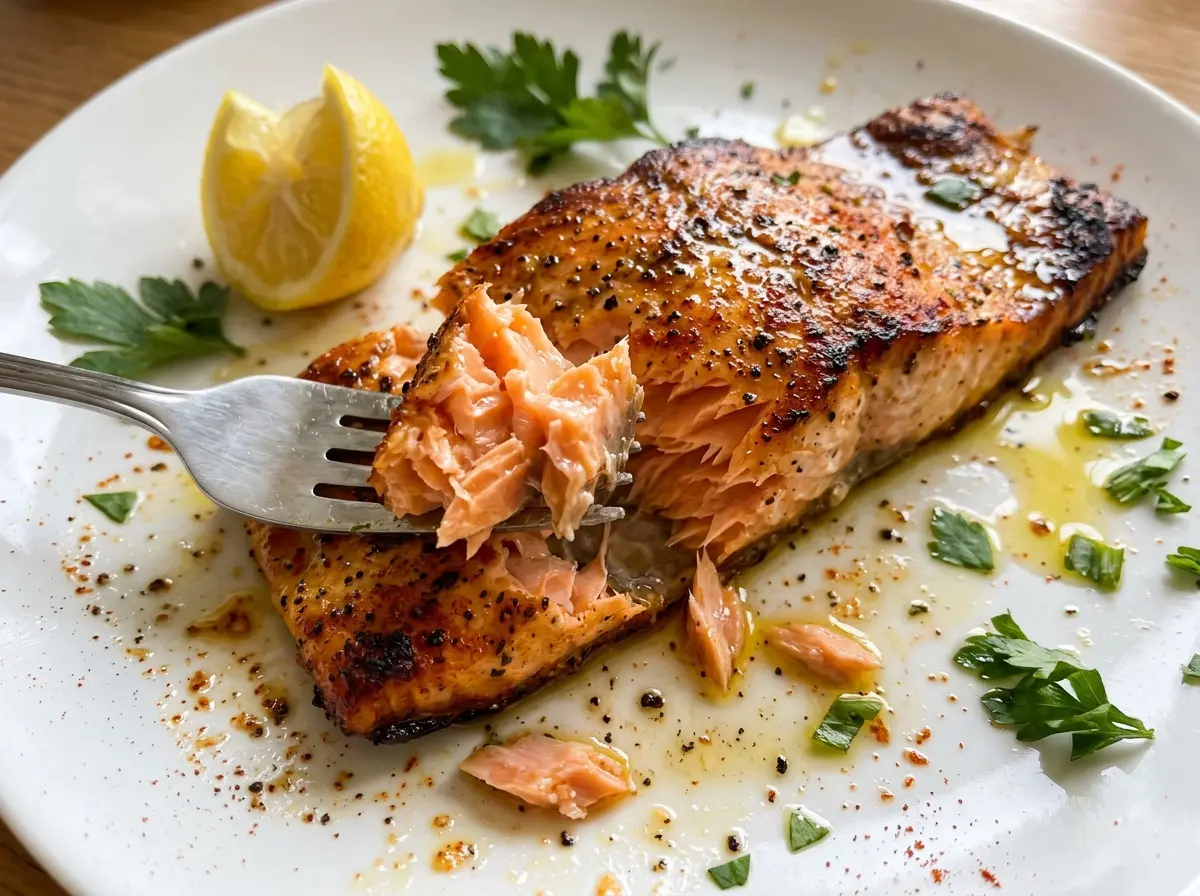
Kitchen Note
The basket needs room for air to move around each fillet. If four pieces won’t fit in one layer, cook them in batches rather than stacking or overlapping them.
Save this air fryer salmon recipe for four flaky fillets with a quick garlic-paprika seasoning and no stovetop splatter.
Why Drying the Salmon Comes Before the Olive Oil
Salmon releases surface moisture as it sits, and even a little water can interfere with the coating you want on the fish. Patting the fillets dry first gives the olive oil a better surface to cling to, so the garlic powder, pepper, salt, and paprika stay where you put them instead of sliding around on a wet sheen.
Oil isn’t a way to fix damp fish. Brushing on more won’t remove the moisture; it can leave the top greasy while the surface still steams. A careful pat with paper towels is the useful part. Press gently over the top and sides without crushing the fillets, then brush on the measured oil. The finished coating should look lightly glossy rather than wet or pooled.
That order also makes seasoning easier to distribute evenly across the tops and sides. Each bite gets a balanced savory crust, and the paprika colors the surface instead of collecting in damp patches. It takes only a moment, but it’s the difference between seasoning that stays put and seasoning that ends up in the basket.
How Skin-on Salmon and Four Simple Seasonings Shape the Result
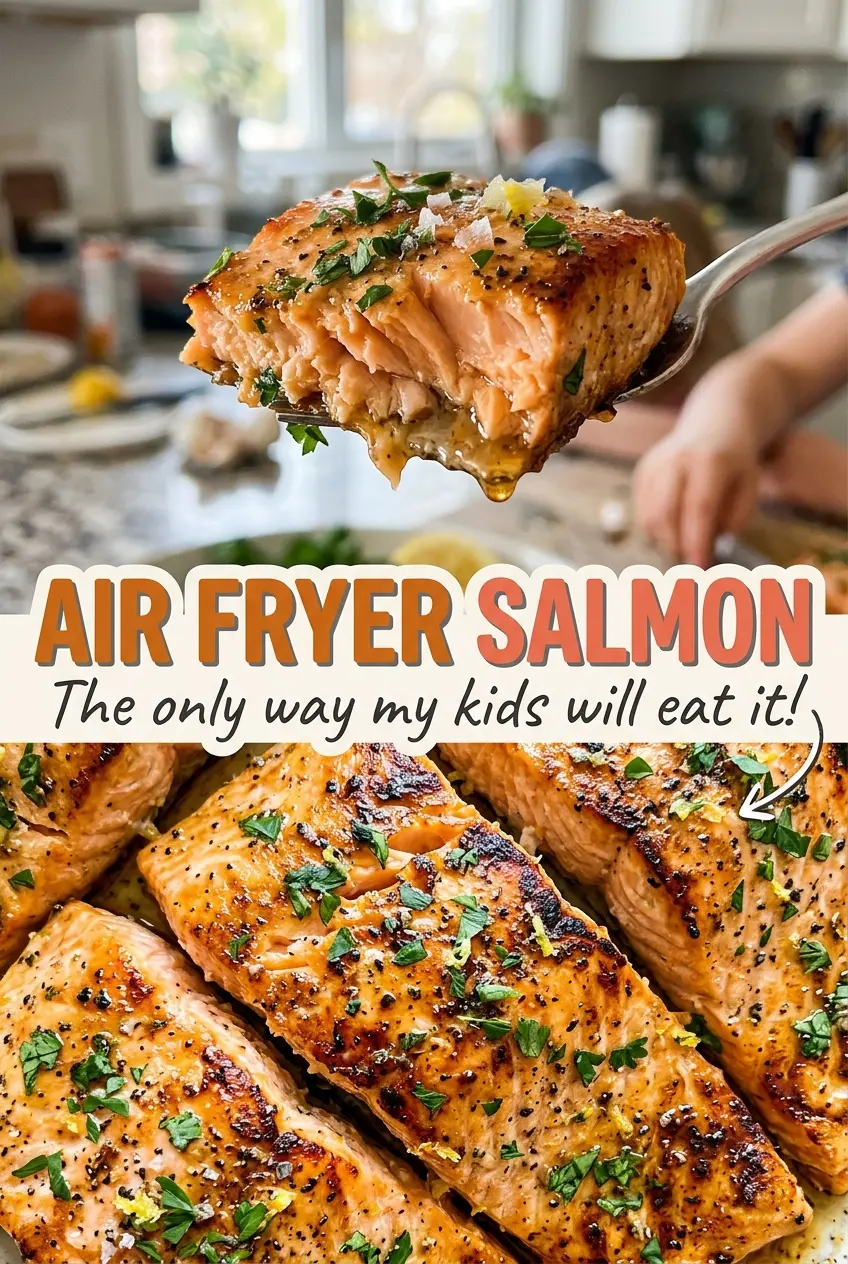
- Skin-on salmon fillets — The skin gives each portion a sturdy underside while it cooks in the basket. Choose fillets that are similar in size and thickness so they finish at about the same time. The fish itself matters more than buying a premium cut; fresh-smelling salmon with firm, moist flesh is what I look for.
- Olive oil — A thin brush of oil helps the dry seasonings adhere and keeps the surface from looking powdery. A basic olive oil is plenty here; its flavor won’t need to compete with the salmon or the spices. Brush it over the tops and sides, not in a puddle.
- Kosher salt and black pepper — Salt brings out the salmon’s natural savory flavor, while pepper adds a gentle bite. Kosher salt is the type used here; different salt crystals measure differently by volume, so don’t casually swap in another kind using the same spoonful.
- Garlic powder and paprika — These dry seasonings spread evenly over the oiled surface and add savory depth and color without a wet marinade. Use powders that still smell fragrant when you open the container. If either has been sitting in the cupboard for years and has little aroma, the finished coating will taste muted.
From Preheated Basket to Tender, Flaky Salmon
Warm the Air Fryer and Prep the Fillets
Preheat a 6-quart air fryer to 400°F for 3 minutes. While it heats, pat the salmon dry with paper towels, taking care not to press hard enough to break the flesh apart. Brush the tops and sides with olive oil. Keeping the fillets intact now makes them easier to place and lift later.
Season the Tops and Sides Evenly
Sprinkle the kosher salt, black pepper, garlic powder, and paprika evenly over the oiled surfaces. Aim for an even dusting rather than a heavy mound in the center of each piece. If a little seasoning falls onto the work surface, pick it up and distribute it across a bare patch before the fish goes into the basket. The coating should look even, with no thick clumps of powder.
Air-fry Skin-side Down and Check the Thickest Part
Set the fillets skin-side down in the basket in a single layer. Air-fry at 400°F for 8–10 minutes, checking the thickest part with an instant-read thermometer; it should reach 145°F, and the flesh should flake easily with a fork. A thinner portion may be ready before a thicker one, so check each fillet rather than assuming they’re identical. Let the salmon rest for 2 minutes before serving.
Small Adjustments for Different Portions and Tastes
Make a Two-Serving Batch
Use two of the same 6-ounce fillets and halve each seasoning and the olive oil to keep the same balance for a smaller meal. The air-fryer temperature and timing remain the same starting point for fillets of the same thickness; use the thermometer and flake test to judge doneness.
Make the Seasoning Milder
Leave out the black pepper for a softer, less peppery finish while keeping the salt, garlic powder, and paprika in their listed amounts. The salmon still has a savory garlic note and warm color, just without pepper’s bite. No change to the cooking method is needed.
Storage and Reheating
- Refrigerator: Store cooked salmon in a covered container for 3–4 days. The flesh will firm up as it chills, so it won’t have quite the same just-cooked texture.
- Freezer: Cooked salmon freezes well for about 2–3 months. Cool it, wrap portions tightly, and place them in a freezer-safe container; thaw overnight in the refrigerator for the best texture.
- Reheating: Reheat gently in short microwave bursts or in a low oven until the center reaches 165°F. High heat and long reheating dry the flakes out, so stop as soon as it’s hot throughout.
Questions That Come Up When Air-frying Salmon
Air Fryer Salmon
Ingredients
Equipment
Method
- Preheat a 6-quart air fryer to 400°F for 3 minutes.
- Pat the salmon dry with paper towels.
- Brush the tops and sides of the salmon with olive oil.
- Sprinkle the salmon evenly with the kosher salt, black pepper, garlic powder, and paprika.
- Place the salmon skin-side down in the air fryer basket in a single layer, working in batches if needed.
- Air-fry at 400°F for 8–10 minutes, until the thickest part reaches 145°F and the flesh flakes easily with a fork.
- Let the salmon rest for 2 minutes before serving.