The cider bubbles quietly on the stove, then starts to smell like a fall orchard as the liquid cooks down. I used to think adding more cinnamon would make a pound cake taste more like apples, but it mostly covered up the cider. Reducing it first gives this apple cider pound cake a deeper fruit flavor without making the batter too wet.
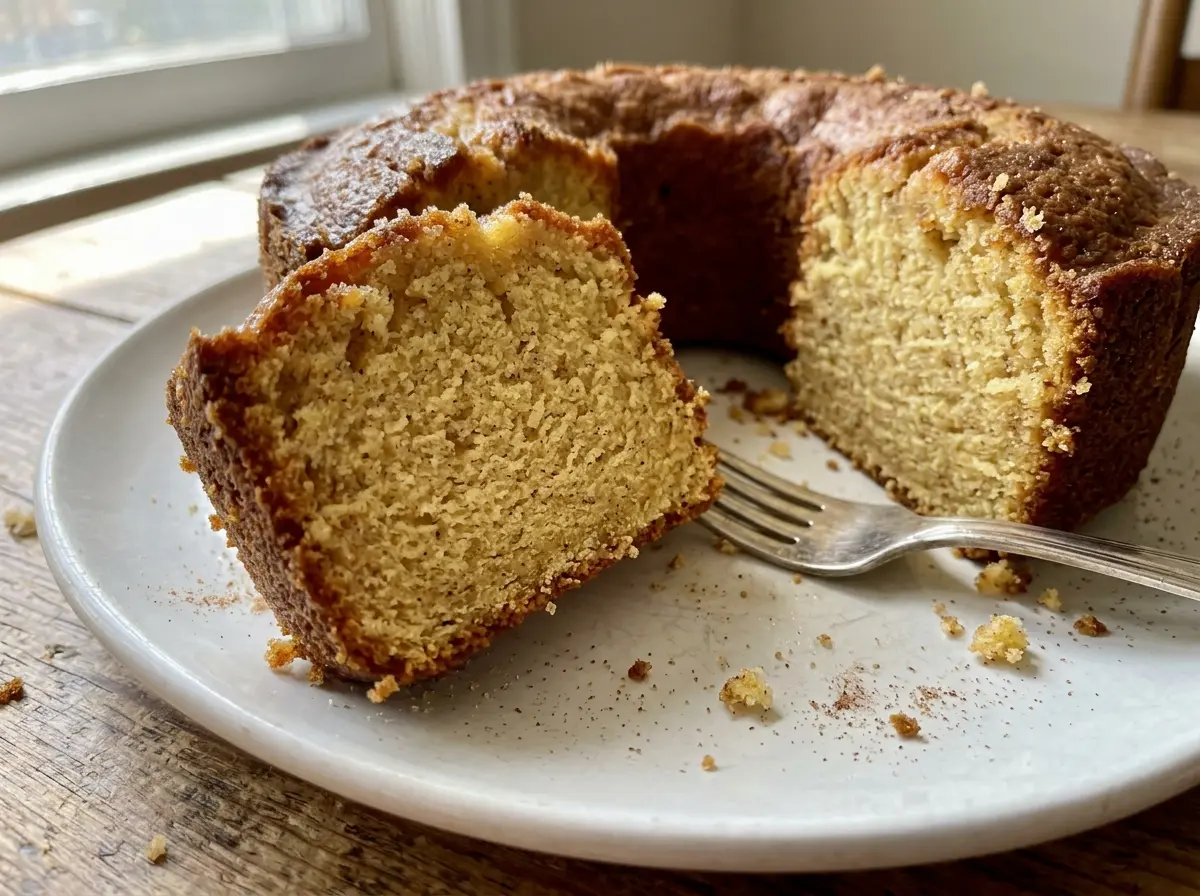
The batter gets its close, tender crumb from softened butter, room-temperature eggs, and sour cream. I alternate the flour mixture with the cider mixture, which helps everything blend without overworking the batter. In the oven, the cake turns golden around the edges while the center stays moist, with cinnamon and nutmeg tucked into every slice.
Kitchen Note
Let the cake sit in the Bundt pan for the full 15 minutes before turning it out. Too soon and it can break; much longer and the warm cake may cling to the pan instead of releasing cleanly.
Save this apple cider pound cake for a tender, warmly spiced Bundt cake with concentrated cider in every slice.
Why Reducing the Cider Matters More Than Adding Extra Spice
A pound cake batter already has plenty of moisture from butter, eggs, and sour cream. Pouring in a full cup of cider would change that balance and could leave the cake heavy or gummy. Cooking the cider down concentrates its apple flavor while bringing the amount of liquid in line with a sturdy cake batter.
That distinction matters because cinnamon and nutmeg bring warmth, not apple flavor. When the cider is concentrated, the fruit still comes through under the spices instead of getting lost in them. The finished cake should taste gently apple-forward, not like a spice cake with a faint cider note.
Use plain apple cider for this step rather than hard cider or a strongly spiced cider drink. Those products bring different flavors and sweetness, and they won’t give you the same clean apple base. Let the reduced cider cool completely before it goes into the batter; warm liquid can soften the butter mixture and make it harder to keep the batter smooth.
The Ingredients That Keep This Pound Cake Tender and Apple-Forward

- Apple cider — Plain cider brings a mellow, unmistakable apple flavor. Reducing it concentrates that flavor without adding extra liquid to the finished batter; fresh cider or a familiar grocery-store cider both work.
- All-purpose flour — It gives the cake enough structure to hold its shape in a Bundt pan. The measured flour is divided so some can coat the pan and the rest can go into the batter; keep that small portion separate before mixing the dry ingredients.
- Butter and sugar — Softened unsalted butter traps air as it beats with the sugar, helping the cake bake up lighter than a dense, compact pound cake. Unsalted butter also lets the listed salt stay in balance.
- Eggs — Room-temperature eggs blend more smoothly into the creamed butter than cold eggs straight from the refrigerator. Adding them one at a time gives each egg time to incorporate before the next goes in.
- Sour cream — It adds moisture and a gentle tang while helping keep the crumb tender. Use it at room temperature so it combines easily with the cooled cider and vanilla.
- Cinnamon, nutmeg, and vanilla — Cinnamon and nutmeg give the cake its warm, rounded spice, while vanilla fills out the flavor. Freshly opened spices smell stronger, but there’s no need for a specialty brand.
- Baking powder and baking soda — Both leaveners help lift a rich batter. Measure them carefully rather than estimating; too much can affect both the cake’s rise and its flavor.
How to Build the Batter for a Fine, Even Crumb
Concentrate the Apple Cider
Simmer the cider in a small saucepan over medium heat until it has reduced to one-half cup, which takes about 10 to 15 minutes. Keep an eye on the volume as it cooks; the goal is a concentrated liquid, not a dry or sticky syrup. Set it aside to cool completely before combining it with the sour cream and vanilla. Adding it warm can soften the butter and disrupt the texture you built while creaming.
Prepare the Bundt Pan and Dry Ingredients
Heat the oven to 325°F, then coat a 10-inch, 12-cup Bundt pan with nonstick cooking spray. Dust it with one tablespoon of the measured flour, turning the pan so the flour reaches the curves and center tube. Whisk the remaining flour with the baking powder, baking soda, salt, cinnamon, and nutmeg. A thorough whisk disperses the spices and leaveners so you don’t get a concentrated pocket in one slice.
Cream the Butter and Add the Eggs
Beat the softened butter and sugar on medium speed for about 3 minutes, until the mixture looks light and fluffy. This step gives the cake some lift, so don’t stop while the mixture still looks dense and heavy. Add the room-temperature eggs one at a time, mixing well after each addition and scraping down the bowl as needed. If batter clings high on the sides, scrape it back into the mixture before you move on.
Alternate the Flour and Cider Mixtures
Whisk the cooled cider with the sour cream and vanilla in a small bowl. Add the flour mixture to the butter mixture in three additions, alternating with the cider mixture in two additions; start and finish with flour. Mix on low speed just until combined, stopping as soon as the last streaks of flour disappear. Beating longer than that can develop the flour and leave the cake tougher.
Bake Until Moist Crumbs Cling to the Tester
Spread the batter evenly in the prepared pan and bake for 60 to 75 minutes. Check near the center with a toothpick; it should come out with a few moist crumbs, not wet batter. A completely clean tester can mean the cake has baked longer than it needs. Cool it in the pan for 15 minutes, turn it onto a wire rack, and let it cool completely.
Three Ways to Change the Spice or Make a Dietary Adaptation
Make the Cake More Cinnamon-Forward
Leave out the nutmeg and use that same measured amount as additional cinnamon. The cake keeps its warm spice character, but cinnamon becomes more prominent and the nutmeg’s earthy note fades.
Use a Gluten-Free Flour Blend
Replace the all-purpose flour with a cup-for-cup gluten-free baking blend that includes a binder, measuring the same total amount and reserving the pan-dusting portion. The cake may have a slightly more delicate crumb, so cool it in the pan before turning it out.
Make a Dairy-Free Version
Use dairy-free baking sticks in place of the butter and plain unsweetened dairy-free sour cream in place of the sour cream, keeping the same amounts. Choose baking sticks rather than a soft tub spread for a more dependable cake structure; expect a slight change in richness and flavor.
Storage and Reheating
- Refrigerator: Keep the cooled cake covered for up to 5 days. The crumb firms up when chilled, so let slices come to room temperature before serving.
- Freezer: It freezes well. Wrap the completely cooled cake or individual slices tightly, then freeze for up to 2 months; thaw wrapped in the refrigerator.
- Reheating: Let a slice lose its chill at room temperature for the best texture. If you prefer it warm, microwave one slice for about 10 seconds; longer heating can dry the crumb.
Questions That Come Up When Baking Apple Cider Pound Cake
Apple Cider Pound Cake
Ingredients
Equipment
Method
- Simmer the apple cider in a small saucepan over medium heat until reduced to 1/2 cup, about 10 to 15 minutes.
- Let the reduced cider cool completely.
- Heat the oven to 325°F.
- Coat a 10-inch, 12-cup Bundt pan with nonstick cooking spray.
- Dust the pan with 1 tablespoon of the measured flour.
- Whisk the remaining flour with the baking powder, baking soda, salt, cinnamon, and nutmeg in a medium bowl.
- Beat the butter and sugar in a large bowl with an electric mixer on medium speed until light and fluffy, about 3 minutes.
- Beat in the eggs one at a time, mixing well after each addition and scraping down the bowl as needed.
- Whisk the cooled cider with the sour cream and vanilla in a small bowl.
- Add the flour mixture to the butter mixture in three additions, alternating with the cider mixture in two additions; mix on low speed just until combined, beginning and ending with the flour mixture.
- Spread the batter evenly in the prepared pan.
- Bake for 60 to 75 minutes, until a toothpick inserted near the center comes out with a few moist crumbs.
- Cool the cake in the pan for 15 minutes.
- Turn the cake out onto a wire rack and cool completely.