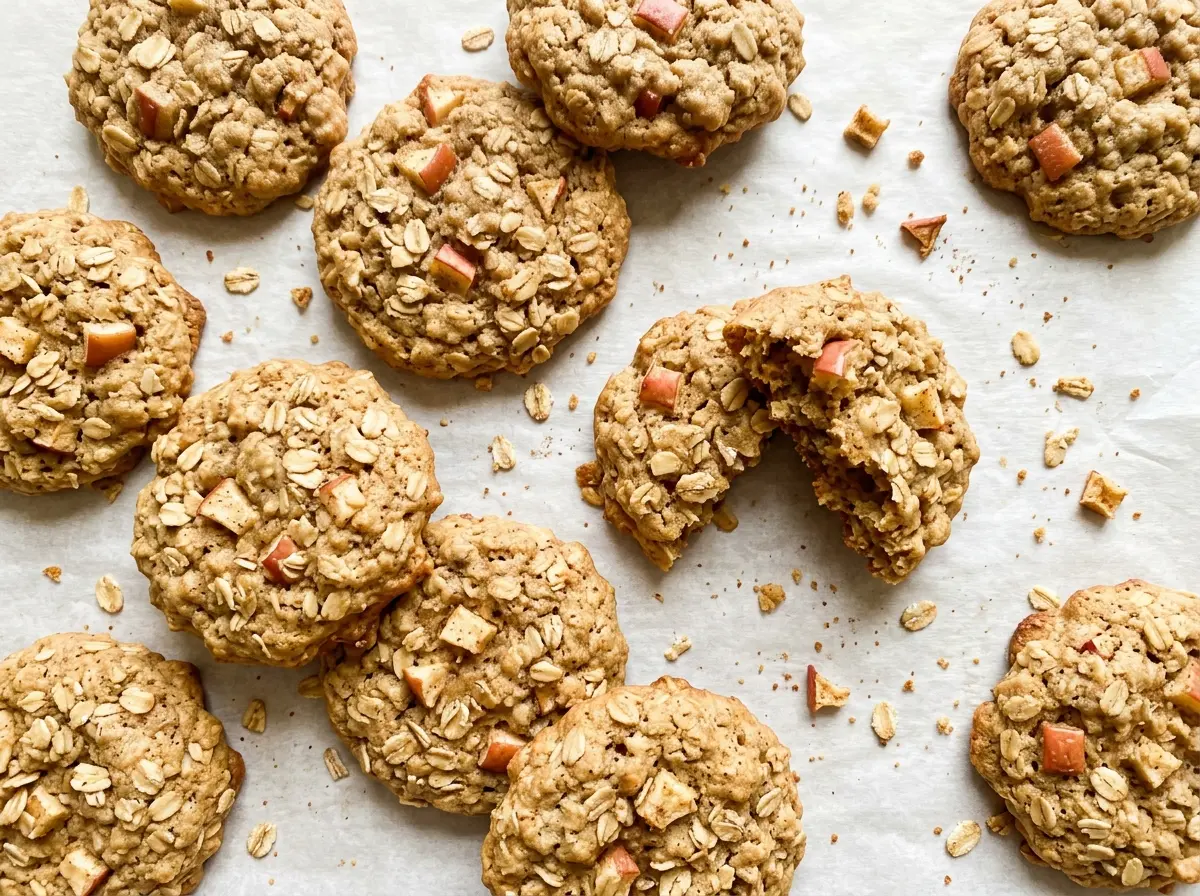
The edges of these cookies turn golden before the centers look completely firm, and that’s exactly when I take them out. Fresh apple keeps the middle tender, while the oats give each bite a little chew. Let them sit on the baking sheet for a few minutes before moving them, and they’ll finish setting without losing that soft center.
I cut the peeled apple into small, even dice so it distributes through the dough instead of weighing down one spot. The dough gets a short rest in the refrigerator, too; it’s easier to portion when it’s cool, and the cookies bake up with a more even shape. These apple cinnamon oatmeal cookies make 24, with a gentle cinnamon warmth and little pieces of apple in every batch.
Kitchen Note
Once the flour goes in, stop mixing as soon as the dry streaks disappear. Extra beating can make the cookies firm instead of tender, so fold the apple in gently at the end.
Save these apple cinnamon oatmeal cookies for a bake with tender centers, golden edges, and little bites of fresh apple.
Why the Apple Needs to Stay in Small Dice
Apple brings more moisture to cookie dough than raisins or chocolate chips, so the cut matters. Pieces that are too large can leave damp pockets in the middle of a cookie, while grated apple releases juice throughout the dough and makes the texture harder to predict. Small, even dice spread the fruit through the oats and let the cookies bake at the same pace.
Use an apple that’s firm enough to hold its shape in the oven. A soft, mealy apple can turn mushy, and an especially juicy one may make the dough feel wetter than it should. Peel it first, then cut the flesh into even pieces. You want to see apple throughout the cookie, not a single large chunk that pulls the crumb apart when you take a bite.
That balance is what keeps these from eating like apple cake in cookie form. The oats stay distinct, the edges can turn golden, and the apple adds a tender spot in each bite without taking over the dough.
Why Old-Fashioned Oats Give These Cookies Their Chew

- Old-fashioned rolled oats — They stay pleasantly distinct after baking and give the cookies their hearty chew. Quick oats absorb moisture faster and make a tighter, less textured cookie, so rolled oats are the better choice here.
- Firm apple — The apple adds fresh, lightly tart pockets that dried fruit can’t quite replicate. A firm baking apple such as Granny Smith gives a sharper contrast; a firm, sweeter apple makes the cinnamon taste rounder.
- Light brown sugar — Its molasses notes pair naturally with apple and cinnamon, and it helps keep the centers soft. Packed brown sugar matters for the intended sweetness and moisture; dark brown sugar works, but the cookies will have a deeper molasses flavor.
- Unsalted butter — Softened butter creams smoothly with the sugars and lets you control the salt in the dough. Use butter that yields to a light press but isn’t melted; melted butter changes how the dough spreads.
- Ground cinnamon — Fresh, fragrant cinnamon is worth using because it’s a main flavor rather than a background spice. If the jar smells faint, the finished cookies will taste muted.
- All-purpose flour and egg — Flour gives the cookies structure, while the egg binds the oats and apple into a scoopable dough. Measure flour without packing it tightly into the cup; too much flour can make the baked cookies dry.
Mixing and Baking Apple Oat Cookies Without Overworking the Dough
Start with a Properly Heated Oven
Heat the oven to 350°F and line two rimmed baking sheets with parchment paper. Starting with a hot oven helps the cookies begin setting at the edges as soon as they go in. The parchment also makes it easier to lift the cookies after their brief rest on the sheets. Have both pans ready before mixing, since the dough will be portioned across them.
Cream the Butter and Sugars Until Smooth
Beat the softened butter with the light brown and granulated sugars for about 2 minutes, until the mixture looks creamy. If the butter is cold, it won’t blend evenly; if it’s melted, the dough may spread more than intended. Beat in the egg and vanilla just until combined. Scrape the bowl if needed so there aren’t streaks of butter or sugar left at the bottom.
Fold in the Dry Mixture and Apple
Whisk the flour, oats, cinnamon, baking soda, and salt together in a medium bowl before adding them to the butter mixture. Mix just until combined, then fold in the diced apple. Stop when the pieces look evenly distributed and no dry flour remains; a few extra turns of the spoon can make the cookies tougher. The finished dough will be thick and studded with oats and apple.
Chill, Portion, and Bake Until the Edges Turn Golden
Chill the dough for 30 minutes, then scoop it into 1 1/2-tablespoon portions, leaving about 2 inches between cookies on the prepared sheets. Bake at 350°F for 13 to 16 minutes, swapping the sheets between racks and rotating them front to back halfway through. Look for golden edges and tops that look set; the centers don’t need to look deeply browned. Cool the cookies on the sheets for 5 minutes, then transfer them to a wire rack to cool completely.
Three Ways to Shift the Apple-Cinnamon Balance
Use a tart apple for a brighter bite
Choose a firm tart apple, such as Granny Smith, for a little tang against the brown sugar. Keep the same peeling and dicing approach so the fruit stays evenly distributed; the cookies will taste less sweet without changing their chewy oat texture.
Make them gluten-free with a 1-to-1 flour blend
Replace the all-purpose flour with the same amount of a gluten-free 1-to-1 baking flour blend that includes xanthan gum, and use certified gluten-free oats. The dough may feel a little more delicate, but the cookies keep their apple-oat character; chill and portion them the same way.
Use stick-style dairy-free baking butter
For a dairy-free batch, replace the butter with an equal amount of stick-style dairy-free baking butter. Choose a product meant for baking rather than a soft tub spread, which can contain more water and make the dough spread unpredictably. The cookies will have a slightly different buttery flavor, but the cinnamon and apple still come through.
Storage and Reheating
- Refrigerator: Keep fully cooled cookies in an airtight container for up to 5 days. The apple softens the crumb as they sit, so they’ll be less crisp at the edges.
- Freezer: Freeze fully cooled cookies in a sealed freezer-safe container for up to 2 months, with parchment between layers. Thaw at room temperature while still covered to keep them from drying out.
- Reheating: Warm a cookie in the microwave for about 8 seconds if you’d like it soft and just warm. Longer heating can make the apple pockets hot before the rest of the cookie warms through.
Questions That Come Up While Baking Apple Oatmeal Cookies
Apple Cinnamon Oatmeal Cookies
Ingredients
Equipment
Method
- Heat the oven to 350°F and line two rimmed baking sheets with parchment paper.
- In a large bowl, beat the butter, brown sugar, and granulated sugar until creamy, about 2 minutes.
- Beat in the egg and vanilla until combined.
- In a medium bowl, whisk together the flour, oats, cinnamon, baking soda, and salt.
- Mix the dry ingredients into the butter mixture just until combined, then fold in the apple.
- Chill the dough for 30 minutes.
- Scoop the dough into 1 1/2-tablespoon portions onto the prepared sheets, spacing them about 2 inches apart.
- Bake at 350°F for 13 to 16 minutes, swapping the sheets between racks and rotating them front to back halfway through, until the edges are golden and the tops look set.
- Cool the cookies on the sheets for 5 minutes.
- Transfer the cookies to a wire rack to cool completely.