The oil should shimmer before the beef goes in; if it doesn’t, the cubes tend to steam instead of picking up the deep brown crust that gives a stew its backbone. I learned to give the pot a moment to heat and work in batches, even when I’m eager to get dinner simmering. Those browned bits on the bottom are worth saving.
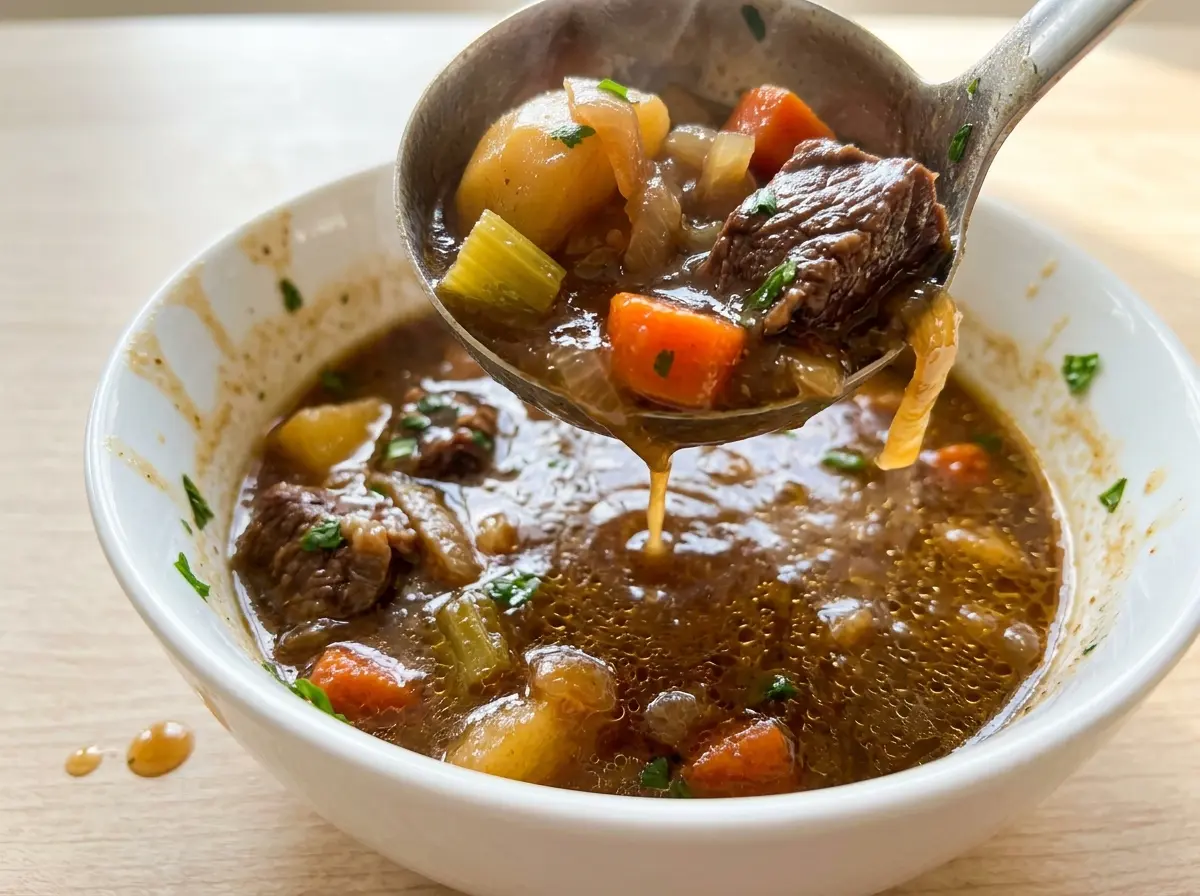
In this Autumn Beef Stew, chuck gets a long, gentle simmer first, and the potatoes and other vegetables join later. That order gives the beef time to turn tender without leaving the vegetables to cook for hours. The broth comes together with tomato paste, thyme, and Worcestershire, and the finished bowl is full of tender beef, soft vegetables, and savory broth.
Kitchen Note
Pat the beef dry before seasoning and flouring it. A damp surface releases moisture in the pot before it can brown, so take a moment with paper towels for a better crust.
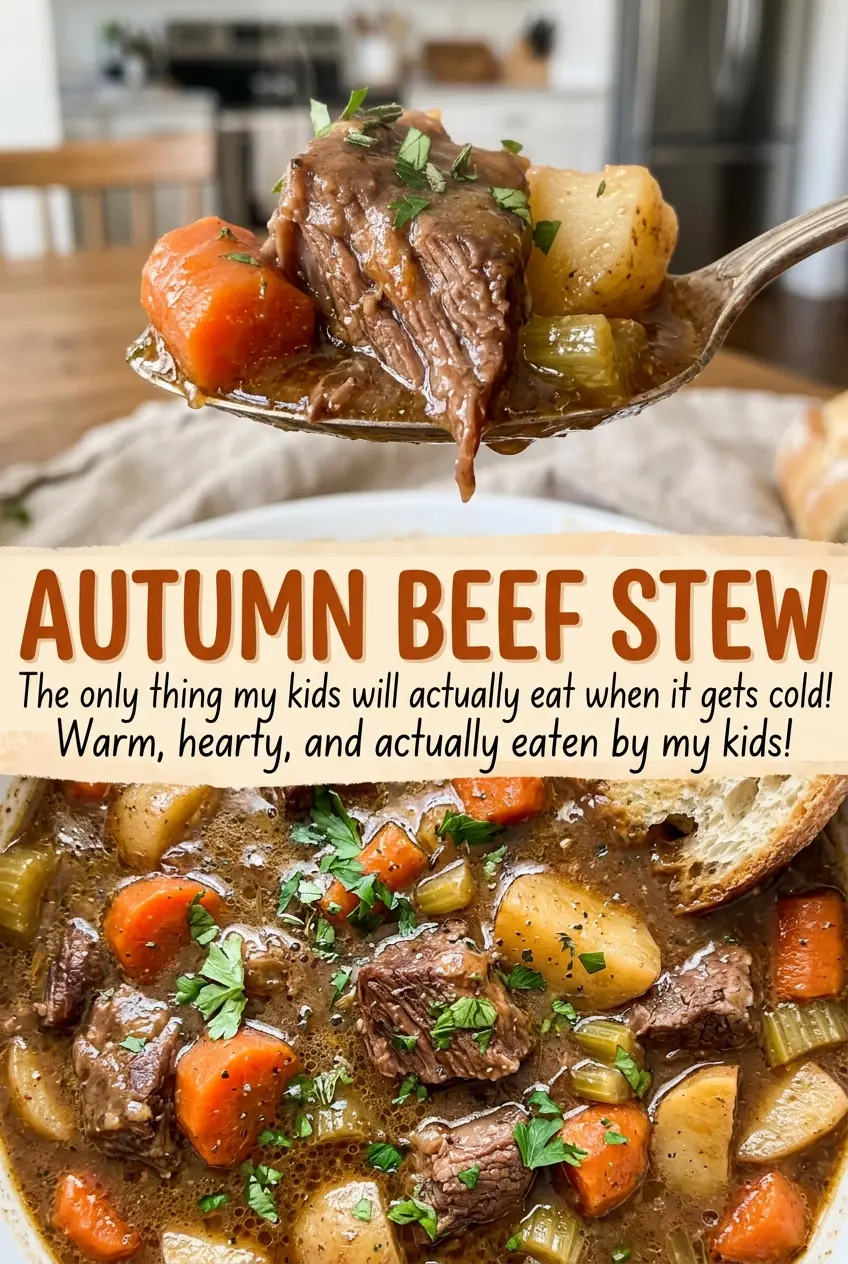
Save this Autumn Beef Stew for a cozy dinner with tender chuck, soft Yukon Gold potatoes, and a savory thyme broth.
Why the potatoes wait until the beef is nearly tender
Beef chuck needs a longer stretch in the pot than potatoes do. Its connective tissue softens with a gentle braise, while potatoes keep cooking as long as they’re submerged in hot broth. Put everything in at the beginning and you risk getting tender beef alongside potatoes that have lost their edges and started to fall apart.
Carrots and celery benefit from joining the pot later, too. They have time to soften and take on the savory broth, but they don’t have to endure the full beef-braising window. The timing also gives you a useful texture check: when the vegetables are tender, the beef should be fork-tender as well. If you can pierce a potato easily but the beef still resists, the stew needs more time at a gentle simmer, not a harder boil.
What builds the deep, savory broth in this stew
- Beef chuck — Chuck has enough connective tissue and fat to become tender during a slow simmer, while leaner beef cuts can turn dry before the broth has time to develop. Buy a chuck roast and cut it yourself if you want more control over even 1-inch pieces; trim away any especially large, hard pieces of fat.
- All-purpose flour — The light coating helps the beef brown and gives the broth body as it simmers. For a gluten-free version, use a cup-for-cup gluten-free flour blend made for baking; a single starch won’t behave the same way in the coating.
- Tomato paste and Worcestershire sauce — Tomato paste adds a concentrated savory depth, while Worcestershire brings a tangy, fermented note that keeps the broth from tasting flat. A store-brand Worcestershire works well; the tomato paste should be fresh-tasting, not scorched or dried out in an old tube.
- Low-sodium beef broth — It gives the stew its braising liquid without taking seasoning control out of your hands. Regular beef broth can work, but its salt level varies by brand, so the finished stew may taste more seasoned.
- Yukon Gold potatoes — Their creamy centers soften into the broth while the pieces generally hold their shape. Russets are starchier and more likely to break down, so Yukon Golds are the better choice when you want distinct potato chunks.
- Onion, garlic, thyme, and bay leaf — These form the stew’s aromatic base without taking over the beef. Dried thyme is convenient and works as written here; use a fresh, fragrant bay leaf, and remove it before serving.
Build the stew in stages for tender beef and intact vegetables
Brown the floured chuck in batches
In a 6-quart Dutch oven, toss the beef with the kosher salt and black pepper, then sprinkle it with flour and toss until evenly coated. Heat the vegetable oil over medium-high until shimmering. Brown the beef in batches for 2 to 3 minutes per side, using the oil as needed, and transfer each batch to a plate. If the cubes crowd one another, they’ll release moisture and steam rather than develop browned surfaces.
Soften the onion and wake up the aromatics
Add the chopped onion and cook over medium heat for 4 to 5 minutes, stirring and scraping up the browned bits from the pot. The onion should soften rather than take on a dark crust. Stir in the minced garlic and tomato paste and cook for 1 minute. Keep stirring during that minute so the garlic doesn’t scorch against the hot pot.
Simmer the beef until nearly fork-tender
Pour in the beef broth and Worcestershire sauce, then stir well to loosen anything clinging to the bottom. Add the dried thyme, bay leaf, and browned beef with any juices on the plate, and bring the pot to a simmer. Cover, reduce the heat to low, and simmer gently for 1 1/2 to 2 hours, stirring occasionally. The broth should bubble quietly; the beef is ready for the vegetables when a fork meets little resistance but the cubes haven’t begun to fall apart.
Finish with the vegetables
Stir in the carrots, celery, and Yukon Gold potatoes, then cover the pot again. Simmer for 30 to 40 minutes, until the vegetables are tender and the beef is fork-tender. Check a carrot and a potato with a fork rather than judging by the broth alone. Find and discard the bay leaf before serving.
Two smart ways to adapt this beef stew
Make it gluten-free
Replace the all-purpose flour with the same amount of a cup-for-cup gluten-free flour blend, and use gluten-free Worcestershire sauce. A blend designed to replace wheat flour gives the beef a coating and helps the broth thicken; the finished broth may be a little less glossy than the wheat-flour version.
Make the broth thicker and more rustic
When the vegetables are tender, press a few potato pieces against the side of the pot and stir them into the broth. The potato thickens the liquid without adding another ingredient, though the stew will have a softer, less defined texture than a broth with every chunk intact.
Storage and Reheating
- Refrigerator: Refrigerate leftovers in a covered container for 3 to 4 days. The broth will thicken as it chills, and the potatoes will soften a little more.
- Freezer: Freeze in airtight freezer-safe containers for up to 2 to 3 months. The potatoes may turn slightly softer after thawing, but the stew remains hearty.
- Reheating: Warm on the stovetop over medium-low heat, stirring occasionally, until the stew reaches 165°F throughout. Avoid a hard boil, which can break up the potatoes before the center of the stew is hot.
Questions that come up while making Autumn Beef Stew
Autumn Beef Stew
Ingredients
Equipment
Method
- In a 6-quart Dutch oven, toss the beef with the salt and pepper. Sprinkle with the flour and toss until evenly coated.
- Heat the oil over medium-high heat until shimmering. Brown the beef in batches for 2 to 3 minutes per side, using the oil as needed, then transfer the browned beef to a plate.
- Add the onion to the pot and cook over medium heat for 4 to 5 minutes, stirring and scraping up browned bits, until softened.
- Stir in the garlic and tomato paste and cook for 1 minute.
- Pour in the beef broth and Worcestershire sauce and stir well. Add the thyme, bay leaf, and browned beef with any juices, then bring to a simmer.
- Cover, reduce the heat to low, and simmer gently for 1 1/2 to 2 hours, stirring occasionally, until the beef is nearly fork-tender.
- Stir in the carrots, celery, and potatoes. Cover and simmer for 30 to 40 minutes, until the vegetables are tender and the beef is fork-tender.
- Remove the bay leaf before serving.