Autumn wild rice soup lands in that sweet spot between hearty and comforting without turning heavy. The wild rice stays pleasantly chewy, the squash breaks down just enough to thicken the broth, and the cream pulls everything together into a bowl that feels substantial enough for dinner. The mushrooms bring a deep, savory base, while kale keeps the whole pot tasting fresh instead of flat.
What makes this version work is the order of the cooking. The vegetables get a head start in butter so they soften and pick up a little color before the flour goes in, which helps the broth thicken smoothly instead of tasting pasty. The wild rice simmers long enough to open up and turn tender, and the squash cooks right in the broth so it gives the soup body naturally.
Below, I’ll walk through the one place people usually rush this soup, how to keep the cream from dulling the flavor, and a few swaps that still keep the bowl balanced and satisfying.
The wild rice stayed perfectly chewy and the soup thickened up beautifully without getting gluey. I made it on a Sunday and the flavor was even better the next day.
Love the creamy broth, chewy wild rice, and cozy vegetable blend? Save this Autumn Wild Rice Soup for the nights when you want a hearty bowl that tastes like it simmered all afternoon.
The Part That Keeps Wild Rice Soup From Turning Mushy
Wild rice is the ingredient that gives this soup its personality, but it also needs the most respect. If it gets added too late, it stays tough. If it’s cooked too hard or too long after the cream goes in, the grains can split and the soup starts losing that clean, chewy bite. The goal is tender rice with a little resistance at the center, not soft grains that disappear into the broth.
The other thing that changes the result is the flour step. Cooking the flour with the vegetables for a minute or two takes away the raw taste and helps the broth thicken evenly. Skip that, and the soup can taste thin at first, then suddenly overly starchy once it reduces. A short simmer after the broth goes in gives the rice time to finish and lets the squash collapse just enough to make the soup feel naturally creamy.
What Each Ingredient Is Actually Doing in This Dish
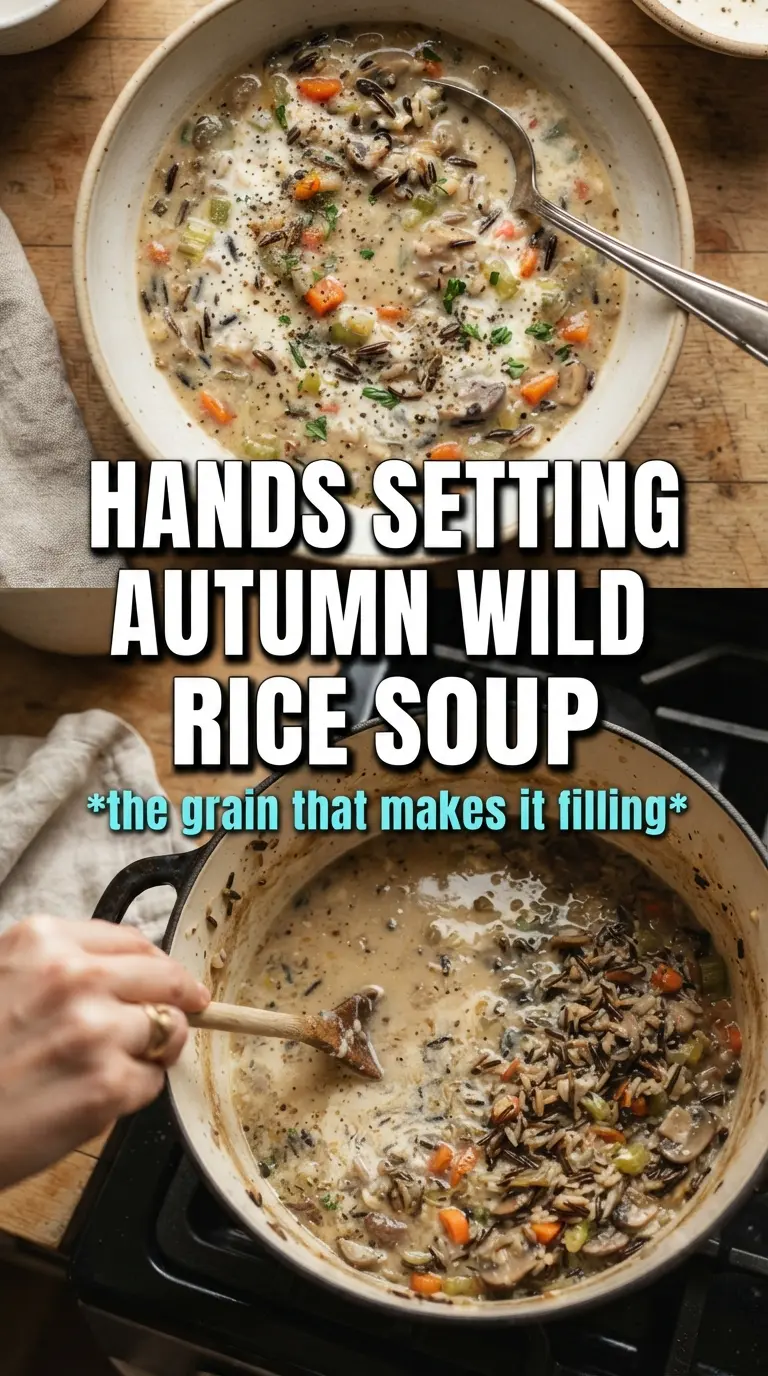
- Wild rice blend — This gives the soup chew and structure. A blend cooks a little more predictably than pure wild rice and still brings that nutty, earthy bite. If you use straight wild rice, expect a longer simmer and check the texture often near the end.
- Butternut squash — It softens into the broth and gives the soup body without needing extra cream. Fresh squash is best here because frozen cubes can release too much water and make the texture loose. Cut the cubes evenly so they break down at the same pace as the rice cooks.
- Cremini mushrooms — They add the savory depth that keeps the soup from tasting like vegetable broth with rice in it. Brown them a little before the liquid goes in so they actually taste roasted instead of steamed.
- Kale — It goes in at the end so it stays green and slightly firm. If you add it too early, it turns dull and limp. Swiss chard works if that’s what you have, but it will soften faster and give a gentler flavor.
- Heavy cream — This rounds out the broth and makes the soup feel complete. Half-and-half works in a pinch, but the soup will be a little thinner and less rich. Stir it in after the rice is tender and keep the heat low so it doesn’t dull the flavor.
Building the Soup in the Right Order
Softening the Base First
Melt the butter in a large pot, then add the onion, celery, and carrots. Let them cook until the onion turns translucent and the carrots start to lose their raw edge. This is the foundation of the soup, and if these vegetables stay crunchy, the whole pot tastes unfinished.
Cooking the Mushrooms Until They Taste Like Something
Add the garlic, mushrooms, and sage next. The mushrooms should give up their moisture and then start to sizzle again before you move on. That second stage matters because it means the water has cooked off and the mushrooms can actually brown a little instead of disappearing into the broth.
Making the Broth Thick Enough to Hold Everything
Whisk in the flour and cook it for a minute or two so it coats the vegetables and loses the raw flour taste. Then pour in the broth slowly while stirring, which keeps the soup smooth. Add the wild rice, squash, and thyme, bring it to a boil, then drop it to a gentle simmer; a hard boil can break the squash apart too fast and make the rice uneven.
Finishing with Cream and Greens
When the rice is tender and the squash is soft, stir in the cream, kale, and nutmeg. Keep the heat low at this point so the cream stays silky and the kale wilts without turning dark. Season at the end with salt and pepper, because the broth, butter, and cream all change how much salt you actually need.
How to Adapt This for a Different Pantry or Diet
Dairy-Free Version
Use olive oil instead of butter and swap the heavy cream for full-fat coconut milk or an unsweetened oat-based cooking cream. Coconut milk gives the richest body, but it adds a faint sweetness that leans the soup in a different direction. Oat cream keeps the flavor closer to the original and still gives you a smooth finish.
Gluten-Free Version
Skip the flour and thicken the soup by simmering it a little longer after the rice goes in. The squash will help the broth take on body, especially if you mash a few pieces against the side of the pot before stirring in the cream. If you want a little extra thickness, whisk 1 tablespoon cornstarch with cold water and stir it in near the end.
Make It More Meaty
Use chicken broth and stir in shredded rotisserie chicken with the cream and kale. The chicken keeps the soup from feeling too delicate and makes it stretch farther for a crowd. Add it near the end so it warms through without drying out.
Storage and Reheating
- Refrigerator: Store for up to 4 days. The rice will keep absorbing liquid, so the soup thickens as it sits.
- Freezer: It freezes fairly well for up to 2 months, but the cream can separate a little. For the best texture, freeze it before adding the cream and stir the cream in after reheating.
- Reheating: Warm it slowly on the stove over low heat with a splash of broth or water. The biggest mistake is boiling it hard, which can make the rice bloated and the cream grainy.
Answers to the Questions Worth Asking
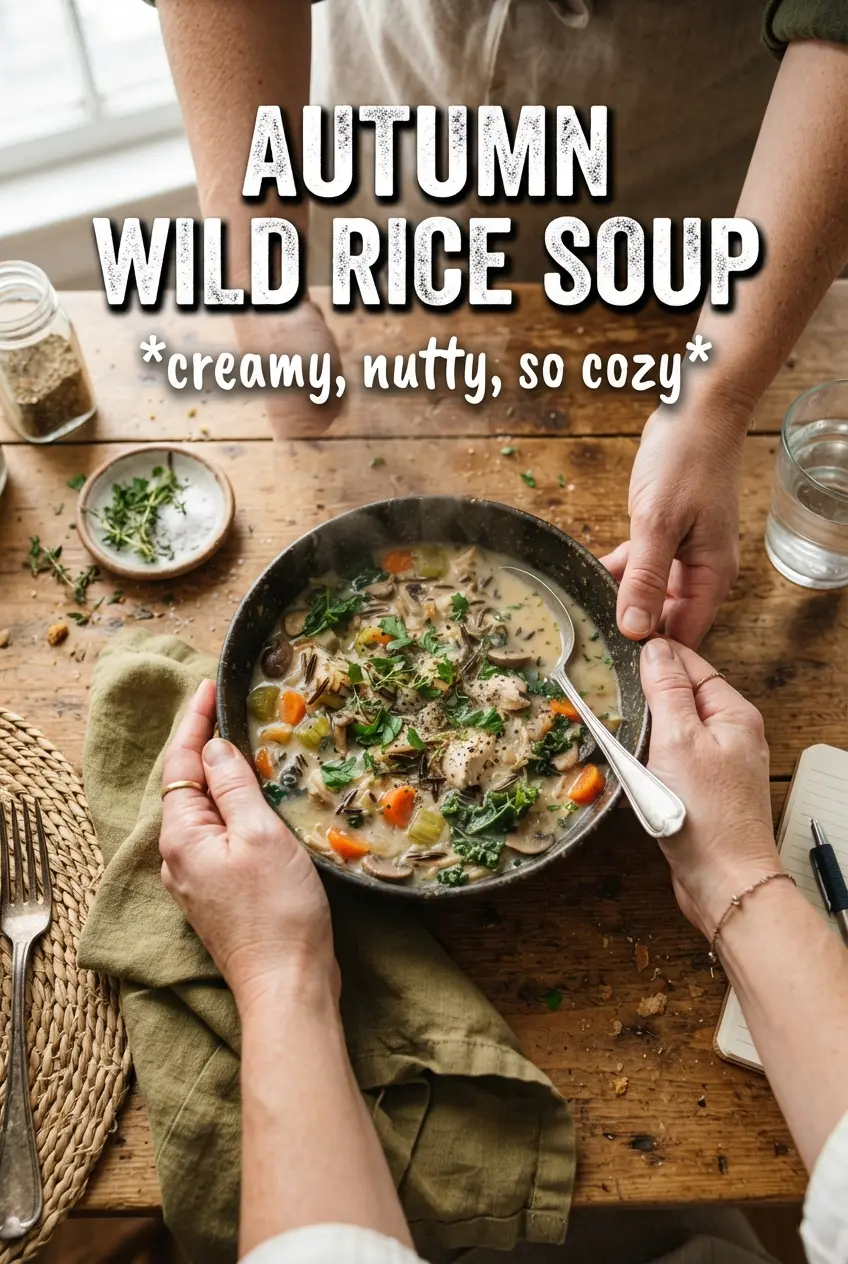
Autumn Wild Rice Soup
Ingredients
Equipment
Method
- Melt the butter in a large pot over medium heat, then sauté the onion, celery, and carrots for 5 minutes.
- Add the garlic, cremini mushrooms, and fresh sage and cook for 4 minutes, stirring until the mushrooms begin to soften.
- Whisk in the flour and cook for 1-2 minutes to remove the raw flour taste.
- Add the broth, wild rice blend, butternut squash, and dried thyme, then bring the mixture to a boil.
- Reduce the heat and simmer for 40 minutes until the wild rice is tender and the squash is soft.
- Stir in the heavy cream, kale, and nutmeg, then simmer for 5 minutes until the kale wilts.
- Season with salt and pepper to taste and serve hot.