The first sign a baked potato is ready isn’t the clock—it’s the knife sliding into the center without a firm spot pushing back. With a few russets on a rimmed baking sheet and the toppings in bowls, a Baked Potato Bar turns dinner into something everyone can put together their own way.
I like this setup because the potatoes can bake while I cook the bacon, and nothing needs to be assembled until it’s time to eat. Each potato gets a fluffy center to hold butter and sour cream, with sharp cheddar, scallions, and crisp bacon close by. Keeping the toppings separate also means the first potato stays just as good as the last one.

Kitchen Note
Give the potatoes their five-minute rest before you split them. The centers are steaming hot straight from the oven, and that short pause makes them easier to open and fluff without rushing.
Save this Baked Potato Bar for a low-fuss dinner with fluffy russets, crisp bacon, and toppings everyone can choose for themselves.
Why the Toppings Belong in Bowls, Not on the Potatoes
It’s easy to think of a potato bar as a tray of already-loaded potatoes, but keeping the toppings separate is what makes this setup work. Sour cream and softened butter melt into the hot potato once added, while the cheddar, scallions, and bacon stay easy to portion. Everyone can add what they want, and the potatoes don’t sit around with their toppings sinking into the skin.
That separation also gives you a better texture contrast. The potato itself is warm and soft; the bacon brings crisp bites, and the scallions add a fresh, savory finish. If you pile everything on before serving, the bacon can lose its crunch and the cheese starts to soften before anyone gets to choose how much they want.
Set out small bowls with a spoon for the sour cream and separate serving utensils for the other toppings. Keep the potatoes whole until you’re ready to eat, then split and fluff each one. The bar stays neat, and each person gets a hot potato with the toppings still distinct.
Russets, Sharp Cheddar, and the Toppings That Make the Bar
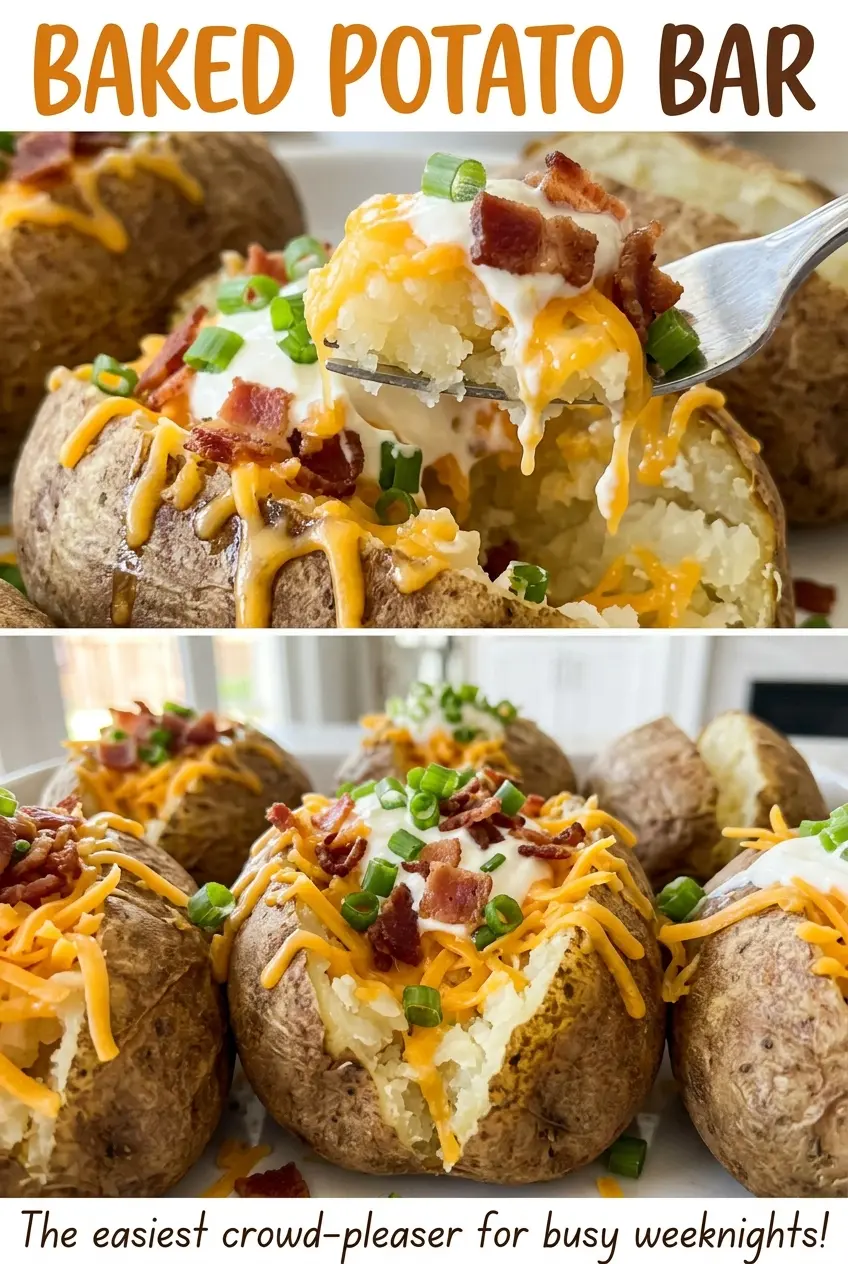
- Russet potatoes — Their fluffy interior gives you room to fold in the toppings with a fork. Choose potatoes close in size so they bake at a similar pace, and dry them after scrubbing so the olive oil coats the skins instead of sliding over water.
- Olive oil and kosher salt — The oil helps the salt cling to the outside and gives the skin a lightly seasoned finish. A basic olive oil works well here; there’s no need to use a specialty bottle for a potato skin.
- Bacon — Cook it until crisp, then drain it before crumbling so the topping doesn’t bring a puddle of grease to the bowls. If you’re making a vegetarian bar, leave it out rather than trying to replace its smoky, salty character with another topping.
- Sharp cheddar — Its tang stands up to the mild potato and creamy toppings. Pre-shredded sharp cheddar is convenient for a topping bar; a milder cheddar works too, though the finished bite won’t taste as sharp.
- Sour cream and softened butter — Both blend easily into the hot potato, but cold butter is harder to work through the fluffy center. Let the butter soften before serving; plain Greek yogurt can stand in for sour cream if you want a thicker, tangier topping.
- Scallions — Thin slices distribute their mild onion flavor without dominating a bite. Slice them shortly before setting out the bowls so the cut edges stay fresh-looking.
Getting Tender Centers and Crisp Bacon on the Same Timeline
Dry and Season the Russets
Heat the oven to 400°F, scrub the potatoes clean, and dry them well. Prick each potato several times with a fork, then rub the skins with olive oil and sprinkle on the kosher salt. The dry surface helps the oil coat evenly, so don’t skip the towel after washing.
Bake Until the Knife Slides Easily
Arrange the potatoes on a rimmed baking sheet and bake for 50 to 70 minutes. Start checking for tenderness at the lower end of that range: a knife should slide easily into the center, without a hard spot resisting it. Larger potatoes or differences between ovens can shift the timing, so use the knife test rather than relying on the clock alone.
Crisp the Bacon While the Potatoes Bake
Cook the bacon in a 12-inch skillet over medium heat for 8 to 12 minutes, turning it as needed. Look for crisp pieces rather than soft, floppy strips; bacon continues to feel a little delicate while hot. Transfer it to paper towels to drain, then crumble it once it’s cool enough to handle.
Set Out the Bowls and Fluff the Potatoes
While the potatoes are in the oven, put the cheddar, sour cream, softened butter, scallions, and crumbled bacon in separate serving bowls. Let the potatoes rest for 5 minutes after baking, then split each one lengthwise without cutting all the way through. Use a fork to fluff the insides, keeping the potato open like a little bowl for the toppings.
Two Easy Ways to Change the Potato Bar
Make It Vegetarian by Leaving Out the Bacon
Skip the bacon and keep the cheddar, sour cream, butter, and scallions in their own bowls. The bar still has creamy and sharp toppings, though it loses the smoky, crisp bite that bacon adds.
Set Up a Dairy-Free Bar
Use dairy-free shredded cheddar, dairy-free sour cream, and plant-based butter in place of the dairy toppings. Keep the scallions and bacon separate as usual; the exact tang and creaminess will vary by brand, but everyone can still build a potato at the table.
Use Yukon Golds for a Denser Potato
Yukon Gold potatoes can take the place of russets, but their centers are creamier and less fluffy. Keep the toppings the same and check each potato for tenderness rather than expecting the russet timing to fit exactly.
Storage and Reheating
- Refrigerator: Refrigerate leftover potatoes and toppings separately within 2 hours. Store them in airtight containers and use within 3 to 4 days; the potato skin softens in the fridge.
- Freezer: Baked potatoes freeze best without toppings. Wrap each cooled potato well and freeze for up to 1 month for best quality; thaw overnight in the refrigerator before reheating.
- Reheating: Warm potatoes in a 350°F oven until the center reaches 165°F, then add the toppings. A microwave is quicker, but it softens the skin, so the oven is the better choice when you want to keep more of its texture.
Questions That Come Up When You Set Out a Potato Bar
Baked Potato Bar
Ingredients
Equipment
Method
- Heat the oven to 400°F.
- Scrub the potatoes clean.
- Dry the potatoes.
- Prick each potato several times with a fork.
- Rub the potatoes with the olive oil.
- Sprinkle the potatoes with the kosher salt.
- Place the potatoes on a rimmed baking sheet.
- Bake for 50 to 70 minutes, until a knife slides easily into the center.
- Let the potatoes rest for 5 minutes.
- While the potatoes bake, cook the bacon in a 12-inch skillet over medium heat for 8 to 12 minutes, turning as needed, until crisp.
- Drain the bacon on paper towels.
- Crumble the bacon.
- Put the cheddar, sour cream, softened butter, scallions, and crumbled bacon in separate serving bowls.
- Split each potato lengthwise without cutting all the way through.
- Fluff the insides with a fork.
- Serve the potatoes with the toppings.