The spinach tells you when the filling is ready: it starts as a loose pile, then collapses into the skillet as the moisture cooks away. If you scoop it out too soon, that extra liquid follows it into the salmon pocket. I let the pan do its work until the spinach is wilted and the skillet looks dry, which keeps the filling from turning watery inside these baked stuffed salmon fillets.
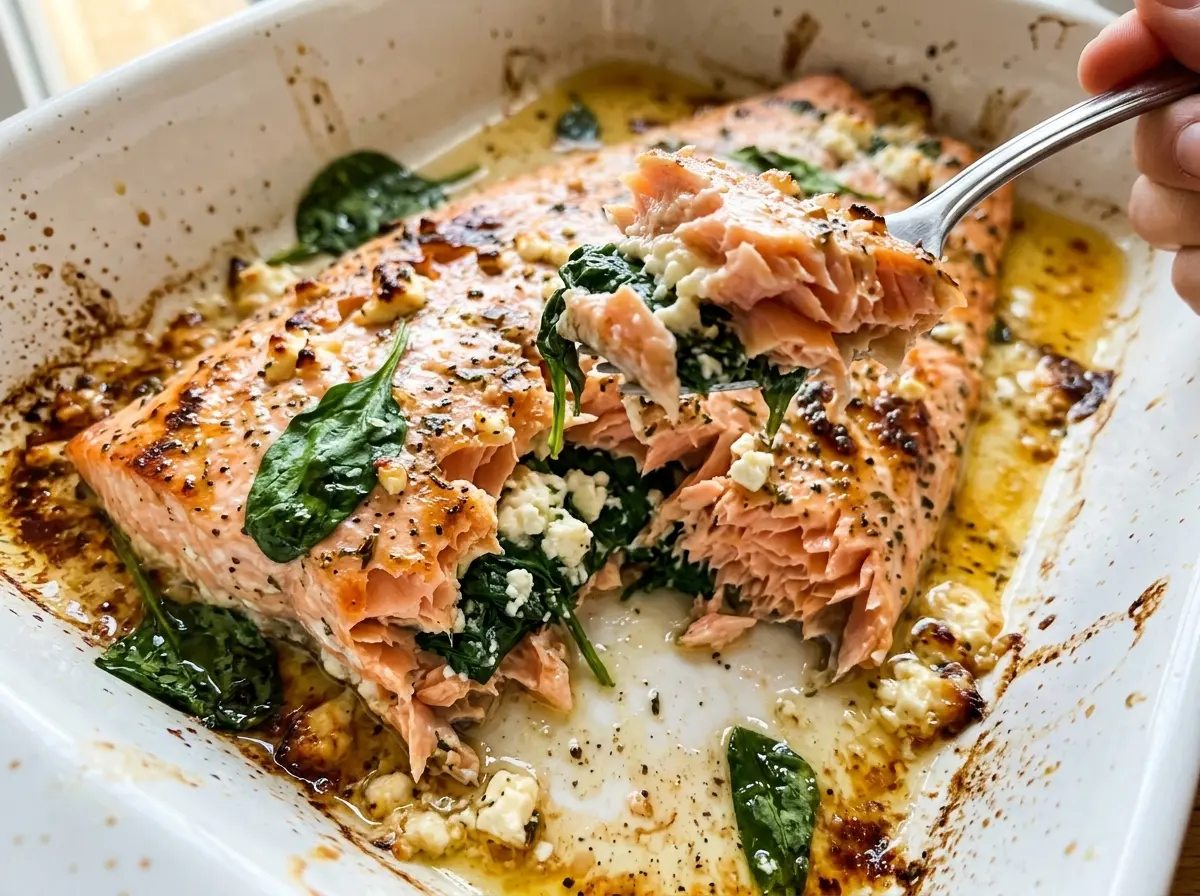
The filling is simple, but each part has a job. Feta brings a salty, tangy bite, lemon zest brightens it without adding liquid, and a little black pepper keeps the flavor lively. I cool the spinach before stirring everything together, then tuck the mixture into thick center-cut fillets. The result is flaky salmon with a savory spinach-feta center, all baked in one dish.
Kitchen Note
Give the spinach five minutes to cool before you stir in the feta. When it’s still steaming, the cheese softens and smears instead of staying pleasantly crumbly through the filling.
Save this baked stuffed salmon with spinach and feta for a dinner that pairs flaky fish with a bright, savory filling.
Why the Feta Filling Gets No Extra Salt
Feta brings plenty of savory saltiness to the center of each fillet, so the filling doesn’t need another pinch. The salmon gets its own seasoning on the outside, where it can be spread evenly over the fish rather than concentrated in a few bites of filling. That separation keeps the feta’s tang in the foreground without making the middle taste overly salty.
Feta brands vary in how briny they are, but the combination still works because the cheese is balanced by mild spinach and fragrant lemon zest. Black pepper adds warmth without masking those flavors. I keep the filling seasoning restrained and let the feta do what it does best; adding salt before tasting can make the finished pocket taste sharper and saltier than intended.
What the Spinach, Feta, and Salmon Each Bring to the Pocket

- Olive oil — It coats the baking dish and carries the garlic’s aroma into the spinach. A standard everyday olive oil is a good fit; there’s no need to use a prized finishing oil here.
- Garlic — Minced garlic gives the spinach a savory base. Fresh garlic has a clearer, punchier aroma, while prepared minced garlic is convenient; either way, keep an eye on it in the skillet so it doesn’t brown during its short cooking time.
- Baby spinach — The tender leaves wilt quickly and fit neatly into the filling. Chopped mature spinach can stand in, though it may take longer to soften; cook until the leaves have collapsed and the pan is no longer holding liquid.
- Feta — Crumbled feta gives the filling its salty tang and distinct little pockets of cheese. A familiar grocery-store feta works well. Very soft feta blends more readily into the spinach, while firmer crumbles keep more texture.
- Lemon zest — Zest adds concentrated citrus fragrance without watering down the filling. Grate just the yellow outer peel; the white pith underneath tastes bitter. If you don’t have lemon, leaving the zest out is better than adding juice and making the filling wet.
- Center-cut salmon — Evenly thick, skinless fillets give you enough depth for a pocket and help the portions bake at a similar pace. Choose pieces close to the listed thickness rather than thin tail-end cuts, which can overcook before the filling is hot.
From Wilted Spinach to a 145°F Center: The Stuffing Sequence
Prepare the Dish and Warm the Oven
Heat the oven to 400°F and brush the bottom of a 9×13-inch baking dish with the smaller portion of olive oil. This thin coating helps keep the fish from sticking as it bakes. Set the dish aside while you make the filling. Having it ready before handling the salmon keeps the process moving without a rushed transfer.
Cook the Spinach Until the Skillet Looks Dry
Warm the remaining olive oil in a large skillet over medium heat, then add the minced garlic. Cook it for 30 seconds, just until fragrant; if it starts to brown, it can taste bitter. Add the spinach and stir as the leaves wilt, which takes about 3 to 4 minutes. Keep cooking until the liquid released by the spinach has evaporated instead of pooling in the pan.
Stir Together the Filling
Transfer the spinach mixture to a bowl and let it cool for five minutes. Stir in the feta, lemon zest, and black pepper once the spinach is no longer steaming. Fold gently so the feta stays in crumbles rather than disappearing into the greens. The finished mixture should hold together without looking soupy.
Fill the Salmon and Bake
Pat the salmon dry and season it all over with kosher salt. Cut a pocket lengthwise into the thick side of each fillet, stopping before you reach the opposite side. Divide the filling among the pockets, arrange the fillets in the prepared dish, and bake for 12 to 16 minutes, until the thickest part reaches 145°F. Let the fish rest in the dish for three minutes before serving.
Three Changes That Keep the Filling Balanced
Make It Dairy-Free with Feta-Style Crumbles
Replace the feta with dairy-free feta-style crumbles and keep the rest of the filling the same. The result will depend on the brand, but expect a slightly different tang and a less creamy bite; choose a variety that holds its shape when stirred.
Trade Feta for Goat Cheese
Use soft goat cheese in place of the feta for a milder, creamier center with less of feta’s briny edge. Fold it into the cooled spinach gently; it will blend more readily, so the filling will feel smoother rather than distinctly crumbly.
Leave Out the Lemon Zest for a Milder Filling
Skip the zest if you want the spinach and cheese to be the main flavors. The filling will lose its fresh citrus lift but will still work as a savory stuffing; don’t replace the zest with lemon juice, which adds moisture.
Storage and Reheating
- Refrigerator: Refrigerate leftovers within 2 hours in an airtight container and use them within 3 to 4 days. The salmon will be a little firmer after chilling.
- Freezer: Freeze cooled portions in an airtight container for up to 2 to 3 months. Thaw them overnight in the refrigerator; the spinach filling may soften slightly.
- Reheating: Cover and warm gently in the microwave in short intervals until the center reaches 165°F. High heat for too long dries out salmon quickly, so avoid reheating it uncovered at full power.
Questions That Come Up Before Stuffing the Salmon
Baked Stuffed Salmon with Spinach and Feta
Ingredients
Equipment
Method
- Heat the oven to 400°F.
- Brush the bottom of a 9x13-inch baking dish with 1 teaspoon of the olive oil.
- Heat the remaining 1 tablespoon olive oil in a large skillet over medium heat.
- Add the garlic and cook for 30 seconds.
- Add the spinach and cook, stirring, until wilted and any liquid has evaporated, about 3 to 4 minutes.
- Transfer the spinach mixture to a bowl and let it cool for 5 minutes.
- Stir in the feta, lemon zest, and black pepper.
- Pat the salmon dry and season all over with the salt.
- Cut a pocket lengthwise into the thick side of each fillet, taking care not to cut through the other side.
- Divide the spinach-feta filling among the pockets and place the fillets in the prepared baking dish.
- Bake for 12 to 16 minutes, until the salmon reaches 145°F at the thickest part.
- Let the salmon rest in the dish for 3 minutes before serving.