When the beef hits the hot Dutch oven, it needs space. Crowded pieces release moisture instead of forming the deep brown crust that gives this stew its savory backbone, so I brown the cubes in batches and let the pot do its work between rounds. That patience is worth it in Beef Carbonnade Stew, where beef and onions slowly soften in a malty beer broth.
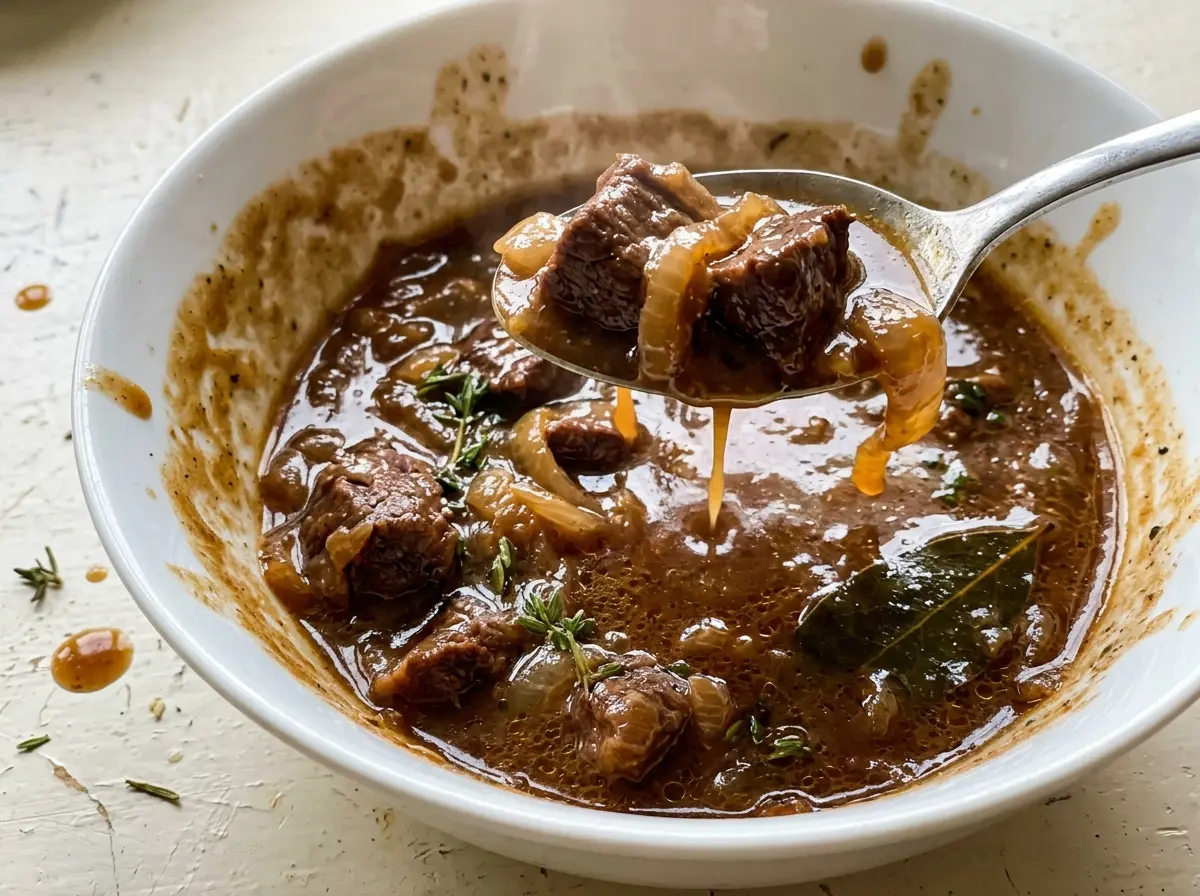
The onions get their own stretch of time before the liquid goes in. Cooked until soft and lightly browned, they bring gentle sweetness that balances the beer without turning the stew sugary. A mustard-coated slice of country bread rests on top during the oven braise, then softens into the rich broth. The finished stew is tender, savory, and just thick enough to cling to a spoon.
Kitchen Note
Give the stew its full 10-minute rest uncovered before serving. The bubbling settles, and it’s easier to ladle without the broth sloshing over the tender beef.
Save this Beef Carbonnade Stew for a slow-braised dinner with fork-tender beef, sweet onions, and a malty beer broth.
Why the Onions Need Their Full 15 Minutes Before the Beer Goes In
Onions are more than a background flavor in carbonnade. They cook down into a soft, sweet base that helps balance the malt and savory depth of the beer, and their texture becomes part of the stew rather than a separate pile of vegetables. Give them time to soften and take on a little color before adding flour or liquid.
The brown sugar supports that gentle browning, but the goal isn’t dark, jammy onions. Stir often and watch for softness with pale golden edges; if the pan starts catching, lower the heat rather than rushing the process. Those 15 minutes give the onions a head start on the long braise, so they melt into the broth while the beef turns tender. Pouring in the beer too early would stop that browning and leave a sharper, more watery onion base.
This is also where a little restraint pays off. Light browning keeps the stew rounded and savory, while heavily browned or scorched onions can make the beer taste harsher. Let the color build gradually, scraping the bottom as you stir so nothing burns before the broth has a chance to loosen it.
What the Beer, Beef, and Mustard Bread Each Bring to the Pot

- Beef chuck — Its marbling and connective tissue suit a long, covered braise, giving you beef that turns fork-tender instead of drying out. Cut the pieces evenly so they cook at a similar pace; a lean steak isn’t a good stand-in here.
- Bacon — It renders the cooking fat and leaves savory browned bits in the pot. Regular sliced bacon works; there’s no need for a specialty cut, since the beef and onions carry the slow-cooked texture.
- Belgian-style dubbel or brown ale — Either style brings malty depth to the broth. Pick a bottle with a flavor you enjoy drinking, rather than a sharply bitter beer that could dominate the long-cooked onions.
- Low-sodium beef broth — It adds a savory base while giving you more control over salt, since the bacon and seasoned beef contribute plenty of flavor. Keep the low-sodium choice rather than swapping in a salty broth.
- All-purpose flour — A brief cook with the onions gives the liquid a little body. For a gluten-free version, use a 1:1 gluten-free all-purpose flour blend in its place and make the other gluten-free swaps in the variation below.
- Country bread and Dijon mustard — Hearty bread holds together on top of the stew long enough to soften during the braise, and Dijon gives that layer a sharp, savory edge. Choose a sturdy loaf rather than a thin, soft sandwich bread.
- Red wine vinegar, thyme, and bay leaf — The vinegar brightens the rich broth, while the herbs add a quiet savory aroma. Fresh thyme sprigs and a whole bay leaf are easy to remove before serving, so keep them whole rather than chopping them into the stew.
Building the Beer Broth and Braising the Beef Until Tender
Render the Bacon, Then Brown the Beef in Batches
Set a rack in the lower-middle position and heat the oven to 325°F. In a 6-quart Dutch oven over medium heat, cook the chopped bacon until crisp, about 6 to 8 minutes, then move it to a plate and leave the fat in the pot. Season the beef with kosher salt and black pepper, then brown it in batches for about 3 to 4 minutes per side, adding vegetable oil as needed. If the pieces are crowded, they’ll steam instead of browning; give them room and transfer each browned batch to the plate.
Soften the Onions and Cook the Flour
Add the sliced onions and brown sugar to the pot, stirring often as they cook for about 15 minutes. Look for onions that are soft and lightly browned, not dark or crisp at the edges. Sprinkle the flour over them and stir for 1 minute so it cooks into the onion mixture. Keep stirring across the bottom of the pot; flour can catch where the onions have left browned bits.
Loosen the Fond and Set the Mustard Bread on Top
Pour in the beer and beef broth, scraping the bottom of the pot to release the browned bits. Stir in the red wine vinegar, thyme, and bay leaf, then return the beef and crisp bacon to the pot. Bring the liquid to a simmer before adding the bread; spread Dijon mustard on the bread and place it mustard-side down on top of the stew. Keep the slice intact so it forms a soft layer instead of disappearing before the braise begins.
Braise Covered, Then Remove the Herbs
Cover the Dutch oven and bake until the beef is fork-tender, about 2 1/2 to 3 hours. The broth should be quietly bubbling when you check, and the beef should yield easily when pressed with a fork. If it’s still firm, the connective tissue needs more time to soften; keep the pot covered and continue baking until the beef gives way. Remove the thyme stems and bay leaf, then rest the stew uncovered for 10 minutes before serving.
Two Practical Ways to Adapt Beef Carbonnade
Make the stew gluten-free
Use a 1:1 gluten-free all-purpose flour blend in place of the flour, then choose gluten-free beer and a hearty gluten-free bread for the mustard-topped layer. The stew keeps its savory, malty character, though gluten-free bread may soften more quickly; use a sturdy slice and leave it whole.
Choose a nonalcoholic version
Replace the beer with the same total volume of nonalcoholic brown ale. It keeps a malty note in the broth, but the stew may taste a little less complex than one made with Belgian-style dubbel or brown ale. The remaining browning and braising steps stay the same.
Storage and Reheating
- Refrigerator: Transfer leftovers to shallow airtight containers and refrigerate within 2 hours. Use within 3 to 4 days; the bread softens into the broth and the stew thickens as it chills.
- Freezer: Freeze in airtight containers for up to 3 months. The beef freezes well, though the sauce may look less smooth after thawing; stir gently as it warms.
- Reheating: Warm gently in a covered saucepan over low heat, stirring occasionally, until the stew reaches 165°F. Avoid a hard boil, which can make the beef seem tougher and break the sauce down.
Questions That Come Up When Making Beef Carbonnade
Beef Carbonnade Stew
Ingredients
Equipment
Method
- Heat the oven to 325°F and set a rack in the lower-middle position.
- In a 6-quart Dutch oven over medium heat, cook the chopped bacon until crisp, about 6 to 8 minutes, then transfer it to a plate, leaving the fat in the pot.
- Season the beef chuck with the kosher salt and black pepper.
- Brown the beef in batches in the bacon fat, adding some of the vegetable oil as needed, about 3 to 4 minutes per side; transfer the browned beef to a plate.
- Add the yellow onions and packed light brown sugar to the pot and cook, stirring often, until the onions are soft and lightly browned, about 15 minutes.
- Sprinkle the all-purpose flour over the onions and cook, stirring, for 1 minute.
- Pour in the Belgian-style dubbel or brown ale and low-sodium beef broth, scraping up the browned bits from the bottom of the pot, then stir in the red wine vinegar, fresh thyme, and bay leaf.
- Return the beef and bacon to the pot and bring the liquid to a simmer.
- Spread the Dijon mustard on the hearty country bread and place it mustard-side down on top of the stew.
- Cover the pot and bake until the beef is fork-tender, 2 1/2 to 3 hours.
- Remove the thyme stems and bay leaf.
- Let the stew rest uncovered for 10 minutes before serving.