Beef carbonnade stew turns a tough cut into something spoon-tender, with onions melted down into a dark, savory-sweet gravy that clings to the beef instead of sitting around it. The beer doesn’t just add flavor; it gives the sauce that deep mahogany color and a malty backbone that makes this dish feel old-world and complete. Served with crusty bread, it’s the kind of stew that gets better as it sits on the table.
What makes this version work is patience in two places: the beef needs a hard sear so the pot starts with real browned flavor, and the onions need enough time to go soft, golden, and almost jammy before anything liquid goes in. That’s what keeps the stew from tasting flat or rushed. A little flour cooks into the onions and helps the broth thicken naturally, while Dijon, vinegar, and brown sugar keep the finish balanced instead of heavy.
You’ll find the exact timing that gives the onions their depth, a straightforward braising method that keeps the beef tender, and a few ways to adapt the stew if you want to change the beer or make it ahead.
The onions cooked down into the richest sauce, and the beef was fall-apart tender after the full braise. I served it with bread for soaking up the broth, and there wasn’t a spoonful left.
Save this beef carbonnade stew for the night you want deep flavor, tender beef, and plenty of bread for dunking.
The Browning and Onion Time That Give Carbonnade Its Depth
If the beef goes into the pot pale, the stew tastes thin no matter how long it simmers. The first job is to sear the beef in batches until the pieces have a dark crust on more than one side. Those browned bits on the bottom are not a cleanup problem; they’re the base of the gravy. The second job is giving the onions time to collapse and caramelize. Twenty to twenty-five minutes can feel long, but undercooked onions are the fastest way to end up with a stew that tastes like beef in broth instead of carbonnade.
The flour goes in after the garlic so it can cook out its raw taste and coat the onions before the beer and broth are added. That little step helps the stew thicken without turning pasty. Once the liquid goes in, scrape the pot well. If there’s anything stuck to the bottom, it belongs in the stew.
What Each Ingredient Is Actually Doing in This Dish

- Beef chuck — This is the right cut because it has enough connective tissue to turn tender during the long braise. Lean stew meat can work, but it won’t get that same silky bite.
- Dark Belgian ale or stout — This brings the maltiness that defines the stew. Use a beer you’d actually drink; overly bitter beers can make the finished sauce harsh.
- Onions — They do the heavy lifting here. Thin slicing helps them soften evenly and melt into the sauce instead of staying stringy.
- Dijon mustard and red wine vinegar — These sharpen the rich broth and keep the dish from tasting heavy. Don’t skip both unless you’re replacing them with another source of acid.
- Tomato paste — It deepens the color and adds a little concentrated sweetness. Cook it briefly with the flour and onions so it loses its raw edge.
Building the Stew So the Beef Stays Tender
Searing the Beef First
Season the beef well and sear it in a hot Dutch oven with oil until the pieces are deeply browned on multiple sides. Don’t crowd the pot or the meat will steam before it browns. If the crust looks pale, the stew will taste flat no matter how good the braise is later. Take the beef out once it has a real crust; it will finish cooking gently in the liquid.
Cooking the Onions All the Way Down
Add the onions to the same pot and cook them over medium heat until they’re soft, golden, and starting to stick a little at the edges. That’s where the flavor is. If the heat is too high, they’ll scorch before they sweeten, and the stew will pick up bitterness. Stir often once they start coloring so the sugars don’t catch.
Deglazing and Braising
Stir in the garlic and flour, cook for a minute, then pour in the beer and scrape the bottom of the pot until every browned bit lifts. Add the broth, tomato paste, vinegar, brown sugar, Dijon, thyme, bay leaves, and beef. Bring it to a boil first so the liquid gets moving, then drop it to a low simmer and cover the pot. The stew is done when the beef gives easily with a fork and the sauce tastes rounded, not sharp.
Finishing the Pot
Pull out the bay leaves and thyme before serving. Taste the broth and adjust the salt and pepper at the end, not before, because the liquid reduces and concentrates as it cooks. If the sauce seems loose, uncover the pot for the last 10 to 15 minutes so it can tighten up a bit. Serve it hot with bread that can hold up to the gravy.
What to Change When You Want a Different Result
Use a darker stout for a deeper, roaster finish
A stout pushes the sauce toward deeper malt and a slightly roasted edge. It works well if you like the gravy darker and a little more assertive, but it can taste heavier than a classic Belgian ale. Use it when you want richness first and brightness second.
Make it gluten-free by swapping the flour and checking the beer
Use a gluten-free beer if you want to keep the same braised flavor, and swap the all-purpose flour for a gluten-free thickener like cornstarch slurry near the end of cooking. The texture will be a little glossier and less rustic, but the stew still braises beautifully.
Make it ahead for better flavor the next day
Carbonnade tastes even better after it rests overnight. The sauce settles, the onions melt in further, and the beef absorbs more of the braising liquid. Reheat it gently so the meat stays tender instead of tightening up.
Swap the bread for mashed potatoes or buttered noodles
Crusty bread is classic because it soaks up the sauce, but mashed potatoes give you a softer, richer plate and noodles make the dish feel a little more casual. The stew itself doesn’t need changing, just the way you serve it.
Storage and Reheating
- Refrigerator: Store for up to 4 days. The sauce will thicken as it chills.
- Freezer: Freezes well for up to 3 months. Cool it completely first and leave a little room in the container for expansion.
- Reheating: Warm it gently on the stove over low heat with a splash of broth if needed. A hard boil can make the beef dry and the onions break down too far.
Answers to the Questions Worth Asking
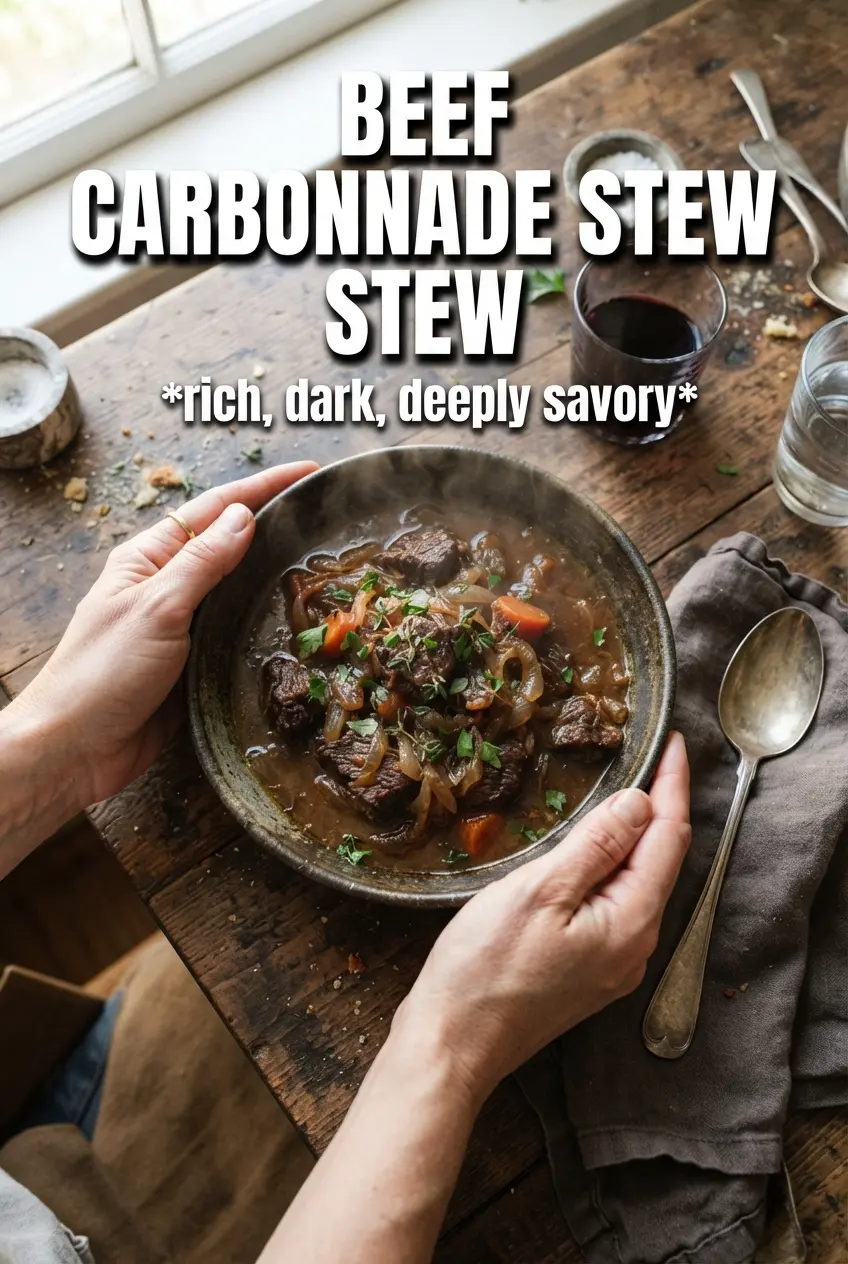
Beef Carbonnade Stew
Ingredients
Equipment
Method
- Season the beef chuck cubes with salt and pepper, then heat the vegetable oil in a Dutch oven over high heat until shimmering. Sear the beef until deeply browned, then remove to a plate.
- Keep all the browned bits in the Dutch oven after removing the beef so they can flavor the sauce during deglazing.
- Cook the thinly sliced onions in the Dutch oven over medium heat for 20-25 minutes, stirring occasionally, until very soft and golden.
- Add the minced garlic and cook for 1 minute, stirring, until fragrant but not browned.
- Whisk in the all-purpose flour and cook for 1 minute to remove the raw flour taste.
- Pour in the dark Belgian ale or stout beer and deglaze, scraping up all browned bits from the bottom of the Dutch oven.
- Add the beef broth, tomato paste, red wine vinegar, brown sugar, Dijon mustard, fresh thyme, bay leaves, and the browned beef. Bring to a boil.
- Reduce the heat to low, cover, and braise for 2 hours until the beef is very tender.
- Remove the bay leaves and thyme, then taste and season with additional salt and pepper if needed.
- Serve the beef carbonnade stew hot with crusty bread on the side.