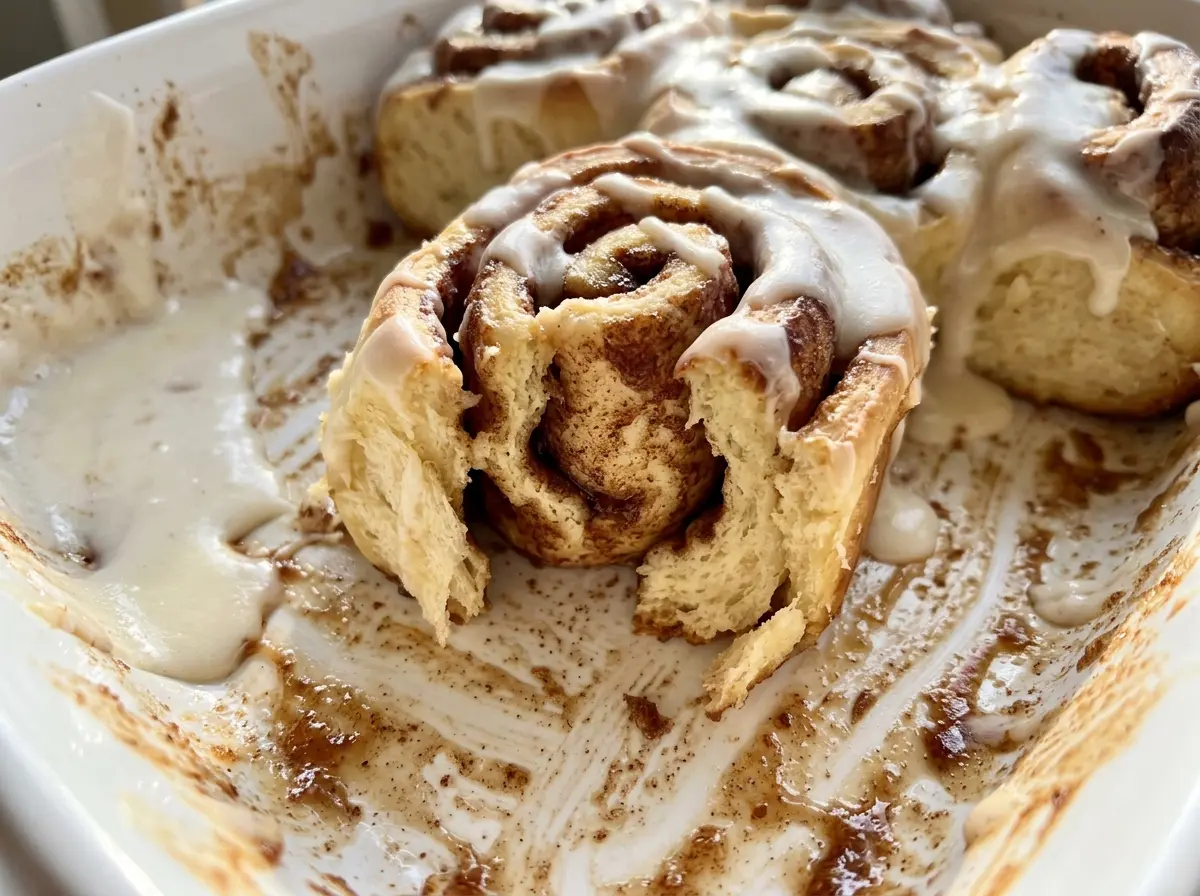
The cinnamon starts to perfume the kitchen before the rolls are out of the oven, and the brown sugar settles into every turn of the dough. Best Homemade Cinnamon Rolls have soft centers, golden tops, and cream cheese frosting that loosens slightly over the warm spirals. I like that the filling stays simple: butter, brown sugar, and cinnamon give each bite that familiar buttery sweetness without taking attention away from the dough.
These are made from scratch, but the dough is comfortable to handle and the shaping is straightforward. The first rise gives it time to become light and puffy; the second helps the cut rolls rise together in the pan. A smooth cream cheese frosting goes on while they’re warm, turning the tops glossy and settling into the cinnamon swirls.
Kitchen Note
The dough should feel soft and slightly tacky after kneading, not dry. I stop once it’s smooth and elastic; adding flour until the dough feels completely dry can make the rolls less tender.
Save these homemade cinnamon rolls for a slow morning when you want soft cinnamon spirals and cream cheese frosting straight from the pan.
Why the Cinnamon Filling Needs a Clean Edge Before You Roll
A cinnamon roll can lose filling from the open end of the log if the dough isn’t sealed well. I leave a narrow strip bare along the far long edge, which gives the dough a clean surface to meet when the log is rolled. The butter and sugar stay tucked inside instead of coating that last edge and making it slippery.
Rolling the dough tightly also helps the spirals hold their shape when you cut them. Keep the pressure even from one end of the log to the other, then pinch the seam closed before slicing. If the seam is left open, it can loosen as the rolls rise, and the end pieces may unfurl. Cutting the log into equal pieces gives the rolls a more even bake in the same dish, too.
What Gives These Rolls Their Soft Dough and Cinnamon-Filled Swirls

- Whole milk — It adds richness as well as liquid, giving the dough a softer crumb. Lower-fat milk can hydrate the dough, but the finished rolls won’t be quite as rich. Warm it to the specified range rather than heating it until hot.
- Active dry yeast — This yeast needs time in the warm milk and sugar to become foamy before the flour goes in. Check that it’s within its expiration date; old yeast may not foam well, even when the milk is warmed correctly.
- All-purpose flour — It gives the dough enough structure to roll and hold the filling while keeping the baked texture tender. Bread flour will make a chewier roll, so all-purpose is the better choice if you want the soft crumb this version is designed for.
- Light brown sugar and cinnamon — The sugar’s moisture helps the filling cling to the butter, while cinnamon provides the warm, familiar flavor. Fresh, fragrant ground cinnamon makes a noticeable difference; dark brown sugar can be used in the same amount for a deeper molasses note.
- Unsalted butter and cream cheese — Softened butter spreads over the dough without tearing it, and softened cream cheese blends smoothly into the frosting. Full-fat cream cheese gives the frosting its thick, tangy body; a lower-fat version tends to make it softer.
Build the Dough, Shape the Spirals, and Frost While Warm
Wake Up the Yeast and Mix the Dough
Stir the warm milk, active dry yeast, and granulated sugar together in a large bowl, then leave the mixture for 5 to 10 minutes until foamy. If it stays flat, pause before adding the flour; the yeast mixture should show visible foam. Stir in the canola oil, room-temperature egg, and salt. Add the flour one cup at a time until you have a shaggy dough.
Knead Until Smooth, Then Let the Dough Rise
Turn the dough onto a clean counter and knead for 8 to 10 minutes, until it feels smooth and elastic. It may still feel slightly tacky, which is fine. Lightly grease a large bowl with the reserved oil, place the dough inside, and turn it once to coat. Cover the bowl and let it rise at room temperature for 1 to 1 1/2 hours, until doubled in size.
Fill the Rectangle and Let the Rolls Puff
Grease a 9×13-inch baking dish with the remaining oil. On parchment paper, roll the dough into a 16×12-inch rectangle, spread on the softened butter while leaving a 1/2-inch border along the far long edge, then scatter over the brown sugar and cinnamon mixture. Roll the dough tightly from a long edge, pinch the seam closed, and cut the log into 12 equal rolls. Arrange them cut-side up in the dish, cover, and let them rise for 30 to 45 minutes, until puffy; heat the oven to 350°F while they rise.
Bake Until Golden and Finish with Cream Cheese Frosting
Bake the rolls at 350°F for 23 to 28 minutes, until golden brown. The tops should have color rather than looking pale, but don’t wait for them to become deeply browned. Let the pan sit for 10 minutes while you beat the softened cream cheese, powdered sugar, and vanilla in a medium bowl until smooth. Spread the frosting over the warm rolls and serve.
Two Easy Ways to Change the Frosted Finish
Serve Them Without Frosting
Skip the cream cheese frosting for a simpler cinnamon roll with a less tangy, less rich finish. The dough and cinnamon filling still bake the same way, and the tops stay golden and uncovered.
Frost Only the Centers
For a lighter finish, spread the frosting over the middle of each warm roll and leave the golden outer edges bare. You’ll still get cream cheese frosting in each bite, with more of the baked dough exposed.
Storage and Reheating
- Refrigerator: Refrigerate covered within 2 hours and keep for 3 to 4 days. The rolls will firm up when cold, and the frosting will be less soft than when freshly spread.
- Freezer: Freeze the baked rolls without frosting, individually wrapped and then sealed in an airtight freezer container, for up to 2 months. Thaw in the refrigerator and frost after warming.
- Reheating: Warm one roll in the microwave in 10-second bursts until heated through. Long bursts can dry the edges and make the frosting run.
Questions That Come Up When Making Cinnamon Rolls
Best Homemade Cinnamon Rolls
Ingredients
Equipment
Method
- Stir the warm milk, yeast, and granulated sugar together in a large bowl. Let stand for 5 to 10 minutes, until foamy.
- Stir in 1/3 cup of the canola oil, the egg, and salt.
- Mix in the flour, 1 cup at a time, until a shaggy dough forms.
- Knead the dough on a clean counter for 8 to 10 minutes, until smooth and elastic; it may feel slightly tacky.
- Lightly grease a large bowl with 1 teaspoon of the reserved oil, place the dough in the bowl, and turn it once to coat.
- Cover the bowl and let the dough rise at room temperature for 1 to 1 1/2 hours, until doubled in size.
- Grease a 9x13-inch baking dish with the remaining 1 teaspoon of oil.
- Roll the dough on parchment paper into a 16x12-inch rectangle.
- Spread the softened butter over the dough, leaving a 1/2-inch border along the far long edge.
- Mix the brown sugar and cinnamon together, then scatter evenly over the butter.
- Starting at a long edge, roll the dough tightly into a log and pinch the seam closed.
- Cut the log into 12 equal rolls and arrange them cut-side up in the prepared baking dish.
- Heat the oven to 350°F while the rolls rise.
- Cover the rolls and let rise for 30 to 45 minutes, until puffy.
- Bake for 23 to 28 minutes, until the rolls are golden brown.
- Let the rolls cool in the dish for 10 minutes.
- Beat the cream cheese, powdered sugar, and vanilla in a medium bowl until smooth.
- Spread the frosting over the warm rolls and serve.