Juicy blueberries and ripe nectarines turn soft and syrupy under a golden biscuit topping that bakes up with crisp, sugared edges and a tender center. The fruit bubbles up around the sides, so every spoonful gets both the jammy filling and the buttery crust. Served warm, it lands in that sweet spot where the fruit still tastes fresh, not cooked flat.
What makes this version work is the balance: enough cornstarch to thicken the juices without turning them gummy, enough lemon juice to keep the fruit bright, and a topping batter that stays thick instead of disappearing into the filling. Melted butter keeps the biscuit layer rich and easy to stir together, while the final sugar sprinkle gives the top a crackly finish. If the batter looks a little rustic when you pour it on, that’s exactly right.
The fruit baked down into the perfect syrupy layer and the topping stayed crisp on the edges even after sitting a bit. I used the full 10-minute cool time and it scooped so cleanly.
Save this blueberry nectarine cobbler for the days when you want bubbling fruit and a buttery biscuit top with almost no fuss.
The Secret to a Cobbler That Bubbles Without Going Soupy
The mistake people make with fruit cobbler is underestimating how much juice fresh fruit gives off in the oven. Blueberries burst fast, nectarines soften even faster, and without a little thickener the filling turns thin and runny instead of spoonable. Cornstarch solves that, but only if the fruit is tossed well enough to coat every piece before it goes into the dish.
The other piece that matters is the baking time. Pulling cobbler too early leaves the topping pale and the filling loose; baking it until the center is actively bubbling means the cornstarch has had time to activate and the fruit juices have thickened properly. That bubbling edge is the sign to trust.
- The sugar in the fruit filling does more than sweeten. It helps draw out juice, which is why the cornstarch has something to work with.
- Lemon juice keeps the nectarines and blueberries from tasting flat, especially once they bake down.
- The melted butter in the topping gives you a denser, biscuit-like crust instead of a cakier one.
- The final sugar on top is there for texture, not just sweetness. It bakes into a light crunch.
What Each Ingredient Is Actually Doing in This Cobbler

Blueberries bring the jammy, purple-blue juices that make this cobbler feel lush. Fresh berries hold their shape a little better than frozen ones, which can turn the filling looser. If you use frozen blueberries, don’t thaw them first; just expect a slightly softer, more syrupy bake.
Nectarines add sweetness and a soft sliceable texture that balances the burst of the blueberries. Peaches work in the same amount if that’s what you have, but nectarines give a cleaner bite because there’s no fuzzy skin to deal with. Slice them evenly so they soften at the same pace.
Cornstarch is what keeps the fruit from flooding the dish. Flour can work in a pinch, but it takes more of it and the filling won’t set as cleanly. Mix the cornstarch directly with the sugar before it hits the fruit so it disperses evenly.
Melted butter makes the topping simple to mix and gives it that rich, short texture. Cold butter would need cutting in, which makes a different style of cobbler. Here, melted butter is what keeps the batter thick but pourable.
Milk loosens the batter just enough to spread over the fruit. Whole milk gives the best richness, but 2% works fine. Don’t pour in extra milk if the batter looks thick; that’s what helps it sit on top instead of vanishing into the filling.
Building the Fruit Base and Topping in the Right Order
Coating the Fruit Before It Goes In
Toss the blueberries and nectarine slices with the sugar, cornstarch, and lemon juice until every piece looks lightly glazed. You’re aiming for no dry pockets of starch and no clumps of sugar stuck in the bottom of the bowl. Spread the fruit evenly in the baking dish so the juices can bubble across the whole surface instead of pooling in one corner.
Mixing the Batter Without Overworking It
Whisk the flour, baking powder, and salt first, then stir in the melted butter and milk just until the dry spots disappear. The batter should look thick and a little lumpy, not silky smooth. If you beat it too long, the topping turns tighter and less tender. A heavy spoonful should fall from the bowl in one mound, not run like pancake batter.
Reading the Bake Instead of the Clock
Pour the batter over the fruit in patches and spread it gently; it doesn’t need to cover every inch. Sprinkle the remaining sugar over the top, then bake until the crust is deeply golden and the fruit is bubbling around the edges and in the center. If the top browns before the fruit bubbles, tent it loosely with foil and give the filling the time it needs. Letting it rest for 10 minutes helps the juices settle so the first scoop holds together.
Three Ways to Change This Cobbler Without Losing What Makes It Good
Use peaches instead of nectarines
Peaches work in the same quantity and give you a slightly softer, more perfumed filling. Peel them if the skins are thick or you want a smoother texture. The rest of the recipe stays the same, though very juicy peaches may need an extra minute or two in the oven.
Make it dairy-free
Use a neutral plant-based butter and unsweetened non-dairy milk like oat or almond. The topping will still brown, but it won’t have quite the same richness as the dairy version. Oat milk gives the closest result because it adds a little body without an obvious flavor.
Swap in other summer fruit
Blackberries or raspberries can replace part of the blueberries if that’s what you have, but keep some stone fruit in the mix so the filling doesn’t turn too tart. If you use only berries, reduce the lemon juice a bit and expect a softer, more sauce-like filling.
How to store leftovers
- Refrigerator: Store covered for up to 4 days. The topping softens as it sits, but the flavor stays good.
- Freezer: Freeze baked cobbler in portions for up to 2 months. Wrap tightly and thaw overnight in the fridge before reheating.
- Reheating: Warm in a 325°F oven until the center is hot and the top wakes back up, about 15 to 20 minutes. The microwave works for a single bowl, but it softens the topping fast.
Questions I Get Asked About This Recipe
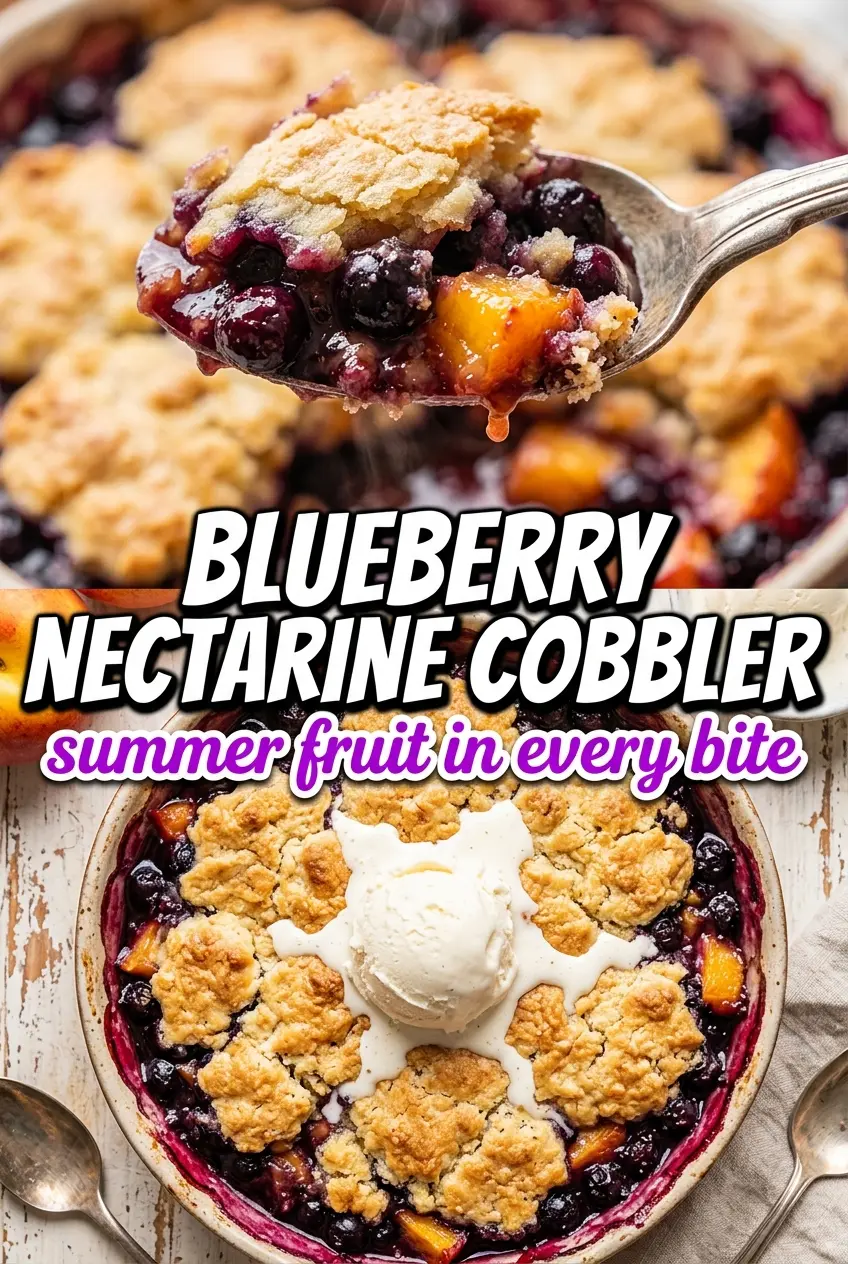
Blueberry Nectarine Cobbler
Ingredients
Equipment
Method
- Preheat the oven to 350°F and grease a 9x9-inch baking dish.
- Toss the fresh blueberries and fresh nectarines, sliced with the granulated sugar, cornstarch, and lemon juice, then spread evenly in the baking dish.
- Whisk together the all-purpose flour, baking powder, and salt in a bowl.
- Stir in the unsalted butter, melted and the milk just until combined, forming a thick batter.
- Pour the batter evenly over the fruit and sprinkle with the remaining granulated sugar.
- Bake for 40–45 minutes, until the top is golden and the fruit is bubbling, then let cool for 10 minutes before serving warm.