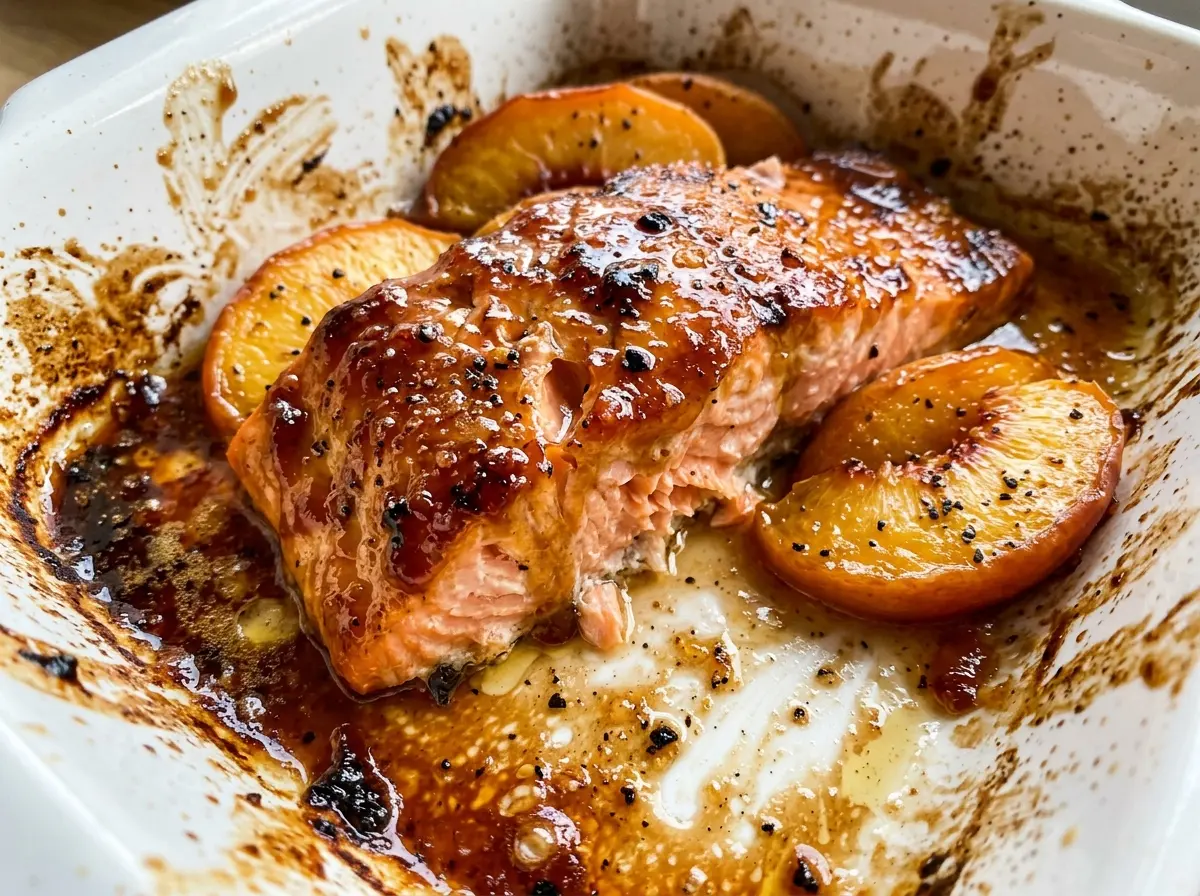
The glaze bubbles up around the peach as it simmers, and the kitchen starts to smell like warm fruit with a little bourbon in the background. I used to spoon a sweet glaze over salmon right from the start; by the time the fish was ready, the sugary edges had gone too dark. For Bourbon Peach Roasted Salmon, I let the fillet roast first, then add the glaze for the final stretch so it turns glossy without scorching.
Fresh peach and peach preserves do different jobs here: the diced fruit softens into little tender pieces, while the preserves give the glaze body. A little soy sauce, Dijon, garlic, and lemon keep the sweetness in check. The result is a tender salmon fillet with a shiny, fruity top and plenty of savory balance.
Kitchen Note
Dice the peach finely, not in big chunks. Smaller pieces soften quickly in the saucepan and spread across the salmon instead of sliding off in a few heavy clumps.
Save Bourbon Peach Roasted Salmon for a dinner that pairs flaky fish with a glossy, sweet-savory peach glaze.
Why the Peach Glaze Waits Until the Salmon Is Partway Roasted
Peach preserves bring a lot of sugar to the topping, and sugar browns faster than the salmon cooks through. If the glaze went on before the fish entered the oven, the exposed fruit and syrup would have a longer stretch in the heat and could darken before the thickest part of the fillet was ready. Roasting the salmon on its own first gives it a head start, then the glaze gets just enough oven time to cling and turn shiny.
This timing also helps the topping stay on the fish. The salmon has begun to warm and firm at the surface before you spoon over the glaze, so the fruit mixture sits on top instead of running across the parchment. Spread it evenly from end to end, including the thinner edges, and keep the layer light enough that you can still see the shape of the fillet underneath.
The glaze itself should be reduced only until it thickens slightly. It will continue to cling as it roasts, so cooking it down until it looks like candy in the saucepan makes it harder to spread and more likely to get too dark in the oven.
What the Peach, Preserves, and Savory Ingredients Each Bring
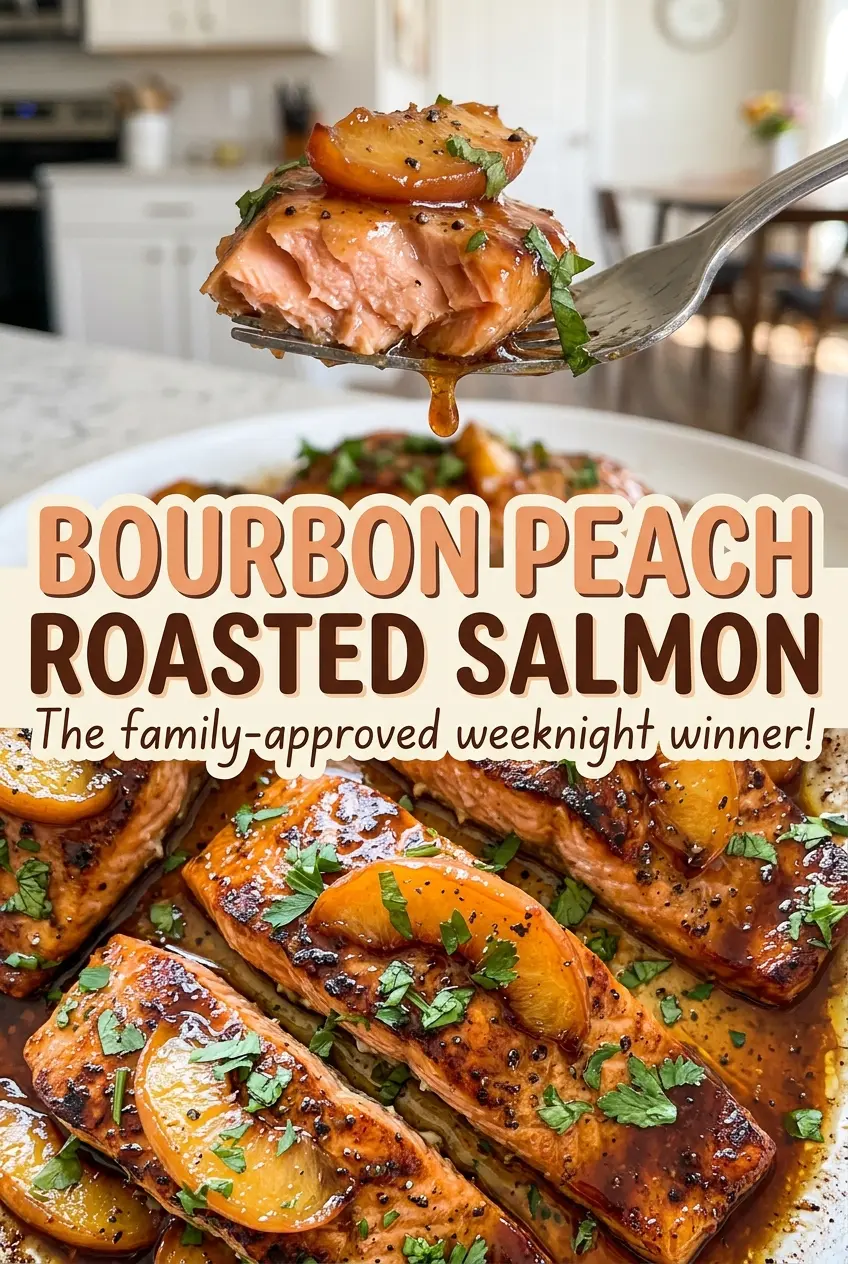
- Ripe peach — Fresh peach gives the glaze soft fruit pieces and a brighter, less uniform texture than preserves alone. Choose one that smells fragrant and yields slightly when pressed; a hard, underripe peach won’t soften as readily during the short simmer. Finely dice it before it goes into the saucepan.
- Peach preserves — Preserves make the glaze thick enough to coat the salmon, while the fresh fruit keeps it from tasting one-note. A good everyday jar works well; there’s no need for specialty preserves. Apricot preserves are the closest swap if peach preserves aren’t available, though the glaze will taste more like stone fruit than peach.
- Bourbon — Bourbon adds a warm, oaky note that rounds out the fruit. Use a bourbon you enjoy drinking, but an affordable bottle is fine since it’s simmered with the other glaze ingredients. For a bourbon-free version, use apple juice in its place; the glaze will be fruitier and won’t have that toasted edge.
- Soy sauce and Dijon — These are small savory counterweights to the preserves, adding salt and tang without turning the glaze into a savory sauce. Tamari can stand in for soy sauce, especially in the gluten-free adaptation below. Dijon gives a sharper, more layered taste than plain yellow mustard.
- Garlic and lemon juice — Minced garlic brings a savory aroma, and lemon juice keeps the peach from tasting overly sweet. Use fresh garlic and fresh-squeezed lemon when convenient; bottled lemon juice works in a pinch, but its flavor is less lively.
- Skin-on salmon — A fillet about an inch thick gives the center time to cook while the glaze sets on top. Look for salmon with a fresh, clean scent and moist-looking flesh. Parchment makes the skin-side-down fillet easy to lift after roasting, even if you don’t plan to eat the skin.
Simmer the Glaze, Then Roast the Salmon in Two Stages
Let the Peach Softly Simmer
Combine the diced peach, preserves, bourbon, soy sauce, Dijon, garlic, and lemon juice in a small saucepan. Bring the mixture to a simmer over medium heat, stirring often so the preserves don’t catch on the bottom. Lower the heat to medium-low and simmer for 5 to 7 minutes, stirring occasionally. The peach should soften and the glaze should thicken slightly; take the pan off the heat at that point.
Season the Fillet on Parchment
Heat the oven to 400°F and line a rimmed baking sheet with parchment paper. Pat the salmon dry, then set it skin side down on the lined pan and season with kosher salt and black pepper. Drying the surface gives the seasoning a chance to stay put instead of dissolving into moisture on the fish. Keep the fillet in one piece so the center and thinner edges roast together.
Add the Glaze After the First Roast
Roast the salmon for 7 minutes before adding any glaze. Spoon the peach mixture evenly over the top, then return the pan to the oven for 5 to 8 minutes. Check the thickest part with a thermometer; it should reach 145°F and flake easily with a fork. If your fillet is thinner at one end, the tail may finish before the center, so use the thickest section to judge doneness.
Give the Fish a Short Rest
Take the pan from the oven and let the salmon rest for 3 minutes before serving. That brief pause gives the fish time to settle after roasting and keeps the glaze from immediately running when you portion it. Use a wide spatula to lift the fillet from the parchment, supporting it underneath so the flaky flesh stays in larger pieces.
Two Easy Ways to Adapt the Peach-Bourbon Glaze
Make the glaze gluten-free and bourbon-free
Use tamari in place of soy sauce and apple juice instead of bourbon, then choose peach preserves and Dijon labeled gluten-free. The fruit still thickens into a glossy topping, but the flavor is softer and more peach-forward without the bourbon’s oaky note.
Trade peach preserves for apricot
Use the same amount of apricot preserves in place of the peach preserves and keep the fresh diced peach. The glaze remains thick and fruity, with a slightly tangier stone-fruit taste that still works with the bourbon and salmon.
Storage and Reheating
- Refrigerator: Refrigerate leftover salmon in an airtight container within 2 hours and eat it within 3 days. The glaze will firm up when cold, and the fish will be less delicate after chilling.
- Freezer: Freeze individual portions in a tightly sealed freezer-safe container for up to 2 months. Thaw them in the refrigerator; the fish may be a little softer and the glaze less glossy after freezing.
- Reheating: Cover the salmon and warm it in a 275°F oven until the center reaches 165°F. High heat or prolonged reheating dries out the fish, so avoid leaving it uncovered in a hot oven.
Questions That Come Up When Roasting Salmon with Peach Glaze
Bourbon Peach Roasted Salmon
Ingredients
Equipment
Method
- Combine the peach, preserves, bourbon, soy sauce, Dijon, garlic, and lemon juice in a small saucepan.
- Bring the mixture to a simmer over medium heat, stirring often.
- Reduce the heat to medium-low and simmer for 5 to 7 minutes, stirring occasionally, until the peach softens and the glaze thickens slightly.
- Remove the glaze from the heat.
- Heat the oven to 400°F.
- Line a rimmed baking sheet with parchment paper.
- Pat the salmon dry and place it skin side down on the prepared baking sheet.
- Season the salmon with the salt and pepper.
- Roast for 7 minutes.
- Spoon the glaze evenly over the salmon.
- Return the salmon to the oven for 5 to 8 minutes, until the thickest part reaches 145°F and flakes easily with a fork.
- Rest the salmon for 3 minutes before serving.