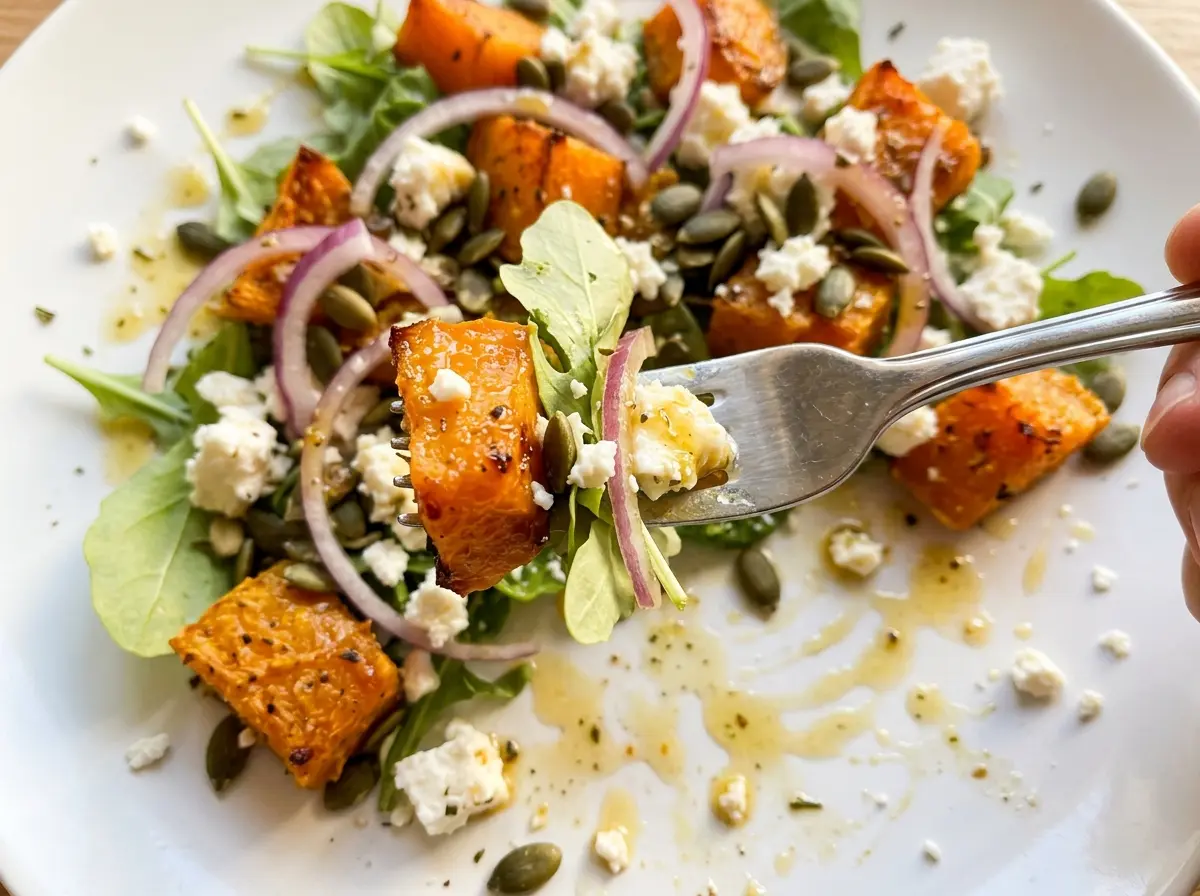
When the squash comes off the pan, the browned edges are the first thing I look for. They add a roasted, savory note that keeps the cranberries and balsamic from making the whole salad taste sweet. That balance is what makes this Butternut Squash Feta Salad work as more than a pile of fall ingredients: tender squash, peppery arugula, salty feta, and a little crunch in every forkful.
I keep the dressing simple and whisk it until the Dijon and maple syrup disappear into the balsamic and olive oil. Then I add it at the last moment, so the arugula stays lively instead of wilting while the salad waits on the table. The squash takes most of the hands-on work, and the rest comes together quickly around its warm, roasted flavor.
Kitchen Note
Give the squash its full 10 minutes to cool before it meets the arugula. It will still be pleasantly warm, but it won’t wilt the tender leaves on contact.
Save this Butternut Squash Feta Salad for its browned squash, peppery arugula, and tangy-sweet dressing.
Why the Squash Needs Room Before It Can Turn Golden
Butternut squash gives off moisture as it roasts. When the cubes are crowded, that moisture hangs around the pieces instead of letting their surfaces brown, and you can end up with soft squash that tastes more steamed than roasted. A single layer gives the hot air room to move around the cubes, which is what helps those browned spots develop.
Cutting the squash into even 3/4-inch cubes matters for the same reason: similar-sized pieces finish at about the same pace. The parchment keeps the pieces from sticking to the baking sheet, while turning them once gives another side a chance to make contact with the hot pan. Resist the urge to keep stirring. The squash needs uninterrupted time against the pan to build color, and those golden edges are what give the salad its savory backbone.
What Each Ingredient Adds to This Squash-and-Arugula Salad

- Butternut squash — Its mellow sweetness and soft, creamy interior make a substantial base for the greens. Peeling, seeding, and cutting it into even cubes are the prep details that matter most; everyday squash is fine, since roasting supplies much of the flavor.
- Olive oil — The oil on the squash helps it roast, while the oil in the dressing softens balsamic’s sharp edge. A regular olive oil works well here; an unusually strong or bitter one can dominate the delicate greens and squash.
- Balsamic vinegar, Dijon mustard, and maple syrup — Balsamic brings acidity, maple rounds it with a touch of sweetness, and Dijon helps the dressing come together when whisked. Use balsamic vinegar rather than a thick glaze, which is sweeter and won’t make the same dressing.
- Baby arugula — Its peppery bite cuts through the squash’s sweetness and the feta’s saltiness. Baby leaves are tender enough to eat as they are; a tougher green would change the salad’s texture and flavor.
- Feta cheese — Crumbled feta gives the salad a salty, tangy contrast to the warm squash. Pre-crumbled feta is convenient, while feta crumbled just before serving tends to have a softer texture.
- Dried cranberries and roasted pepitas — Cranberries add chewy sweetness, and pepitas bring a crisp, nutty bite. The pepitas should be roasted, not raw, for the toasty crunch that balances the tender squash.
Roasting, Whisking, and Assembling Without Losing the Contrast
Roast the Cubes Until Their Edges Brown
Heat the oven to 425°F and line a large rimmed baking sheet with parchment paper. Toss the squash right on the prepared sheet with the olive oil, kosher salt, and black pepper, then spread the pieces in a single layer. Roast for 25–30 minutes, turning them once, until they’re tender and browned in spots. If they look pale, give them time to color rather than pulling them as soon as they soften.
Whisk a Dressing That Clings to the Leaves
While the squash roasts, whisk the olive oil, balsamic vinegar, Dijon mustard, and maple syrup in a small bowl. Keep whisking until the mixture looks evenly combined, with no separate streaks of oil sitting on top. Dijon helps the ingredients come together, but the dressing can separate as it stands. A quick whisk before pouring brings it back together.
Layer the Salad Just Before Serving
Arrange the arugula on a serving platter or in a large bowl, then add the roasted squash. Scatter the feta, dried cranberries, and roasted pepitas over the top so each serving gets a little of every texture. Drizzle with dressing and toss gently just before serving. A heavy-handed toss can bruise the leaves and break up the feta, so lift and turn the ingredients rather than stirring them hard.
Two Easy Ways to Adjust the Salad’s Sweetness and Saltiness
Make It Dairy-Free by Leaving Out the Feta
Omit the feta for a dairy-free salad. You’ll lose its salty, creamy contrast, but the roasted squash, tart dressing, cranberries, and crunchy pepitas still make a balanced combination.
Take the Sweet Edge Down a Notch
Leave out the dried cranberries for a less-sweet salad, or omit the maple syrup from the dressing as well for a sharper, more savory finish. Without the cranberries, the salad loses some chew; without the syrup, the balsamic comes through more strongly.
Make-Ahead and Storage
- Refrigerator: Keep the squash, arugula, feta, toppings, and dressing in separate covered containers. Assemble within 2 days for the freshest greens and best texture.
- Freezer: The assembled salad doesn’t freeze well; the arugula wilts and the feta’s texture changes after thawing.
- Serving: Keep the dressing off the arugula until just before serving. If the olive oil in chilled dressing looks cloudy or thick, let it stand until pourable and whisk it again.
Questions That Come Up When Making Butternut Squash Feta Salad
Butternut Squash Feta Salad
Ingredients
Equipment
Method
- Heat the oven to 425°F.
- Line a large rimmed baking sheet with parchment paper.
- Toss the squash on the prepared baking sheet with 1 tablespoon olive oil, kosher salt, and black pepper.
- Spread the squash in a single layer.
- Roast for 25–30 minutes, turning the squash once, until tender and browned in spots.
- Let the squash cool for 10 minutes.
- Whisk 3 tablespoons olive oil, balsamic vinegar, Dijon mustard, and maple syrup in a small bowl until combined.
- Arrange the arugula on a serving platter or in a large bowl, then top with the roasted squash, feta, dried cranberries, and pepitas.
- Drizzle with the dressing and toss gently just before serving.