Cauliflower chicken soup earns its place in the regular rotation because it lands in that sweet spot between cozy and light. The broth turns creamy without feeling heavy, the cauliflower softens until it almost melts into the base, and the chunks you leave behind give every spoonful a little texture. The chicken stays tender, the cheddar adds enough richness to feel satisfying, and the final bowl tastes like something that took more effort than it did.
The trick here is to treat the cauliflower like part of the body of the soup, not just a vegetable floating around in broth. Blending only part of it gives you a naturally thick base without turning everything into puree, and that matters because cheddar can go grainy if you try to force the soup into a hard boil after the cream goes in. Keeping the heat gentle at the end gives you a smooth finish and a clean, creamy texture.
You’ll find the exact blending point that gives this soup its best texture, plus a few simple swaps if you need to work with what’s already in the fridge. There’s also a storage note worth reading if you like making a pot on Sunday and eating well for the next couple of days.
I loved how the cauliflower thickened the soup without turning it gluey. I only blended about half like you said, and the texture was perfect with the little chunks of chicken and cauliflower. My husband went back for seconds and said it tasted like something from a restaurant.
Creamy cauliflower chicken soup with cheddar and chives belongs in your dinner rotation for the nights when you want something hearty, silky, and ready in about 45 minutes.
The Secret to Creamy Cauliflower Soup Without Turning It Watery
The biggest mistake with cauliflower soup is rushing the simmer. Cauliflower needs enough time to go fully soft so it can blend into the broth and help thicken the pot from the inside out. If you pull it too early, the soup tastes thin even if you add cream later. Let it get to the point where a spoon slides through the florets with almost no resistance.
The second trap is blending everything smooth. That sounds like the way to get a creamier soup, but it usually backfires because the texture turns pasty and the chicken disappears into the background. Blending about half keeps the soup thick while leaving enough small pieces of cauliflower to give you a clean, spoonable finish. It also helps the cheddar melt in evenly instead of getting lost in a fully pureed base.
- Cauliflower — Fresh florets cook evenly and break down into a soft, buttery texture. Frozen cauliflower works in a pinch, but it tends to release more water, so the final soup can be a little looser.
- Chicken breast — Diced chicken cooks fast and stays in neat pieces. Thighs work too if you want a richer result, but they’ll give the soup a darker, slightly meatier flavor.
- Heavy cream — This gives the soup its smooth finish without curdling easily. Half-and-half will work, but the broth won’t feel as plush and you may need a few extra minutes on low heat to bring everything together.
- Cheddar — Sharp cheddar gives the soup its best salty bite. Pre-shredded cheese can be a little less smooth because of the anti-caking coating, so block cheese melts more cleanly if you have it.
- Smoked paprika — This is doing quiet work in the background, adding warmth and a little depth so the soup tastes built, not flat. If you only have regular paprika, use it, but the smoky note does help the cauliflower and cheddar taste fuller.
What Each Ingredient Is Actually Doing in This Recipe

- Primary ingredient (the star) — Quality matters most. Choose the best you can find.
- Cooking medium (oil, butter, or broth) — This carries flavors and prevents dryness.
- Seasonings (salt, pepper, spices, herbs) — Layer flavors so nothing overpowers. Build depth gradually.
- Aromatics (garlic, onion, herbs) — Cook with fat to bloom flavors. Become the foundation.
- Supporting ingredients — Complement the main ingredient without overpowering it.
- Sauce or liquid (if applicable) — Brings flavors together. Balance richness with acid.
- Acid (lemon, vinegar, wine, or other) — Brightens and prevents flat-tasting results.
- Final finish (garnish, glaze, or sauce) — Prevents one-dimensional taste and adds visual appeal.
Building the Base Before the Cheese Goes In
Softening the Onion and Garlic
Start with butter, onion, and garlic in a large pot. The onion should turn translucent and smell sweet before the garlic goes in; if the garlic hits the pot too early, it can brown and taste bitter. Four minutes for the onion and one minute for the garlic is enough to build a base without pushing either one too far.
Cooking the Chicken in the Broth
Add the diced chicken with the broth, cauliflower, garlic powder, and smoked paprika. Once the pot comes to a boil, drop it to a steady simmer so the chicken cooks through without turning tough on the outside before the cauliflower softens. The broth should look active but not raging; violent bubbling is what makes dairy-based soups harder to finish cleanly later.
Blending for Texture, Not Purée
When the cauliflower is very tender, use an immersion blender to blend about half the soup. Leave visible chunks in the pot. That contrast is what makes the soup feel hearty instead of baby-food smooth, and it also helps the finished bowl hold up once the cheddar is stirred in. If you don’t have an immersion blender, transfer only a couple of ladles to a regular blender and return them to the pot.
Finishing with Cream and Cheddar
Stir in the cream and bring the soup back to a gentle simmer, not a boil. Then add the cheddar a handful at a time and stir until it disappears into the broth. If the soup gets grainy, it’s usually because the heat was too high when the cheese went in. Pull the pot off the burner for a minute, then stir in the cheese slowly and let the residual heat finish the job.
How to Adapt This Soup Without Losing the Good Texture
Dairy-Free Version That Still Feels Creamy
Swap the butter for olive oil and use full-fat coconut milk or an unsweetened dairy-free cream in place of the heavy cream. You’ll lose the sharp dairy richness from the cheddar, so use a dairy-free shredded cheese only if you already like the brand’s melting behavior. The texture will still be cozy and thick, just a little less tangy.
Use Chicken Thighs for a Richer Bowl
Chicken thighs bring a deeper, rounder flavor and stay juicy even if they simmer a little longer than expected. Cut them into the same size pieces so they cook evenly with the cauliflower. This version tastes a little more rustic and a little less lean.
Make It Gluten-Free Without Changing Anything
This soup is naturally gluten-free as written, as long as your broth is certified gluten-free. That makes it one of the easier soups to serve to a mixed crowd because nothing about the texture or flavor needs to change.
Add More Vegetables Without Making It Thin
A handful of diced celery or carrots can go in with the onion if you want more depth. Keep the pieces small so they soften at the same pace as the cauliflower. Larger vegetable chunks won’t blend as smoothly and can leave the soup feeling uneven.
Storage and Reheating
- Refrigerator: Keeps well for 3 to 4 days. It thickens as it sits, so expect a slightly denser texture after chilling.
- Freezer: Freezing is possible, but dairy soups can separate a little when thawed. For the best result, freeze before adding the cream and cheddar, then finish the dairy after reheating.
- Reheating: Warm it gently over low heat and stir often. Don’t boil it after the cheese is in, or the soup can turn grainy and lose that smooth, creamy finish.
Questions I Get Asked About This Recipe
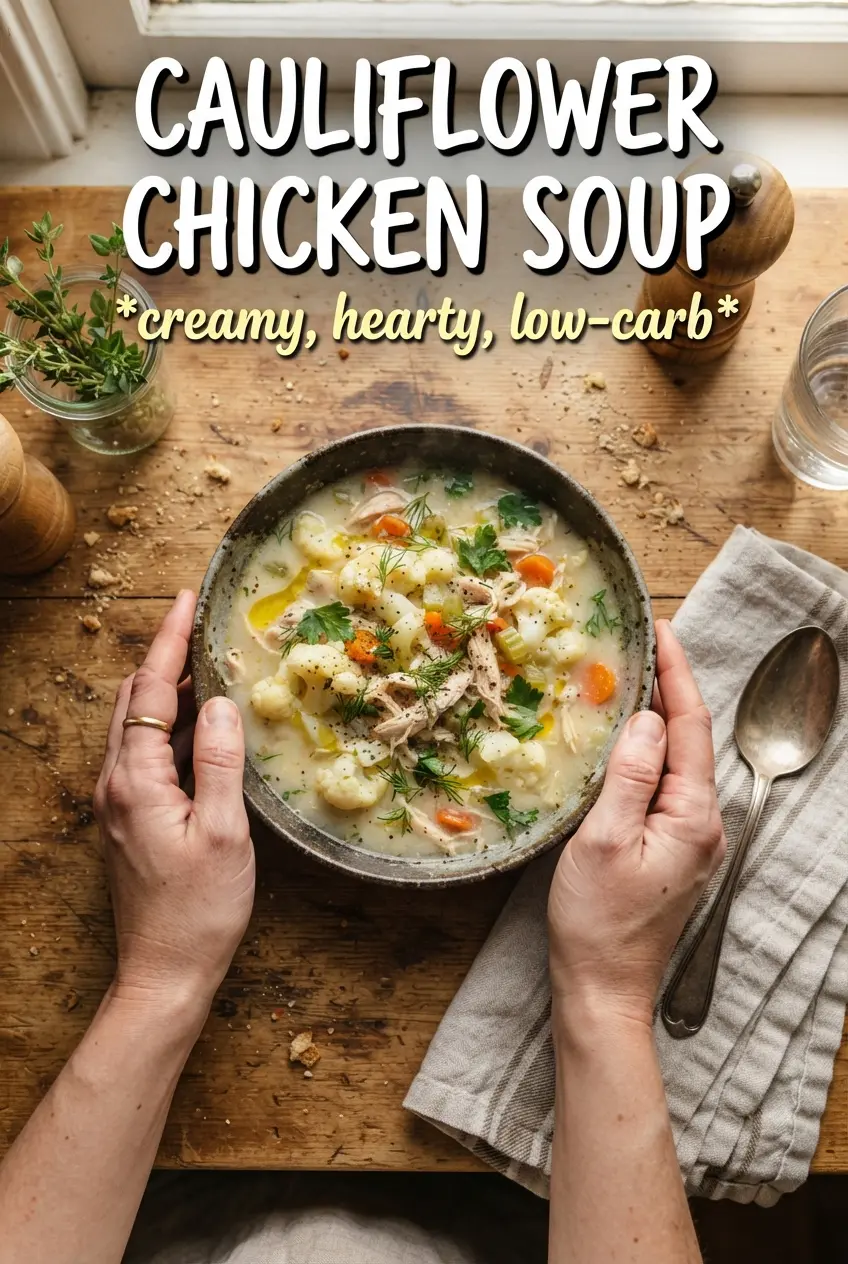
Cauliflower Chicken Soup
Ingredients
Equipment
Method
- Melt the unsalted butter in a large pot over medium heat, then sauté the diced onion for 4 minutes until softened.
- Add the minced garlic and cook for 1 minute, stirring until fragrant and lightly golden.
- Add the diced chicken breast and cook for 4 to 5 minutes until it starts to lose its pink color.
- Pour in the chicken broth, then add the cauliflower florets, garlic powder, and smoked paprika.
- Bring the mixture to a boil, then simmer for 15 to 18 minutes at a steady low boil until the cauliflower is very tender.
- Use an immersion blender to blend about half the soup, leaving some cauliflower chunks for texture.
- Stir in the heavy cream and return to a gentle simmer, keeping it just hot and not aggressively boiling.
- Stir in the shredded cheddar until fully melted and smooth, then season with salt and pepper to taste.
- Serve hot with extra cheddar and chives on top.