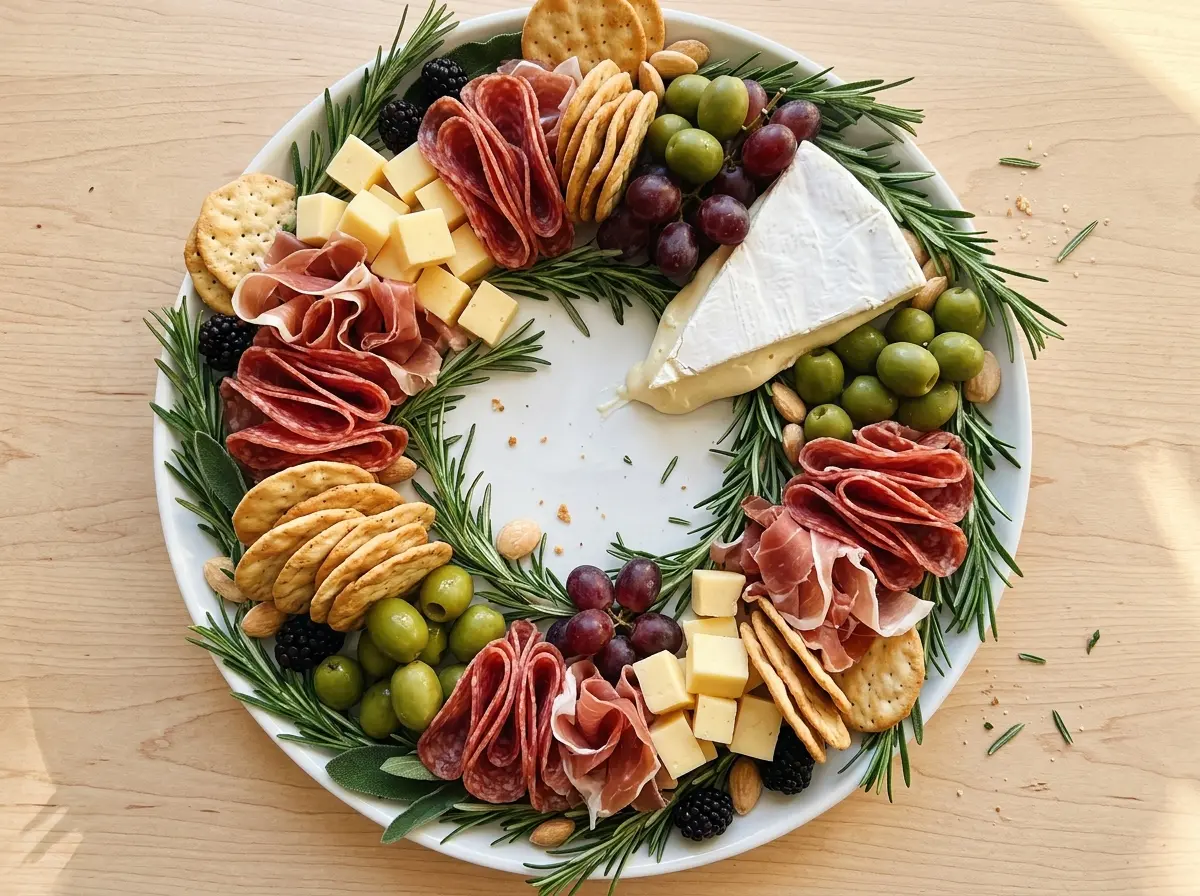
The rosemary ring is the first thing people notice on this platter, but the open space in the middle is what makes it read as a wreath instead of a crowded pile of snacks. I build the Charcuterie Wreath with little clusters of cheese, fruit, and folded salami and prosciutto, leaving enough room between them for each part to stand out.
Fresh rosemary does double duty here: it makes a green border and gives the platter its shape before you add anything else. I like keeping the ingredients in distinct groups instead of scattering them everywhere. The grapes and apricots bring a sweet break between bites of sharp cheddar, creamy Brie, and salty olives, while the crackers stay around the outside where they’re easy to reach.
Kitchen Note
Let the Brie and cheddar stand at room temperature for the full 20 to 30 minutes before serving. Brie is easier to cut into tidy wedges once it has lost its refrigerator chill, and the cheddar keeps its shape in bite-size cubes.
Save this Charcuterie Wreath for a party platter with a fresh rosemary border, creamy Brie, sharp cheddar, and plenty of easy-to-grab bites.
Why a Wreath Platter Looks Better With One Intentional Gap
A ring of ingredients can look crowded fast, especially when every open spot gets filled. Leaving the center open gives the rosemary and food clusters a clear outline, so the platter still reads as a wreath from across the table. It also gives the eye somewhere to rest among all the different colors and shapes.
The 14-inch round platter gives the wreath enough room to curve around the edge without squeezing the crackers and folded meats into the center. I arrange the rosemary first, then use it as a visual guide for distributing the other ingredients around the ring. Keep the clusters distinct rather than blending them together: the Brie wedges look more inviting beside the cheddar cubes than they do buried under fruit, and the small bowl of olives has a defined place of its own. That little bit of breathing room makes the platter easier to serve from, too.
Think of the empty center as part of the design, not a space that needs filling. Once the ring is balanced, stop adding things. The wreath looks more deliberate when its outline stays visible.
How Brie, Sharp Cheddar, and Rosemary Give the Wreath Its Shape

- Brie — Its soft texture contrasts with the firmer cheddar and gives the cheese section variety. Keep the wheel intact until you’re ready to cut wedges; there’s no other ingredient on this platter that quite replaces its creamy character.
- Sharp cheddar — The sharper taste gives the cheese clusters a bolder counterpoint to Brie and the sweet fruit. Bite-size cubes are easy to pick up, and sharp cheddar is the part to keep if you want that distinct savory contrast.
- Fresh rosemary — Fresh sprigs make the wreath-shaped border and bring a fragrant green element to the presentation. Choose sprigs that hold their shape; dried rosemary won’t create the same leafy ring.
- Seedless grapes — They add juicy sweetness and are simple to eat without stopping to remove seeds. Seedless grapes are the practical choice for a grazing platter, and rinsing and drying them before arranging keeps the display neat.
- Pitted mixed olives — Their briny, savory bite breaks up the fruit and cheese. Pitted olives are much easier to eat while mingling; keeping them together in a small bowl contains their liquid.
- Dried apricots — These add a chewy, concentrated fruit note alongside the fresh grapes. Their shape is easy to tuck into gaps, and they don’t need any extra preparation.
- Sliced salami and prosciutto — The two cured meats bring different shapes and savory flavors to the ring. Loose folds give each slice some height; flat slices tend to disappear against the other ingredients.
- Assorted crackers — A mix gives guests a crisp base for cheese and meat. Keep them whole and arrange them around the outside, where they’re easy to reach without covering the wreath’s ingredients.
Assemble the Charcuterie Wreath Without Losing the Ring
Take the Chill Off the Cheese
Remove the Brie and cheddar from the refrigerator and let them stand before serving. Once the cheeses have rested, cut the Brie into wedges and the cheddar into bite-size cubes. Keep the pieces in separate clusters so guests can choose between the two textures. Cutting the cheeses after they have softened slightly makes the Brie easier to portion neatly.
Lay Down the Rosemary Outline
Rinse the rosemary and dry the sprigs thoroughly. Arrange them in a wreath-shaped ring around the edge of a 14-inch round serving platter, leaving an opening in the center. Take a moment to make the ring easy to see before adding the food. Wet sprigs can cling together, so dry them well before they go on the platter.
Build Distinct Clusters Around the Circle
Place the Brie wedges and cheddar cubes in separate clusters around the rosemary ring. Fill the open spaces with seedless grapes and dried apricots, then set the pitted mixed olives in a small bowl within the arrangement. Move around the platter as you add each group so one section doesn’t end up crowded while another looks bare. Keep the center opening visible.
Fold the Meats and Finish With Crackers
Fold the salami and prosciutto loosely, then tuck them around the ring rather than laying them flat. Arrange the crackers around the outside edge. This keeps the crackers easy to grab and leaves the food clusters in view. Serve promptly once the platter is assembled.
Three Ways to Change the Charcuterie Wreath Without Adding Ingredients
Make a meat-free fruit-and-cheese wreath
Leave out the salami and prosciutto, then use the grapes and dried apricots to fill the open spots around the cheeses. The platter becomes lighter and more fruit-forward, without the salty cured-meat contrast. If you need it to meet a specific vegetarian diet, choose cheeses and crackers that fit that requirement.
Turn it into a grazing platter instead of a wreath
Arrange the same ingredients in separate groups across the round platter rather than following a circle. This format is useful when you want each ingredient easy to spot and don’t need the wreath shape. Keep the crackers around the outside so they don’t cover the other clusters.
Make the fruit the visual focus
Arrange the grapes and dried apricots in larger, easy-to-see clusters, with the cheeses and folded meats tucked between them. The platter will look brighter and read as fruit-forward, while still keeping the savory bites within reach. Use the same ingredients and keep the rosemary ring as the border.
Holding and Leftovers
- Refrigerator: Refrigerate leftovers within 2 hours, or within 1 hour if the temperature is above 90°F. Use them within 3 to 4 days.
- Freezer: The assembled wreath doesn’t freeze well. Grapes release moisture as they thaw, and crackers lose their crisp texture.
- Serving: This is a cold platter, so there’s no reheating step. Bring out only what you’ll serve and keep the rest chilled.
Questions That Come Up While Building a Charcuterie Wreath
Charcuterie Wreath
Ingredients
Equipment
Method
- Remove the Brie and cheddar from the refrigerator and let stand at room temperature for 20 to 30 minutes before serving.
- Rinse and thoroughly dry the rosemary.
- Arrange the rosemary sprigs in a wreath-shaped ring around the edge of a 14-inch round serving platter, leaving an opening in the center.
- Cut the Brie into wedges.
- Cut the cheddar into bite-size cubes.
- Arrange the Brie and cheddar in clusters around the ring.
- Fill spaces with the grapes and dried apricots.
- Place the olives in a small bowl and arrange it in a space in the ring.
- Fold the salami and prosciutto loosely and tuck them around the ring.
- Arrange the crackers around the outside.
- Serve promptly.
- Refrigerate leftovers within 2 hours, or within 1 hour if the temperature is above 90°F.