The first sign that fondue is coming together is the way the cheese disappears into the wine instead of sitting in a stretchy pile on top. I used to rush that part and add too much cheese at once; the pot went lumpy before I could stir it smooth. For this Cheese Fondue, I add the finely shredded cheese by the handful and give each addition time to melt before the next one goes in.
Gruyère and Emmentaler make a balanced pair: one brings a savory depth, the other melts into a supple, stretchy sauce. Tossing them with cornstarch first helps the cheese disperse through the wine instead of clumping. Lemon juice adds a little brightness, while kirsch, nutmeg, and black pepper round out the finish without hiding the cheese.
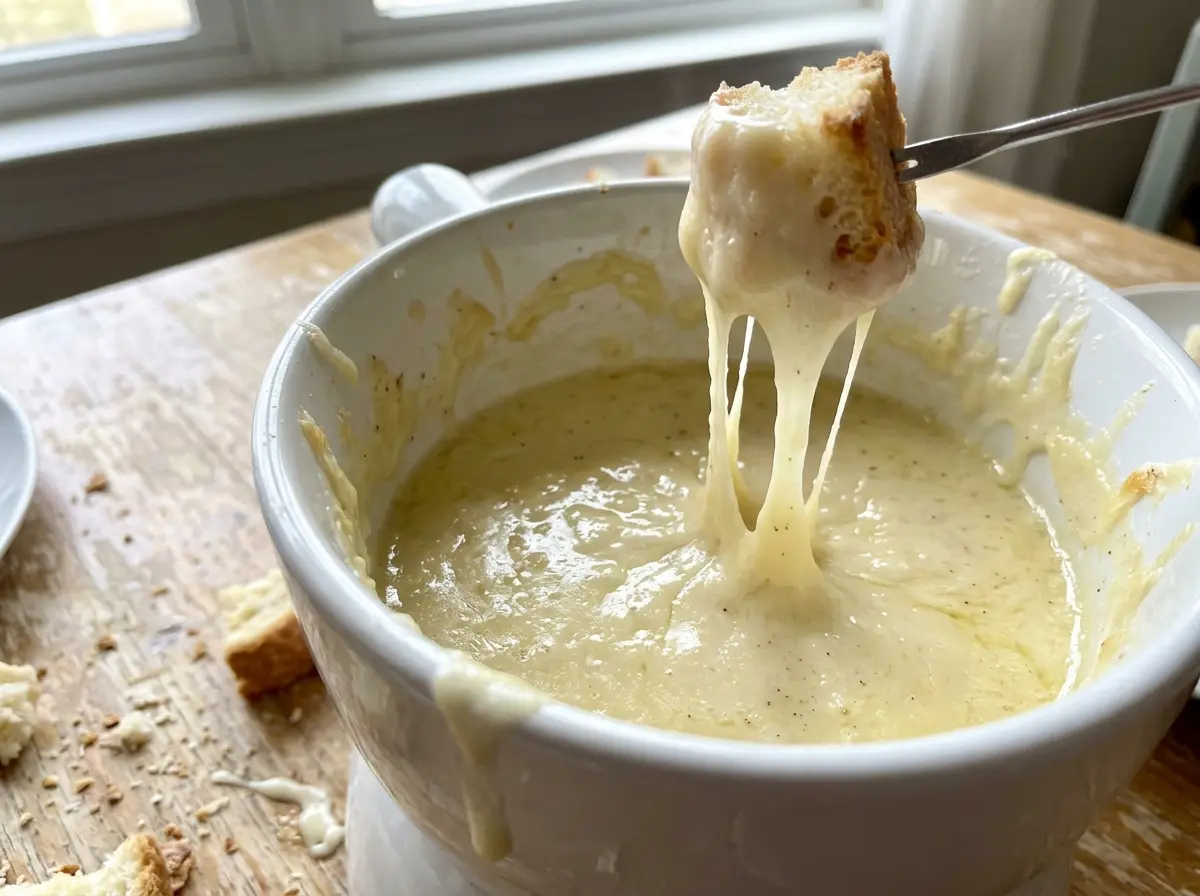
Cut the baguette into sturdy one-inch cubes, warm the fondue pot before you fill it, and keep the finished fondue at a low flame. The result should be smooth enough to coat each piece of bread, with a gentle warmth that keeps the cheese flowing. Set the bread around the pot and serve it right away.
Kitchen Note
Rub the cut garlic over the inside of the saucepan, then discard it instead of leaving it in the wine. You’ll get a delicate garlic aroma without having to fish a softened clove out of the finished fondue.
Save this Cheese Fondue for a cozy shared meal, with smooth Gruyère and Emmentaler and bread ready for dipping.
Why the Cheese Needs a Cornstarch Coat Before It Hits the Wine
Fondue can turn stringy or lumpy when the cheese is added too quickly or the pot gets too hot. Coating the shredded cheese with cornstarch gives the pieces a light, even dusting before they meet the liquid. As the cheese melts, that starch helps thicken the wine into a cohesive sauce rather than leaving separate wisps of cheese behind.
Take the time to toss the cheeses thoroughly in the bowl. If you see dry pockets of cornstarch, keep tossing until the shreds look evenly coated; concentrated patches can leave the finished fondue uneven. Then add the cheese a handful at a time, stirring constantly and waiting for each addition to melt before adding more. A gentle simmer gives the cheese time to blend into the liquid. Boiling is not a shortcut: high heat can make the mixture seize or separate before it has a chance to turn smooth.
The gradual approach also gives you a useful visual cue. The mixture may look loose at first, then turn glossy and unified as the last handfuls melt in. Keep stirring through that change rather than trying to correct the texture with extra ingredients.
How Gruyère, Emmentaler, and Dry Wine Shape the Fondue

- Gruyère and Emmentaler — Together, these cheeses bring the savory, nutty character and melting texture that define the pot. Finely shred them so they melt quickly and evenly; a block you shred at home is a dependable choice, while pre-shredded cheese may have a coating that keeps the strands from blending as smoothly. Keep the two-cheese pairing rather than swapping in an unrelated melting cheese.
- Cornstarch — This is more than a thickener at the end; tossing it with the cheese helps the shreds melt into the wine without clumping. Measure and distribute it evenly through the cheese instead of sprinkling it directly into the saucepan.
- Dry white wine and lemon juice — The wine supplies the liquid base, and the lemon juice brings acidity that keeps the rich cheese from tasting heavy. Choose a dry white wine you’d be comfortable drinking; sweet wine changes the balance, and cooking wine can taste noticeably salty or harsh. The lemon juice is a small but useful counterpoint, so don’t leave it out if you want the same bright finish.
- Kirsch, nutmeg, and black pepper — Kirsch gives the finished fondue its subtle cherry note, while nutmeg and pepper add warmth and a little savory lift. Use freshly ground black pepper for its sharper aroma, and keep the nutmeg measured so it supports the cheese instead of taking over.
- Baguette — A baguette cut into one-inch cubes gives you a manageable dipper with enough structure to carry the melted cheese. Cut the pieces evenly so they’re easy to arrange around the pot and to pick up while serving.
Build the Fondue in Four Calm Stages
Coat the Shredded Cheese Evenly
Put the finely shredded Gruyère and Emmentaler in a medium bowl and toss them with the cornstarch until every strand has a light coating. Break up any compacted cheese as you toss so the starch doesn’t sit in little clumps. Set the bowl near the stove before you start warming the wine; once the liquid is ready, you’ll want the cheese close at hand.
Warm the Garlic-Scented Wine
Rub the cut sides of the halved garlic clove around the inside of a 2-quart heavy saucepan, then discard the clove. Add the dry white wine and lemon juice, and bring them to a gentle simmer over medium heat, about 3 to 5 minutes. Look for small, steady bubbles rather than a rolling boil. If the surface is bubbling hard, lower the heat before you add any cheese.
Melt the Cheese a Handful at a Time
Add a handful of the coated cheese and stir constantly, letting it melt before adding the next handful. Continue this way until all the cheese has melted and the fondue looks smooth, about 5 to 8 minutes. Keep the liquid at a gentle simmer while you stir; a fast boil can leave you with a greasy or grainy texture instead of a unified sauce. If a few strands are still visible, keep stirring gently rather than turning up the heat.
Season, Transfer, and Serve
Stir in the kirsch, nutmeg, and black pepper once the cheese is smooth. Transfer the fondue to a warmed fondue pot set over a low flame, and arrange the baguette cubes around it. Serve immediately, keeping the fondue warm without letting it bubble. The sauce should stay fluid enough to cling to a dipped cube, not simmer hard at the table.
Two Simple Ways to Adapt the Pot
Make a Half Batch for Two
Halve every fondue ingredient and the baguette to make a smaller amount for two. Keep the same cheese pairing and gradual melting method; the smaller quantity may come together sooner, so watch the texture instead of relying only on the full-batch timing.
Leave Out the Kirsch
Omit the kirsch if you don’t want its light cherry note. The fondue will still have the dry white wine base, but the finish will taste less aromatic and a little more directly of cheese; keep the nutmeg and black pepper for their own gentle warmth.
Storage and Reheating
- Refrigerator: Store leftover fondue in a covered container for 3 to 4 days. It will firm up as it chills, and the texture may be less silky after reheating. Keep the baguette separate so it doesn’t soften in the sauce.
- Freezer: Freezing isn’t a good choice for this fondue; the cheese sauce is likely to separate or turn grainy as it thaws.
- Reheating: Warm the fondue slowly in a saucepan over low heat, stirring often as it loosens. High heat can make the cheese oily or grainy, so don’t rush it or let it bubble.
Questions That Come Up While Making Cheese Fondue
Cheese Fondue
Ingredients
Equipment
Method
- Toss the Gruyère and Emmentaler with the cornstarch in a medium bowl until evenly coated.
- Rub the cut sides of the garlic over the inside of a 2-quart heavy saucepan, then discard the garlic.
- Add the wine and lemon juice to the saucepan.
- Bring to a gentle simmer over medium heat, about 3 to 5 minutes.
- Add the cheese mixture a handful at a time, stirring constantly and allowing each addition to melt before adding more, until the fondue is smooth, about 5 to 8 minutes.
- Keep it at a gentle simmer and do not let it boil.
- Stir in the kirsch, nutmeg, and black pepper.
- Transfer the fondue to a warmed fondue pot set over a low flame.
- Arrange the baguette cubes around the fondue pot.
- Serve immediately, keeping the fondue warm without letting it bubble.