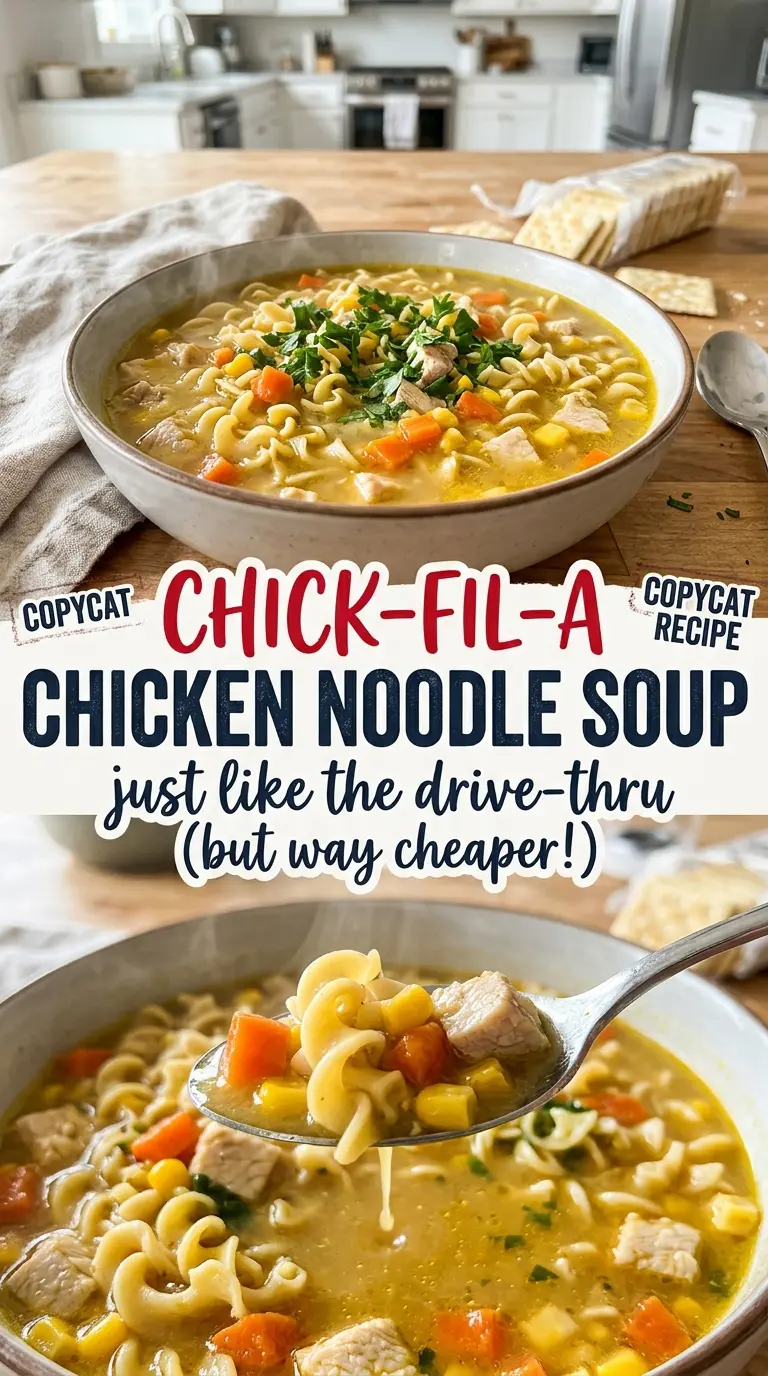
Clear broth, tender vegetables, and little egg noodles make this soup feel light without tasting thin. The chicken stays in neat, bite-size pieces, the corn adds a little sweetness, and the seasoning is restrained enough that the bowl still tastes like the familiar copycat version people go looking for. It’s the kind of soup that disappears fast because it’s comforting without being heavy.
The detail that matters most here is the chicken. Finely diced chicken breast gives you a cleaner bite in every spoonful and keeps the soup closer to the texture people expect from Chick-fil-A’s version. Shredded chicken can work, but it changes the whole feel of the bowl and makes the soup look and eat more rustic than the original.
The broth stays simple on purpose. Garlic, thyme, parsley, onion, carrots, celery, and a little corn do the work, and the noodles go in at the end so they don’t drink up half the pot before you serve it. A few small choices make this one taste like the restaurant version instead of a generic chicken noodle soup.
The broth stayed clear and the noodles held their shape even after sitting on the stove for a bit. Dicing the chicken small like you suggested made every bite feel just like the restaurant soup my kids ask for.
Save this Chick-Fil-A chicken noodle soup for the nights when you want that clear, cozy broth with tender noodles and finely diced chicken.
The Trick to Copycat Chicken Noodle Soup That Still Tastes Clean, Not Heavy
The biggest mistake with chicken noodle soup is letting it turn muddy. That usually happens when the broth gets overloaded with too much seasoning, the vegetables cook down too far, or the noodles simmer too long and starch the whole pot. This version stays bright because the vegetable base is cooked just until tender, and the broth stays simple enough that the chicken and corn can still stand out.
Another thing that changes the final bowl is the cut of the chicken. Diced chicken sits in the broth like the restaurant version and gives you a cleaner spoonful than shreds that fall apart into threads. If your soup ever tastes like the noodles swallowed everything else, it usually means the pasta went in too early or the broth started too low and never really came back to a proper simmer.
What Each Ingredient Is Actually Doing in This Soup
The broth carries the whole soup, so use one that tastes good before anything else goes in. If your broth is bland, the finished soup will be bland no matter how careful you are with the herbs. A low-sodium broth gives you more control, especially since the noodles and chicken both need seasoning from the pot.
- Cooked chicken breast — Dice it finely instead of shredding it. Small cubes keep the soup neat and closer to the fast-food version, and they warm through quickly without overcooking. Rotisserie chicken works if that’s what you have, but trim it into small pieces so it doesn’t turn stringy.
- Carrots, celery, and onion — This trio builds the base without making the broth heavy. Dice them small so they soften in the 10-minute simmer and don’t dominate each spoonful. Larger chunks read more like homemade stew than copycat soup.
- Corn kernels — The corn is what gives this soup that subtle sweetness people remember. Fresh, frozen, or canned all work here. If you use frozen, add it straight from the freezer; no need to thaw first.
- Egg noodles — These are best added at the end because they keep cooking in the hot broth even after the burner is off. Small pasta works too, but egg noodles give you the closest texture and the classic look.
- Dried parsley and thyme — These herbs keep the soup familiar without making it taste like a herbal broth. Dried works fine here because the soup cooks long enough for it to bloom. Fresh herbs can be used, but they’ll make the flavor a little greener and less like the chain version.
Building the Soup in the Right Order
Starting with the Broth
Bring the broth and water to a full boil before the vegetables go in. That first burst of heat matters because it gets the onion, carrot, and celery cooking evenly instead of slowly steeping into a dull, overcooked base. If the pot starts only lukewarm, the vegetables soften unevenly and the broth loses its clean, clear look.
Cooking the Vegetables Until They Still Have Structure
Add the carrots, celery, onion, garlic, parsley, thyme, and garlic powder, then let them simmer for about 10 minutes. You want the carrots just tender, not mushy, and the celery should lose its raw edge without collapsing. If the vegetables go too far, the soup turns cloudy and the final texture feels tired before the noodles even go in.
Warming the Chicken and Corn
Stir in the diced chicken and corn and simmer for 5 minutes, just long enough for everything to heat through and blend into the broth. Since the chicken is already cooked, this stage is about warming, not cooking from scratch. If you leave it on too long, the chicken dries out and the corn loses its pop.
Adding the Noodles at the End
Drop in the noodles last and cook until tender, usually 6 to 8 minutes. Taste one a minute before the package says it should be done; you want them cooked through but still springy, because they’ll keep softening in the hot soup. The most common mistake here is letting the noodles go past tender, which thickens the broth and pulls the whole soup out of balance.
What to Change When You Want a Different Version
Make it gluten-free
Use a gluten-free small pasta that holds its shape in broth. Rice-based noodles can work, but they soften faster than egg noodles, so keep a close eye on the pot and pull it off the heat the moment they turn tender. The broth and vegetable base stay the same.
Use leftover rotisserie chicken
Rotisserie chicken makes this even faster, and it works well as long as you dice it small. Dark meat will give the broth a little more richness, while breast meat keeps it closer to the classic copycat flavor. Skip big torn chunks; they change the texture and make the soup feel heavier.
Leave out the corn
You can leave out the corn if you want a more traditional chicken noodle soup, but you’ll lose the faint sweetness that makes this taste like the chain version. If you skip it, add a pinch more parsley and a small extra splash of broth so the soup still tastes rounded instead of plain.
Storage and Reheating
- Refrigerator: 3 to 4 days. The noodles will continue to absorb broth, so the soup gets thicker as it sits.
- Freezer: It freezes better without the noodles. Freeze the soup base, then cook fresh noodles when you reheat it for the best texture.
- Reheating: Warm it gently on the stove over medium-low heat. If it’s too thick, add a splash of broth or water. High heat can overcook the noodles and make the chicken dry.
Answers to the Questions Worth Asking

Chick-Fil-A Chicken Noodle Soup (Copycat)
Ingredients
Equipment
Method
- Bring the chicken broth and water to a boil in a large pot, then keep it at a steady boil. Visual cue: you should see active bubbles across the surface before you add anything else.
- Add the carrots, celery, onion, garlic, dried parsley, dried thyme, and garlic powder to the boiling broth. Reduce to a simmer and cook for 10 minutes, until the vegetables are just tender. Visual cue: carrots should be pierced easily with a fork but still hold their shape.
- Add the finely diced chicken and the corn kernels, then simmer for 5 minutes. Visual cue: the broth will look slightly golden and the chicken pieces will be heated through without turning stringy.
- Add the egg noodles and cook for 6-8 minutes, until tender. Visual cue: noodles will soften and begin to float and spread through the broth.
- Season with salt and pepper to taste, then stir well. Visual cue: the flavor should feel balanced and the broth should taste clean, not heavy.