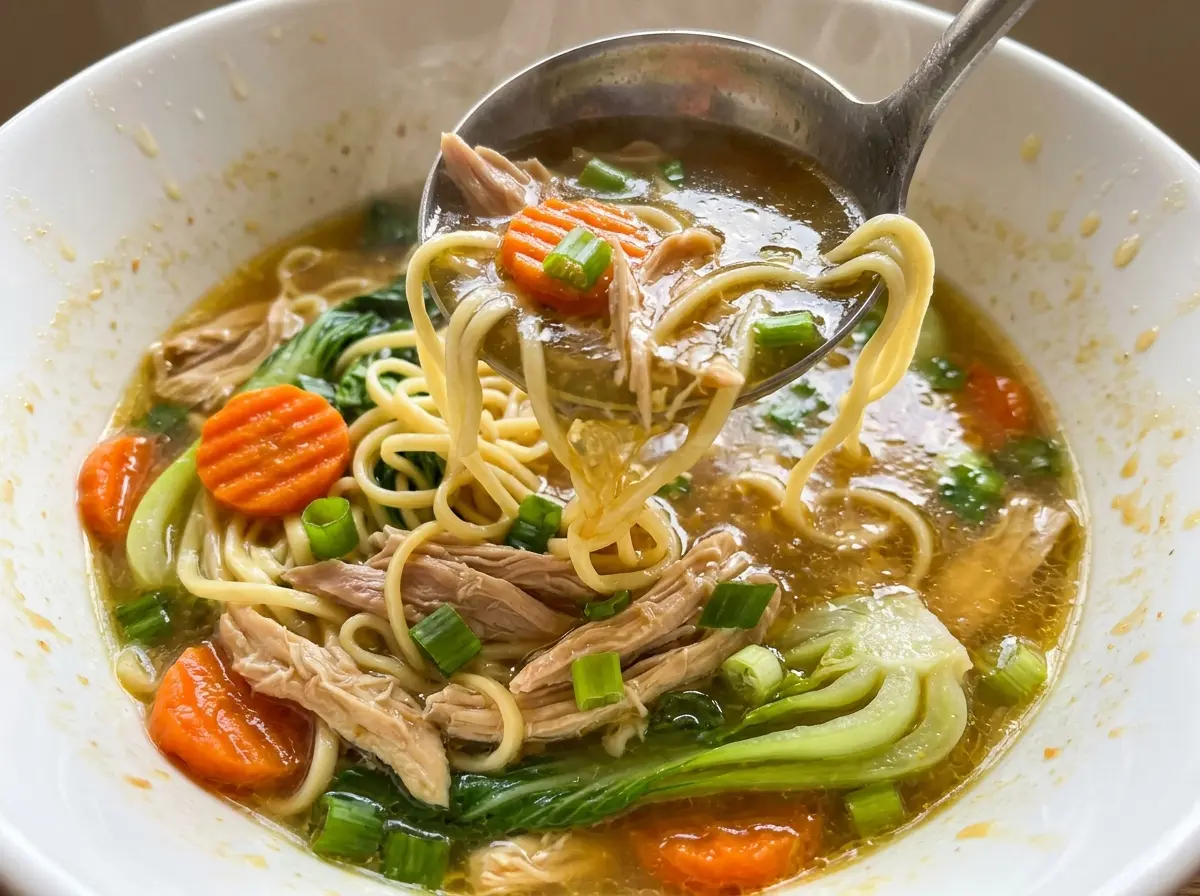
The shiitake caps start to soften in the pot, then ginger and garlic hit the warm oil and the whole kitchen smells savory before the broth even goes in. I like that first few minutes because the mushrooms have time to deepen before they’re surrounded by liquid. This Chinese chicken noodle soup builds its flavor in that order, then simmers boneless chicken thighs right in the broth.
Cooking the noodles in their own pot is one small choice that makes a noticeable difference: the broth stays clear and the noodles keep their springy bite. The chicken is easy to shred once it’s cooked through, and the bok choy needs only a short simmer to keep its stems crisp-tender. Spoon the rich broth, tender chicken, greens, and noodles together, then finish each bowl with scallions.
Kitchen Note
Slice the scallions into thin rounds before you start ladling. They scatter over the noodles and broth instead of landing in a few big pieces, so each bowl gets a little fresh onion bite.
Save this Chinese chicken noodle soup for a cozy bowl with savory shiitakes, tender chicken, and noodles that stay springy.
Why the Noodles Stay Out of the Soup Pot
It’s one extra pot, but cooking Chinese egg noodles in water instead of in the broth protects the texture of both. Noodles release starch as they cook; in the soup pot, that starch can make the broth cloudy and thicker than intended. The noodles also keep taking up liquid as they sit, which leaves less broth in the pot and softer noodles in the bowl.
Cooking them separately lets you stop when they’re tender, then add them to each bowl right before serving. It also gives you control over the balance: a little more broth, a little more noodle, or an even split without fishing strands out of the soup pot. The broth stays savory and light, while the noodles hold their own instead of disappearing into it. That distinction matters most if the bowls won’t be eaten all at once, but it’s useful even for a quick dinner.
What the Shiitakes, Chicken Thighs, and Sesame Oil Each Bring

- Shiitake mushrooms — Their caps give the broth a deep, earthy savoriness that the other vegetables don’t provide. Choose firm caps without slimy spots; grocery-store shiitakes work well here. Remove the stems and slice the caps thinly so they soften evenly. If you can’t find shiitakes, leaving them out makes a lighter soup, but no other ingredient in this pot replaces their distinct flavor.
- Fresh ginger and garlic — Minced fresh ginger brings a clean warmth, while garlic rounds out the broth. Freshness matters more than a premium brand, and mincing them finely helps them cook quickly without leaving large raw-tasting pieces. Add them after the mushrooms have softened so they spend only a short time in the hot oil.
- Low-sodium chicken broth and soy sauce — The broth is the soup’s foundation; soy sauce adds a concentrated savory, salty note. Low-sodium broth leaves room for that soy flavor without letting the soup become overly salty. A good everyday carton is fine, but check that it’s low-sodium rather than assuming all chicken broth is interchangeable.
- Boneless, skinless chicken thighs — Thighs stay tender through the simmer and pull apart easily once cooked. Their forgiving texture is a good match for soup, where the chicken has to cook in liquid before being shredded. Keep the pieces whole while they simmer so they’re easy to lift out and shred on a cutting board.
- Baby bok choy — The sliced stems give the bowl a gentle crunch, while the leaves soften into the broth. Slice crosswise so the stems and leaves are easy to eat with noodles. Fresh, crisp bok choy makes the biggest difference in texture; there’s no need to seek out an expensive variety.
- Dried Chinese egg noodles and toasted sesame oil — The noodles bring a tender, springy bite, so check their package directions as well as the texture while they cook. Toasted sesame oil is a finishing touch, not a cooking oil; its nutty aroma is most noticeable when stirred in at the end. Use a toasted version rather than plain sesame oil for that characteristic finish.
Build the Broth First, Then Finish Each Bowl
Soften the shiitakes before adding liquid
Heat 1 tablespoon neutral oil in a 6-quart pot over medium heat. Add 8 ounces of shiitake caps, with the stems removed and caps thinly sliced, and cook for 5–7 minutes, stirring occasionally, until softened. Give the mushrooms time to soften before moving on; adding the broth too early skips the chance for them to cook in the oil. Stir in 1 tablespoon minced fresh ginger and 3 minced garlic cloves, then cook for 30 seconds.
Simmer the thighs gently in the seasoned broth
Add 8 cups low-sodium chicken broth, 2 tablespoons soy sauce, and 1 pound boneless, skinless chicken thighs. Bring the pot to a gentle boil, then reduce the heat and simmer for 15–20 minutes. Keep the bubbles calm rather than letting the broth boil hard. Check the thickest part of each thigh with a thermometer; each one should reach 165°F before you take it out.
Cook the greens while you shred the chicken
Transfer the chicken to a cutting board, then add 1 pound sliced baby bok choy to the pot. Simmer for 3–4 minutes, until the stems are crisp-tender rather than soft. While the greens cook, shred the chicken with two forks. Return it to the pot with 1 teaspoon toasted sesame oil and stir until heated through.
Boil the noodles and ladle the bowls
Bring 3 quarts water to a boil in a 5-quart pot, add 8 ounces dried Chinese egg noodles, and cook for 4–6 minutes or according to the package directions, until tender. Drain the noodles, then divide them among four bowls. Ladle the soup over the noodles and top with the thinly sliced scallions. Drain the noodles well so excess cooking water doesn’t dilute the broth in the bowls.
Two Ways to Change the Bowl Without Losing Its Character
Make it a noodle-free chicken soup
Leave out the egg noodles and ladle the chicken, shiitakes, bok choy, and broth straight into bowls. The result is lighter and more broth-forward, with the vegetables and shredded chicken taking center stage. The soup itself cooks the same way; only the separate noodle pot and final noodle portioning disappear.
Shift the vegetables toward shiitake
For a more earthy bowl, use more shiitake mushrooms and less bok choy while keeping both in the soup. The broth will lean further into the mushrooms’ savory flavor, and each bowl will have less of the crisp-tender green bite. Keep the bok choy in the mix so the finished soup still has a fresh vegetable contrast.
Storage and Reheating
- Refrigerator: Store the soup and noodles separately for 3–4 days. The bok choy will soften as it sits, and the noodles lose some spring if stored in the broth.
- Freezer: Freeze the soup without the noodles in an airtight container for up to 2–3 months. The chicken and broth freeze well, though the bok choy will be softer after thawing.
- Reheating: Warm the soup on the stovetop until it reaches 165°F throughout, then portion it over the noodles. Avoid simmering the noodles in the soup while reheating; they’ll turn soft and absorb broth.
Questions That Come Up When Making Chinese Chicken Noodle Soup
Chinese Chicken Noodle Soup
Ingredients
Equipment
Method
- Heat the oil in a 6-quart pot over medium heat. Add the mushrooms and cook for 5–7 minutes, stirring occasionally, until softened.
- Stir in the ginger and garlic and cook for 30 seconds.
- Add the broth, soy sauce, and chicken; bring to a gentle boil, then reduce the heat and simmer for 15–20 minutes, until the thickest part of each thigh registers 165°F.
- Transfer the chicken to a cutting board and add the bok choy to the pot. Simmer for 3–4 minutes, until the stems are crisp-tender.
- Shred the chicken and return it to the pot with the sesame oil. Stir until heated through.
- Bring the water to a boil in a 5-quart pot.
- Add the noodles and cook for 4–6 minutes or according to the package directions, until tender. Drain.
- Divide the noodles among four bowls.
- Ladle the soup over the noodles and top with the scallions.