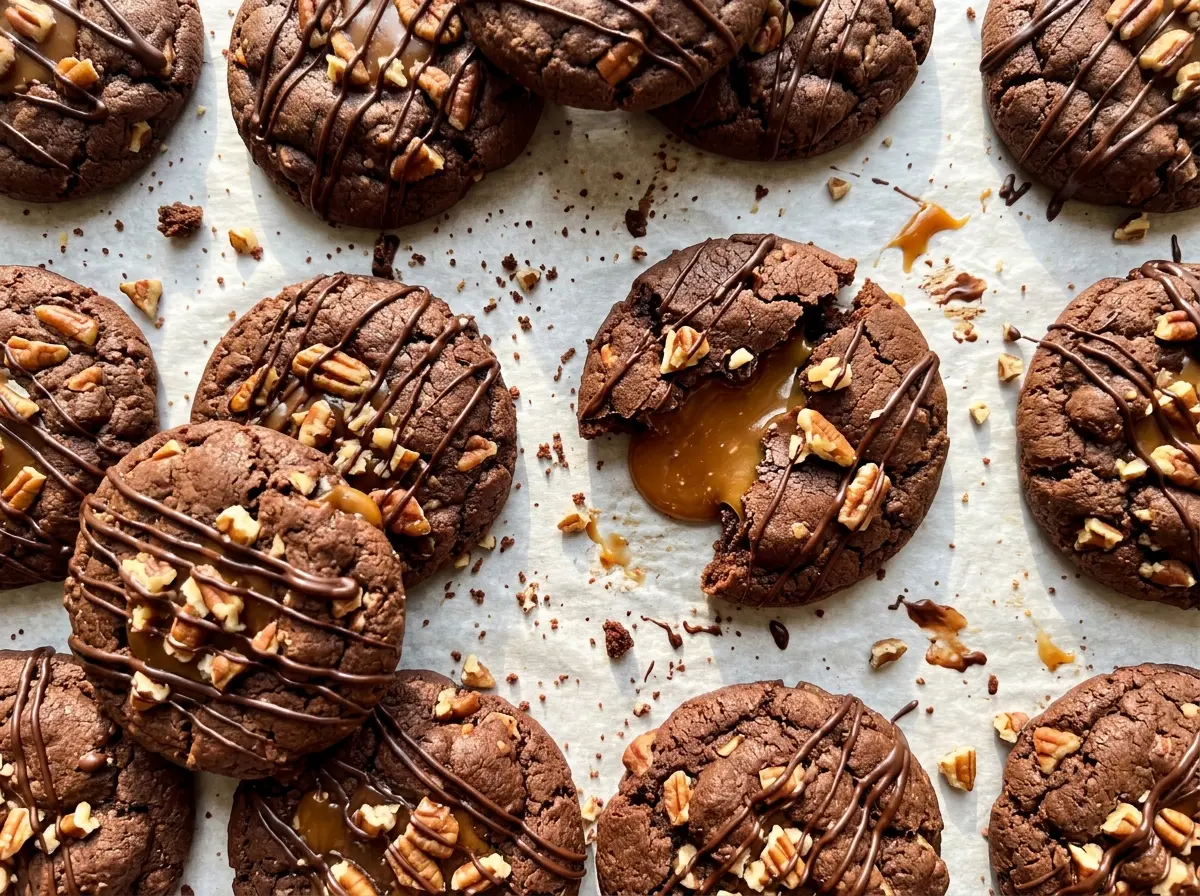
That little well in the center of a chocolate cookie can disappear while it bakes, leaving nowhere for the caramel to go. I press the centers deeply before the tray goes in, then reshape them while the cookies are still warm. That small bit of timing gives these Chocolate Turtle Cookies room for a generous spoonful of caramel without turning them into flat chocolate rounds.
The dough is soft when the butter and sugar are first creamed, so I give it the full 30-minute chill before rolling. The rest firms it enough to shape cleanly and helps each cookie keep its round, thumbprint-style form in the oven. A pecan coating adds a crisp edge around the cocoa-rich cookie, with caramel and a fine chocolate drizzle tucked into the middle.
Kitchen Note
Let the cookies cool completely before you drizzle on the chocolate. Warm cookies soften the ribbons as they land, while a cool surface lets the drizzle keep its shape as it sets.
Save these Chocolate Turtle Cookies for a bake day when you want crisp pecans, soft chocolate centers, caramel filling, and a neat chocolate finish.
Why Chilling Makes These Thumbprints Easier to Shape
Softened butter makes a tender cookie, but dough that goes straight from mixing to shaping can feel sticky and spread before its edges have time to set. The chill gives the butter time to firm back up. After 30 minutes, the dough is easier to roll into even balls and less likely to slump while you press in the centers.
That consistency matters because every cookie needs a well deep enough to hold its filling. If the dough is too soft, your finger or spoon can drag it instead of making a clean indentation, and the sides may close in as the cookies bake. Keep the dough covered while it chills, and work in small batches if your kitchen is warm. You want pliable dough that rolls smoothly, not dough that sticks to your palms or feels hard straight from the refrigerator.
The finished cookies should have defined edges, not a perfectly smooth, flat top. A little texture around the center gives the caramel a place to settle and keeps the pecan-coated rim visible once the chocolate goes on.
What the Cocoa, Egg, and Pecans Each Bring to the Cookie

- Unsweetened cocoa powder — It gives the dough its chocolate flavor without adding the sweetness of a cocoa drink mix. Use unsweetened cocoa, either natural or Dutch-process; Dutch-process will give the cookies a darker, mellower cocoa taste.
- Egg, separated — The yolk enriches and binds the dough, while the lightly beaten white makes a tacky surface for the chopped pecans to cling to. Keep the two parts separate so each can do its job.
- Pecans — Finely chopped pieces coat the outside more evenly than large chunks and are less likely to fall off when you move the cookies. Walnuts are a practical swap if that’s what you have; they bring a slightly more assertive, earthy flavor.
- Caramel bits and heavy cream — The cream helps the bits melt into a spoonable filling instead of a stiff lump. Caramel bits are convenient here because they melt together evenly in short microwave bursts.
- Semisweet chocolate chips and neutral oil — The oil loosens the melted chocolate so it can be drizzled in fine ribbons. Use a neutral-tasting oil, such as canola or vegetable oil, so it doesn’t compete with the chocolate.
From Soft Dough to Neat Caramel Centers
Cream the Butter, Then Mix Just Until Combined
Beat the softened butter and granulated sugar until the mixture looks light and fluffy, about 2 minutes. Add the egg yolk and vanilla, then beat until combined. Whisk the flour, cocoa, and salt in a separate bowl so the cocoa is evenly distributed before it meets the butter mixture. Mix the dry ingredients in just until no dry streaks remain; continuing to beat after that can make the cookies tougher.
Chill and Shape the Dough
Cover the dough and chill it for 30 minutes. While it rests, lightly beat the egg white in one shallow bowl and put the finely chopped pecans in another. Roll the dough into 1-tablespoon balls, dip each ball in egg white, and roll it through the pecans until coated. Arrange 12 cookies on each parchment-lined baking sheet, leaving about 2 inches between them, then press a deep indentation into each center.
Bake Until the Edges Set
Bake at 350°F for 10–12 minutes, rotating the baking sheets halfway through so the cookies bake evenly. Look for edges that appear set; the centers will still be soft when the pans come out. Gently press the indentations again while the cookies are warm, then leave them on the baking sheets for 5 minutes before transferring them to a rack. The short rest gives the cookies time to firm enough to move without breaking.
Fill with Caramel and Finish with Chocolate
Microwave the caramel bits and heavy cream in a microwave-safe bowl in 20-second bursts, stirring between each burst, until the mixture is smooth. Spoon about 1 teaspoon into each indentation. In a clean microwave-safe bowl, melt the chocolate chips and neutral oil in the same 20-second-burst rhythm, stirring between bursts until smooth. Drizzle the chocolate over the cookies and leave it to set for about 20 minutes.
Three Ways to Change Up the Pecan-and-Caramel Finish
Use Walnuts Instead of Pecans
Swap the finely chopped pecans for the same amount of finely chopped walnuts. They’ll coat the dough in the same way, with a slightly deeper, earthier nut flavor.
Make the Drizzle More Bittersweet
Use dark chocolate chips in place of semisweet chips and keep the neutral oil. The darker chocolate gives the sweet caramel a more pronounced contrast without changing the filling.
Make a Gluten-Free Batch
Replace the all-purpose flour with a cup-for-cup gluten-free baking blend that includes xanthan gum. For the finished cookies to be gluten-free, choose gluten-free caramel bits and chocolate chips too; the cookies may be a little more delicate than the wheat-flour version.
Storage and Reheating
- Refrigerator: Store filled cookies in an airtight container for up to 5 days. The cookies and caramel will firm up when cold; let them sit at room temperature before serving.
- Freezer: For the best texture, freeze the baked, unfilled cookies in an airtight container with parchment between layers for up to 2 months. Thaw completely, then add the caramel and chocolate.
- Reheating: These cookies don’t need reheating. Avoid microwaving them once topped, since the caramel can run and the chocolate drizzle will melt.
Questions That Come Up When Baking Chocolate Turtle Cookies
Chocolate Turtle Cookies
Ingredients
Equipment
Method
- Heat the oven to 350°F.
- Line two baking sheets with parchment paper.
- In a large bowl, beat the butter and sugar until light and fluffy, about 2 minutes.
- Beat in the egg yolk and vanilla until combined.
- In a separate bowl, whisk together the flour, cocoa powder, and salt.
- Mix the dry ingredients into the butter mixture just until no dry streaks remain.
- Cover and chill the dough for 30 minutes.
- Lightly beat the egg white in a shallow bowl.
- Place the pecans in a second shallow bowl.
- Roll the dough into 1-tablespoon balls.
- Dip each ball in egg white.
- Roll each ball in pecans to coat.
- Arrange 12 cookies on each baking sheet, about 2 inches apart.
- Press a deep indentation into the center of each cookie.
- Bake for 10–12 minutes, rotating the sheets halfway through, until the cookies are set at the edges.
- Gently press the indentations again while the cookies are warm.
- Cool the cookies on the sheets for 5 minutes before transferring to a rack to cool completely.
- Microwave the caramel bits and heavy cream in a microwave-safe bowl in 20-second bursts, stirring between bursts, until smooth.
- Spoon about 1 teaspoon into each cookie indentation.
- Microwave the chocolate chips and oil in a clean microwave-safe bowl in 20-second bursts, stirring between bursts, until smooth.
- Drizzle the chocolate over the cookies.
- Let the cookies set for about 20 minutes.