When I slice a cinnamon roll log, the filling tends to press toward the open end unless the dough is rolled snugly and the seam is pinched shut. That small detail keeps the cinnamon-sugar swirl where it belongs, so every slice has a defined spiral. These Christmas cinnamon rolls bake up golden in a 9×13-inch dish and get a warm layer of caramel cream cheese icing right before serving.
The dough gets two rises: first as one ball, then again after it’s filled and cut. I let the dough become visibly puffy at both stages instead of rushing it because the clock says it’s time. The result is a soft, tender roll with cinnamon tucked through the center and a creamy icing that settles into the warm swirls.
Kitchen Note
Give the baked rolls their full 10-minute rest before icing them. They’ll still be warm, but the icing won’t slide straight off the top into the bottom of the pan.
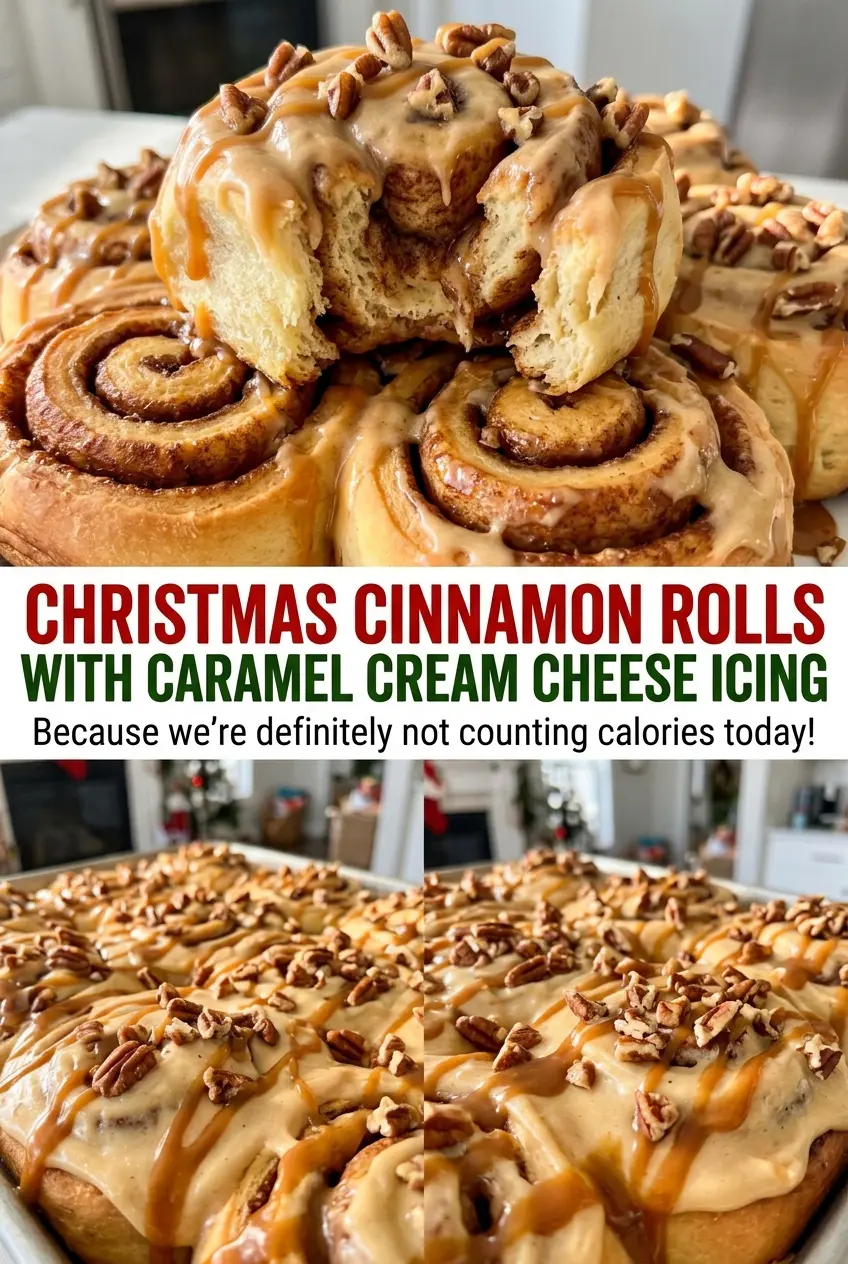
Save these Christmas cinnamon rolls with caramel cream cheese icing for a batch of soft spirals and a warm caramel finish.
Why the Second Rise Matters as Much as the First
The dough has to recover after you roll it out, spread it with butter, and cut it into individual spirals. That’s the job of the second rise: the rolls become puffy again before they go into the oven, rather than baking while compressed from shaping. If you skip that rest or cut it short, the centers can bake up tighter and less tender.
Use the visual cue along with the timing. The first rise should take 1 to 1 1/2 hours in a warm place, but the dough needs to double. After shaping, allow 30 to 45 minutes and look for rolls that have visibly puffed in the dish. A cooler kitchen may slow either rise, so follow the dough’s appearance instead of forcing it to match the shortest time. The final 20 minutes of the second rise are a good time to preheat the oven; that way, the oven is ready as the rolls finish proofing.
This two-stage rise also makes the work easier to pace. The dough can rest while you prepare the filling, and the shaped rolls have their own short rest before baking. Keeping those stages separate gives the yeast time to do its work without asking the dough to rise while it’s being handled.
What the Dough, Filling, and Icing Each Need
- Whole milk and active dry yeast — The milk gives the dough richness, while the yeast creates its rise. Warm the milk to the specified range before adding the yeast; milk that’s too hot can keep the yeast from foaming. Active dry yeast is the one used here, so I don’t recommend swapping in a different leavener.
- Eggs and butter — Room-temperature eggs blend into the dough more evenly, and dividing the butter matters: melted butter goes into the dough while softened butter spreads over the rolled rectangle. The softened portion should spread without tearing the dough; melted butter would run into the filling instead.
- All-purpose flour — It gives the rolls enough structure to hold their spiral while keeping the dough tender. Add extra only for dusting the work surface; packing more flour into the dough can make it stiff. The dough should stay slightly tacky after kneading, not dry.
- Light brown sugar and cinnamon — Brown sugar brings a moist, rich filling, and ground cinnamon gives the rolls their familiar warm center. Break up any hard brown-sugar lumps before mixing so the filling distributes evenly. Cinnamon is the defining spice here, so there isn’t a direct replacement in this version.
- Cream cheese and caramel sauce — Softened cream cheese is what makes the icing tangy and creamy, while caramel gives it its signature flavor. Let the cream cheese soften before beating; cold pieces are harder to smooth out. For a dairy-free adaptation, use dairy-free cream cheese and dairy-free caramel sauce, and replace the milk and both portions of butter with unsweetened oat milk and plant-based butter in the same listed amounts. The rolls will have a slightly different richness, but the dough and icing remain in the same style.
- Vanilla and powdered sugar — Vanilla rounds out the caramel, and powdered sugar thickens the icing without a grainy texture. Add it gradually so it blends into the cream cheese mixture instead of puffing out of the bowl.
From Foamy Yeast to Warm, Iced Spirals
Wake the Yeast and Knead the Dough
Warm the milk to 105–110°F, pour it into a large bowl, and sprinkle the active dry yeast over it. Leave it for 5–10 minutes; it should look foamy before you continue. Whisk in the granulated sugar, room-temperature eggs, melted butter, and dough salt, then stir in the flour until a shaggy dough forms. Knead on a lightly floured surface for 8–10 minutes, until smooth, elastic, and slightly tacky; if it feels dry, resist adding a large amount of flour at once.
Let the Dough Double
Lightly coat a large bowl with nonstick cooking spray, add the dough, and turn it so the surface is coated. Cover the bowl and let the dough rise in a warm place for 1 to 1 1/2 hours. It’s ready when it has doubled, not just when the timer goes off. If it still looks dense and close to its original size, give it more time.
Fill, Roll, and Cut the Spirals
Mix the brown sugar, cinnamon, and filling salt in a small bowl. Roll the dough on a lightly floured surface into a 12×18-inch rectangle, spread the softened butter over it, and distribute the cinnamon-sugar mixture evenly. Roll it tightly from a long side, pinch the seam closed, and cut the log into 12 rolls. Set them cut-side up in a greased 9×13-inch baking dish so the spirals face up.
Proof, Bake, and Ice While Warm
Cover the pan and let the rolls rise for 30–45 minutes, until puffy; preheat the oven to 350°F during the final 20 minutes. Beat the softened cream cheese until smooth, then beat in the caramel sauce and vanilla before gradually adding the powdered sugar until the icing is creamy. Bake the rolls for 25–30 minutes, until golden brown and the centers are set. After their 10-minute rest in the pan, spread the icing over the warm rolls.
Small Changes for a Different Look or Finish
Arrange the Rolls in a Christmas Tree
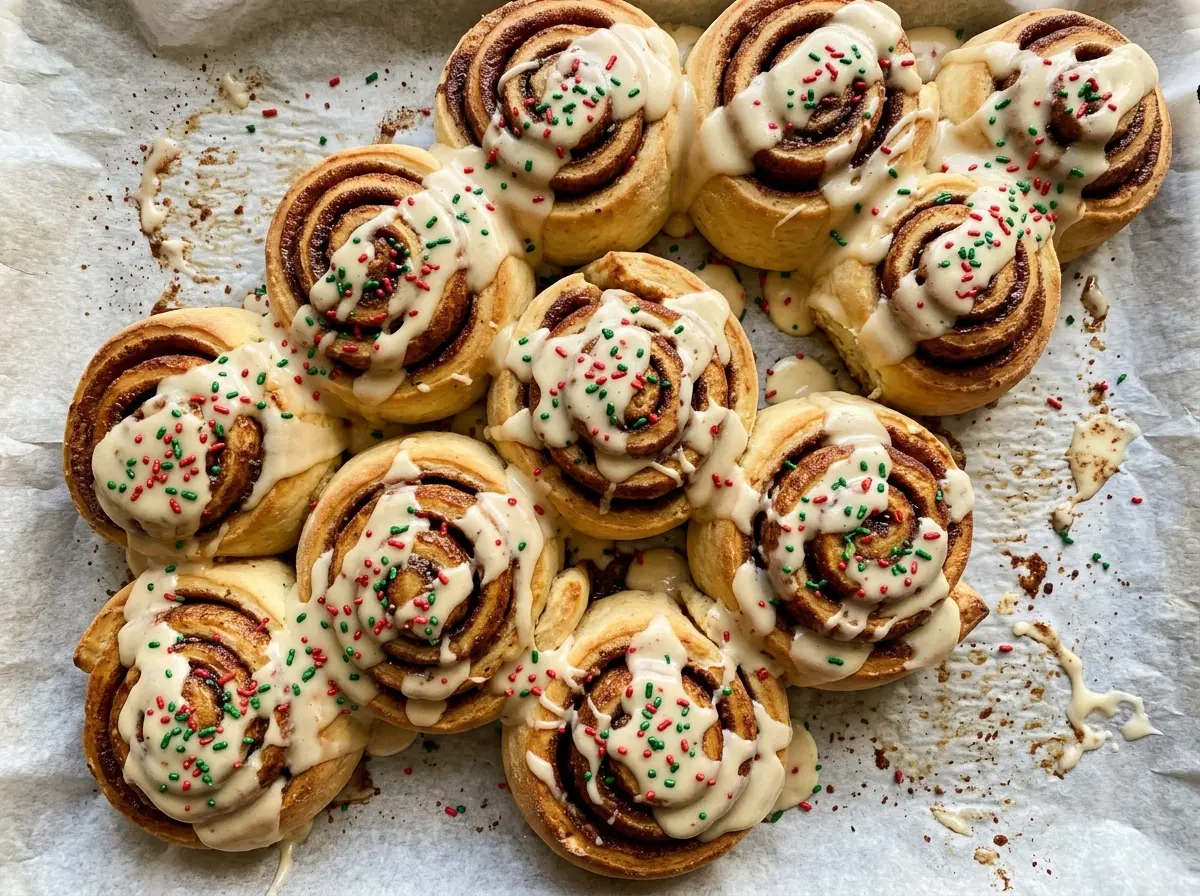
Keep the same 12 rolls and the same greased 9×13-inch dish, but arrange them in a tree silhouette instead of a regular grid. Leave enough room for the rolls to puff during their second rise. It changes the look on the table without changing the dough, filling, or baking method.
Make a Dairy-Free Batch
Replace the whole milk with unsweetened oat milk, use plant-based butter for both butter portions, and choose dairy-free cream cheese and caramel sauce for the icing. Keep the listed amounts the same. The rolls won’t have quite the same buttery richness, but this keeps the cinnamon-roll shape and caramel icing idea intact.
Use a Simpler Cream Cheese Icing
Leave out the caramel sauce and beat the softened cream cheese with the vanilla, then gradually mix in the powdered sugar until creamy. The result is less sweet and skips the caramel note, while keeping a smooth cream cheese topping for the warm rolls.
Storage and Reheating
- Refrigerator: Cover leftover iced rolls and refrigerate for 3–4 days. The icing will firm up when cold, and the bread may lose some of its just-baked softness.
- Freezer: Freeze baked rolls without icing, tightly wrapped, for up to 2 months. Thaw in the refrigerator, warm gently, then make and spread the icing.
- Reheating: Warm an individual roll briefly in the microwave, just until soft and warm. Long heating can make the bread tough and cause the icing to melt away.
Questions That Come Up When Baking These Rolls
Christmas Cinnamon Rolls with Caramel Cream Cheese Icing
Ingredients
Equipment
Method
- Warm the milk to 105–110°F.
- Pour the warm milk into a large bowl and sprinkle the yeast over it; let stand for 5–10 minutes until foamy.
- Whisk the granulated sugar, eggs, melted 1/3 cup butter, and 1 teaspoon salt into the yeast mixture.
- Stir in the flour until a shaggy dough forms.
- Knead the dough on a lightly floured surface for 8–10 minutes until smooth, elastic, and slightly tacky.
- Lightly coat a large bowl with cooking spray, add the dough, and turn it to coat.
- Cover the bowl and let the dough rise in a warm place for 1–1 1/2 hours, until doubled.
- Mix the brown sugar, cinnamon, and remaining 1/4 teaspoon salt in a small bowl.
- Roll the dough on a lightly floured surface into a 12x18-inch rectangle.
- Spread the softened 1/2 cup butter over the dough and sprinkle evenly with the brown sugar mixture.
- Roll the dough tightly from a long side, pinch the seam closed, and cut into 12 rolls.
- Coat a 9x13-inch baking dish with cooking spray and arrange the rolls cut-side up in the dish.
- Cover the rolls and let rise for 30–45 minutes, until puffy; preheat the oven to 350°F during the final 20 minutes.
- Beat the cream cheese until smooth.
- Beat in the caramel sauce and vanilla.
- Gradually beat in the powdered sugar until creamy.
- Bake for 25–30 minutes, until golden brown and the centers are set.
- Let the rolls rest in the pan for 10 minutes, then spread the icing over the warm rolls.