The butter and sugar go from pale and foamy to a deeper golden color while they bubble in the saucepan, and the change happens faster than I expect once the thermometer climbs. For this Churro Toffee, I keep stirring and watch the temperature rather than trying to guess by color. That gives me hard, snappy toffee pieces that are sturdy enough to dip in white chocolate.
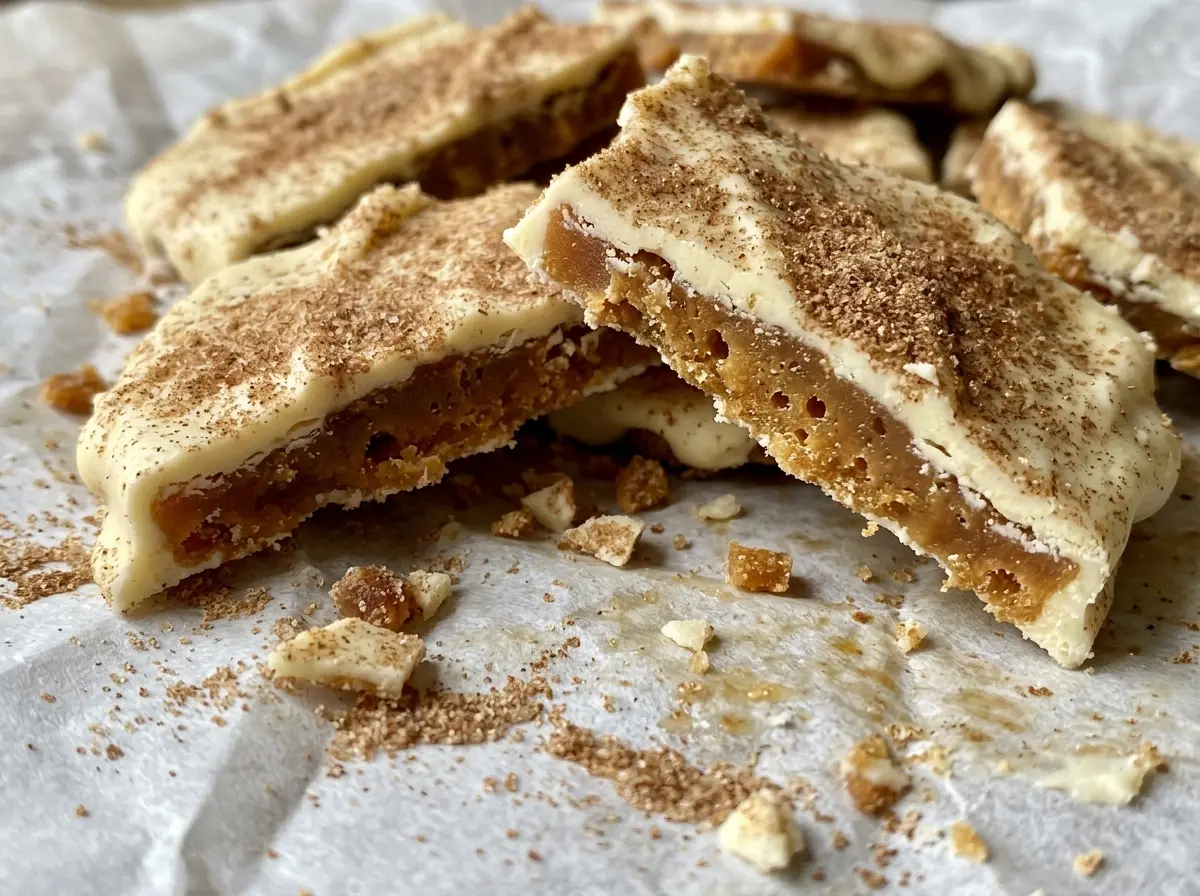
After the toffee cools completely, each piece gets a white chocolate coating and a roll in cinnamon sugar. The contrast is what makes the finished candy so satisfying: crisp toffee underneath, smooth chocolate around it, and a cinnamon-sugar finish on the outside. Let the chocolate set at room temperature, and you’ll have about 24 pieces ready to share or tuck away for later.
Kitchen Note
Vanilla goes in after the saucepan comes off the heat, and the hot toffee can bubble sharply when you stir it in. Keep your face and hands back from the pan, and stir carefully before pouring.
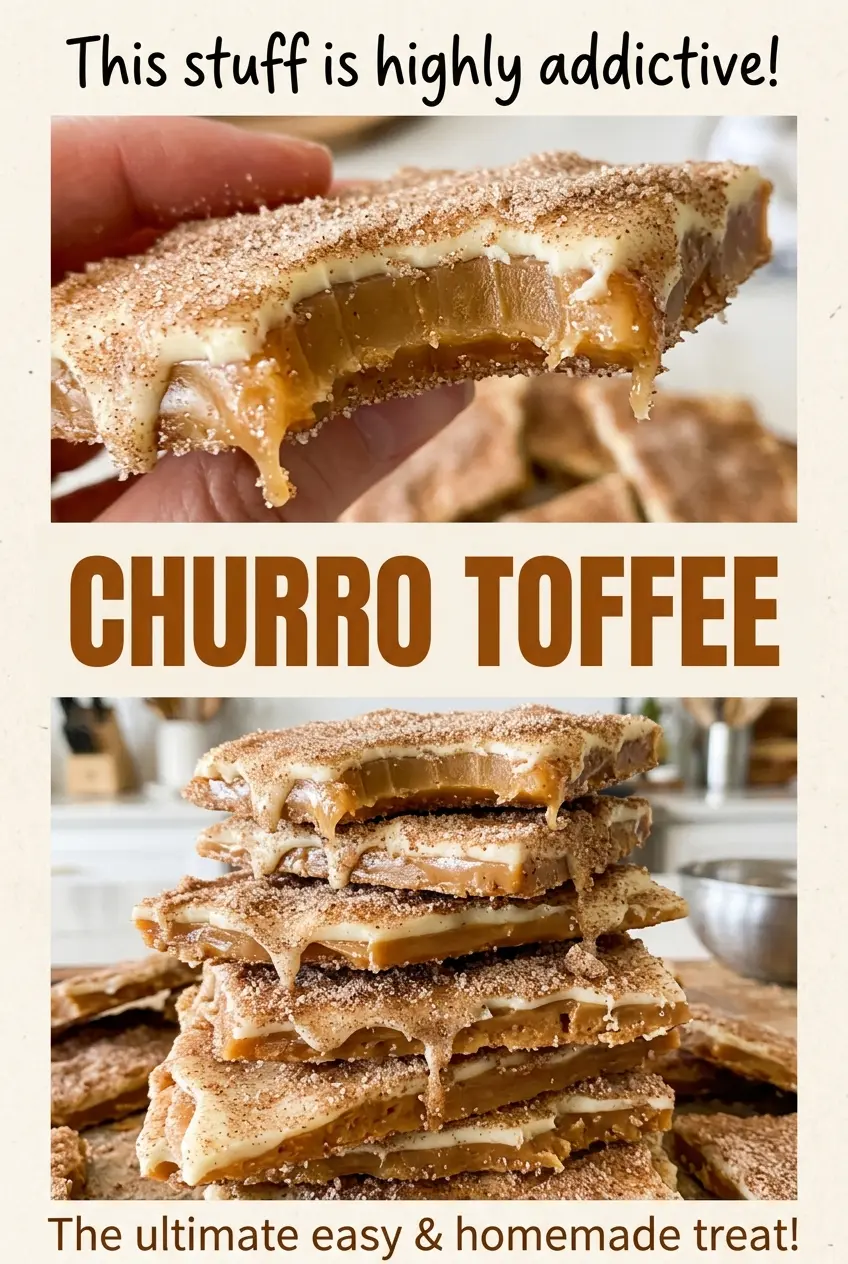
Save this Churro Toffee for a crisp butter-toffee center, a white chocolate shell, and cinnamon sugar in every bite.
Why 300°F Matters More Than the Toffee’s Color
Toffee needs to reach a precise temperature to turn into a crisp candy instead of a chewy one. At 300°F, the sugar mixture is at the hard-crack stage; once it cools, it sets firm enough to break into pieces. A candy thermometer takes the guesswork out of that change. Color can be misleading because the mixture’s shade shifts with the light, the pan, and how long the butter has been cooking.
Keep the mixture moving while it cooks, and pay attention to the thermometer as it approaches the target. The cooking time can range from 12 to 20 minutes, so the clock is a rough guide, not a replacement for the temperature reading. Stopping short leaves softer toffee that can bend or feel sticky after cooling. Going past the target risks a darker, bitter batch. That narrow window is why I use both a heavy-bottomed saucepan and a thermometer: steady heat and a clear temperature cue make the result much more dependable.
Butter, Sugar, and White Chocolate: What Sets the Texture
- Unsalted butter — Butter gives the toffee its rich flavor and helps create its texture. Use real unsalted butter so the salt level stays controlled; a spread or margarine has a different water and fat balance and won’t behave the same way in candy.
- Granulated sugar — This is the structure of the toffee, not just a sweetener. Regular granulated sugar is the right choice here; brown sugar would bring extra moisture and a molasses flavor that changes the set and taste.
- Water, kosher salt, and vanilla — The water helps the sugar cook evenly at the start, while the salt keeps the butter-sugar flavor from tasting flat. Vanilla rounds out the finished toffee. There isn’t a useful direct replacement for these in this recipe, so I keep them in their listed roles.
- White chocolate — Finely chopped chocolate melts more evenly than large chunks, which matters when you’re coating individual pieces. Use a white chocolate you enjoy eating; the coating is a prominent part of every bite. White chocolate chips can melt more thickly, so finely chopped chocolate is the more reliable choice for dipping.
- Ground cinnamon — Cinnamon gives the coating its churro-like finish. A fresh, fragrant jar makes a noticeable difference, but an ordinary grocery-store ground cinnamon works well; there’s no need for a specialty variety.
From Hard-Crack Toffee to a Cinnamon-Sugar Shell
Cook the butter and sugar to temperature
Line a 9×13-inch metal baking pan with parchment, leaving enough overhang to lift the toffee out later. In a 3-quart heavy-bottomed saucepan, combine the butter, 2 cups granulated sugar, water, and kosher salt over medium heat. Stir until the butter melts and the mixture comes to a boil, then keep stirring constantly as it cooks. It’s ready when the candy thermometer reads 300°F, usually after 12 to 20 minutes.
Pour, cool, and break the slab
Take the saucepan off the heat, carefully stir in the vanilla, and pour the hot toffee into the prepared pan right away. Spread it evenly so the pieces have a similar thickness. Leave it at room temperature until completely cool and hard, about 1 hour; warm or flexible toffee is harder to break cleanly. Lift it out using the parchment and break it into about 24 pieces.
Prepare the cinnamon sugar and melt the chocolate
Stir the remaining granulated sugar and ground cinnamon together in a shallow bowl. Put the finely chopped white chocolate in a heatproof bowl and microwave it at 50% power. Stir every 30 seconds, continuing until the chocolate is smooth. The repeated stirring helps you catch any unmelted pieces before the chocolate gets too hot.
Dip each piece and let the coating set
Dip a toffee piece into the melted white chocolate, then let the excess drip back into the bowl. Roll it in the cinnamon-sugar mixture and set it on parchment. Repeat with the remaining pieces, giving the coating an even layer without letting a puddle of chocolate collect underneath. Leave the finished candy at room temperature for about 30 minutes, until the coating has set.
Two Ways to Change the Bite Without Losing the Churro Finish
Use dark chocolate for a less-sweet coating
Swap the white chocolate for the same amount of finely chopped semisweet or dark chocolate, then melt it with the same microwave method. The deeper cocoa flavor makes the coating taste less sweet and gives the cinnamon-sugar a more pronounced contrast.
Break the slab into smaller bites
For a smaller candy, break the cooled slab into more than 24 pieces before dipping. Each bite will have a higher proportion of white chocolate and cinnamon sugar around the crisp toffee, and the smaller pieces are easier to serve as a nibble.
Storage and Serving
- Room temperature: Keep the set pieces in an airtight container in a cool, dry spot for up to 2 weeks. The cinnamon-sugar coating can lose its dry texture in a humid place.
- Freezer: I don’t recommend freezing the dipped pieces; moisture as they thaw can leave the cinnamon sugar damp and the chocolate coating streaky.
- Serving: Serve at room temperature. There’s no reheating needed, and warming the pieces can soften the chocolate coating.
Questions That Come Up While Making Churro Toffee
Churro Toffee
Ingredients
Equipment
Method
- Line a 9x13-inch metal baking pan with parchment paper, leaving an overhang on the sides.
- Combine the butter, 2 cups sugar, water, and salt in a 3-quart heavy-bottomed saucepan over medium heat, stirring until the butter melts and the mixture comes to a boil.
- Continue cooking and stirring constantly until a candy thermometer reads 300°F, about 12 to 20 minutes.
- Remove the pan from the heat and carefully stir in the vanilla.
- Immediately pour the toffee into the prepared pan and spread it evenly.
- Let it cool completely at room temperature until hard, about 1 hour.
- Lift the toffee from the pan using the parchment.
- Break the toffee into about 24 pieces.
- Stir the remaining 3/4 cup sugar and cinnamon together in a shallow bowl.
- Melt the white chocolate in a heatproof bowl in the microwave at 50% power, stirring every 30 seconds until smooth.
- Dip each toffee piece in the white chocolate and let excess chocolate drip back into the bowl.
- Roll each piece in the cinnamon-sugar.
- Place the coated pieces on parchment and let set at room temperature for about 30 minutes.