The crust comes out of its first bake looking dry around the bottom, and that’s the moment I want to see before any custard goes in. A pie crust that’s still soft can turn damp under a creamy filling, so this cinnamon pie starts with a short blind bake instead of sending everything into the oven together. It’s a small extra step, but it gives each layer a better chance to set properly.
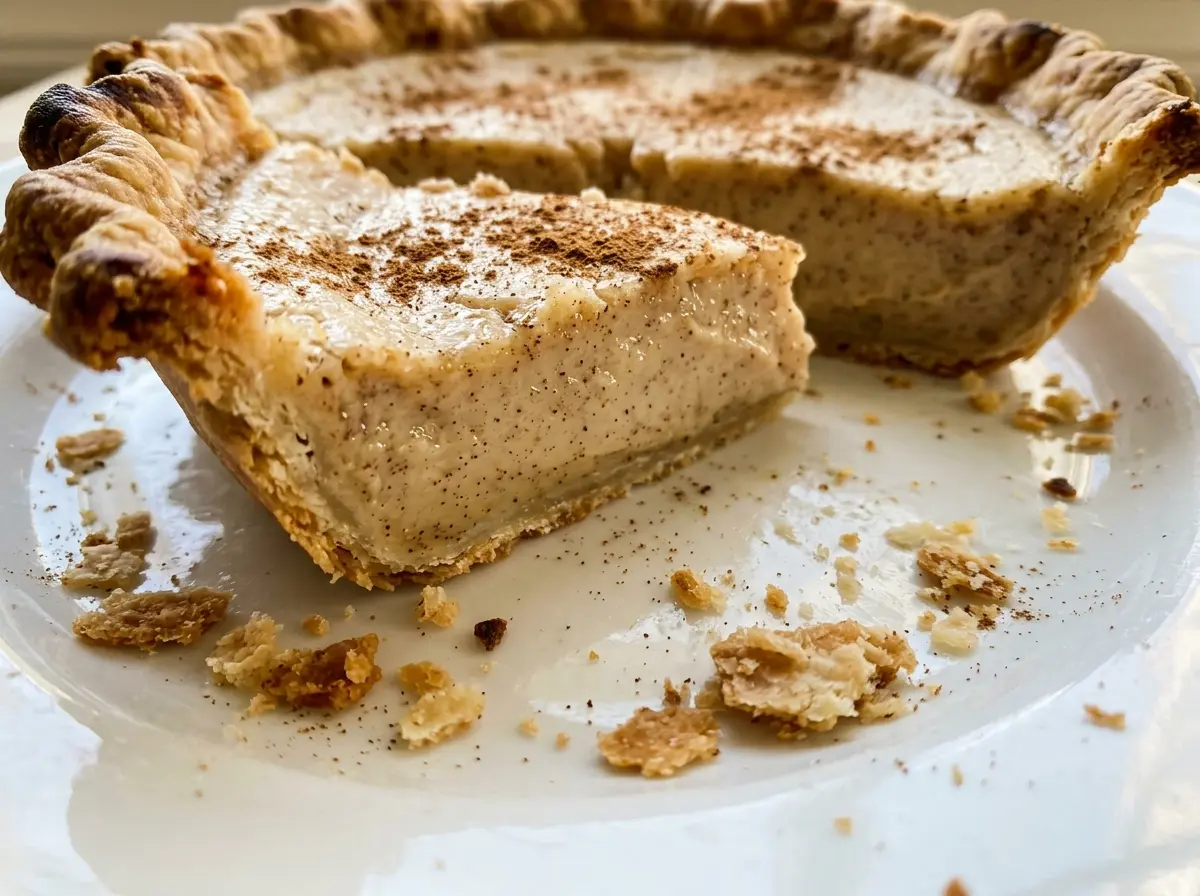
The filling comes together in one bowl for the dry ingredients and another for the eggs, cream, butter, and vanilla. I whisk the wet mixture into the dry gradually, which helps the cinnamon and flour disperse instead of clumping. Once baked, the center should still have a slight jiggle; it firms as the pie cools and chills. You’ll have eight slices with a smooth, warmly spiced custard and a crisp, crimped crust.
Kitchen Note
Whisk the wet mixture into the dry ingredients a little at a time, rather than pouring it all in at once. That gradual start makes it much easier to get a smooth filling without pockets of flour or cinnamon.
Save this cinnamon pie for a holiday table or a cozy weekend bake—the creamy cinnamon filling sits in a crisp, blind-baked crust.
Why a Dry, Set Crust Matters Under Cinnamon Custard
A custard filling brings plenty of moisture to the pie plate. If the crust goes in raw, the base has to cook while it’s covered by that filling, and the bottom can stay soft by the time the center is ready. Blind-baking gives the crust a head start and lets its surface dry before the filling is poured in. That’s the difference between a slice that holds together and one with a damp, fragile bottom.
The crust doesn’t need to turn deeply golden during this first bake. Look for a dry, set appearance after the parchment and pie weights come out; the filling bake will finish the job. Chilling the lined crust with the weights in place also helps the shaped shell keep its form. Treat this first bake as part of the pie’s structure, not a fussy extra, and the creamy cinnamon center has a sturdy base to sit on.
What Gives This Cinnamon Pie Its Custard Texture

- Refrigerated pie crust — A ready-to-fit crust keeps the prep focused on the filling. Choose one made for a 9-inch pie plate, and handle it gently as you fit and crimp it so the rim stays even. A homemade crust can work, but its dough and blind-baking behavior may differ.
- Ground cinnamon — Ground cinnamon blends through the filling and gives every slice its warm spice. Fresh, fragrant cinnamon makes a noticeable difference; if the jar smells faint, the pie will taste less vivid. Cinnamon sticks aren’t a direct substitute because they won’t distribute through this whisked filling.
- All-purpose flour — Flour helps the custard hold together as it bakes and chills. It’s not just there to thicken the mixture on the stovetop; it needs to be whisked evenly with the sugar and cinnamon before the wet ingredients go in. For a gluten-free version, use a gluten-free flour blend designed as a cup-for-cup replacement, as described below.
- Eggs and heavy cream — Eggs provide the set, while heavy cream brings richness and a smooth mouthfeel. The cream’s fat is part of what makes the filling lush, so lower-fat milk won’t give quite the same result. Use large eggs so the balance of liquid and structure stays close to the intended custard.
- Melted butter and vanilla — The butter adds richness, and letting it cool before it meets the eggs helps keep the mixture smooth. Vanilla rounds out the cinnamon without taking over. Since both are mixed directly into the custard, there’s no extra preparation beyond melting and cooling the butter.
Blind-Baking and Setting the Cinnamon Filling
Shape and chill the crust
Heat the oven to 375°F, fit the refrigerated crust into a 9-inch pie plate, and crimp the edges. Line the crust with parchment and fill it with pie weights so the base stays in place as it bakes. Chill the weighted crust for 15 minutes before it goes into the oven. That pause gives the shaped shell time to firm up before the heat reaches it.
Bake the shell until dry
Bake the chilled crust for 15 minutes, then carefully lift out the parchment and pie weights. Return the crust to the oven for another 5 to 8 minutes, watching for a surface that looks dry and set rather than soft or damp. The crust will bake again with the filling, so it doesn’t need to be deeply browned now. Handle the hot pie plate carefully when removing the weights.
Whisk the dry and wet mixtures
In a large bowl, whisk together the sugar, flour, cinnamon, and salt so the dry ingredients are evenly combined. In a separate bowl, whisk the eggs with the heavy cream, melted and cooled butter, and vanilla. Add the wet mixture gradually to the dry ingredients, whisking as you go. Keep going until the filling looks smooth, with no visible streaks of flour.
Bake until the center still moves slightly
Reduce the oven temperature to 350°F and pour the filling into the crust. Bake for 40 to 50 minutes, loosely covering the crust edges with foil if they brown too quickly. The edges of the filling should be set while the center still has a slight jiggle, and the center should reach 160°F. Don’t wait for the middle to look completely firm in the oven; it will continue to set as the pie cools.
Cool fully before slicing
Set the pie on a rack to cool for 2 hours, then refrigerate it for at least 2 hours before slicing. Cutting while it’s warm can leave the custard too soft to make neat slices. Once chilled, use a sharp knife and wipe it between cuts if you want clean edges. The filling should be cool and cohesive, with the crust supporting each slice.
Two Simple Ways to Adapt Cinnamon Pie
Make the pie gluten-free
Use a gluten-free 9-inch refrigerated pie crust and replace the all-purpose flour in the filling with a cup-for-cup gluten-free flour blend. The filling keeps its cinnamon-custard character, though the crust’s texture depends on the brand. Follow the crust package’s blind-baking directions if they differ from the timing here.
Make a dairy-free filling
Use full-fat canned coconut cream in place of the heavy cream, and dairy-free butter in place of the unsalted butter. Melt and cool the butter substitute before whisking it with the eggs and vanilla. The eggs still set the filling, while coconut cream brings a subtle coconut note and a slightly different richness.
Storage and Reheating
- Refrigerator: Cover the cooled pie and refrigerate it for up to 3 days. The custard stays firm when cold.
- Freezer: Freezing isn’t recommended; custard can turn watery or lose its smooth texture after thawing.
- Reheating: This pie is best served chilled, so no reheating is needed. Warming it can soften the filling and crust.
Questions That Come Up When Baking Cinnamon Pie
Cinnamon Pie
Ingredients
Equipment
Method
- Preheat the oven to 375°F.
- Fit the pie crust into a 9-inch pie plate and crimp the edges.
- Line the crust with parchment paper, fill with pie weights, and chill for 15 minutes.
- Bake for 15 minutes, then carefully remove the parchment and weights and bake for 5 to 8 minutes more, until the crust looks dry and set.
- Whisk the sugar, flour, cinnamon, and salt in a large bowl.
- In a separate bowl, whisk the eggs, heavy cream, melted butter, and vanilla.
- Gradually whisk the egg mixture into the dry ingredients until smooth.
- Reduce the oven temperature to 350°F and pour the filling into the crust.
- Bake for 40 to 50 minutes, loosely covering the crust edges with foil if they brown too quickly, until the edges are set, the center jiggles slightly, and the center reaches 160°F.
- Cool the pie on a rack for 2 hours.
- Refrigerate for at least 2 hours before slicing.