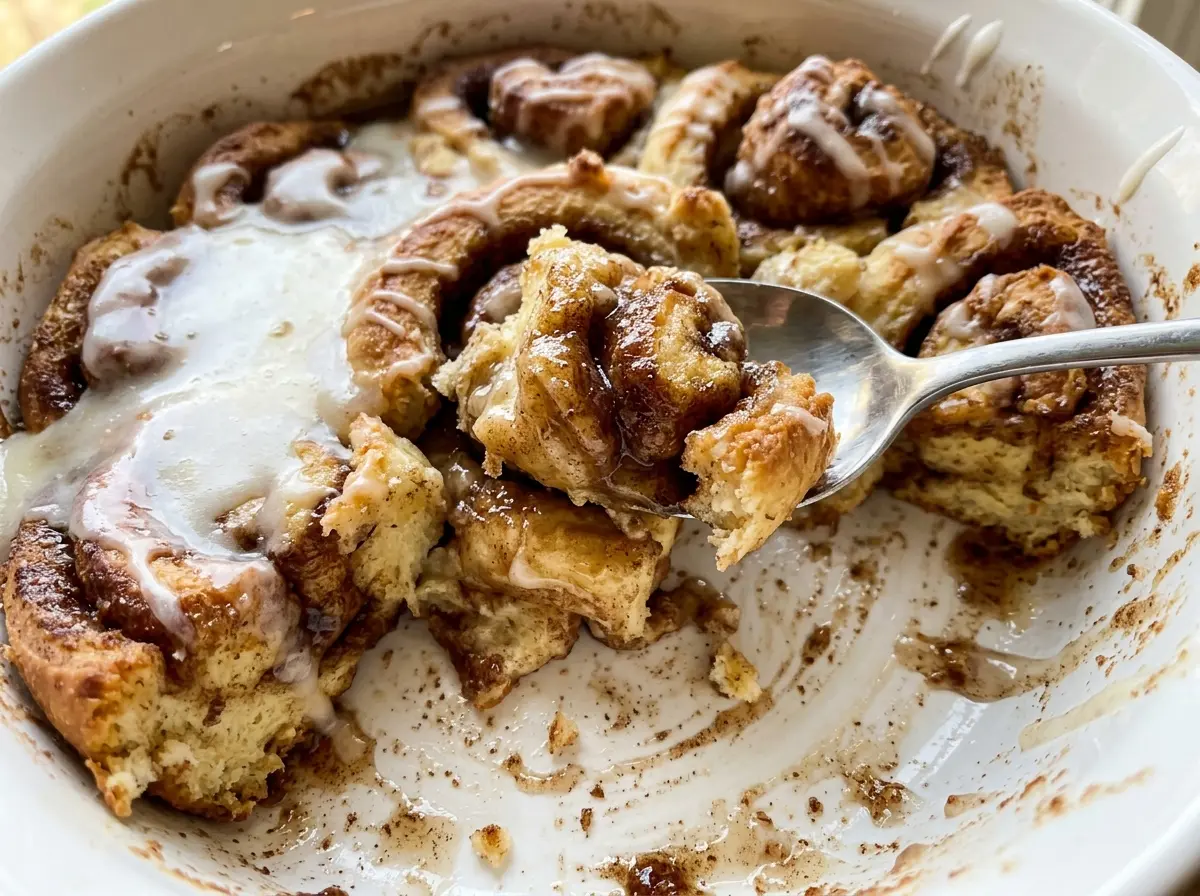
When the egg mixture runs between the cinnamon roll pieces, it looks like a lot of liquid for a pan of dough. Then the casserole bakes up golden around the edges, with soft centers that still taste like cinnamon rolls. Cutting the rolls into quarters gives the custard room to settle throughout, so each scoop has pastry and egg instead of a soggy layer underneath. That’s what makes this Cinnamon Roll Casserole feel like a proper breakfast bake rather than cinnamon rolls piled in a dish.
I use the icing packets that come with the refrigerated rolls, but wait until the casserole has rested before drizzling them on. The short pause lets the center finish setting and keeps the icing from disappearing straight into the warm dough. Serve it in generous squares while the top is still glossy and the cinnamon-scented pieces are tender.
Kitchen Note
Give the casserole its full 10-minute rest before adding the icing. I’ve found that waiting makes the drizzle sit on top in ribbons instead of melting into the warm pieces.
Save this Cinnamon Roll Casserole for a breakfast that turns refrigerated cinnamon rolls into tender, custardy squares with a sweet icing finish.
Why Quartering the Rolls Makes the Custard Work
Whole cinnamon rolls are thick, and custard poured over them tends to run around the outside before it can reach the middle. Cutting each roll into quarters creates more edges and openings for the egg mixture to travel through. The small pieces bake together, but the custard isn’t left trying to soak through one solid layer of dough.
That cut also gives you a better balance in each serving. You get tender centers alongside browned edges, rather than a casserole that’s soft in the middle and dry around the perimeter. Spread the pieces evenly in the dish instead of stacking them in a mound; an even layer gives the egg mixture a fair chance to reach the whole pan. The goal isn’t to mash the dough down or pack it tightly. Let the pieces sit naturally, with a little space for the custard to flow between them.
Because the rolls already bring their own cinnamon-sugar filling, the custard supports their flavor rather than replacing it. The ground cinnamon in the egg mixture adds a little more warmth, while the vanilla rounds out the egg-and-cream taste. You still recognize the cinnamon rolls in every bite.
What the Rolls, Eggs, and Half-and-Half Each Bring

- Refrigerated cinnamon rolls with icing — These provide the dough, cinnamon-sugar filling, and finishing drizzle in one package. Choose the refrigerated rolls that come with their own icing packets; the icing is set aside until the casserole has baked and rested. Keep the dough chilled until you’re ready to cut it so the pieces are easier to handle.
- Eggs — Eggs bind the half-and-half into a custard that sets around the roll pieces as the casserole bakes. Whisk them well with the other custard ingredients so no streaks of egg white remain. They’re doing essential structural work here, so an egg-free swap would change the dish rather than simply replace one flavor.
- Half-and-half — This brings enough richness for a tender custard without making the mixture as heavy as cream. Use fresh half-and-half and whisk it directly with the eggs; there’s no need to warm it first. A thinner liquid would make the custard less rich, so I stick with the half-and-half for this version.
- Vanilla extract and ground cinnamon — Vanilla softens the egg flavor, and ground cinnamon reinforces the spice already tucked into the rolls. Fresh, aromatic cinnamon makes the difference most noticeable here; vanilla extract from your pantry is fine. Whisk both into the egg mixture so their flavor is spread through the casserole rather than concentrated in a few spots.
- Salt — A small pinch sharpens the sweetness and keeps the custard from tasting flat. Whisk it in with the eggs and spices so it disperses evenly.
- Nonstick cooking spray — Coat the baking dish before adding the dough. It helps the browned edges release cleanly when you serve the casserole.
From Chilled Dough to a Set, Golden Center
Prepare the Dish and Cut the Rolls
Heat the oven to 350°F and coat a 9×13-inch baking dish with nonstick cooking spray. Set the icing packets aside before opening up your workspace, then cut each cinnamon roll into quarters. Arrange the pieces evenly across the prepared dish in a single layer. If the dough pieces are piled on top of each other, the custard won’t be distributed as evenly.
Whisk a Smooth Cinnamon Custard
In a medium bowl, whisk the eggs, half-and-half, vanilla, ground cinnamon, and salt until combined. Keep whisking until the eggs and dairy look uniform, with the cinnamon dispersed instead of sitting in clumps. You don’t need to beat the mixture until foamy; a smooth, blended custard is what you’re after. This quick whisk helps each part of the casserole bake with the same balance of spice and creaminess.
Pour Evenly and Bake Until Set
Pour the egg mixture evenly over the cinnamon roll pieces so it can run into the spaces between them. Transfer the dish to the oven and bake for 30 to 35 minutes. Look for a golden top and a center that has set rather than sloshing when the dish is gently moved. If the center still looks wet at the end of that window, give it more time in the oven and check again; the center needs to set before you take the casserole out.
Rest Before Adding the Icing
Once the casserole is baked, let it rest for 10 minutes. That pause lets the hot center settle, so the pieces hold together more neatly when served. Drizzle the icing from the packets over the top after the rest. For a tidy finish, move the icing across the pan in thin ribbons instead of dropping it in one thick pool.
Two Easy Ways to Adjust the Sweetness and Spice
A Milder Cinnamon Custard
Leave the ground cinnamon out of the egg mixture if you want the cinnamon flavor to come mainly from the rolls themselves. The casserole will still have the cinnamon-sugar filling in every piece, but the custard will taste gentler and less spice-forward.
A Lighter Icing Finish
Use less of the icing from the packets, or leave it off if you prefer the casserole less sweet. The browned cinnamon roll pieces still give you a recognizable cinnamon-roll flavor; you’ll just lose the glossy, sugary finish on top.
Storage and Reheating
- Refrigerator: Refrigerate leftovers within 2 hours in a covered container and eat them within 3 to 4 days. The pieces soften as they sit, so the edges won’t stay as crisp as they are fresh from the oven.
- Freezer: Freeze individual portions in an airtight freezer-safe container for up to 2 months. Thaw them overnight in the refrigerator; the dough may be softer after thawing.
- Reheating: Warm individual portions in the microwave until hot throughout, or reheat covered in a low oven. Don’t heat uncovered for too long, or the roll pieces can dry out before the center warms.
Questions That Come Up When Baking Cinnamon Roll Casserole
Cinnamon Roll Casserole
Ingredients
Equipment
Method
- Heat the oven to 350°F.
- Coat a 9x13-inch baking dish with nonstick cooking spray.
- Set the icing packets aside.
- Cut each cinnamon roll into quarters.
- Arrange the pieces evenly in the prepared dish.
- Whisk the eggs, half-and-half, vanilla, cinnamon, and salt in a medium bowl until combined.
- Pour the egg mixture evenly over the cinnamon roll pieces.
- Bake for 30 to 35 minutes, until the casserole is golden and the center is set.
- Let the casserole rest for 10 minutes.
- Drizzle the icing from the packets over the top.