The onion starts softening while the beef browns, and the smoked sausage gives off that savory smell before the broth even goes in. The first time I made Cowboy Stew, I worried the pot looked too full, but everything settles as the meat cooks and the potatoes simmer. It’s the kind of one-pot dinner that feels hearty without asking you to juggle pans or manage a long ingredient list.
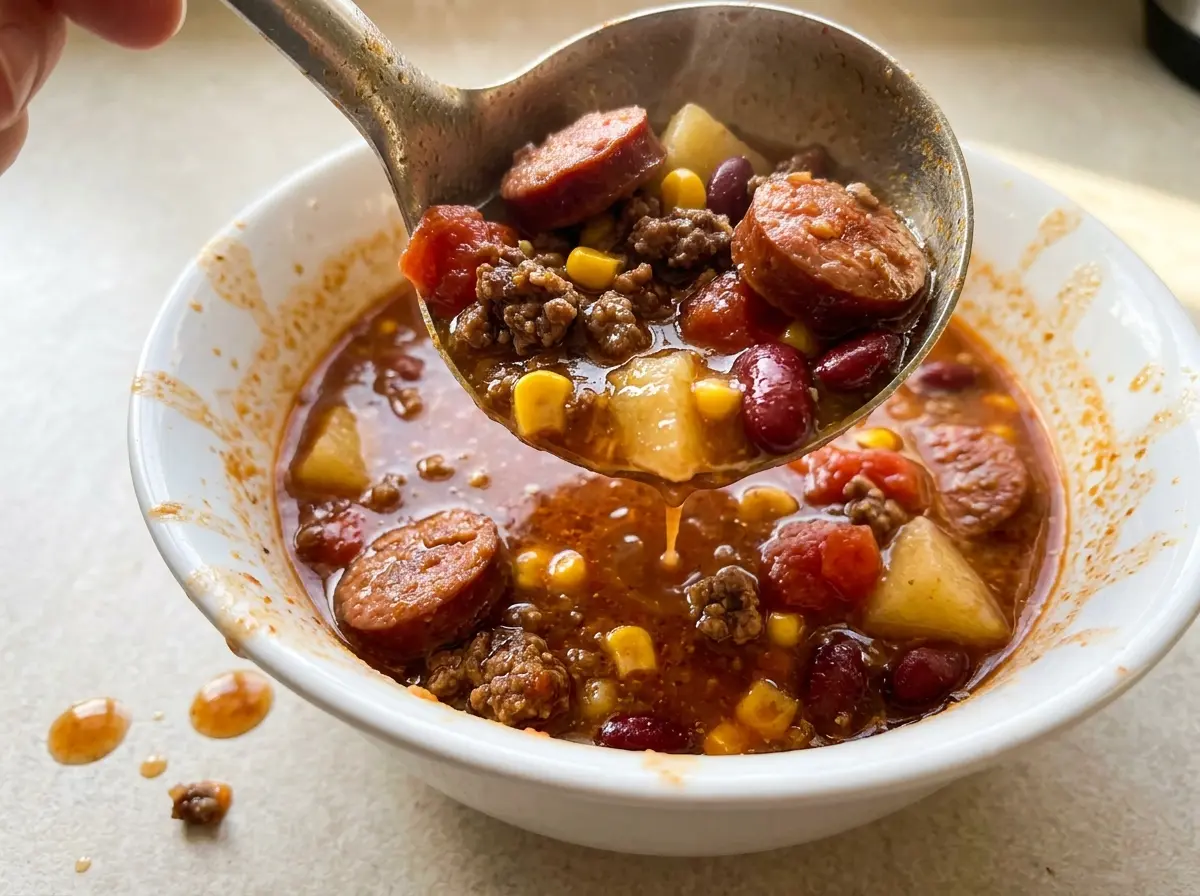
I like how the ground beef makes the broth substantial while the sausage brings its own smoky seasoning. Russet potatoes do more than fill the bowl: as they cook, they help give the broth a little body. The beans and corn go in near the end, so they warm through without spending the whole simmer in the pot. Each spoonful has tender potatoes, beef, and a bit of smoky sausage in a savory broth.
Kitchen Note
Have the beans drained and the corn drained before you start the covered simmer. When the potatoes are nearly tender, you can add both right away instead of leaving the pot open while you get the cans ready.
Save this Cowboy Stew for a cozy dinner when you want smoky sausage, tender potatoes, and a full bowl from one Dutch oven.
Why Cowboy Stew Thickens at the End, Not the Beginning
This stew gets its body from two things working together: russet potatoes and the final uncovered simmer. Russets are starchy, and as their edges soften, a little of that starch moves into the broth. The potatoes don’t need to fall apart; they just need to become tender enough to give the liquid a slightly fuller feel.
Keeping the pot covered while the potatoes cook helps them soften in the broth instead of letting too much liquid evaporate too soon. Once the potatoes are nearly tender, the lid comes off. That last stretch gives steam a way out, so the broth reduces while the beans and corn heat through. If the stew looks loose when you first add the broth, that’s expected. The uncovered finish is where it starts to feel more like a stew than a bowl of soup.
There’s no need to mash the potatoes or add a separate thickener. Stir gently during the final simmer, especially near the bottom of the Dutch oven, where the potatoes and beef settle. You’re looking for a broth that clings lightly to the ingredients, not a paste-thick consistency.
What the Beef, Sausage, and Russets Each Bring to the Pot
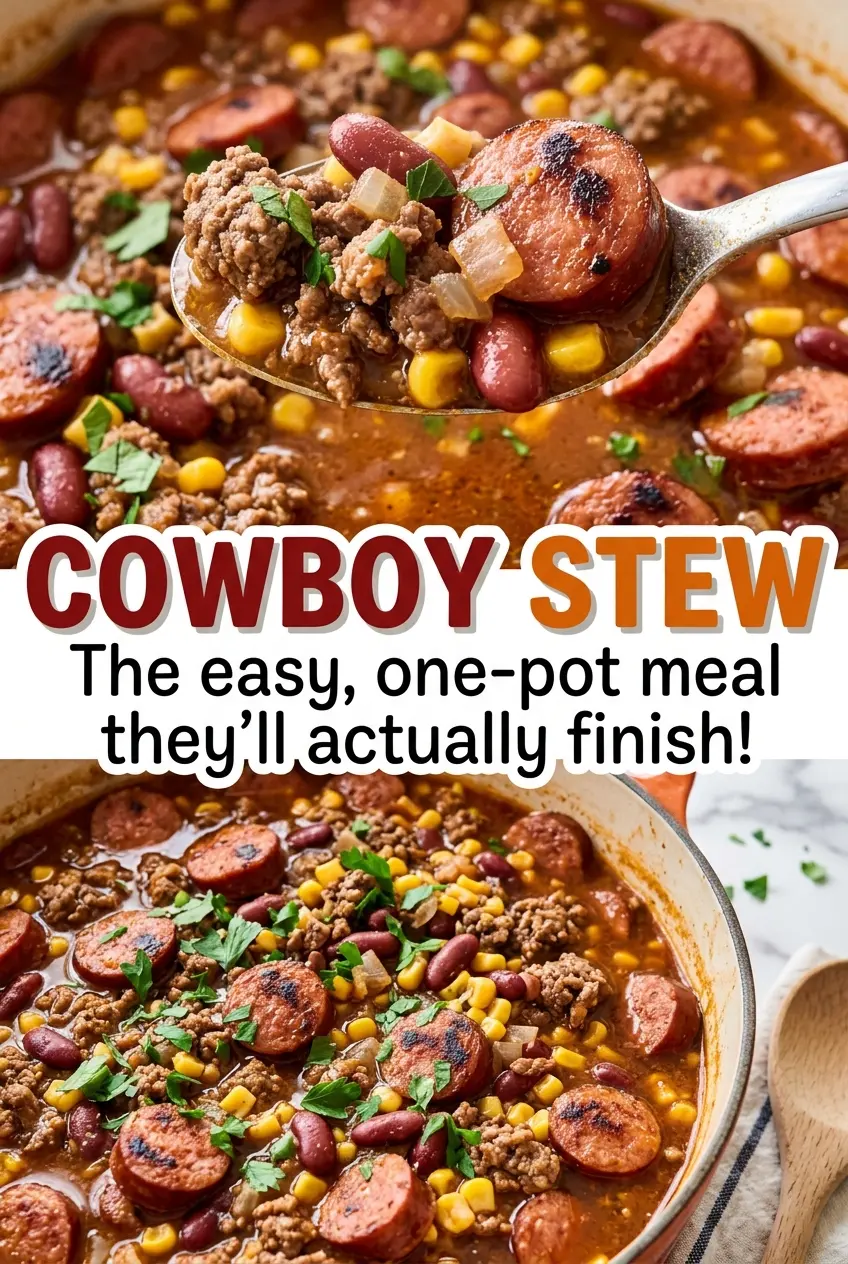
- Ground beef — The 85% lean beef gives the broth a meaty base without leaving as much fat as a fattier grind would. Break it into small crumbles as it cooks so each serving gets some. If you don’t have beef, the most practical adjustment with the ingredients here is to leave it out; the sausage still gives the stew a savory center, though the broth will be less beefy.
- Smoked sausage — Its smoke and seasoning add character that plain ground beef won’t replicate. Sausage varies in how smoky it tastes, so choose one whose flavor you enjoy. If you’re out, omit it rather than trying to replace its distinct smoke with another listed ingredient.
- Russet potatoes — Their starch helps the broth thicken as they soften. Scrub them well and cut them into even half-inch cubes so they cook at roughly the same rate. Leaving them out is possible, but the stew will be much brothier; none of the other listed ingredients has the same starchy effect.
- Beef broth — It gives the stew its savory liquid base, so use a broth whose salt level you like. The added kosher salt seasons the whole pot, and a particularly salty broth can make the finished stew taste more seasoned than intended.
- Diced tomatoes — Keep the can’s liquid; it belongs in the broth and brings acidity that balances the meat. There isn’t a like-for-like replacement among the other ingredients, so leaving the tomatoes out will make the base less bright and less tomato-rich.
- Pinto beans and corn — Pinto beans add a creamy, filling bite, while whole kernel corn brings sweetness and little bursts of texture. Drain and rinse the beans to remove their canning liquid, and drain the corn so its liquid doesn’t dilute the broth. If beans aren’t available, leaving them out works better than treating corn as an equal substitute.
- Onion, garlic, and chili powder — The onion builds a savory base alongside the meat, garlic adds a sharper note, and chili powder gives the broth its warm seasoning. Mince the garlic before it goes into the hot pot, since its brief cooking time leaves little room to stop and chop. If you’re missing one, omit it rather than increasing another seasoning to compensate.
How to Brown the Meat Before the Potatoes Go In
Brown the onion, beef, and sausage together
Heat a 6-quart Dutch oven over medium-high heat, then add the chopped onion, ground beef, and sliced sausage. Cook for 8 to 10 minutes, breaking the beef into crumbles as it browns. The meat should lose its raw color, and the beef should reach 160°F. Drain excess fat if needed; don’t pour off the browned meat along with it.
Give the garlic just 30 seconds
Stir the minced garlic into the browned meat and cook for 30 seconds, stirring constantly. The garlic should smell fragrant as it warms. Keep it moving across the bottom of the pot; if it sits in one spot, it can scorch before the broth goes in.
Simmer the potatoes until nearly tender
Add the beef broth, undrained diced tomatoes, cubed potatoes, chili powder, kosher salt, and black pepper. Bring the pot to a boil, then cover it and simmer over medium-low heat for 15 to 20 minutes. The potato cubes should be close to tender when pierced, with a little firmness remaining at the center. If they still feel hard, give them more time before moving on.
Finish uncovered with beans and corn
Stir in the drained and rinsed pinto beans and drained corn. Simmer uncovered for 8 to 10 minutes, until the potatoes are tender and the stew has thickened slightly. Keep the heat at a steady simmer rather than a hard boil, which can break up the potatoes. Stir gently so the ingredients stay intact.
Simple Ways to Change the Beef-and-Potato Balance
Make it beef-forward without the sausage
Leave out the smoked sausage and keep the ground beef. The broth will have a milder, less smoky taste, and the stew will still have potatoes, beans, and corn to make each bowl filling.
Leave out the pinto beans
For a version without beans, omit them and keep the corn. The stew will have fewer creamy bites and a little less heft, but the beef, sausage, and potatoes still make a substantial bowl.
A lower-carb, brothier bowl
Omit the potatoes, pinto beans, and corn for a lower-carb version built around the beef, sausage, and tomato broth. It won’t have the same thick, starchy texture, so think of it as a meat-forward soup rather than the original hearty stew.
Storage and Reheating
- Refrigerator: Store in a covered container for 3 to 4 days. The potatoes continue to soften and release starch, so the broth will be thicker after chilling.
- Freezer: Freeze in airtight portions for up to 2 to 3 months for best quality. The potatoes may turn softer or slightly grainy after thawing, but the stew is still fine to eat.
- Reheating: Warm on the stovetop over medium-low heat, stirring gently, until the stew reaches 165°F. Avoid a vigorous boil; it can break the potatoes apart.
Questions That Come Up When the Pot Is Simmering
Cowboy Stew
Ingredients
Equipment
Method
- Heat a 6-quart Dutch oven over medium-high heat, then add the onion, ground beef, and sausage; cook for 8 to 10 minutes, breaking up the beef, until the beef is browned and reaches 160°F, then drain excess fat if needed.
- Add the garlic and cook for 30 seconds, stirring constantly.
- Add the beef broth, diced tomatoes, potatoes, chili powder, salt, and pepper; bring to a boil, then cover and simmer over medium-low heat for 15 to 20 minutes, until the potatoes are nearly tender.
- Stir in the pinto beans and corn, then simmer uncovered for 8 to 10 minutes, until the potatoes are tender and the stew has thickened slightly.