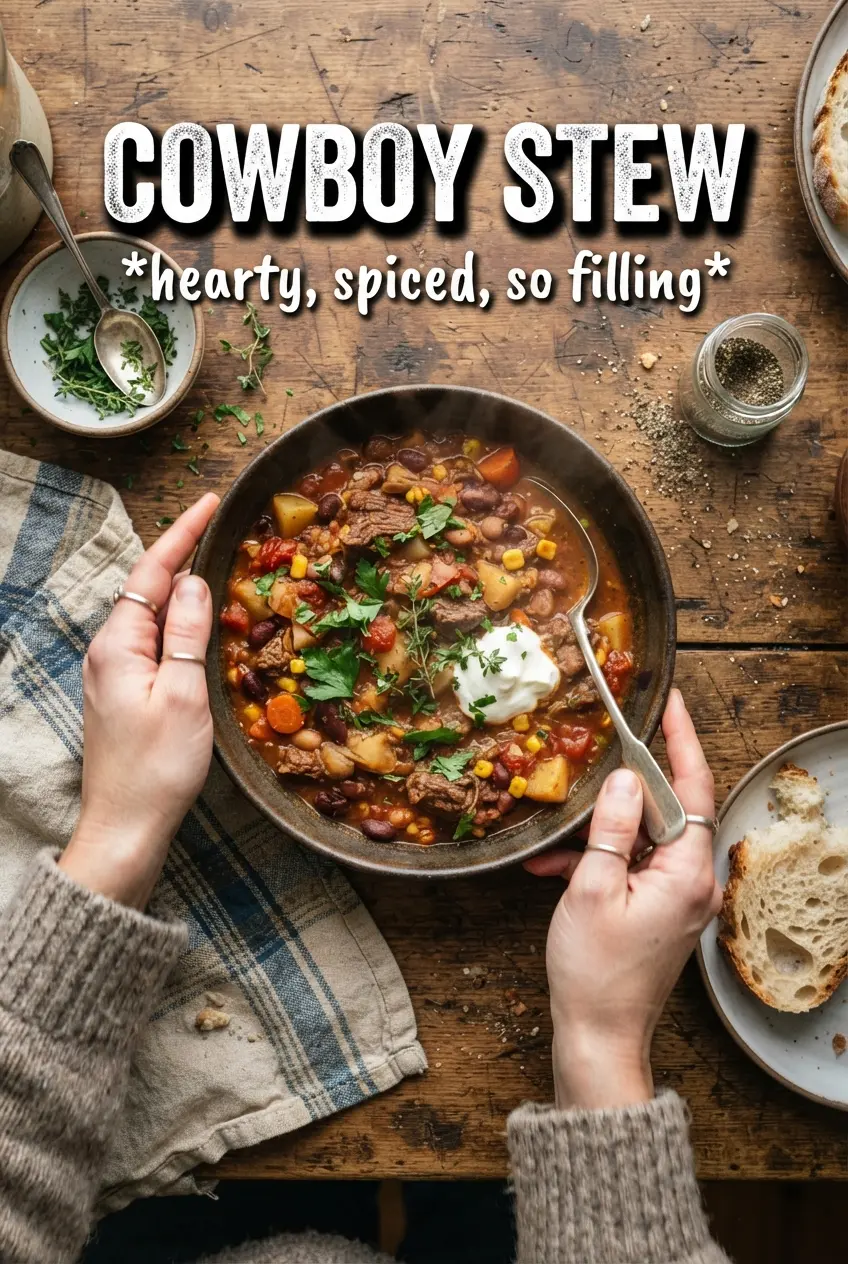
Cowboy stew lands in that sweet spot between weeknight practical and backyard-hearty. It’s thick with potatoes, beans, beef, and sausage, with a smoky tomato broth that tastes like it simmered much longer than 35 minutes. The best part is the balance: enough broth to keep it spoonable, but enough starch and meat to make every bowl feel substantial.
What makes this version work is the layering. The ground beef and smoked sausage both get browned first, which builds flavor before any liquid goes in. Then the onions, garlic, chili powder, and smoked paprika hit the pot for a short bloom so the stew tastes rounded instead of flat. The ranch seasoning doesn’t make it taste like salad dressing; it just adds salt, herbs, and a little savory backbone that plays nicely with the tomatoes and beef broth.
Below, I’ll walk through the part that matters most — getting the potatoes tender without letting the beans turn to mush — plus a few smart swaps if you want to stretch it, lighten it up, or work with what’s already in the pantry.
The potatoes stayed tender without falling apart, and the broth had that smoky ranch thing going on that made it taste like it had been simmering all afternoon. My husband went back for seconds before I even sat down.
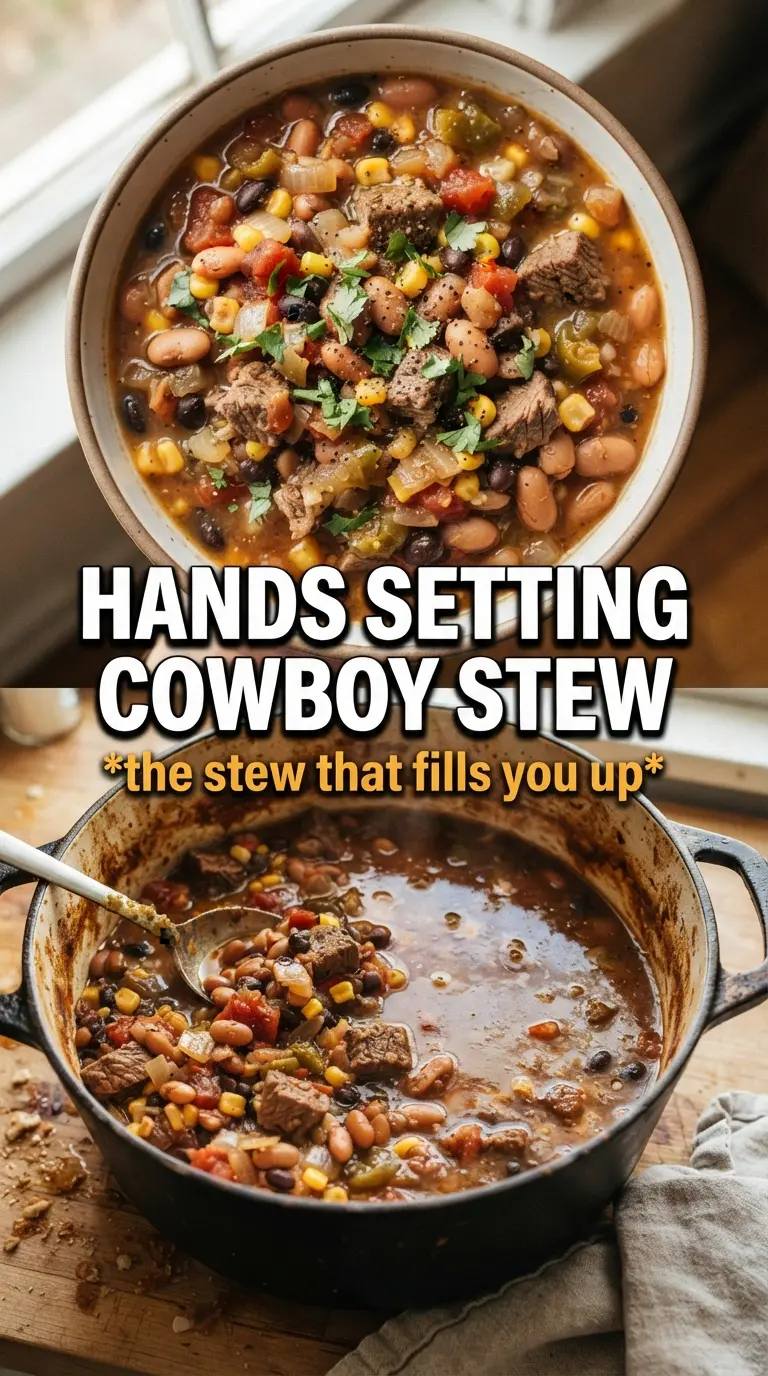
Save this Cowboy Stew for a smoky, filling dinner with beef, sausage, beans, and tender potatoes in one pot.
The Secret to Cowboy Stew That Tastes Slow-Cooked in Under an Hour
The shortcut here isn’t using less flavor. It’s building it in the right order. Browning the beef and sausage first gives you the savory base, and that browned fond on the bottom of the pot turns into the backbone of the broth once the tomatoes and broth go in. If you skip that step, the stew still works, but it tastes thinner and more one-note.
The other place people go wrong is the potatoes. Add them too early and they can break down before the beans and corn are even warm. Cut the baby potatoes in half so they cook through in a short simmer, then add the corn and sausage near the end so they keep their shape and texture. You want the potatoes tender at the center, not collapsing into the broth.
- Ground beef — Use 85/15 if you can. It has enough fat for flavor, but not so much that the stew turns greasy after a short simmer. If your beef is very lean, leave the sausage fat in the pot for the onions instead of wiping it out.
- Smoked sausage — This is where the smoky, campfire-style flavor comes from. Kielbasa works well, and andouille gives the stew more heat. Turkey sausage is fine, but you’ll lose some of the richness that makes cowboy stew taste so hearty.
- Baby potatoes — Their thin skins and small size help them cook quickly without turning chalky. Regular potatoes work too if you cut them into small chunks, but don’t make them too large or they’ll lag behind the rest of the pot.
- Rotel and diced tomatoes — Rotel brings the gentle heat and acidity that keeps the stew from tasting heavy, while the diced tomatoes add body. If you only have plain diced tomatoes, add a few pinches of extra chili powder or a spoonful of diced green chiles to replace some of that brightness.
- Ranch seasoning — This is the seasoning that ties the beefy, smoky ingredients together. A homemade blend can work in a pinch, but the packet gives consistent salt and herb balance without having to guess.
What Each Ingredient Is Actually Doing in This Recipe
- Primary ingredient (the star) — Quality matters most. Choose the best you can find.
- Cooking medium (oil, butter, or broth) — This carries flavors and prevents dryness.
- Seasonings (salt, pepper, spices, herbs) — Layer flavors so nothing overpowers. Build depth gradually.
- Aromatics (garlic, onion, herbs) — Cook with fat to bloom flavors. Become the foundation.
- Supporting ingredients — Complement the main ingredient without overpowering it.
- Sauce or liquid (if applicable) — Brings flavors together. Balance richness with acid.
- Acid (lemon, vinegar, wine, or other) — Brightens and prevents flat-tasting results.
- Final finish (garnish, glaze, or sauce) — Prevents one-dimensional taste and adds visual appeal.
The Pot Order That Keeps the Broth Rich and the Potatoes Intact
Browning the Meat First
Start with the ground beef in a large pot and let it develop some color before stirring too much. You want browned bits, not steamed meat. Drain the excess fat if needed, then brown the sausage just long enough to pick up a little color on the edges. Removing the sausage briefly keeps it from overcooking while the base of the stew comes together.
Building the Smoky Base
Sauté the onion until it softens and turns translucent, then add the garlic for just a minute. Garlic burns fast, and burned garlic will make the whole pot taste sharp. Stir in the chili powder and smoked paprika right away so the spices toast in the hot fat before the liquid goes in; that short bloom makes the broth deeper and less dusty.
Letting the Potatoes Cook Before the Soft Ingredients
Add both tomatoes, the broth, ranch seasoning, potatoes, and beans, then bring everything up to a boil before lowering to a steady simmer. The boil gets the potatoes moving, but the simmer finishes them gently. Check the potatoes with a fork after 15 minutes; they should be tender all the way through but still hold their shape. Add the corn and sausage only after the potatoes are almost done, since both just need a few minutes to heat through.
Finishing With the Right Seasoning
Taste before serving and adjust with salt and pepper. The ranch packet, broth, sausage, and tomatoes all carry salt, so it’s easy to overshoot if you season too early. The final toppings matter too: cheddar melts into the hot stew, green onions add freshness, and jalapeños cut through the richness.
What to Change When You Want a Different Kind of Hearty
Make It Dairy-Free Without Losing the Comfort
The stew itself is already dairy-free. Just skip the cheddar on top or use a dairy-free shredded cheese that melts well. You’ll still get plenty of richness from the sausage, beef, and broth, so nothing feels missing.
Gluten-Free Cowboy Stew
Use a certified gluten-free ranch seasoning and check the sausage label, since some brands use fillers that contain gluten. The texture and flavor stay the same as long as both of those ingredients are verified. Everything else in the pot is naturally gluten-free.
Stretch It for a Bigger Crowd
Add an extra can of beans or another cup of broth if you want more servings without increasing the meat. The stew will be a little looser, but still hearty, and the extra broth makes it even better with cornbread or crackers. If you scale up the sausage, brown it in batches so the pot still gets some color.
Turn Up the Heat
Use hot smoked sausage, add extra jalapeños on top, or stir a pinch of cayenne into the spice step with the chili powder and paprika. Heat layered into the base tastes cleaner than dumping in a lot at the end. That way the stew still tastes balanced, not just spicy.
Storage and Reheating
- Refrigerator: Store covered for up to 4 days. The potatoes soften a little more as it sits, but the flavor deepens nicely.
- Freezer: Freezes well for up to 3 months. Cool completely first, then portion into containers with a little headspace because the broth expands.
- Reheating: Warm gently on the stove over medium-low heat, stirring often. If it looks too thick, add a splash of broth or water; boiling hard can break the potatoes and make the sausage tough.
Questions I Get Asked About This Recipe
Cowboy Stew
Ingredients
Equipment
Method
- Brown the ground beef in a large pot over medium-high heat, then drain the fat.
- Brown the smoked sausage slices briefly, then remove.
- Sauté the onion for 3 minutes, until softened.
- Add the garlic and cook for 1 minute, stirring to avoid browning.
- Add the chili powder and smoked paprika, then cook for 1 minute to bloom the spices.
- Add the Rotel tomatoes, diced tomatoes, beef broth, ranch seasoning, baby potatoes, and pinto beans, then bring to a boil.
- Simmer for 15-18 minutes, until the potatoes are tender.
- Add the corn and sausage, then simmer for 5 more minutes.
- Season with salt and pepper to taste.
- Ladle the cowboy stew into bowls and top with shredded cheddar, jalapeños, and green onions.