Tender chicken, crispy bacon, and a ranch cream sauce clinging to every piece of penne is the kind of dinner that clears a pan fast. This version earns its keep because the sauce turns silky without getting heavy, and the bacon stays crisp enough to give every bite a little snap. It tastes rich and comforting, but it still comes together in the time it takes to boil pasta and cook the chicken.
The trick is building the sauce in the same skillet you used for the chicken. Those browned bits add depth, and the ranch seasoning gets a chance to bloom in the hot pan before the cheese goes in. Cream cheese and broth melt into a smooth base, then cheddar finishes it with the kind of pull you want on a weeknight pasta.
Below you’ll find the small details that keep the sauce from turning grainy, the best way to loosen it if it tightens up, and a few smart swaps if you need to work with what you already have.
The sauce turned out creamy and thick, and the ranch flavor didn’t taste overpowering at all. I added a splash of pasta water at the end and it coated the penne perfectly. My husband went back for seconds before I even sat down.
Save Crack Chicken Penne for the nights when you want creamy ranch pasta with bacon and almost no cleanup.
The Reason the Sauce Stays Creamy Instead of Breaking
The sauce in this dish needs gentle heat, not a hard boil. Cream cheese can go from smooth to stubborn fast, and cheddar can turn grainy if it gets too much heat after it melts. Keep the skillet at medium or even medium-low once the dairy goes in, and use the broth to loosen the cream cheese before the cheddar joins the party.
The other thing that matters is the pasta water. It sounds like a small detail, but that starchy water helps the sauce cling to the penne and gives you a little insurance if the pan tightens up while you’re tossing everything together. If the sauce looks thick before the pasta is fully coated, add the water a splash at a time and stir until it turns glossy.
What Each Ingredient Is Actually Doing in This Dish
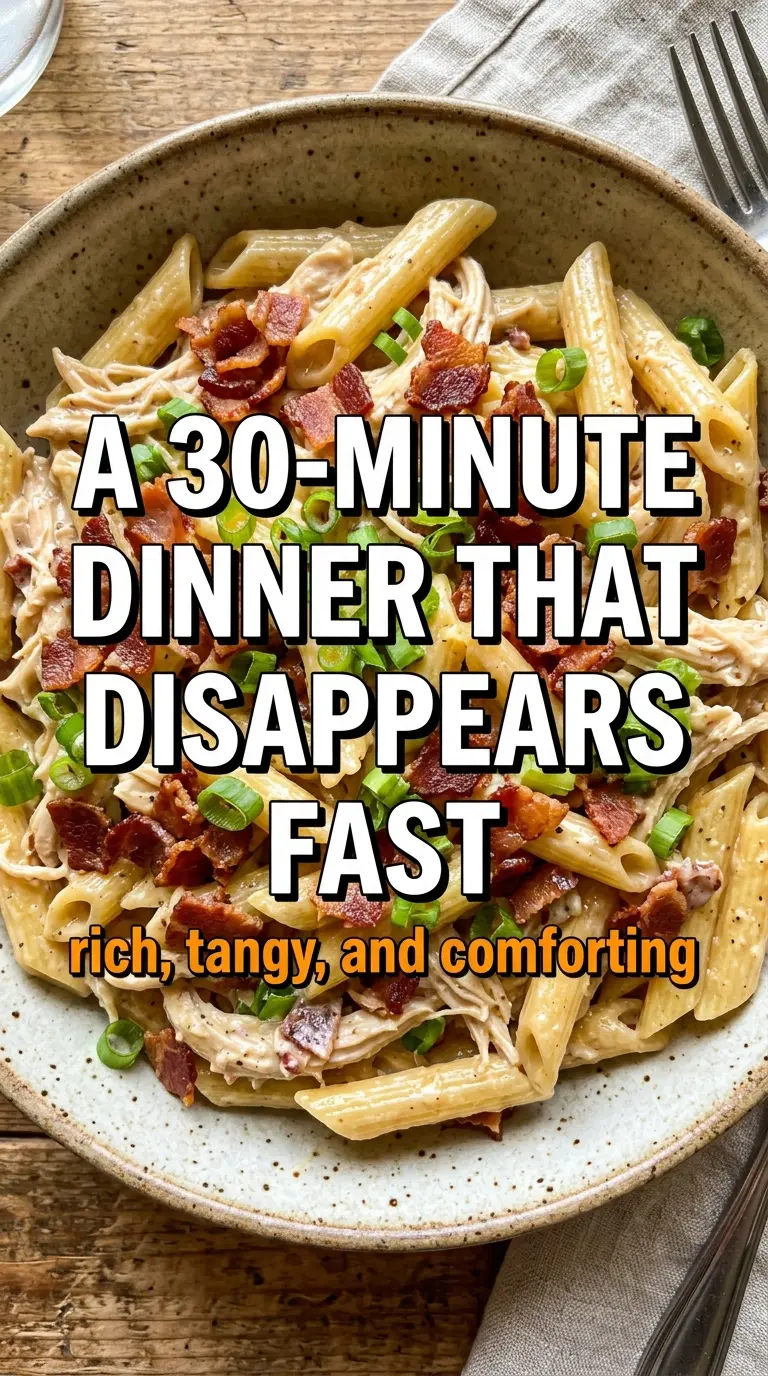
- Penne pasta — The tube shape catches the sauce inside and out. A sturdier pasta like rigatoni also works, but thin noodles get lost in this sauce.
- Chicken breasts — Dicing the chicken gives you more browned surface area and faster cooking. Thighs work too if you want a little more richness, but they’ll need a minute or two longer.
- Cream cheese — This is what gives the sauce its body. Let it soften first so it melts evenly instead of leaving little lumps in the pan.
- Ranch seasoning — This is the shortcut that gives the dish its familiar tang and herbiness. A homemade ranch blend can work, but the packet keeps the flavor consistent and saves time.
- Chicken broth — Broth thins the cream cheese into a real sauce instead of a thick paste. If you use water, the sauce tastes flat and less savory.
- Cheddar cheese — Sharp cheddar adds the strongest flavor here. Pre-shredded cheese works in a pinch, but freshly shredded melts smoother because it doesn’t carry the anti-caking coating.
- Bacon — Half goes into the pasta so you get smoky bites throughout, and the rest stays on top for crunch. If bacon softens in the sauce too long, it loses the texture that makes this dish pop.
- Green onions — They cut through the richness at the end. Don’t cook them in the sauce; keep them fresh for a cleaner finish.
Getting the Chicken, Sauce, and Pasta to Come Together Cleanly
Cook the Pasta First
Boil the penne in well-salted water until it’s just shy of fully tender. You want a little bite left because it finishes in the sauce, where it picks up more flavor and keeps its shape. Reserve some pasta water before you drain it, since that starchy water is what saves the sauce if it tightens.
Brown the Chicken Without Crowding the Pan
Cook the diced chicken in hot olive oil until it turns golden on the edges and loses all pink in the center. If the pan is packed too tightly, the chicken steams and turns pale instead of taking on color, and you lose a lot of flavor. Work in batches if needed, because the browned bits left behind are part of the sauce.
Melt the Base into a Smooth Sauce
Add the softened cream cheese, ranch seasoning, and chicken broth straight into the skillet. Stir until the cream cheese breaks down and the mixture turns smooth before you add the cheddar. If the heat is too high, the dairy can seize and look grainy, so keep it at a steady medium-low once the sauce starts coming together.
Finish with Cheese and Bacon
Stir in the cheddar until it melts, then add the pasta and toss until every piece is coated. Fold in half the bacon so some of it gets tucked into the sauce, then pile the rest on top with the green onions. If the sauce gets too thick during tossing, a splash of the reserved pasta water brings it back without watering it down.
How to Adapt This for a Lighter Bowl or a Different Pantry
Make It Gluten-Free
Use a gluten-free penne and check that your ranch seasoning and broth are certified gluten-free. The sauce itself works the same way, but gluten-free pasta usually benefits from a slightly shorter cook time so it doesn’t go soft once it hits the skillet.
Swap in Chicken Thighs for Extra Richness
Boneless thighs work well if you want a more tender, richer bite. They stay juicy even if they cook a minute longer, which is helpful in a skillet pasta, but they do bring a little more fat to the finished dish.
Make It Bacon-Lighter
If you want less bacon, cut the amount in half and add a pinch more black pepper and extra green onion at the end. You’ll lose some smoky crunch, but the ranch sauce still carries the dish and the pasta stays satisfying.
Use Rotisserie Chicken on a Busy Night
If you already have cooked chicken, skip the browning step and warm it briefly in the skillet before adding the sauce ingredients. You’ll lose the deeper sear flavor, but dinner gets on the table even faster.
Storage and Reheating
- Refrigerator: Store leftovers in an airtight container for up to 4 days. The sauce thickens as it chills, so the pasta will look denser the next day.
- Freezer: It freezes, but the cream sauce can separate a little when thawed. For best texture, freeze only if you don’t mind a less silky sauce after reheating.
- Reheating: Warm it gently on the stove or in the microwave with a splash of broth or water. High heat is what makes the dairy seize, so bring it back slowly and stir often.
Answers to the Questions Worth Asking

Crack Chicken Penne
Ingredients
Equipment
Method
- Bring a large pot of salted water to a boil and cook the penne according to package directions. Before draining, reserve 1/2 cup pasta water and drain the rest.
- Season the diced chicken with half the kosher salt and half the black pepper. Heat the olive oil in a large skillet over medium-high heat and cook the chicken for 6–7 minutes, until golden and cooked through.
- Add the cream cheese, ranch seasoning, and chicken broth to the skillet. Stir until the cream cheese melts and the sauce is smooth.
- Stir in the cheddar cheese until melted, then add the cooked pasta. Toss to coat, thinning with reserved pasta water if needed.
- Fold in half the crumbled bacon. Stir gently so the bacon is evenly distributed.
- Top with the remaining crumbled bacon and the sliced green onions. Serve immediately while the sauce is hot and silky.