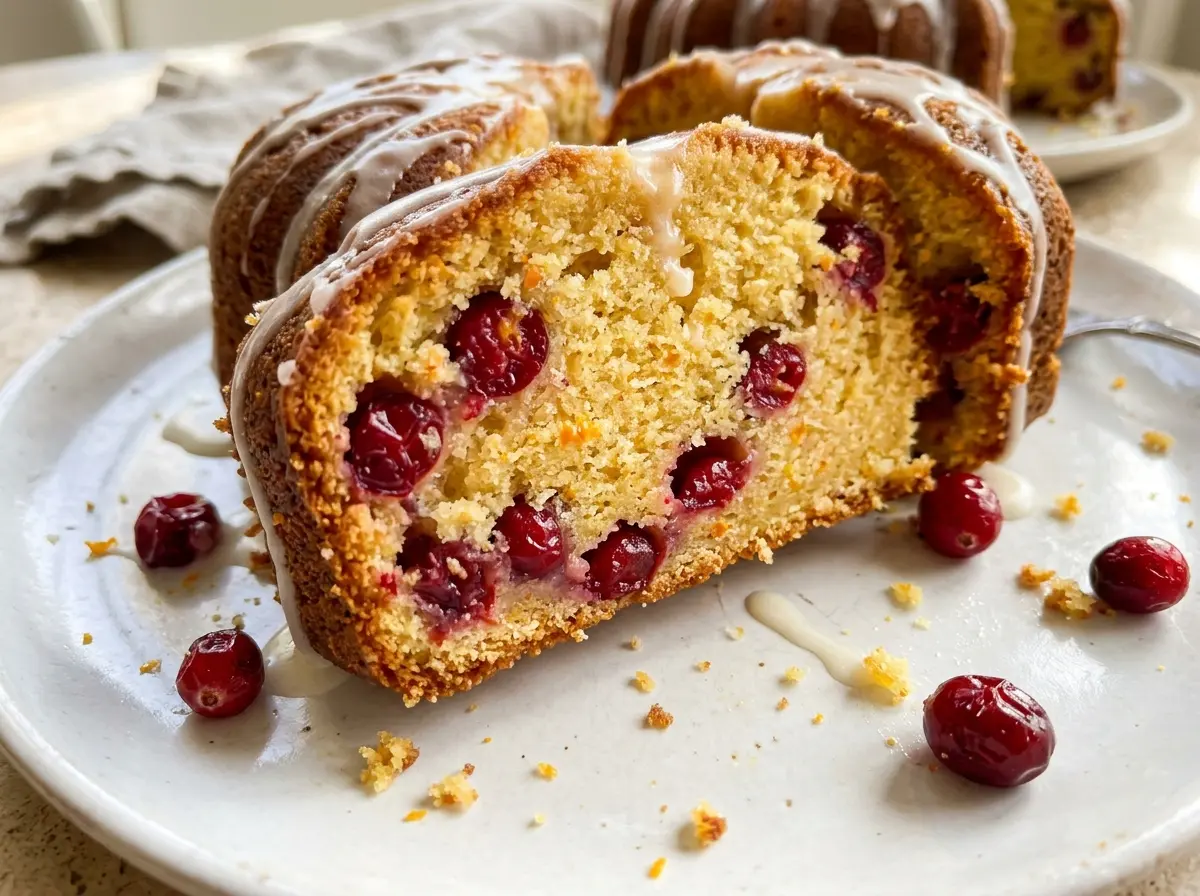
The cranberries make little ruby pockets in the batter, and the orange scent is already there before the pan goes into the oven. That’s the part I look forward to when I make this Cranberry Orange Cake: the fruit is tart against a soft, buttery crumb, while the orange keeps each bite bright without turning the cake into a citrus loaf.
I use both finely grated orange zest and orange juice, so the flavor comes through in two ways. The zest brings fragrant orange oils, and the juice joins the milk in the batter. Creaming the butter and sugar until pale and fluffy gives the cake a head start on a tender texture, while mixing the flour in gently keeps it from getting tough.
Once the cranberries are folded through, the batter spreads easily into a 9×13-inch pan and bakes into a generous cake for slicing. Give it time to cool before cutting; the crumb settles, and the cranberry-studded slices hold together neatly.
Kitchen Note
Dry the cranberries well after rinsing them. Water clinging to the berries can make the batter wetter in spots, and taking a minute to pat them dry helps keep the cake’s crumb even.
Save this Cranberry Orange Cake for its tart berry pockets, soft butter cake, and bright orange flavor.
Why a Few Moist Crumbs Are Better Than Waiting for a Bone-Dry Toothpick
A cake can be fully baked without the tester coming out perfectly clean. At the end of the bake, a toothpick inserted in the center should come out clean or carry a few moist crumbs. Wet batter clinging to it means the center needs more time; a few crumbs are a good stopping point. Waiting for the toothpick to look bone-dry risks taking this cake farther than it needs to go.
The cranberries make the center a little harder to judge by sight alone, since a berry can leave a streak of juice on the tester. Check more than one spot near the center, avoiding a cranberry when you can, and look for batter rather than fruit juice. The 35-to-42-minute range allows for differences between ovens, so use the toothpick cue along with the timer. The cake continues to settle as it cools in the pan, which is another reason not to keep baking it just to chase a completely dry crumb.
What the Orange, Butter, and Cranberries Each Bring to the Batter

- Orange zest and juice — Zest carries concentrated citrus aroma, while the juice adds a lighter orange note to the liquid ingredients. Grate the zest finely so it disperses through the crumb instead of leaving long strips. Bottled orange juice works in place of freshly squeezed juice; the zest is still what gives the cake its fragrant lift.
- Unsalted butter — Softened butter creams smoothly with the sugar and helps create the cake’s tender structure. Let it soften until it yields when pressed but isn’t shiny or melted; butter that’s too warm won’t hold air as well. If salted butter is what you have, use it and leave out the recipe’s added salt.
- Fresh cranberries — Their sharp tartness balances the sweet cake, and their firm skins hold up as the batter bakes. Choose berries that look plump and intact. Frozen cranberries can stand in: use them straight from the freezer rather than thawing them first, since thawed berries are softer and release more juice while you fold them in.
- All-purpose flour — It gives the cake enough structure to support the fruit without making the crumb heavy. Spoon the flour into your measuring cup and level it rather than packing it down. For a gluten-free version, a cup-for-cup baking flour blend designed to replace all-purpose flour is the practical swap; the crumb may be a little more delicate.
- Room-temperature eggs and milk — These blend more evenly into the creamed butter than refrigerator-cold ingredients, helping the batter stay cohesive. Set them out ahead of mixing. For a dairy-free variation, use plant-based baking sticks in place of the butter and unsweetened plant milk in place of the whole milk; the cake will have a slightly different richness.
Build the Batter Gently, Then Let the Center Finish Baking
Set Up the Pan and Dry Ingredients
Heat the oven to 350°F and grease a 9×13-inch baking pan before mixing. In a medium bowl, whisk the flour, baking powder, and salt until the leavening is distributed through the flour. This small step helps avoid concentrated pockets of baking powder in the finished crumb. Keep the bowl nearby so the dry mixture is ready when the butter is creamed.
Cream the Butter and Sugar Until Pale
Beat the softened butter and granulated sugar with an electric mixer on medium speed for about 2 to 3 minutes. The mixture should look paler and fluffier than it did at the start, with no large visible lumps of butter. If you stop while it still looks dense and glossy, the cake won’t have as much air worked into its base. Scrape the bowl if butter is clinging to the sides before moving on.
Add the Eggs One at a Time
Beat in the eggs individually, letting each one blend into the butter mixture before adding the next. This gradual addition helps the batter stay smooth instead of looking separated. Mix in the orange zest and vanilla after the eggs. If the mixture looks slightly uneven, keep mixing just until the ingredients come together rather than beating it for a long time.
Alternate the Flour and Milk Mixtures
Whisk the milk and orange juice together in a small bowl. Add the flour mixture and milk mixture to the butter mixture in alternating additions, beginning and ending with the flour mixture, and mix on low just until combined. Stop as soon as you no longer see dry flour; overmixing at this point can make the cake less tender. The finished batter should be thick enough to hold the cranberries throughout.
Fold, Bake, and Cool Before Slicing
Fold in the cranberries, then spread the batter evenly in the greased pan. Bake for 35 to 42 minutes, checking the center with a toothpick near the end of that range. Take the cake out when the tester comes out clean or with a few moist crumbs, not wet batter. Let it cool in the pan for at least 20 minutes before slicing so the warm crumb has time to firm up.
Three Useful Ways to Adapt Cranberry Orange Cake
Use Frozen Cranberries When Fresh Aren’t Available
Fold the frozen berries into the batter without thawing them first. They’ll be softer after baking than fresh berries, but keep their tart flavor and give you those bright pockets throughout the cake. Work quickly once they’re added so their color doesn’t streak through the batter.
Make It Dairy-Free With Baking Sticks and Plant Milk
Swap the butter for plant-based baking sticks and the whole milk for unsweetened plant milk, using the same amounts. Choose sticks made for baking rather than a soft tub spread, which can contain more water and change the batter. Expect a little less buttery richness, but the orange and cranberry flavors still come through.
Try a Cup-for-Cup Gluten-Free Flour Blend
Replace the all-purpose flour with a gluten-free blend labeled for a one-to-one swap in baking. The cake may have a slightly more delicate or crumbly texture, so cool it fully before cutting if you want especially tidy slices. Avoid using a flour blend intended only for thickening sauces.
Storage and Reheating
- Refrigerator: Keep the cake covered for up to 5 days. The crumb firms when chilled, so bring a slice to room temperature for a softer texture.
- Freezer: Freeze individual slices, wrapped well and stored in an airtight container, for up to 3 months. Thaw a slice overnight in the refrigerator or at room temperature.
- Reheating: Warm an individual slice briefly in the microwave until just warm. Long heating can dry the crumb, so use short intervals rather than heating it for a long stretch.
Questions That Come Up When Baking This Cranberry Orange Cake
Cranberry Orange Cake
Ingredients
Equipment
Method
- Heat the oven to 350°F.
- Grease a 9x13-inch baking pan.
- In a medium bowl, whisk together the all-purpose flour, baking powder, and salt.
- In a large bowl, beat the softened butter and granulated sugar with an electric mixer on medium speed until pale and fluffy, about 2 to 3 minutes.
- Beat in the eggs one at a time.
- Mix in the orange zest and vanilla extract.
- Whisk together the whole milk and orange juice in a small bowl.
- Add the flour mixture and milk mixture to the butter mixture in alternating additions, beginning and ending with the flour mixture; mix on low just until combined.
- Fold in the fresh cranberries.
- Spread the batter evenly in the prepared pan.
- Bake for 35 to 42 minutes, until a toothpick inserted in the center comes out clean or with a few moist crumbs.
- Cool the cake in the pan for at least 20 minutes before slicing.