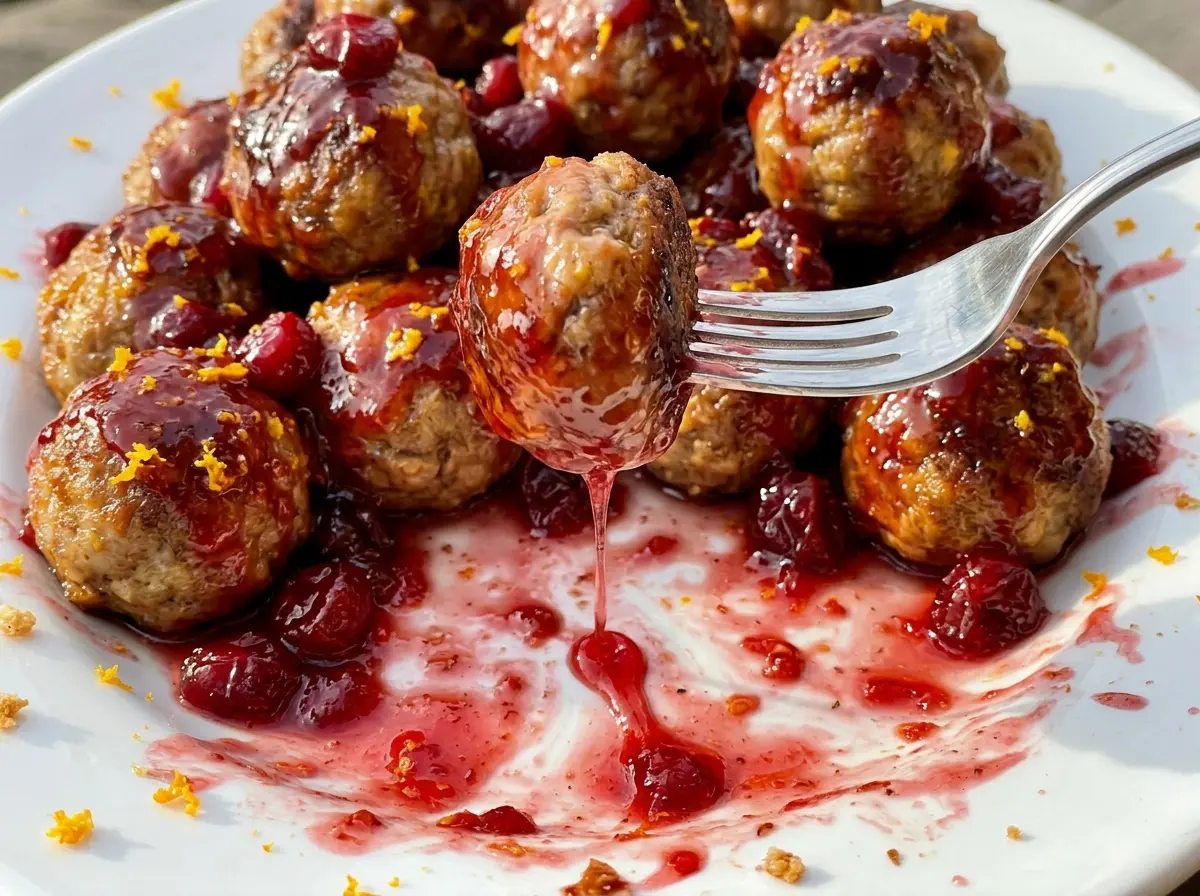
The cranberry sauce starts to loosen as it simmers, and the orange zest gives the whole pan a bright, citrusy smell. A little Dijon keeps the glaze from tasting like cranberry jelly poured over beef. That sweet-tart balance is what makes these cranberry orange meatballs work as more than a holiday-style sauce trick.
I bake the meatballs first, then let them spend just a few minutes in the sauce. That keeps the cranberry mixture from having to simmer for the entire time the beef needs to cook, and the finished meatballs still pick up plenty of glossy sauce. The result is tender beef with a bright, berry-rich coating that’s ready to serve warm.
Kitchen Note
Once the baked meatballs go into the sauce, keep the bubbles gentle. They’re already cooked, so a hard boil only risks breaking them while you’re trying to coat them.
Save these Cranberry Orange Meatballs for a sweet-tart party bite with tender beef and a bright orange-cranberry glaze.
Why This Cranberry Glaze Needs Orange and Dijon
Cranberry sauce brings sweetness and tartness, but on its own it can read as one-note beside savory beef. Orange juice softens that sharp edge, while finely grated zest gives the sauce a fresher citrus aroma without adding much liquid. Dijon brings a small, savory tang that keeps the glaze from feeling like dessert sauce.
The balance matters because the sauce is meant to cling to the meatballs, not bury their flavor. Simmering the sauce before the beef goes in lets the flavors come together and gives excess liquid time to cook off. Whole berries stay visible in the finished glaze, so each bite has a little fruit and a little tang alongside the beef. If you taste the sauce before adding the meatballs, it should be clearly sweet-tart with a mustard note in the background, not sharply vinegary or candy-sweet.
What Each Ingredient Brings to These Cranberry Orange Meatballs

- Plain breadcrumbs and milk — Together they make a soft base that helps keep the beef tender rather than dense. Use plain breadcrumbs so seasoned crumbs don’t add competing flavors; panko can work in the same quantity, though its larger flakes give the mixture a looser feel. Unsweetened, unflavored plant milk can replace dairy milk in an equal amount.
- 85% lean ground beef — This level of fat gives the meatballs enough richness to stay tender while they bake. Regular store-brand beef is fine here; a much leaner grind is more likely to taste dry. Ground turkey is a workable change, but it makes a lighter, less beefy meatball and needs a higher cooking temperature.
- Egg and finely grated yellow onion — The egg helps the mixture hold together, and grating the onion keeps its texture from interrupting the small meatballs. White onion works in the same amount if that’s what you have; grate it finely rather than chopping it so the pieces don’t stay crunchy.
- Whole-berry cranberry sauce — The canned version is convenient and gives the glaze both fruit pieces and a smooth base. A standard store brand works; the orange and Dijon do the flavor balancing. Jellied cranberry sauce is a useful swap when you want a smooth, berry-free coating.
- Orange juice and zest — Carton orange juice is perfectly fine, while fresh zest is where quality makes the biggest difference. Grate only the colored outer peel; the white pith underneath tastes bitter. If there’s no orange to zest, leave it out rather than adding extra juice and thinning the sauce.
- Light brown sugar and Dijon — The sugar rounds out the tart cranberry, and Dijon adds a gentle savory edge. Dark brown sugar can replace light brown for a deeper molasses note. A smooth, ordinary Dijon is all you need; there’s no advantage to using a specialty mustard here.
From Soft Meatball Mixture to Cranberry-Coated Finish
Let the Breadcrumbs Absorb the Milk
Stir the breadcrumbs and milk together in a large bowl, then let them stand for 2 minutes. That brief rest gives the crumbs time to take up the liquid before the beef is added. Add the ground beef, egg, grated onion, kosher salt, and black pepper. Mix gently, stopping as soon as the ingredients are combined; a long, firm mix makes meatballs compact.
Shape and Bake Until Browned
Heat the oven to 400°F and line a rimmed 18×13-inch baking sheet with parchment paper. Shape the mixture into about 30 meatballs, each about 1 inch wide, and arrange them on the sheet. Bake for 14 to 18 minutes, until the outsides are browned and the center of a meatball registers 160°F on an instant-read thermometer. Check a meatball from the center of the pan, where the oven’s heat can differ from the edges.
Simmer the Sauce Until It Thickens Slightly
While the meatballs bake, stir the cranberry sauce, orange juice, orange zest, packed light brown sugar, and Dijon together in a 3-quart saucepan. Bring the mixture to a simmer over medium heat, stirring occasionally. Let it cook for 8 to 10 minutes, watching for the sauce to look slightly thicker than it did straight from the can. Keep it at a simmer rather than letting it boil hard.
Coat the Meatballs Gently
Add the baked meatballs to the saucepan and simmer gently for 3 to 5 minutes. Stir carefully so the sauce coats them without knocking them against one another. The glaze should cling to the outside, with cranberry berries tucked between the meatballs. Serve warm.
Easy Ways to Adapt the Cranberry Orange Meatballs
Make Them Gluten-Free
Replace the plain breadcrumbs with the same amount of plain gluten-free breadcrumbs. The meatballs may have a slightly different, softer crumb, but the milk and egg still help hold the mixture together. Check that the crumbs are unseasoned so they don’t change the sweet-savory balance.
Make the Meatballs Dairy-Free
Use an equal amount of plain, unsweetened oat or soy milk in place of the dairy milk. Avoid vanilla or sweetened varieties, which would bring an unexpected flavor to the beef. The finished meatballs stay tender, though the exact crumb can vary by brand.
Choose a Smooth Cranberry Glaze
Use a 14-ounce can of jellied cranberry sauce instead of whole-berry sauce. The sauce will still simmer with the orange, sugar, and Dijon, but the finished coating will be smooth rather than dotted with whole berries. Stir as it heats so the jellied sauce breaks down evenly.
Storage and Reheating
- Refrigerator: Store the cooled meatballs and sauce together in an airtight container for 3 to 4 days. The sauce will firm up as it chills.
- Freezer: They freeze well. Cool completely, transfer to an airtight freezer-safe container with the sauce, and freeze for up to 3 months for best quality.
- Reheating: Warm them gently in a covered saucepan over low heat, stirring carefully, until the centers reach 165°F. Add a small splash of orange juice if the chilled sauce is too thick to loosen; avoid high heat, which can scorch the sugary glaze.
Questions That Come Up When Making These Meatballs
Cranberry Orange Meatballs
Ingredients
Equipment
Method
- Heat the oven to 400°F.
- Line a rimmed 18x13-inch baking sheet with parchment paper.
- In a large bowl, stir the plain breadcrumbs and milk together.
- Let the breadcrumb mixture stand for 2 minutes.
- Add the ground beef, egg, finely grated yellow onion, kosher salt, and black pepper.
- Mix gently just until combined.
- Shape the mixture into about 30 meatballs, each about 1 inch wide, and arrange them on the baking sheet.
- Bake for 14 to 18 minutes, until browned and the center of a meatball registers 160°F on an instant-read thermometer.
- In a 3-quart saucepan, stir together the whole-berry cranberry sauce, orange juice, finely grated orange zest, packed light brown sugar, and Dijon mustard.
- Bring the sauce to a simmer over medium heat, stirring occasionally.
- Cook for 8 to 10 minutes, until slightly thickened.
- Add the baked meatballs to the sauce.
- Simmer gently for 3 to 5 minutes, stirring carefully to coat them.
- Serve warm.