When the edges turn lightly golden, the center of a shortbread pan can still look pale and a little soft. That’s the cue I watch for with these cranberry pistachio shortbread squares: bake until the top looks set, then let the pan do the rest of the work as the bars cool. Cutting too early or lifting the slab while it’s warm can leave you with crumbly pieces instead of neat squares.
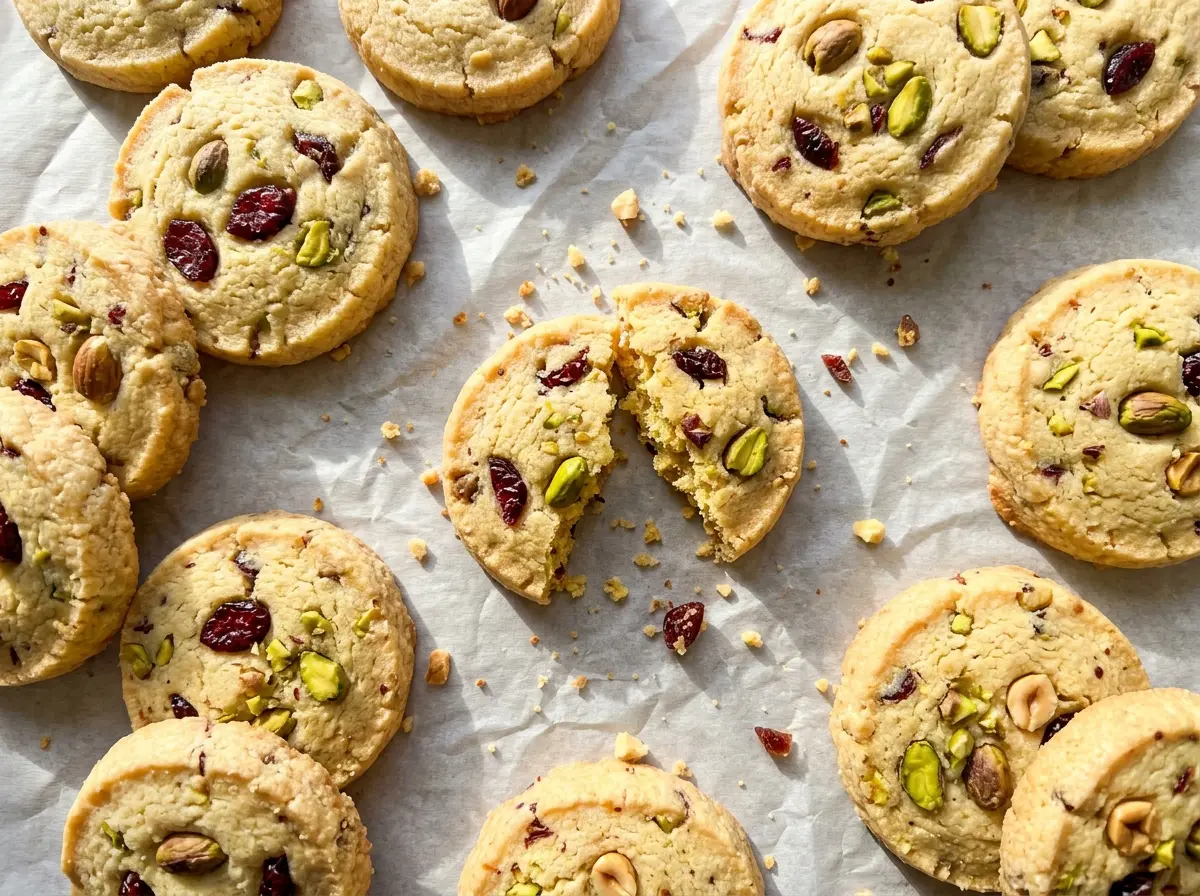
The dough comes together with softened butter, sugar, flour, and just enough mixing to make it clump. I fold in the cranberries and pistachios at the end so they stay distinct, then press everything into an even layer in a parchment-lined metal pan. Each bite has that tender, sandy shortbread texture with chewy fruit and a little crunch from the nuts.
Kitchen Note
Prick the dough all over with a fork before it goes into the oven. Those little holes help the surface bake evenly instead of puffing up in random spots.
Save these cranberry pistachio shortbread squares for a buttery, fruit-studded bake with crisp edges and tender centers.
Why These Squares Are Scored Before They’re Lifted
Shortbread is delicate while it’s hot, but it firms as it cools. That’s why I bake the dough as one slab, let it rest in the pan for 10 minutes, and score it into squares while it’s still warm. The knife marks set the portions without asking the tender dough to hold together before it’s ready.
Scoring and cutting aren’t the same job here. Use a sharp knife to mark all 16 squares, cutting down far enough to create clear lines, then leave the slab in the pan until it’s completely cool. If you try to lift or separate the pieces early, the shortbread can break along uneven cracks instead of those neat score lines. The parchment overhang gives you a way to lift the cooled slab out in one piece, but it’s best to wait until the center has fully set.
What the Butter, Flour, and Mix-Ins Bring to Shortbread

- Butter — Softened unsalted butter gives the dough its rich, tender crumb. It should yield when pressed but shouldn’t look melted or greasy; melted butter changes how the dough comes together. A firm dairy-free baking stick can stand in for the butter, though the shortbread may have a less buttery flavor.
- All-purpose flour — Spoon it into the measuring cup and level the top rather than scooping straight from the bag, which packs in extra flour and can make the squares dry. A one-to-one gluten-free baking flour blend is the most practical substitute; the finished texture may be a little more delicate, so cool the slab fully before lifting it.
- Dried cranberries — Their tart chew balances the buttery dough. Chop them if they’re large so the pieces are easier to cut through; dried cherries work in the same amount if that’s what you have.
- Pistachios — Shelled, unsalted nuts add a crisp bite without pushing the dough too salty. Chopping them gives you pieces throughout each square, while whole nuts can make clean cuts harder. Chopped almonds are a straightforward substitute with a milder, less distinctive flavor.
- Vanilla and kosher salt — Vanilla rounds out the butter, while salt keeps the sweetness from tasting flat. There’s no need for an expensive vanilla here; a standard pure or imitation extract will work.
Mixing and Baking the Dough Without Overworking It
Get the Pan Ready Before Mixing
Heat the oven to 325°F. Lightly grease a 9-inch square metal pan with 1 teaspoon of the butter, then line it with parchment paper, leaving an overhang on two sides. The butter helps the parchment stay in place as you press in the dough. Set the prepared pan aside while you mix.
Beat the Butter and Sugar Until Creamy
Beat the remaining softened butter with the sugar in a large bowl until smooth and creamy, about 2 minutes. Scrape the bowl if butter is clinging to the sides, then mix in the vanilla. The mixture should look cohesive, not separated or oily. Starting with softened butter makes it easier to blend the sugar evenly.
Bring the Dough Together Gently
Add the flour and kosher salt, then mix on low just until the dough begins to clump. It won’t look like a soft, pourable batter; small clumps are exactly what you want before adding the mix-ins. Fold in the cranberries and pistachios so they’re spread through the dough without crushing them. Stop mixing once the ingredients are distributed, since extra mixing can make shortbread tougher.
Press, Bake, and Score the Slab
Press the dough evenly into the prepared pan, paying attention to the corners so they aren’t thicker than the middle, and prick the surface all over with a fork. Bake for 35 to 40 minutes, until the edges are lightly golden and the top looks set. Let the pan cool for 10 minutes, then score the shortbread into 16 squares with a sharp knife. Cool completely in the pan before lifting it out by the parchment.
Easy Swaps for Cranberry Pistachio Shortbread
Trade the Cranberries for Dried Cherries
Use the same amount of chopped dried cherries in place of the cranberries. They keep the chewy fruit texture but make the squares a little sweeter and less tart, so the pistachios stand out more.
Make the Shortbread Dairy-Free
Replace all of the butter, including the small amount used to grease the pan, with an equal amount of firm unsalted dairy-free baking stick. Avoid soft tub spreads, which contain more water and can leave the dough greasy or too soft to press neatly.
Storage and Reheating
- Refrigerator: Store the cooled squares airtight for up to 2 weeks. They’ll feel firmer straight from the fridge; let them come to room temperature for a more tender bite.
- Freezer: Freeze completely cooled squares in an airtight container, with parchment between layers, for up to 2 months. Thaw at room temperature while still covered to keep condensation off the shortbread.
- Reheating: These are best served at room temperature, not reheated. Microwaving can soften the butter and make the shortbread greasy.
Questions That Come Up When Baking These Shortbread Squares
Cranberry Pistachio Shortbread
Ingredients
Equipment
Method
- Heat the oven to 325°F.
- Lightly grease a 9-inch square metal pan with 1 teaspoon of the butter.
- Line the pan with parchment paper, leaving an overhang on two sides.
- Beat the remaining butter and the sugar in a large bowl until smooth and creamy, about 2 minutes.
- Mix in the vanilla.
- Add the flour and salt and mix on low just until the dough begins to clump.
- Fold in the cranberries and pistachios.
- Press the dough evenly into the prepared pan.
- Prick the surface all over with a fork.
- Bake for 35 to 40 minutes, until the edges are lightly golden and the top looks set.
- Cool in the pan for 10 minutes.
- Score into 16 squares with a sharp knife.
- Cool completely in the pan before lifting out with the parchment.