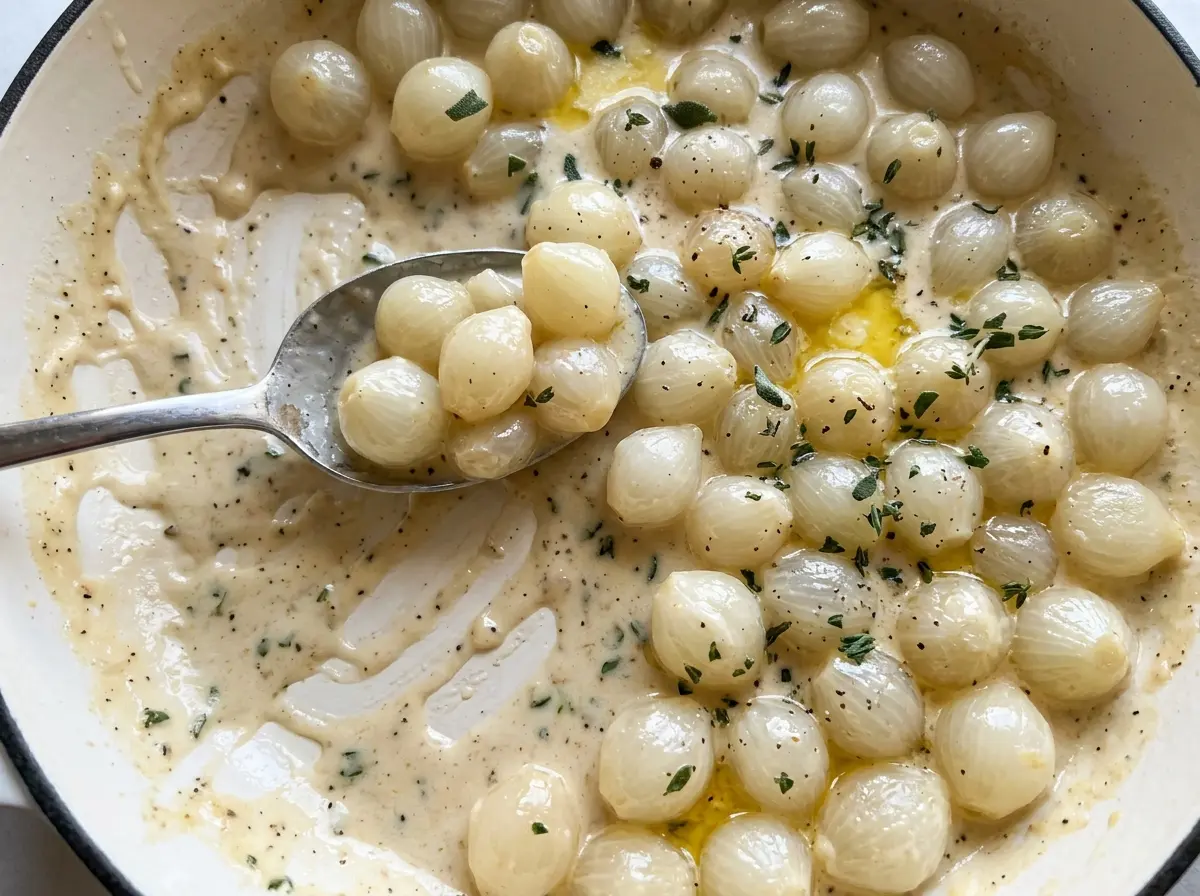
When frozen pearl onions hit boiling water, they bob and tumble before settling into a tender, sweet bite. I used to worry that a cream sauce would smother them, but the right thickness lets each onion stay distinct while a little sauce clings to its curves. That’s the balance I want from creamed pearl onions with sage and thyme: soft onions, a silky coating, and herbs that come through without taking over.
Frozen onions keep peeling out of the equation, and cooking them separately means they don’t overcook while the sauce thickens. I drain them, make the roux in the same saucepan, then stir the onions and herbs in at the end. Fresh sage and thyme make this a savory, gently fragrant side, with a smooth sauce that settles into the spaces between the onions.
Kitchen Note
Drain the onions thoroughly before they go into the sauce. Water clinging to them can thin the cream just when you want it to cling to each onion.
Save these creamed pearl onions with sage and thyme for a side dish with tender onions and a smooth, herb-scented sauce.
Why the Roux Needs Its Full Minute Before the Milk Goes In
A cream sauce can taste floury when the flour doesn’t get a brief cook in the butter. Stirring it over medium heat for a full minute gives the roux time to cook while it stays pale; you’re looking for a smooth paste, not a browned one. Keep it moving so the flour cooks evenly across the bottom of the saucepan.
Adding the milk and cream gradually matters just as much. A steady whisk breaks up the roux as the liquid goes in, so the sauce thickens evenly instead of leaving little floury lumps behind. Let it simmer until it coats a spoon, then stop there. The sauce will coat the onions without turning into a stiff paste, and it will tighten a little more as the onions warm through.
This is a light, creamy sauce rather than a heavy casserole filling. If it looks thinner than you expect before the simmer, give it time to thicken instead of reaching for extra flour. The spoon-coating cue is more dependable than judging it by how it looks while the dairy is still being whisked in.
Frozen Pearl Onions and the Ingredients That Shape the Sauce

- Frozen pearl onions — They’re already peeled and portioned, and their small size cooks quickly from frozen. Use a plain package of pearl onions; there’s no need to thaw them first. If you use fresh pearl onions instead, they’ll need peeling and their tenderness—not the frozen-onion timing—should guide the cooking.
- Whole milk and heavy cream — Whole milk gives the sauce its pourable base, while heavy cream brings a fuller, silkier finish. Using lower-fat milk in place of whole milk makes the sauce less rich, and replacing all the cream with milk takes away some of its body. For a dairy-free adaptation, see the card below.
- Unsalted butter and all-purpose flour — Together, these form the roux that thickens the dairy. Unsalted butter lets the kosher salt stay in control, while all-purpose flour is a reliable thickener here. A measure-for-measure gluten-free flour blend is the most practical swap if you need to avoid wheat.
- Fresh sage — Chopped sage gives the sauce its earthy, savory note. Fresh leaves have a brighter aroma than dried sage, which can taste more concentrated and less fresh in a dish where the herbs are stirred in near the end.
- Fresh thyme — The small leaves bring a lighter herbal note alongside the sage. Strip the leaves from the stems before measuring them; woody stems aren’t pleasant in the finished sauce.
From Tender Onions to a Sauce That Coats a Spoon
Boil the Onions Until Tender
Bring the water to a boil in a 3-quart saucepan over high heat, then add the frozen pearl onions. Simmer them for 5 to 7 minutes, until tender. Start checking near the short end of that range; the onions should give when pierced without falling apart. Drain them and set them aside while you use the same saucepan for the sauce.
Cook the Roux and Whisk in the Dairy
Melt the butter over medium heat, stir in the flour, and cook for 1 minute while stirring constantly. The mixture should look smooth and pale, with no dry flour at the edges of the pan. Gradually whisk in the milk and heavy cream, working steadily so the roux blends into the liquid. Simmer for 3 to 5 minutes, whisking often, until the sauce is smooth and thick enough to coat a spoon.
Warm the Onions with the Herbs
Stir the drained onions into the sauce with the chopped sage, thyme leaves, kosher salt, and black pepper. Cook gently for 2 minutes, until the onions are heated through. Keep the heat gentle rather than letting the sauce boil hard; the goal is to warm everything together, not cook the onions further. The finished sauce should cling to the onions while still looking creamy around them.
Three Ways to Adjust the Herbs or Make a Dietary Swap
A Sage-Only Version
Leave out the thyme and keep the fresh sage. The result is more earthy and direct, with less of the light, woodsy note thyme brings to the sauce.
A Gluten-Free Roux
Replace the all-purpose flour with a measure-for-measure gluten-free flour blend. The sauce may be a little less silky, but the blend still thickens the milk and cream into a spoon-coating sauce; whisk it in gradually just as you would the all-purpose flour.
A Dairy-Free Sauce
Use unsalted plant butter in place of the butter, and substitute unsweetened oat milk and unsweetened oat-based cooking cream for the whole milk and heavy cream in equal amounts. The sauce will be less rich than the dairy version, but the flour still gives it body.
Storage and Reheating
- Refrigerator: Store in a covered container for 3 to 4 days. The sauce will thicken as it chills, and the onions will soften slightly.
- Freezer: Freezing isn’t recommended. Cream sauces can separate after thawing, and the pearl onions may turn soft.
- Reheating: Warm gently in a saucepan over low heat, stirring often. If the chilled sauce is too thick, whisk in a small splash of milk; avoid bringing it to a hard boil.
Questions That Come Up While Making Creamed Pearl Onions
Creamed Pearl Onions with Sage and Thyme
Ingredients
Equipment
Method
- Bring the water to a boil in a 3-quart saucepan over high heat.
- Add the frozen onions and simmer for 5 to 7 minutes, until tender.
- Drain the onions and set them aside.
- Melt the butter in the same saucepan over medium heat.
- Stir in the flour and cook for 1 minute, stirring constantly.
- Gradually whisk in the milk and heavy cream.
- Simmer for 3 to 5 minutes, whisking often, until the sauce is smooth and thick enough to coat a spoon.
- Stir in the onions, sage, thyme, salt, and pepper.
- Cook gently for 2 minutes, until the onions are heated through.