Tender chicken, penne, and a garlicky parmesan cream sauce all baked under a blanket of melted mozzarella is the kind of dinner that disappears fast. The pasta holds onto the sauce instead of drowning in it, the chicken stays tucked into every bite, and the top bakes into a bubbling, lightly browned lid that turns this from a skillet dinner into a proper casserole.
What makes this version work is the order. The garlic gets a short cook in butter so it tastes mellow and round, not sharp. The cream, broth, and parmesan simmer just long enough to thicken before everything goes into the oven, which keeps the bake rich without turning gluey. Using cooked chicken also keeps the texture right; raw chicken would dump extra liquid into the dish and change the whole balance.
Below you’ll find the little details that keep the sauce smooth, the pasta from overcooking, and the top from going pale when you wanted bronze and bubbly. There are also a few smart swaps if you need to stretch it, lighten it up, or work with what you’ve got in the fridge.
The sauce thickened up beautifully and stayed creamy after baking. I used rotisserie chicken, and the whole dish came together faster than I expected with that golden mozzarella top.
Creamy Garlic Parmesan Chicken Pasta Bake is the kind of bubbling casserole worth keeping for busy nights.
The Creamy Sauce Needs the Right Thickness Before It Goes In the Oven
The biggest mistake in a pasta bake like this is assuming the oven will do all the work. It won’t. If the sauce is too thin when it hits the baking dish, the pasta keeps soaking it up and the finished casserole turns loose around the edges and heavy in the middle. Simmering the cream, broth, and parmesan for a few minutes before assembling gives you a sauce that clings instead of pooling.
Parmesan matters here because it thickens as it melts, but only if you grate it finely and add it over low heat. Pre-shredded parmesan usually has starches that can make the sauce a little grainy. If graininess shows up, the pan was too hot. Pull it off the burner, stir slowly, and let the residual heat finish the job.
What Each Ingredient Is Actually Doing in This Dish

- Penne pasta — The tube shape catches the sauce inside and around the edges. A short pasta with ridges works best here, and penne holds up better than delicate shapes that can get soft in the oven.
- Cooked chicken — Rotisserie chicken is the easiest option, and leftover roast chicken works just as well. Use chicken that’s already seasoned if you can, because the bake itself is rich and mild enough to welcome extra savory flavor.
- Heavy cream — This is what gives the sauce its body and plush texture. Half-and-half will work in a pinch, but it makes a thinner sauce that won’t coat the pasta the same way.
- Parmesan cheese — This does more than add flavor; it helps the sauce thicken as it melts. Buy a block and grate it yourself if you want the smoothest sauce.
- Mozzarella — This is the cheese that gives you the melt-and-stretch on top. Part-skim shreds are fine, but whole-milk mozzarella browns better and tastes creamier.
- Garlic — Fresh garlic is worth using here because the whole dish leans on that flavor. Let it cook only until fragrant; if it browns, it turns bitter and you’ll taste it in every bite.
Building the Bake So the Pasta Stays Creamy, Not Mushy
Cooking the Pasta Just Short of Done
Boil the penne in well-salted water until it’s just al dente, then drain it right away. The pasta finishes in the oven, so it should still have a little bite in the center when it goes into the baking dish. If you cook it all the way through at the boiling stage, the final texture goes soft and the pasta starts breaking apart when you scoop it.
Waking Up the Garlic in Butter
Melt the butter over medium heat and add the garlic for about a minute, just until it smells warm and fragrant. You want the garlic softened, not browned. If it starts to color before the cream goes in, the heat is too high and the sauce will pick up a harsh edge.
Turning the Cream Into a Sauce
Stir in the heavy cream, chicken broth, and parmesan, then let it simmer gently until it looks slightly thicker and coats the back of a spoon. Keep the heat low enough that the sauce barely bubbles. Hard boiling is what makes dairy split, and once that happens the sauce won’t bake back together smoothly.
Baking Until the Top Goes Golden
Fold the pasta and chicken into the sauce, spread everything in the baking dish, and cover the top with mozzarella in an even layer. Bake until the edges are bubbling and the cheese has melted into patches of pale gold and deeper brown. If the top is melted but still light, give it another minute or two under the broiler only if you can watch it the whole time — cheese goes from perfect to scorched fast.
How to Adapt This for a Smaller Dinner or a Different Pantry
Dairy-Light Swap With Less Richness
You can use half-and-half instead of heavy cream, but the sauce will be thinner and less plush. If you go this route, simmer it a little longer before assembling so it reduces enough to coat the pasta. It still tastes good, but it won’t have the same velvety finish.
Gluten-Free Version That Still Bakes Well
Use your favorite gluten-free penne and cook it just shy of done, since gluten-free pasta can soften faster in the oven. Check the package closely for timing, because some brands turn fragile if they sit in hot liquid too long. The sauce and topping stay the same.
Vegetarian Version With Real Body
Swap the chicken for sautéed mushrooms, spinach, or roasted broccoli and use vegetable broth instead of chicken broth. The mushrooms bring the most satisfying texture because they hold up like chicken does and add a savory note that keeps the casserole from tasting flat.
Storage and Reheating
- Refrigerator: Store covered for up to 4 days. The pasta will absorb more sauce as it sits, so the bake gets a little thicker by day two.
- Freezer: It freezes well, especially if you portion it before freezing. Wrap tightly and freeze for up to 2 months, then thaw in the fridge before reheating so the sauce doesn’t separate from a shock of heat.
- Reheating: Cover and warm in a 350°F oven until hot in the center, or reheat smaller portions in the microwave with a splash of broth or cream. The mistake to avoid is blasting it uncovered on high heat, which dries out the pasta and makes the cheese top tough.
Questions I Get Asked About This Recipe
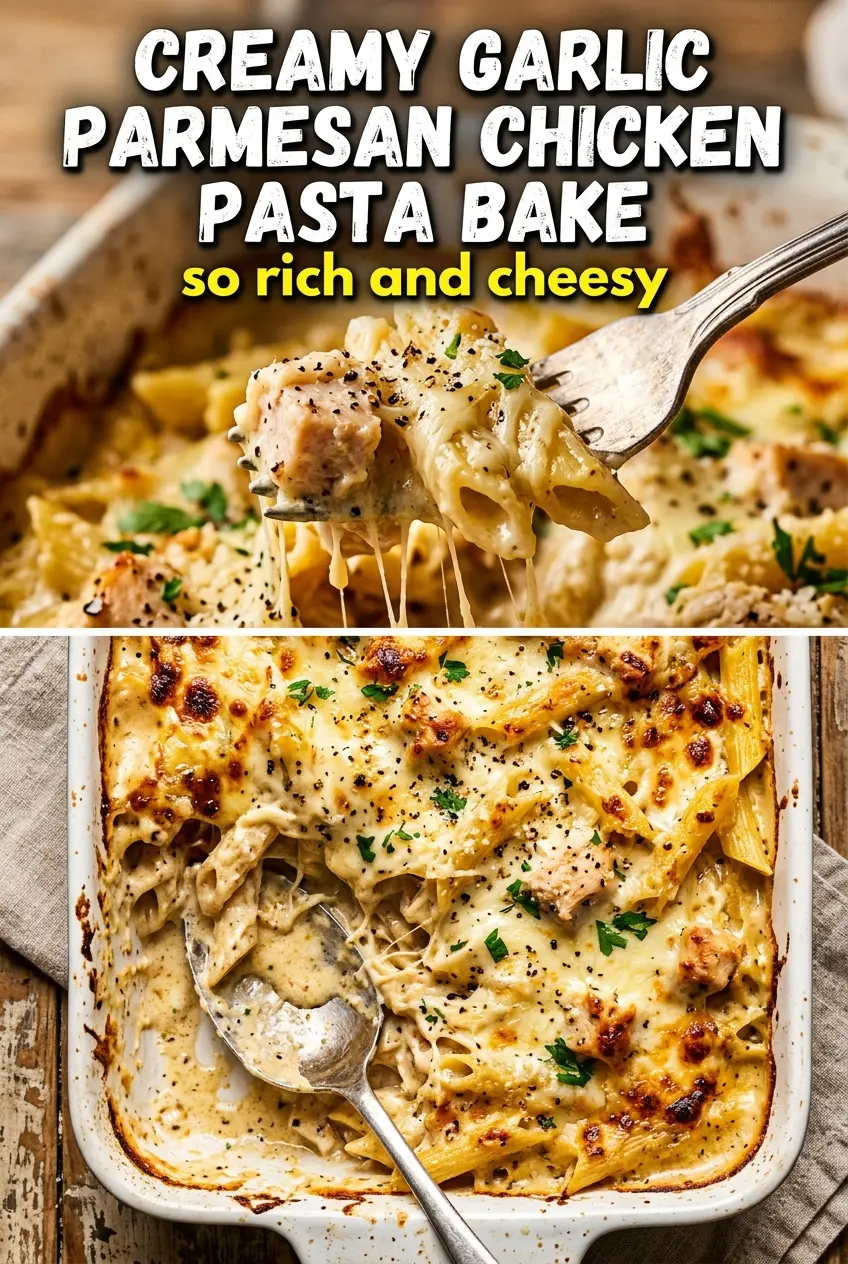
Creamy Garlic Parmesan Heavy Cream Chicken Pasta Bake
Ingredients
Equipment
Method
- Preheat the oven to 375°F. Cook the penne pasta in salted boiling water until al dente, then drain.
- Melt the butter in a large skillet over medium heat and add the garlic, cooking for 1 minute until fragrant.
- Stir in the heavy cream, chicken broth, and grated parmesan cheese, simmering until slightly thickened, about 4–5 minutes.
- Combine the cooked pasta, cooked, cubed chicken, and the sauce in a large baking dish.
- Top evenly with shredded mozzarella cheese.
- Bake for 20–25 minutes, until bubbly and golden on top.
- Season with salt and pepper and serve warm.