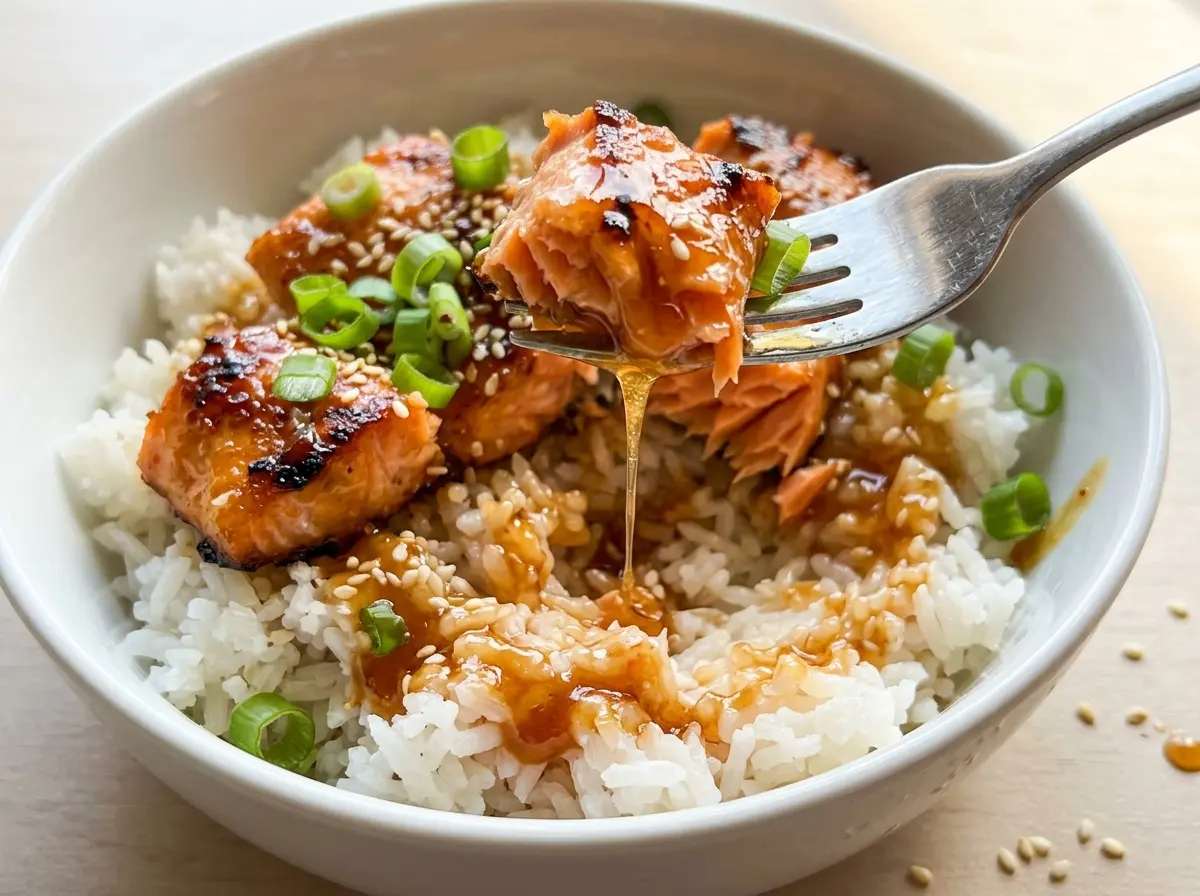
The first thing I watch in the skillet is the coating: the salmon should turn golden at the edges before the honey sauce ever touches it. I used to pour the sauce in too soon, and the pieces softened before they had a chance to brown. Now I cook the salmon in two batches, then give the sauce its own short simmer. That’s how these crispy honey ginger salmon bowls get a browned outside and a glossy finish without losing the tender salmon inside.
The cornstarch coating is thin, not doughy, and it needs dry salmon to cling evenly. Pat the cubes well, then toss gently so each piece gets a light dusting. Once the sauce is in the pan, it only needs a brief bubble to thicken; the salmon goes back in at the end for a quick, careful toss. With fluffy rice underneath and cool cucumber and avocado on top, every bowl has a little contrast in temperature and texture.
Kitchen Note
Keep the rice covered for its full 10-minute rest after the heat is off. That quiet finish lets the grains steam through, so the rice is fluffy when you lift the lid.
Save this crispy honey ginger salmon bowl for its golden salmon, quick honey-ginger glaze, and cool, crunchy toppings.
Why the Honey Sauce Goes In After the Salmon Is Brown
Honey turns from glossy to sticky quickly in a hot skillet. If it goes in while the salmon is still browning, it can scorch before the fish has color, and the coating won’t stay as crisp. Cooking the salmon first gives the cornstarch a chance to brown in the neutral oil, while the sauce gets a short, separate simmer at a gentler heat.
The sauce is deliberately concentrated with honey, soy sauce, rice vinegar, ginger, garlic, and toasted sesame oil. It doesn’t need a long reduction; a bubbling 30 to 60 seconds is enough to thicken it slightly. Then the salmon gets tossed through it just long enough to pick up a shiny coating. You get the sweet-savory ginger flavor on every piece without asking the honey to spend several minutes over direct heat.
This order also makes the skillet easier to manage. Brown the pieces in two batches, transfer them out, and lower the heat before adding the sauce. If the pan is too hot when the honey mixture hits, it bubbles aggressively and can catch on the bottom. A medium-low simmer gives you time to stir and watch the texture change.
What Gives These Bowls Their Crisp, Glossy, Cool Contrast

- Skinless salmon — Cut it into even cubes so the pieces brown at a similar pace. A fresh fillet is ideal, but there’s no need to seek out a premium cut; the quick skillet cook and sauce bring plenty of flavor.
- Cornstarch — This is what helps form the light, crisp coating around the salmon. Flour won’t give the same delicate crust, so keep the cornstarch for the closest result. Patting the fish dry first helps the coating stick instead of clumping.
- Honey and soy sauce — Honey supplies the glaze’s sweetness and body, while soy sauce brings its savory depth. For a gluten-free bowl, use gluten-free tamari in place of the soy sauce; the exact swap is in the variations below.
- Rice vinegar, ginger, and garlic — Rice vinegar cuts through the honey, and freshly grated ginger gives the sauce its bright, warm bite. Fresh garlic adds a deeper savory note. Mince it finely so it blends into the quick-cooking glaze.
- Toasted sesame oil — Its nutty aroma is distinctive, so use toasted sesame oil rather than a neutral oil here. The neutral oil is for browning the salmon; sesame oil belongs in the sauce.
- Rice and toppings — Long-grain white rice gives the bowls a soft, separate-grain base. Cucumber adds cool crunch, avocado brings a creamy counterpoint, and scallions and sesame seeds finish each bowl with fresh, savory notes.
From Fluffy Rice to Glazed Salmon, Without Losing the Crisp
Steam the Rice Until the Grains Are Tender
Rinse the rice under cold water until the water runs mostly clear, then drain it. Combine it with the water and kosher salt in a 2-quart saucepan and bring it to a boil over high heat. Cover, reduce the heat to low, and simmer for 15 minutes; turn off the heat and let it stand covered for 10 minutes. Keep the lid in place during the simmer and rest so the steam stays in the pan.
Whisk the Sauce Before the Skillet Gets Busy
Whisk the honey, soy sauce, rice vinegar, grated ginger, minced garlic, and toasted sesame oil in a small bowl until combined. Set it beside the stove before you start browning the salmon. The sauce comes together quickly in the skillet, and having it ready means you won’t need to step away while the browned bits are at their best.
Brown the Salmon in Two Batches
Pat the salmon cubes dry, then gently toss them with the cornstarch and black pepper until evenly coated. Heat 1 tablespoon of neutral oil in a 12-inch skillet over medium-high heat and add half the salmon in a single layer. Turn the pieces occasionally and cook for 4 to 6 minutes, until browned on several sides and the thickest pieces reach 145°F; transfer them to a plate. Repeat with the remaining oil and salmon, keeping the pieces in a single layer rather than crowding the skillet.
Glaze Gently and Build the Bowls
Reduce the heat to medium-low and pour the sauce into the skillet. Stir as it simmers for 30 to 60 seconds, until bubbling and slightly thickened; if it starts to darken too quickly, lower the heat. Return the salmon and gently toss to coat, taking care not to break up the cubes. Divide the rice among four bowls and top with the salmon, thinly sliced cucumber, sliced avocado, scallions, and sesame seeds.
Three Simple Swaps for a Different Take on These Salmon Bowls
Make the Bowl Gluten-Free with Tamari
Replace the soy sauce with the same amount of gluten-free tamari. The sauce stays savory and glossy, with a slightly deeper, rounder taste; the rest of the bowl stays the same.
Use Low-Sodium Soy Sauce
Swap in an equal amount of low-sodium soy sauce when you want a gentler salty edge. The glaze will taste a little less intense, while the honey, ginger, and vinegar still keep it balanced.
Trade Honey for Maple Syrup
Use the same amount of pure maple syrup in place of the honey. The glaze will be a little thinner and more woodsy in flavor, so watch it closely as it bubbles and take it off the heat once it thickens slightly.
Storage and Reheating
- Refrigerator: Refrigerate cooked salmon and rice within 2 hours and use them within 3 to 4 days. Store the cucumber and avocado separately; the avocado browns and the cucumber softens if packed with the warm components.
- Freezer: Cooked salmon and rice freeze for up to 2 months, packed separately in airtight containers. Skip freezing the fresh cucumber and avocado, which lose their texture after thawing.
- Reheating: Warm the salmon and rice covered in the microwave or in a skillet over low heat until leftovers reach 165°F. Add the cucumber and avocado after reheating; heating those toppings makes them limp.
The Questions That Come Up When Cooking Honey Ginger Salmon
Crispy Honey Ginger Salmon Bowl
Ingredients
Equipment
Method
- Rinse the rice under cold water until the water runs mostly clear, then drain it.
- Combine the rice, water, and salt in a 2-quart saucepan and bring to a boil over high heat.
- Cover, reduce the heat to low, and simmer for 15 minutes.
- Turn off the heat and let stand covered for 10 minutes.
- Whisk the honey, soy sauce, rice vinegar, ginger, garlic, and sesame oil in a small bowl until combined.
- Pat the salmon dry, then gently toss it with the cornstarch and black pepper until evenly coated.
- Heat 1 tablespoon of the neutral oil in a 12-inch skillet over medium-high heat; cook half the salmon in a single layer, turning occasionally, for 4 to 6 minutes until browned on several sides and the thickest pieces reach 145°F, then transfer to a plate. Repeat with the remaining oil and salmon.
- Reduce the heat to medium-low, pour the sauce into the skillet, and simmer for 30 to 60 seconds, stirring, until bubbling and slightly thickened.
- Return the salmon to the skillet and gently toss to coat.
- Divide the rice among four bowls and top with the salmon, cucumber, avocado, scallions, and sesame seeds.