Deep, rich beef stew is one of those slow cooker meals that pays you back all day long. By dinnertime, the broth has gone dark and savory, the beef turns fork-tender without drying out, and the potatoes soak up every bit of flavor instead of tasting boiled and bland. The best version isn’t muddy or thin. It has a glossy broth, soft vegetables that still hold their shape, and beef that falls apart in big, satisfying chunks.
What makes this crock pot version work is the layering. The vegetables go in first so they’re sitting in the liquid and slowly softening, while the beef stays on top long enough to braise instead of simmer flat. The tomato paste, Worcestershire, and red wine build depth early, and the cornstarch slurry gets added only at the end so the broth thickens cleanly instead of turning pasty after hours of heat.
Below you’ll find the exact timing that keeps the beef tender, the one step that keeps the stew from tasting flat, and a few useful swaps if you want to skip the wine or change up the vegetables.
The broth turned out rich and glossy, and the beef was shredding with a spoon after 8 hours on low. I liked that the potatoes held their shape and didn’t get mushy like they do in some slow cooker stews.
Save this Crock Pot Beef Stew for a low-and-slow dinner with fall-apart beef, tender potatoes, and a deep savory broth.
The Secret to Tender Beef Isn’t More Heat
The biggest mistake with slow cooker stew is trying to rush the beef. High heat can get the job done faster, but it doesn’t give chuck roast enough time to soften its connective tissue evenly. That’s how you end up with meat that looks done on the outside but still feels tight in the center, or vegetables that turn to complete mush before the beef is ready. Low heat is what turns tough beef into spoon-tender stew meat.
The second thing that matters is restraint. Don’t stir the stew constantly while it cooks. Every time you open the lid, you lose heat and extend the cooking time. Let the slow cooker do the work, then check the beef near the end. It should break apart easily when pressed with a spoon, and the potatoes should be tender but still intact.
- Beef chuck — This is the cut that belongs here. It has enough marbling and connective tissue to become silky after a long cook. Lean stew meat can taste dry by comparison.
- Baby potatoes — They hold their shape better than russets or diced baking potatoes. Halving them lets them cook through without collapsing.
- Red wine — This gives the broth a deeper, rounder finish. If you skip it, use extra beef broth, but expect a slightly less complex stew.
- Tomato paste and diced tomatoes — The paste adds body and the tomatoes add acidity, which keeps the stew from tasting heavy. That small amount of acid makes the beef flavor stand out.
- Worcestershire sauce — It brings savory depth that’s hard to fake with salt alone. There isn’t a perfect substitute, but soy sauce plus a little extra broth can stand in if needed.
Building the Stew in the Right Order
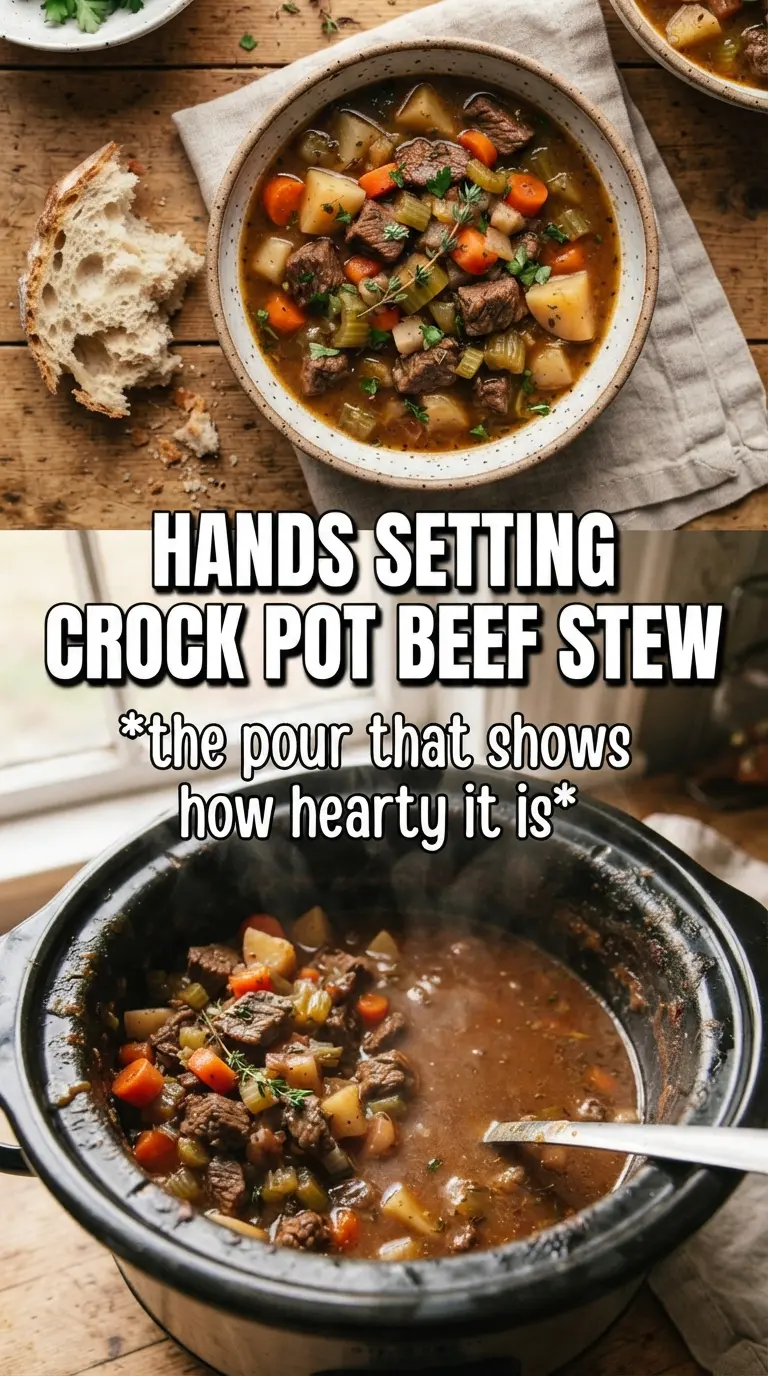
Place the potatoes, carrots, celery, and onion in the bottom of the slow cooker first. They act like a bed for the beef and keep the meat from sitting directly on the hot insert, which helps it braise more gently. If you pile everything in randomly, the vegetables on top can dry out while the bottom turns too soft.
Season the beef well before it goes in. Chuck needs a solid hand with salt and pepper or the stew will taste flat no matter how long it cooks. After that, add the garlic, broth, wine, tomatoes, tomato paste, Worcestershire, thyme, rosemary, and bay leaves. The liquid won’t look thick yet, and that’s fine — slow cooking concentrates flavor over time.
When the stew is done, remove the bay leaves before adding the slurry. Cornstarch only works cleanly when it’s mixed with cold water first, then stirred into hot liquid near the end. If you dump the dry starch straight in, it clumps and leaves chalky streaks in the broth.
Layer the Vegetables First
Spread the potatoes, carrots, celery, and onion across the bottom in an even layer. This gives the stew a stable base and keeps the vegetables from floating into a dry top layer. The onions will melt into the broth, while the carrots and potatoes hold enough structure to stay satisfying.
Let the Beef Braise, Not Boil
Set the seasoned beef over the vegetables, then pour in the liquid and seasonings. The goal is a gentle braise, not an aggressive simmer. If your slow cooker runs hot, check the beef around the eight-hour mark on low so it doesn’t go from tender to stringy.
Thicken at the End
Stir the cornstarch slurry into the hot stew and cook uncovered on high for 20 to 30 minutes. You’ll see the broth go from thin to glossy and lightly cling to the spoon. If it still seems loose, give it a little more time instead of adding more slurry right away, because it continues thickening as it sits.
How to Adapt This Slow Cooker Stew Without Losing the Good Part
Skip the Wine and Keep the Depth
Use the full cup of beef broth instead of red wine. The stew will still be rich because the tomato paste, Worcestershire, and long cook time carry most of the savory flavor. What you lose is a little brightness and complexity, but it still tastes like a proper beef stew.
Make It Gluten-Free
This stew is already close, but check your Worcestershire sauce since some brands contain gluten. If needed, swap in a certified gluten-free version or use tamari with a splash of vinegar. The cornstarch slurry is naturally gluten-free and keeps the broth silky.
Add Mushrooms or Peas
Sliced mushrooms can go in with the vegetables at the start, and frozen peas should go in during the last 15 minutes. Mushrooms deepen the broth, while peas stay bright if they’re added near the end. If you add peas too early, they lose their color and turn mealy.
Storage and Reheating
- Refrigerator: Store for up to 4 days. The broth thickens as it chills, and the potatoes soften a bit more overnight.
- Freezer: This freezes well for up to 3 months. Cool it completely first, then pack it into airtight containers. The potatoes can become slightly softer after thawing, but the flavor holds up well.
- Reheating: Warm it gently on the stove or in the microwave with a splash of broth if needed. Don’t boil it hard, or the beef can tighten up and the vegetables can break apart.
Answers to the Questions Worth Asking
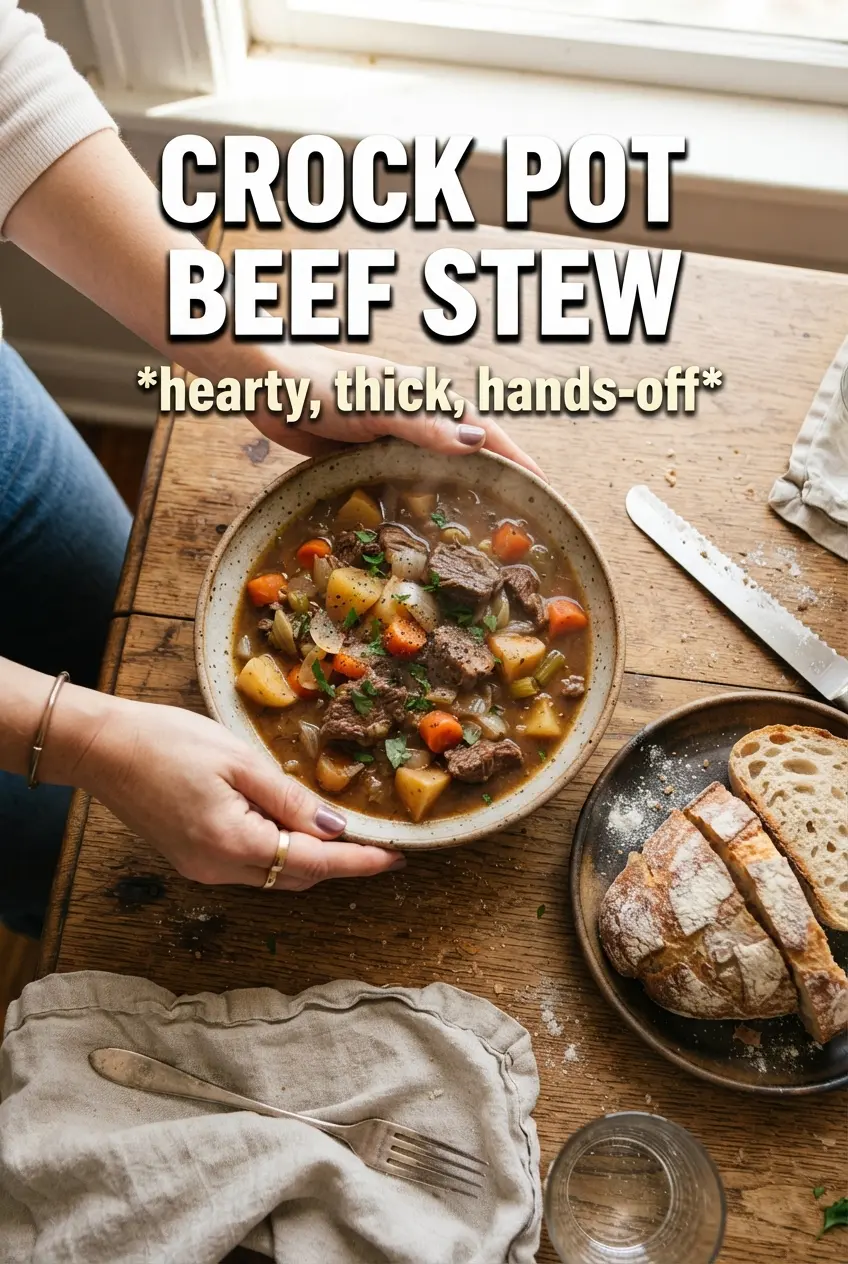
Crock Pot Beef Stew
Ingredients
Equipment
Method
- Season the beef generously with salt and pepper until fully coated, then arrange it on the bottom of the slow cooker. Use a generous pinch each time so the seasoning reaches every cube.
- Add the potatoes, carrots, celery, and onion to the bottom of the slow cooker. Spread them out so they cook evenly around the meat.
- Nestle the seasoned beef on top of the vegetables. Make sure most pieces sit in a single layer for better tenderness.
- Add the garlic, beef broth, red wine (or extra beef broth), diced tomatoes, tomato paste, Worcestershire sauce, dried thyme, dried rosemary, and bay leaves. Stir just enough to distribute the aromatics without breaking up the cubes.
- Cover and cook on Low for 8-10 hours, or on High for 4-5 hours, until the beef is fall-apart tender. Keep the lid on to maintain temperature and moisture.
- Remove the bay leaves from the stew and discard them. Stir to redistribute the solids before thickening.
- Whisk the cornstarch slurry (cornstarch plus water) into the stew, then stir until no lumps remain. The sauce should look slightly thinner before it thickens.
- Cook on High for 20-30 minutes until the broth thickens, stirring once halfway if needed. Watch for a glossy, gravy-like texture.
- Season with additional salt and pepper to taste, then serve hot. Taste for balance and adjust before serving.