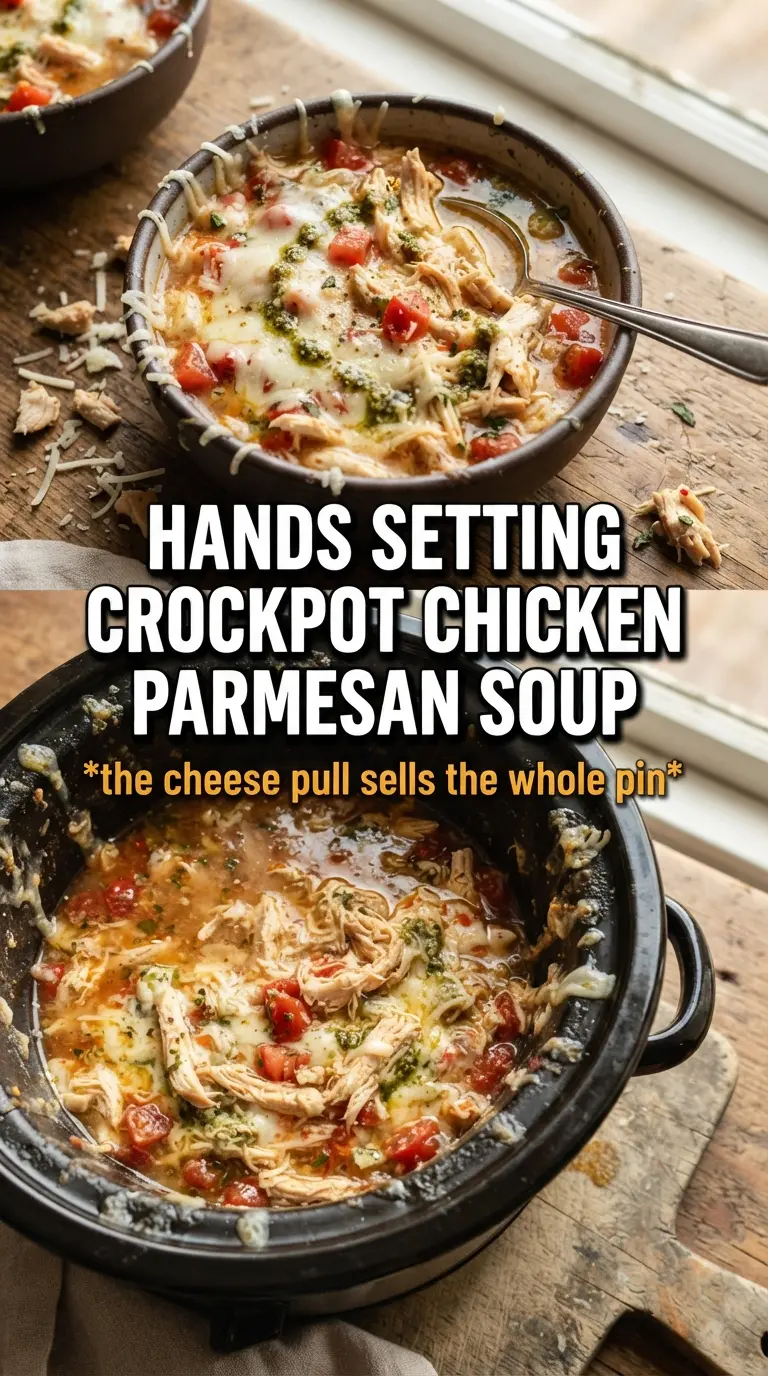
Crockpot Chicken Parmesan Soup brings all the comfort of chicken parm into a spoonable bowl: tender shredded chicken, a tomato-rich broth, pasta that soaks up the flavor, and a cheesy finish that melts right into the top. It eats like a full meal, but it still has the familiar red-sauce warmth and breadcrumb crunch that make chicken parmesan such a favorite.
What makes this version work is the slow cooker doing the heavy lifting on the chicken and the tomato base before the pasta ever goes in. That keeps the broth deep and savory instead of watery, and it gives you time to build flavor with tomato paste, garlic, onion, basil, and Italian seasoning. The pasta goes in near the end so it stays pleasantly tender instead of turning soft and swollen.
Below you’ll find the little details that matter most: when to shred the chicken, how to keep the pasta from going mushy, and the easiest way to get that melty chicken parm finish in a soup bowl.
The broth tasted like chicken parmesan in soup form, and the pasta held up perfectly when I added it at the end. My husband kept going back for more of the crispy breadcrumb topping.
Save this Crockpot Chicken Parmesan Soup for a cozy tomato-and-cheese dinner with tender chicken and a crispy breadcrumb finish.
The Reason the Pasta Goes in After the Chicken Is Tender
If the pasta cooks from the beginning, it drinks up too much liquid and turns soft before the soup is done. It also leaves you with a broth that feels heavy instead of balanced. Waiting until the chicken is already shredded means you control the texture right at the end, when the soup is close to the table and the pasta only needs 25 to 30 minutes to cook through.
The other common mistake is rushing the cheese finish. A quick melt over each bowl gives you that chicken parm feel without stirring all the cheese into the pot and turning the broth stringy. You want the soup to stay brothy underneath with a creamy, cheesy top, not become a pot of thick tomato stew.
- Raw chicken breasts — They cook gently in the tomato broth and shred into soft pieces that hold their shape. Thighs work too if you want a richer result, but breasts keep the soup a little lighter.
- Crushed tomatoes and diced tomatoes — The crushed tomatoes build body, while the diced tomatoes leave some texture in the broth. If you only have one type, use it, but the combination gives a better balance.
- Tomato paste — This is what deepens the soup fast. It adds that cooked tomato flavor you’d normally get from simmering for a long time, so don’t skip it.
- Pasta — Penne or rigatoni hold up best in the slow cooker. Smaller pasta shapes can overcook faster, and long pasta gets awkward to serve in a bowl of soup.
- Mozzarella and parmesan — Mozzarella gives the melt, parmesan sharpens the tomato base. Use freshly grated parmesan if you can; the pre-shredded stuff won’t melt as smoothly.
What Each Ingredient Is Actually Doing in This Recipe
- Primary ingredient (the star) — Quality matters most. Choose the best you can find.
- Cooking medium (oil, butter, or broth) — This carries flavors and prevents dryness.
- Seasonings (salt, pepper, spices, herbs) — Layer flavors so nothing overpowers. Build depth gradually.
- Aromatics (garlic, onion, herbs) — Cook with fat to bloom flavors. Become the foundation.
- Supporting ingredients — Complement the main ingredient without overpowering it.
- Sauce or liquid (if applicable) — Brings flavors together. Balance richness with acid.
- Acid (lemon, vinegar, wine, or other) — Brightens and prevents flat-tasting results.
- Final finish (garnish, glaze, or sauce) — Prevents one-dimensional taste and adds visual appeal.
How to Build the Soup So the Chicken Stays Tender and the Pasta Doesn’t Collapse
Starting the Base in the Slow Cooker
Put the raw chicken right into the Crockpot, then add the tomatoes, broth, tomato paste, garlic, onion, Italian seasoning, and basil on top. The chicken doesn’t need to be browned first because the long, gentle cook does the work here. Stir everything once so the tomato paste breaks up and disappears into the broth, then cover and cook until the chicken shreds easily. If the onion is diced too large, it can stay a little firm, so keep the pieces small enough to soften during the cook.
Shredding and Returning the Chicken
When the chicken is done, lift it out and shred it while it’s still hot. It should pull apart with almost no resistance and look moist, not stringy or dry. Return it to the pot right away so it can soak back up some of the seasoned broth. If you leave the chicken out too long, it cools down and doesn’t absorb the soup the same way.
Cooking the Pasta at the End
Add the pasta only after the chicken has gone back in. Turn the heat to High and cook just until the pasta is tender but still has a little bite in the center. Stir once or twice so the noodles don’t clump together at the bottom. If the soup looks thicker than you want, add a splash of broth before the pasta goes in rather than after it has already absorbed too much liquid.
Melting the Cheese the Chicken Parm Way
Ladle the soup into bowls, then top each one with mozzarella and parmesan. A quick trip under the broiler gives you the best browned, melty finish, but a brief microwave melt works on a weeknight when you don’t want an extra step. Add fresh basil and garlic breadcrumbs after the cheese so they stay crisp and bright. If you add the breadcrumbs too early, they go soft and the whole point of the chicken parm topping gets lost.
Three Ways to Adjust This Soup Without Losing the Chicken Parm Feel
Gluten-Free Version
Use your favorite gluten-free short pasta and cook it just until tender, since many GF pastas soften faster than wheat pasta. Keep an eye on the broth level because some gluten-free shapes absorb more liquid as they sit. The flavor stays the same, but the timing matters even more at the end.
Dairy-Free Finish
Skip the mozzarella and parmesan and finish each bowl with dairy-free shreds plus toasted breadcrumbs. You won’t get the same salty parmesan bite, so add a little extra seasoning to the broth and a pinch of salt at the table. The soup itself still tastes hearty and tomato-rich without the cheese.
Make It Meatier
If you want a heartier bowl, stir in extra shredded chicken at the end or use boneless thighs instead of breasts. Thighs stay a little more forgiving in the slow cooker and give the broth a deeper, richer taste. The soup gets closer to a full dinner bowl without needing anything else on the table.
Storage and Reheating
- Refrigerator: Store in an airtight container for up to 4 days. The pasta will keep absorbing broth, so it thickens a bit as it sits.
- Freezer: Freeze the soup without the pasta if you know you want leftovers. Pasta gets soft after thawing, so cook a fresh batch when you reheat.
- Reheating: Warm gently on the stove over medium-low heat or in the microwave at half power. Add a splash of broth to loosen it, then top with fresh cheese and breadcrumbs after reheating.
Answers to the Questions Worth Asking

Crockpot Chicken Parmesan Soup
Ingredients
Equipment
Method
- Place the raw chicken breasts in the crockpot, then add the crushed tomatoes, diced tomatoes, chicken broth, tomato paste, garlic, onion, Italian seasoning, and dried basil. Stir so the chicken is coated and you can see a thick tomato base around it.
- Cook on Low for 5-6 hours, or High for 3 hours, until the chicken is tender and easily shreds with a fork. You should see gentle bubbling through the broth and softened onion pieces.
- Remove the chicken from the pot, shred it, and return the shredded chicken to the soup. The broth should look cohesive with a darker tomato color after the chicken is back in.
- Add the penne or rigatoni to the pot and cook on High for 25-30 minutes, until the pasta is tender. The soup should thicken slightly as the pasta absorbs broth.
- Top each bowl with shredded mozzarella and grated parmesan, then broil briefly or microwave briefly until the cheese melts and turns glossy. Look for melted, lightly blistered spots on the mozzarella.
- Garnish with fresh basil and garlic breadcrumbs, then season with salt and pepper to taste. Serve immediately while the breadcrumbs stay crisp and the cheese stays melted.