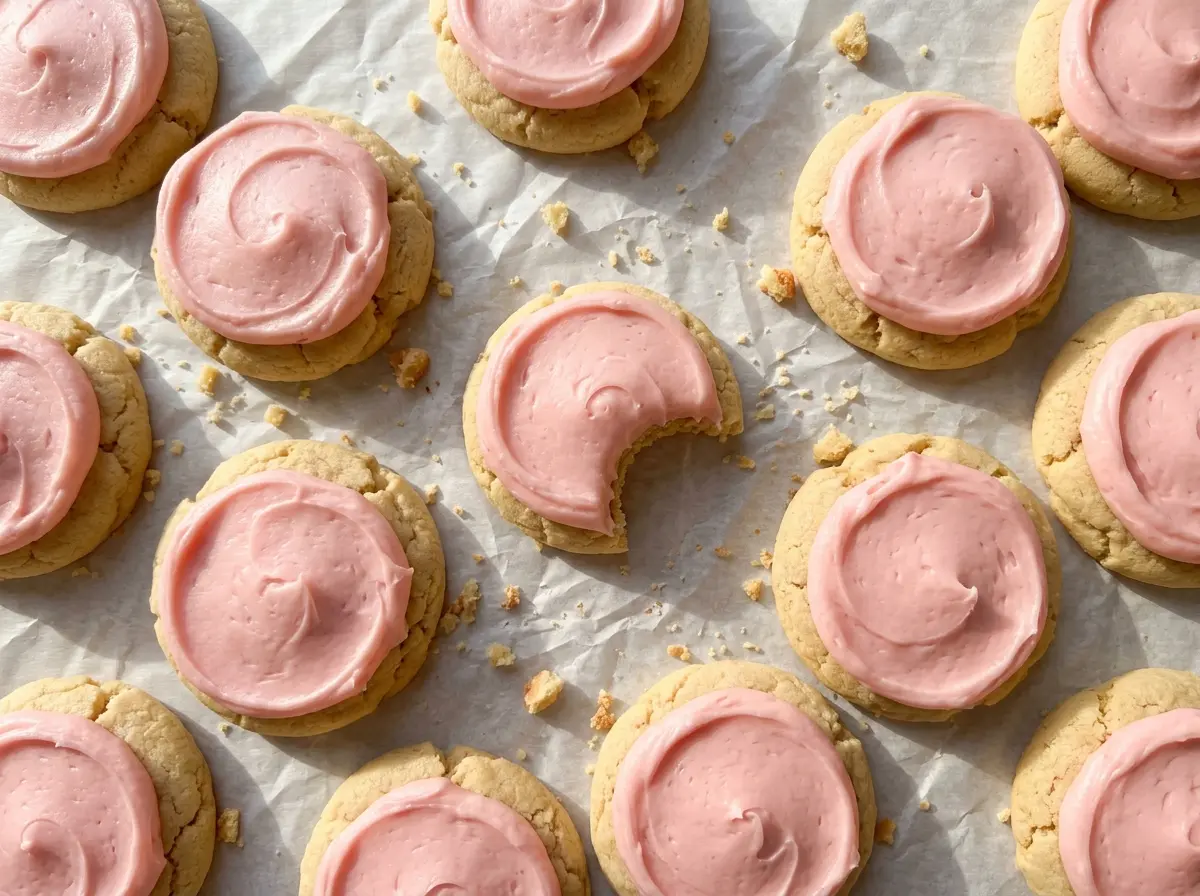
The edges of a sugar cookie can look ready while the middle still seems soft, and that’s exactly the point with these Crumbl Pink Sugar Cookies. They finish setting on the baking sheet, so pulling them when the edges are set and the bottoms are lightly golden keeps the centers tender instead of dry. This batch makes 12 thick cookies, each topped with a smooth pink almond frosting.
I cream softened butter and sugar before adding the eggs and extracts, then mix the flour in on low speed only until the dry streaks disappear. That gives the dough enough structure to hold its thick shape without turning the cookies tough. Once the cookies are completely cool, the almond frosting spreads into a soft, neat layer over each one.
Kitchen Note
Add the pink gel coloring after the frosting is fluffy, then beat until the color is even. Gel gives you a bright pink without adding much liquid, so I wouldn’t swap it one-for-one with liquid food coloring.
Save these Crumbl Pink Sugar Cookies for a bakery-style batch with thick, soft centers and pink almond frosting.
Why These Sugar Cookies Stay Thick Instead of Spreading Flat
A thick cookie starts with its shape before it ever reaches the oven. Rolling each portion into a ball and flattening it into a thick disk gives the dough a head start: it bakes through evenly while keeping enough height for a soft center. If you leave the portions as balls, the middle takes longer to bake; if you press them very thin, the cookies lose the substantial, soft texture that makes this style distinct.
Spacing matters, too. These cookies need about 3 inches between them, with six on each baking sheet, so the dough has room to spread without the edges running together. Keep the disks thick rather than pressing them into thin rounds. The dough should be easy to shape because the butter is softened, but it shouldn’t feel greasy or look melted. That balance gives you cookies with defined edges and a center substantial enough to carry a generous swipe of frosting.
What Gives These Cookies Their Almond Bakery-Style Flavor

- Unsalted butter — It’s the base for both the cookies and the frosting, and softened butter creams smoothly with sugar. It should yield to a fingertip but still hold its shape; melted butter won’t cream the same way. A standard grocery-store butter works well here.
- Granulated sugar — This gives the cookie dough its familiar sweetness and helps create lightly golden bottoms. Brown sugar brings extra moisture and a deeper flavor, so it isn’t a direct swap if you want the same pale, soft sugar-cookie result.
- Eggs at room temperature — They blend more evenly into the creamed butter than cold eggs, helping the dough come together without chilling the butter. Set them out while you prepare the other ingredients.
- Almond extract — Almond is the signature note in both the cookie and frosting. Measure it carefully; its aroma is concentrated, and adding extra can make the flavor overpower the buttery cookie.
- All-purpose flour — Spoon it into the measuring cup and level the top instead of scooping directly from the bag, which packs in extra flour and can leave the cookies dry. For a gluten-free adaptation, use a cup-for-cup baking blend; see the variation below.
- Powdered sugar and heavy cream — Powdered sugar makes a smooth frosting, while heavy cream loosens it enough to spread. Add them gradually so the frosting turns fluffy rather than lumpy or too loose.
Mixing, Shaping, and Frosting Without Losing the Soft Center
Cream the Butter Before Adding the Eggs
Beat the softened butter and granulated sugar on medium speed for about 2 minutes, until the mixture looks creamy. Beat in the room-temperature eggs, vanilla, and almond extract until incorporated. If the butter is cold, it won’t cream smoothly; if it’s melted, the mixture won’t build the same structure. Keep the butter softened, not liquid.
Bring the Dough Together Gently
Whisk the flour, baking powder, and salt in a separate bowl so the leavening is distributed. Add the dry mixture to the butter mixture on low speed, stopping as soon as no dry streaks remain. The dough should hold together without looking heavily worked. Mixing beyond that point can make the cookies firmer than you want.
Shape Even Disks and Bake Until the Edges Set
Divide the dough into 12 equal portions, roll each into a ball, then flatten it into a thick disk. Arrange six on each parchment-lined baking sheet, leaving about 3 inches between cookies. Bake at 350°F for 10–12 minutes, switching the sheets between racks and rotating them front to back halfway through. Look for set edges and lightly golden bottoms; the centers may still look soft.
Cool Completely Before Spreading the Frosting
Let the cookies cool on their baking sheets for 10 minutes, then move them to a rack to cool completely. Beat the frosting butter until smooth, then gradually beat in the powdered sugar and heavy cream until fluffy. Beat in the almond extract and pink gel coloring. Spread it over the cookies only after they’re fully cool, or the butter in the frosting will soften and slide.
Two Simple Ways to Adapt the Flavor or Flour
A Softer, Vanilla-Forward Cookie
For a less pronounced almond note, replace the almond extract in both the cookie dough and frosting with the same amount of vanilla extract. The result keeps the buttery sugar-cookie character but loses some of the distinct bakery-style almond aroma.
A Gluten-Free Batch
Replace the all-purpose flour with a cup-for-cup gluten-free baking blend that includes a binder, following the blend’s measure-for-measure use. Spoon and level it as you would regular flour. The cookies may have a slightly more delicate crumb, so transfer them gently after their brief rest on the baking sheets.
Storage and Reheating
- Refrigerator: Store the frosted cookies in an airtight container for up to 4 days. The frosting firms up and the cookies feel firmer when cold.
- Freezer: Freeze the cookies until the frosting is firm, then layer them with parchment in an airtight container for up to 2 months. Thaw them in the refrigerator before serving.
- Reheating: These are best brought back to room temperature; don’t microwave frosted cookies, because the frosting will melt. Let chilled cookies sit out until the frosting softens.
Questions That Come Up When Baking Pink Sugar Cookies
Crumbl Pink Sugar Cookies
Ingredients
Equipment
Method
- Heat the oven to 350°F.
- Line two baking sheets with parchment paper.
- Beat the butter and granulated sugar in a large bowl with an electric mixer on medium speed until creamy, about 2 minutes.
- Beat in the eggs, vanilla extract, and almond extract.
- Whisk the flour, baking powder, and salt in a separate bowl.
- Mix the dry ingredients into the butter mixture on low speed just until no dry streaks remain.
- Divide the dough into 12 equal portions, roll each into a ball, and flatten into a thick disk.
- Place 6 cookies on each prepared sheet, spaced about 3 inches apart.
- Bake for 10–12 minutes, switching the sheets between racks and rotating them front to back halfway through, until the edges are set and the bottoms are lightly golden.
- Cool the cookies on the sheets for 10 minutes, then transfer to a rack to cool completely.
- Beat the butter in a medium bowl until smooth.
- Gradually beat in the powdered sugar and heavy cream until fluffy.
- Beat in the almond extract and pink gel food coloring.
- Spread the frosting over the completely cooled cookies.