When butter and sugar turn pale and fluffy in the bowl, the dough is already starting to feel different from a plain sugar-cookie dough. Eggnog brings a gentle custardy note, while nutmeg gives these Eggnog Cookies their familiar warm spice without overpowering the buttery base.
I use just the egg yolk, not a whole egg, so the cookies bake up tender without adding extra moisture from the white. The eggnog goes in after the yolk and vanilla; once it’s combined, the flour mixture needs only a brief stir on low.
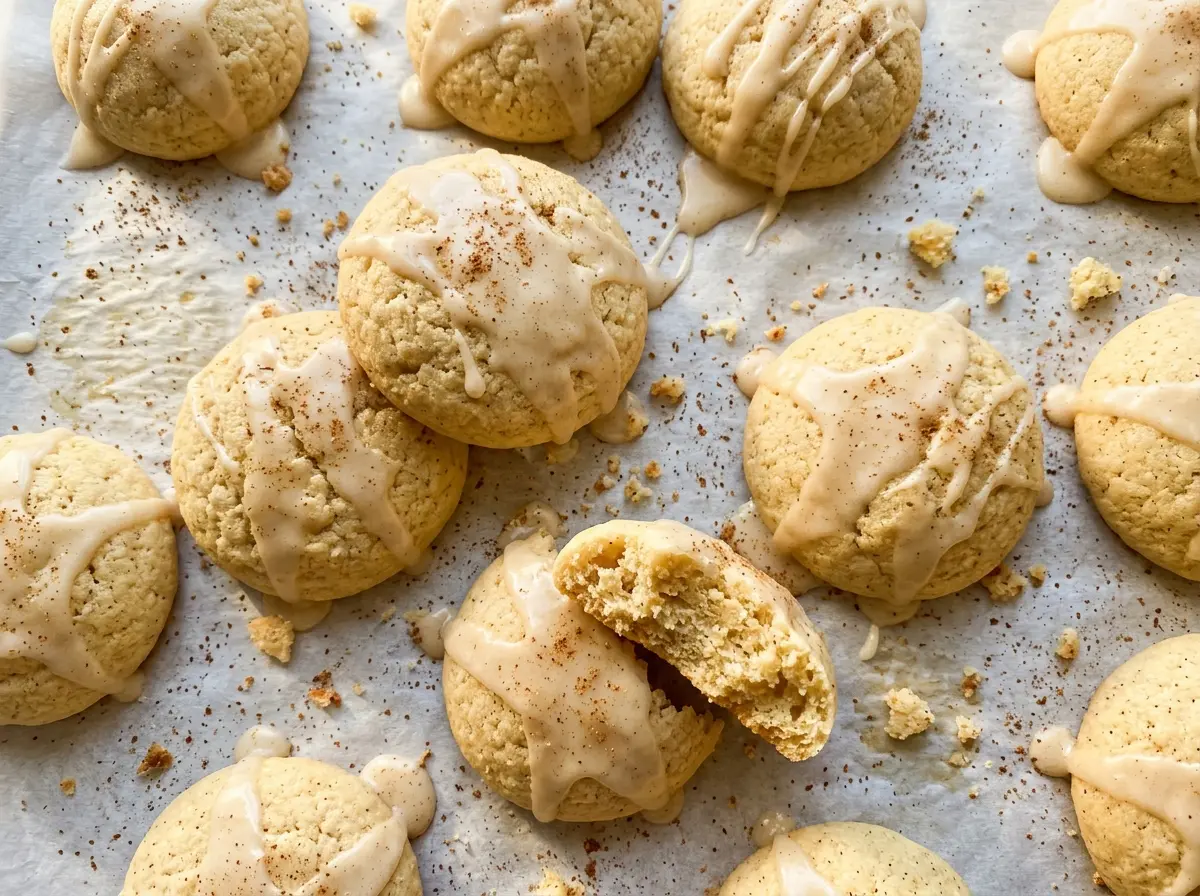
Give the dough its full chill before scooping. It’s easier to portion when cool, and the finished cookies have softly set edges with centers that stay tender. Their tops are simple and unfussy, with a little golden color at the edges and a hint of nutmeg in every bite.
Kitchen Note
Don’t grease the parchment-lined sheets. The dough already has butter in it, and parchment gives the cookies a clean release without an extra slick layer beneath them.
Save these Eggnog Cookies for a batch with tender centers, lightly golden edges, and a gentle nutmeg finish.
Why the 30-Minute Chill Matters More Than You Might Think
Eggnog adds liquid to a butter-rich cookie dough, and freshly mixed dough can feel soft and sticky. Chilling it for 30 minutes firms the butter back up, which makes rounded tablespoons easier to scoop and helps the cookies hold their shape in the oven. Skip that pause and the dough is harder to portion neatly.
Cover the bowl before it goes into the refrigerator so the surface doesn’t dry out or pick up other fridge smells. After chilling, work in a steady rhythm: scoop the dough, space the portions about 2 inches apart, and get the pans into the preheated oven. The dough should be cool but still scoopable. If it feels especially firm, let the covered bowl stand briefly while you prepare the baking sheets; don’t warm it until it looks greasy.
This short rest is useful for another reason: it gives you a moment to confirm the oven is at 350°F and both sheets are lined. That way, the dough doesn’t sit around warming while you finish setting up.
What Eggnog, Nutmeg, and the Egg Yolk Each Bring to the Dough

- Eggnog — It gives the cookies their defining dairy-and-spice character and supplies moisture for the dough. Use an eggnog you enjoy drinking; a fresh carton works well, and there’s no need to seek out a premium brand. If eggnog isn’t available, whole milk can stand in at the same amount, but the cookies will lose much of their eggnog flavor and sweetness.
- Ground nutmeg — Nutmeg is the warm, recognizable spice here. Freshly grated nutmeg smells more vivid, but ground nutmeg from the pantry is perfectly suitable. For a different spice note, use ground cinnamon in its place; the flavor will read more like a classic cinnamon cookie.
- Egg yolk — The yolk contributes richness and helps bind the dough without the extra moisture of a whole egg. Separate a large egg while it’s cold, then let the yolk come closer to room temperature before mixing. A whole egg isn’t a close swap; the white changes the dough’s moisture and can make the baked texture less tender.
- Unsalted butter — Butter gives these cookies their rich flavor and helps create a soft, tender crumb. A standard store-brand unsalted butter is fine; the important detail is that it’s softened enough to beat smoothly, not melted. For a dairy-free batch, plant-based baking sticks are a more reliable swap than a tub spread, which is often softer.
- Light brown sugar — Its moisture and mild molasses note add depth alongside the granulated sugar. Dark brown sugar works in the same amount if that’s what you have, with a deeper caramel flavor. Keep the granulated sugar in the mix; using only brown sugar changes the balance of the dough.
- All-purpose flour — It gives the cookies enough structure to hold their shape. Stir the flour in its container before measuring so it isn’t packed down in the cup. A one-to-one gluten-free baking blend may work, but blends vary in their starches and texture, so the finished cookies won’t be identical.
Mixing and Baking the Cookies Without Overworking the Dough
Whisk the dry ingredients evenly
Whisk the flour, baking powder, nutmeg, and fine salt together in a medium bowl. Break up any small lumps so the leavening and spice are distributed throughout the flour. This quick mixing now helps avoid streaks of baking powder or concentrated nutmeg later. Set the bowl aside while you cream the butter and sugars.
Cream the butter and sugars until fluffy
Beat the softened butter with both sugars on medium speed for 2 to 3 minutes. Look for a noticeably paler mixture that’s fluffy rather than dense or shiny. Scrape the bowl if butter is clinging to the sides so it blends evenly. Beat in the egg yolk and vanilla, then mix in the eggnog until combined.
Add the flour and chill the covered dough
Add the flour mixture and mix on low just until no dry streaks remain. Stop as soon as the flour disappears; continued mixing after that point can make cookies tougher. Cover the dough and refrigerate it for 30 minutes. While it chills, line two baking sheets with parchment paper and heat the oven to 350°F.
Scoop, rotate, and let the cookies set
Scoop rounded tablespoons onto the prepared sheets, leaving about 2 inches between portions. Bake for 10 to 12 minutes, rotating the sheets between racks halfway through. The edges should be set and just beginning to turn golden; don’t wait for the entire cookie to brown. Let the cookies cool on the sheets for 5 minutes before moving them to a wire rack to cool completely.
Easy Ways to Change the Spice or Make a Dairy-Free Batch
Trade nutmeg for cinnamon
Use ground cinnamon instead of the nutmeg for a sweeter, familiar spice flavor. The cookies will still be buttery and tender, but they’ll taste less like traditional eggnog.
Use dark brown sugar for deeper flavor
Swap the light brown sugar for the same amount of dark brown sugar. Its stronger molasses flavor makes the cookies taste richer and a little less delicate, while the granulated sugar keeps the dough balanced.
Make the cookies dairy-free
Replace the butter with plant-based baking sticks and the eggnog with dairy-free eggnog, using each in the same amount as the original ingredient. The cookies will still have a tender texture, though the buttery flavor will be milder. The egg yolk remains, so this adaptation is dairy-free, not vegan.
Storage and Reheating
- Refrigerator: Keep cooled cookies in an airtight container for up to 1 week. Chilling firms them and can make them seem less tender; bring them to room temperature before serving.
- Freezer: Freeze fully cooled cookies in an airtight container, with parchment between layers, for up to 2 months. Thaw at room temperature before eating.
- Reheating: These cookies are good at room temperature, so reheating isn’t necessary. If you like them warm, microwave one briefly; too long and it can turn tough at the edges.
Questions That Come Up When Baking Eggnog Cookies
Eggnog Cookies
Ingredients
Equipment
Method
- Preheat the oven to 350°F.
- Line two baking sheets with parchment paper.
- Whisk the flour, baking powder, nutmeg, and salt together in a medium bowl.
- Beat the butter, granulated sugar, and brown sugar in a large bowl on medium speed for 2 to 3 minutes, until pale and fluffy.
- Beat in the egg yolk and vanilla.
- Mix in the eggnog until combined.
- Add the flour mixture and mix on low just until no dry streaks remain.
- Cover the dough and refrigerate for 30 minutes.
- Scoop rounded tablespoons of dough onto the prepared baking sheets, spacing them about 2 inches apart.
- Bake for 10 to 12 minutes, rotating the sheets between racks halfway through, until the edges are set and just beginning to turn golden.
- Cool the cookies on the baking sheets for 5 minutes.
- Transfer them to a wire rack to cool completely.