Flaky salmon over crisp greens is the kind of salad that actually eats like a meal. The salmon stays tender in the middle, picks up a deep golden crust in the pan, and breaks into big, juicy pieces that hold their shape instead of turning into dry shreds. Add a sharp lemon vinaigrette and you get the kind of dinner that feels light but still leaves you satisfied.
What makes this version work is the balance. The salmon is seasoned simply, then seared hard enough to build flavor without overcooking the flesh. The dressing keeps the bright edge of lemon in check with a little Dijon and honey, so it coats the greens instead of disappearing into them. The vegetables stay crisp, which gives every bite some freshness against the warm fish.
Below, you’ll find the small details that matter: how to tell when the salmon is ready to flip, why the dressing comes together best in a bowl, and the easiest swaps if you want to use what’s already in your fridge.
The salmon stayed so flaky and moist, and the lemon vinaigrette tied everything together without making the greens soggy. I made it for lunch and it held up beautifully even after the fish cooled a bit.
Flaky Salmon Salad with lemon vinaigrette is the kind of fast dinner that still feels bright, fresh, and complete.
The Trick to Salmon That Flakes, Not Falls Apart
The biggest mistake with salmon salad is treating the fish like something that can be ignored once it hits the pan. Salmon needs enough heat to brown the outside, but not so much that the center turns chalky before the crust has a chance to form. If you try to flip too early, it sticks and tears. If you leave it on too long, it dries out and the salad loses the whole point of having salmon on top in the first place.
The sweet spot is a hot skillet, a thin coating of oil, and fish that has been patted dry before seasoning. Dry surface means better browning. Let the salmon release on its own before you turn it. When it’s ready, it lifts cleanly and the flesh is opaque around the edges with a slightly translucent center that finishes as it rests.
- A dry fillet browns instead of steaming.
- Medium-high heat builds a crust fast enough to protect the interior.
- Resting the fish for a few minutes before flaking keeps the pieces large and juicy.
What Each Ingredient Is Actually Doing in This Salad
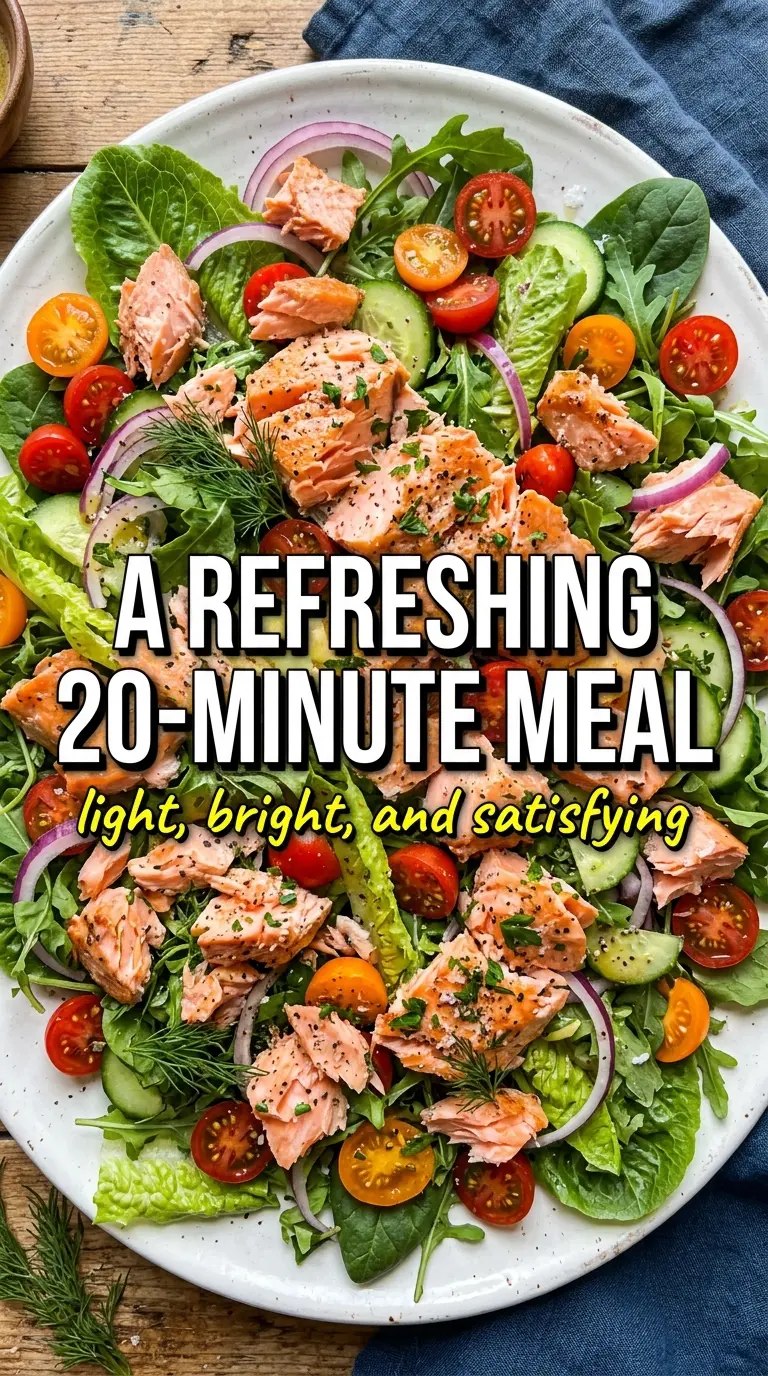
- Salmon fillets — This is the main event, so start with fillets that are similar in size so they cook at the same rate. Skin-on or skinless both work; skin-on gives you a little more protection in the pan, while skinless flakes a touch more easily for serving.
- Mixed greens — Use sturdy greens that can handle warm salmon and dressing without collapsing. Spring mix works, but baby arugula, romaine, or a blend with some crunch gives the best contrast.
- Lemon juice — Fresh lemon juice matters here because the dressing is so simple. Bottled juice can taste flat, and that missing brightness is hard to hide when the whole salad depends on it.
- Dijon mustard — Dijon does more than add flavor. It helps the dressing emulsify, which keeps the oil and lemon from separating into a slick puddle at the bottom of the bowl.
- Honey — Just enough sweetness smooths out the sharp lemon and keeps the dressing from tasting harsh. If you want to swap it, maple syrup works in the same amount, though it adds a slightly rounder sweetness.
- Red onion and cucumber — These are there for crunch and bite. Slice the onion thin so it doesn’t overpower each forkful, and keep the cucumber cold for the best texture against the warm salmon.
Building the Salad So Everything Stays Crisp and Bright
Seasoning the Salmon First
Pat the salmon dry, then season it with half the salt and pepper before it hits the pan. That first layer of seasoning helps the fish taste seasoned all the way through, not just on the surface. If the fillets are wet, they’ll sputter and steam instead of sear, which leaves you with softer, duller salmon and less flavor.
Getting a Clean Sear
Heat the olive oil until it shimmers, then lay the salmon in the skillet and leave it alone. If you nudge it too soon, it can stick and tear. Four to five minutes per side is a good target for average fillets, but the real cue is the look of the fish: the edges turn opaque, the crust turns golden, and the flesh gives a little when pressed rather than feeling rigid.
Flaking Without Drying It Out
Let the salmon cool for a minute or two before you break it apart. If you flake it while it’s piping hot, the steam escapes fast and the texture can go dry. Large pieces are what you want here; they sit on the greens like a proper topping instead of disappearing into crumbs.
Whisking the Dressing at the End
Whisk the olive oil, lemon juice, Dijon, honey, and remaining seasoning until the dressing turns slightly thick and glossy. That sheen tells you the mustard has done its job. Dress the greens right before serving so the leaves stay crisp, then top with the salmon and spoon any extra dressing over the tomatoes and cucumber.
How to Adapt This for a Bigger Lunch, a Dairy-Free Table, or a Different Fish
Make it dairy-free without changing anything
This salad already fits a dairy-free table as written, which is part of what makes it such a useful dinner. The dressing gets its body from Dijon and olive oil, not cream or cheese, so you keep the same bright, clean finish.
Turn it into a packed lunch
Pack the greens and vegetables separately from the salmon, then keep the dressing in a small container. Add the fish just before eating so the leaves stay crisp. If you want it to feel more substantial, add avocado or cooked quinoa, both of which hold up well once the salad is assembled.
Use another fish if salmon isn’t what you have
Arctic char, trout, or even well-seasoned tuna steaks can stand in for salmon, but the cooking time changes with thickness. Keep the same sear-and-rest method, and pull the fish as soon as it flakes cleanly so it doesn’t turn dry and stringy.
Storage and Reheating
- Refrigerator: Store the salmon, vegetables, and dressing separately for up to 2 days. The greens will soften if dressed ahead, so keep everything apart until serving.
- Freezer: I don’t recommend freezing the assembled salad. Cooked salmon can be frozen on its own, but the texture gets softer after thawing and the fresh vegetables won’t recover well.
- Reheating: Warm the salmon gently in a low oven or in a skillet over low heat just until heated through. High heat dries it out fast, so don’t blast it in the microwave unless you’re fine with a firmer texture.
Questions I Get Asked About This Recipe
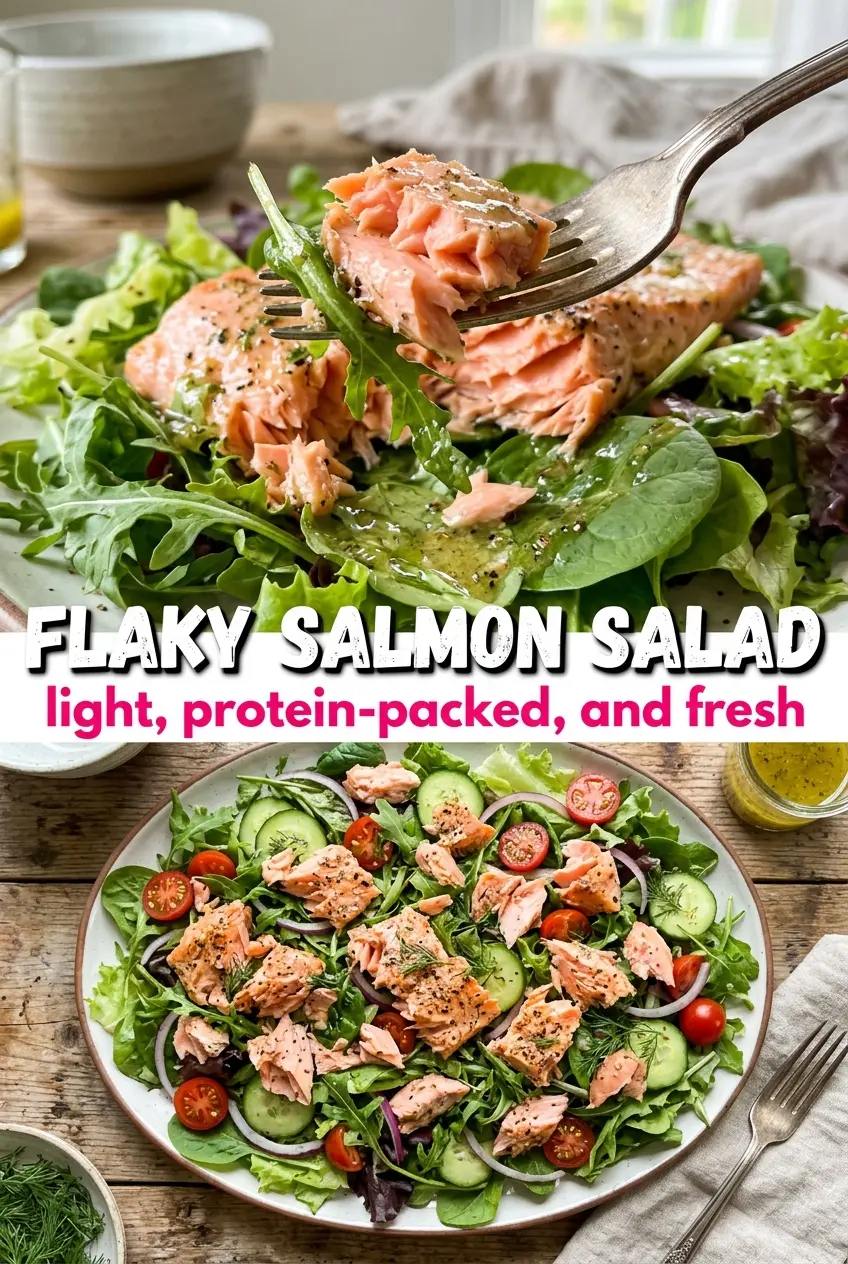
Flaky Salmon Salad
Ingredients
Equipment
Method
- Season the salmon fillets with half the kosher salt and half the black pepper.
- Heat the olive oil in a cast iron skillet over medium-high heat and sear the salmon for 4–5 minutes per side, until golden and flaky.
- Let the salmon cool slightly, then flake it into large pieces.
- Whisk together the dressing olive oil, lemon juice, Dijon mustard, honey, and the remaining kosher salt and black pepper until smooth.
- Arrange the mixed greens, cherry tomatoes, cucumber, and red onion on a platter.
- Top with the flaked salmon.
- Drizzle with the lemon vinaigrette and serve immediately with visible shine from the dressing.