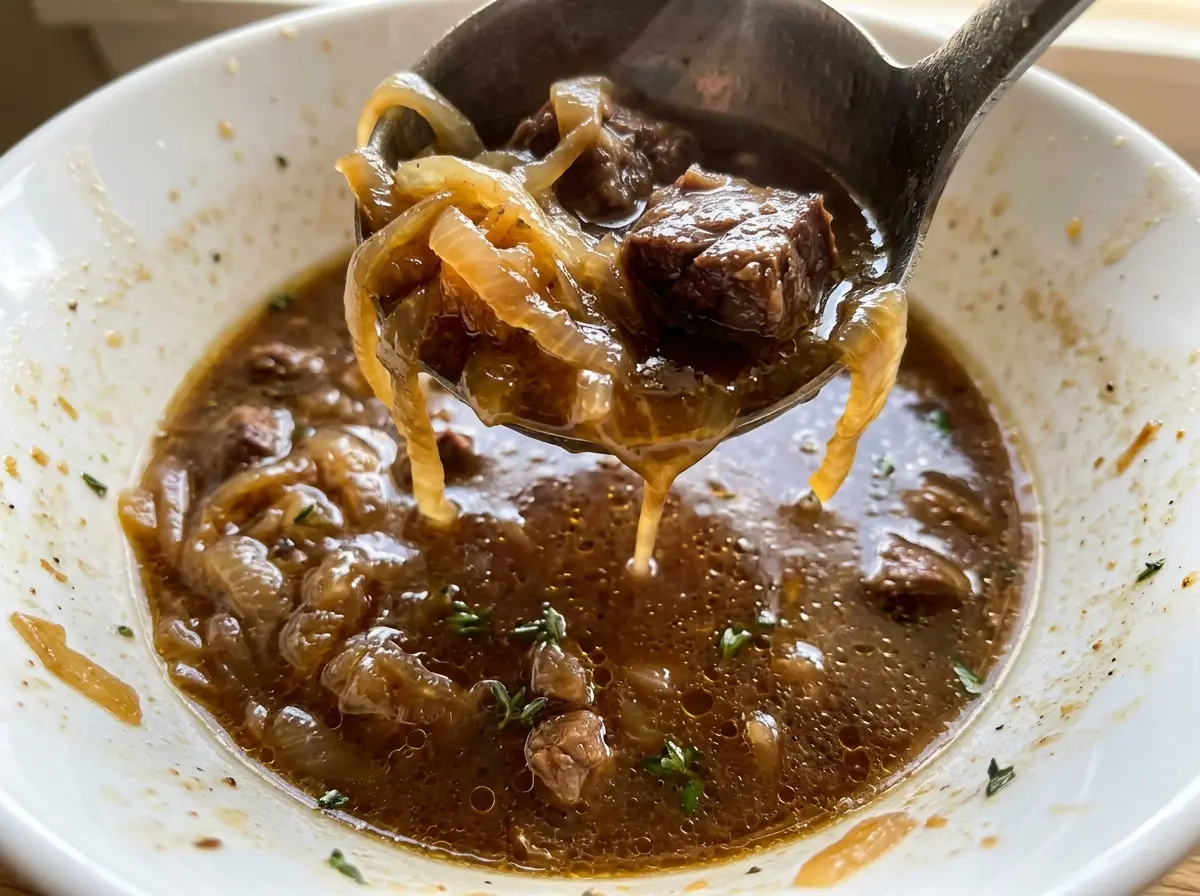
The beef gives a deep sizzle when it hits the Dutch oven, and those browned bits left behind are worth saving. I learned that the onions need their own time before anything gets rushed into the pot; once they’re soft and deeply golden, French Onion Beef Stew has the savory sweetness that makes every bowl taste like more than a standard beef stew.
Chuck is a good fit for the long, covered simmer because it turns fork-tender as it cooks slowly in the broth. The onions, flour, and wine build the base around it, while Gruyère-topped baguette slices bring the familiar French onion soup finish. Keep the cheese toasts alongside the stew until you’re ready to eat, and their edges stay crisp against the rich broth.
This is a slow-cooking dinner, but the work is mostly hands-off once the pot is covered. By the time the beef is tender, the broth has picked up the onions’ sweetness and the browned flavor from the bottom of the pot. A bubbling cheese toast makes a fine bite between spoonfuls.
Kitchen Note
Brown the beef in batches, giving each side 3 to 4 minutes in the hot pot. If the pieces crowd each other, they won’t brown as well, and those browned surfaces are part of the stew’s deep savory flavor.
Save this French Onion Beef Stew for a slow-simmered dinner with tender chuck, sweet onions, and bubbling Gruyère toasts.
Why the Onions Need Their Own Long Stretch in the Pot
French onion flavor doesn’t come from adding extra seasoning; it comes from letting the onions soften and turn deeply golden before the broth goes in. They start out as a large pile, but as they cook they collapse and release moisture. That slow change gives the stew its rounded, sweet-savory base rather than a sharp, raw-onion taste.
The flour goes in after the garlic and cooks briefly before the liquid. That timing coats the softened onions and helps the broth thicken into a stew-like gravy instead of staying thin. The wine then loosens the browned bits from the bottom of the pot, so their flavor joins the onions instead of getting left behind. Give this stage its full time; rushing it means the broth has less onion depth to carry through the long simmer.
There’s a useful difference between deeply golden and scorched. Golden onions look soft and evenly colored, while burnt patches taste bitter and can carry that bitterness into the entire pot. Stirring often over medium-low heat gives the onions time to cook without sacrificing the sweet, mellow flavor this dish depends on.
What the Beef, Onions, and Gruyère Each Bring to the Pot

- Beef chuck — Its marbling and connective tissue suit a long braise, giving you tender pieces and a full-bodied broth. Ask for boneless chuck and cut it into even pieces so they cook at a similar pace; an affordable chuck roast works well here.
- Yellow onions — Their balanced sweetness is a natural match for the beef and dry red wine. Choose firm onions without soft spots; the slow cooking does the work, so there’s no need to seek out a specialty variety.
- Dry red wine — It brings acidity and depth, and it loosens the browned bits after the onions cook. Use a dry wine you’d be comfortable drinking, but there’s no need for an expensive bottle.
- All-purpose flour — Cooking it briefly in the onion mixture helps thicken the broth without leaving a raw-flour taste. Whisk or stir it through the onions before adding liquid so it doesn’t collect in dry pockets.
- Low-sodium beef broth — It provides the braising liquid while leaving room for the salt already used on the beef and onions. Low-sodium broth is helpful here because it lets the stew reduce and concentrate without becoming overly salty.
- Gruyère and baguette — Gruyère melts into a savory, nutty cap, and the baguette holds up under the cheese. A fresh baguette with a sturdy crust gives the toasts a crisp edge and a center that won’t crumble when you lift a slice.
Build the Stew in Four Stages, Then Broil the Toasts
Season and Brown the Chuck
Season the beef with 1 1/2 teaspoons of kosher salt and the black pepper. Heat the olive oil in a 6-quart Dutch oven over medium-high heat, then brown the beef in batches for 3 to 4 minutes per side. Transfer each browned batch to a plate as you go. The goal is a browned surface, not cooking the beef through at this stage.
Soften the Onions and Cook the Flour
Add the butter, sliced onions, and remaining 1/2 teaspoon salt to the pot, then lower the heat to medium-low. Stir often for 30 to 40 minutes, until the onions are very soft and deeply golden. Stir in the garlic for 30 seconds, then add the flour and cook for 1 minute, stirring so it’s distributed through the onions. If flour stays in clumps, work it into the onion mixture before pouring in the wine.
Deglaze and Braise Until Fork-Tender
Pour in the dry red wine and scrape the bottom of the pot to release the browned bits. Let it simmer for about 4 minutes, then stir in the beef broth, Worcestershire sauce, dried thyme, bay leaf, browned beef, and any juices on the plate. Bring the pot to a gentle simmer, cover it, and cook over low heat for 2 to 2 1/2 hours. The beef is ready when a fork slides into a piece easily; keep the lid on during the braise.
Rest the Stew and Broil the Cheese Toasts
Remove the bay leaf and let the stew rest, covered, for 10 minutes. While it rests, heat the oven to 425°F and arrange the baguette slices on a baking sheet. Bake for 5 to 7 minutes, until crisp and lightly golden, then top the slices evenly with shredded Gruyère. Broil for 1 to 2 minutes, watching closely until the cheese is melted and bubbling, and serve the toasts with bowls of stew.
Simple Swaps for Different Tables and Tastes
Make It Gluten-Free
Use a cup-for-cup gluten-free flour blend in place of the all-purpose flour, and choose a gluten-free baguette for the toasts. The stew keeps its onion-and-beef character, though the gravy’s final texture may vary slightly by flour blend.
Cook Without the Red Wine
Replace the wine with additional beef broth, pouring it into the pot and scraping up the browned bits as usual. The stew will taste rounder and less bright, but the browned beef and slowly cooked onions still give the broth plenty of depth.
Trade Gruyère for Swiss Cheese
Shredded Swiss cheese melts well on the baguette and gives the toasts a milder, less nutty finish. The result is still savory and bubbly, with a little less of Gruyère’s distinctive depth.
Storage and Reheating
- Refrigerator: Store the stew in a covered container for 3 to 4 days. The broth may thicken as it chills; it loosens again as it warms.
- Freezer: Freeze the stew without the cheese toasts in a freezer-safe container for up to 3 months. Thaw it in the refrigerator before reheating; the bread is best toasted fresh.
- Reheating: Warm the stew in a covered saucepan over low heat, stirring occasionally, until it reaches 165°F. Avoid a hard boil, which can make the beef fibers tighten and the broth reduce too much.
Questions That Come Up While Making French Onion Beef Stew
French Onion Beef Stew
Ingredients
Equipment
Method
- Season the beef with 1 1/2 teaspoons of the salt and the pepper.
- Heat the olive oil in a 6-quart Dutch oven over medium-high heat.
- Brown the beef in batches for 3 to 4 minutes per side, transferring it to a plate as it browns.
- Add the butter, onions, and remaining 1/2 teaspoon salt to the pot; cook over medium-low heat for 30 to 40 minutes, stirring often, until the onions are very soft and deeply golden.
- Stir in the garlic and cook for 30 seconds.
- Add the flour and cook, stirring, for 1 minute.
- Pour in the wine, scrape up the browned bits, and simmer for about 4 minutes.
- Stir in the broth, Worcestershire sauce, thyme, bay leaf, beef, and any accumulated juices.
- Bring to a gentle simmer, cover, and cook over low heat for 2 to 2 1/2 hours, until the beef is fork-tender.
- Remove the bay leaf and let the stew rest, covered, for 10 minutes.
- Heat the oven to 425°F and arrange the baguette slices on a baking sheet.
- Bake for 5 to 7 minutes, until crisp and lightly golden.
- Top the slices evenly with the Gruyère and broil for 1 to 2 minutes, watching closely, until the cheese is melted and bubbling.
- Ladle the stew into bowls and serve with the cheese toasts.