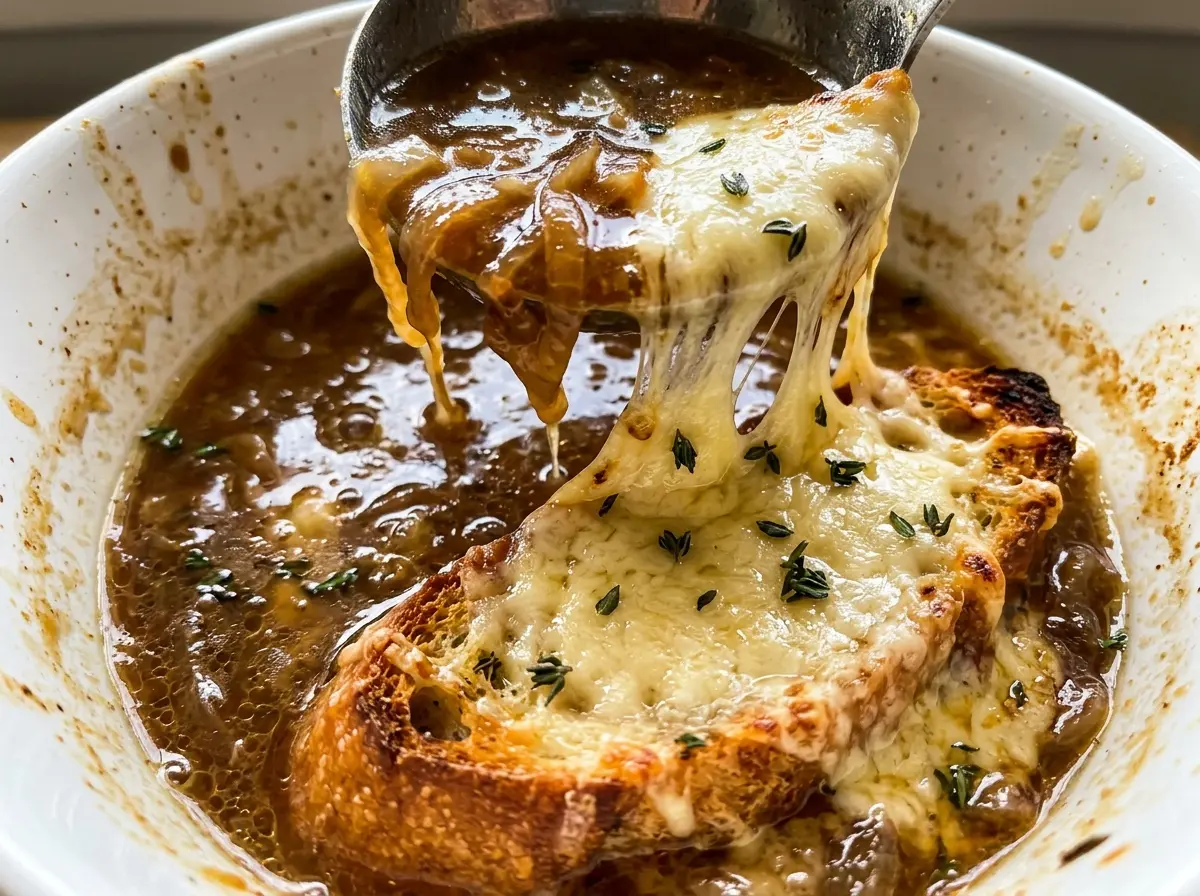
The first spoonful has two very different textures: a crisp, cheese-covered piece of baguette gives way to broth that’s been simmering with sweet, softened onions. That contrast is what makes French onion soup feel like more than a bowl of broth and bread. I like serving it straight from the oven, while the Gruyère is still bubbling and the soup is hot enough to soften the bottom of each toast without losing its browned top.
This version builds its base in a Dutch oven, then finishes each serving under the broiler. Dry white wine lifts the browned bits from the bottom of the pot, while beef broth and thyme turn them into a savory soup. The topping is simple—crisp baguette and grated Gruyère—but the broiler gives it that golden, stretchy finish. Bring the crocks to the table carefully, and dig in while the cheese is still warm.
Kitchen Note
Use the 6-quart Dutch oven for the full batch. Three pounds of sliced onions take up a surprising amount of room before they cook down, and the extra space makes the first round of stirring much easier.
Save this French onion soup for a cozy supper—the deeply golden onion broth and bubbling Gruyère toast are worth bringing out the crocks.
Why Pale Onions Make French Onion Soup Taste Like Broth With Onions
Yellow onions bring sweetness and depth, but they need time to lose their raw, watery edge. If they’re only soft and translucent, they haven’t developed the rounded, savory flavor this soup depends on. Look for onions that have cooked down to a deep golden color and feel soft all the way through. Their browned edges and concentrated sweetness give the broth something substantial to build on.
That transformation happens gradually, not by cranking up the heat. A hotter burner might brown the outside of the onion slices before the whole batch is soft, leaving a mix of dark bits and pale, firm pieces. Steady medium-low heat gives the moisture time to cook off and lets the onions color evenly. The finished soup should taste onion-rich before the bread and cheese go on; the topping adds richness, but it can’t make undercooked onions taste caramelized.
What Each Ingredient Brings to the Pot and the Crock

- Yellow onions — Their balance of sweetness and bite suits the long, slow cook. Choose firm onions without soft spots; the everyday grocery-store ones are ideal here. Slice them thinly and evenly so they soften at a similar pace.
- Butter and olive oil — Butter supplies a rounded flavor, while olive oil helps keep the butter from browning too quickly as the onions cook. Unsalted butter also leaves room to season the soup with the measured kosher salt and the broth’s existing salt.
- Dry white wine — A dry wine brings acidity that balances the onions’ sweetness and loosens the browned bits in the pot. Choose a wine you’d drink, not a sweet cooking wine; the flavor carries through after the simmer.
- Low-sodium beef broth — Beef broth gives the soup its savory backbone. Low-sodium broth lets the onions, wine, and cheese stay in balance without the soup becoming too salty as it reduces. A decent everyday carton works well.
- Gruyère — This cheese melts smoothly and brings a nutty, savory note to the toast. A wedge grated at home melts more evenly than pre-shredded cheese, which is often coated to prevent clumping.
- Baguette — Its sturdy crumb holds up under the soup and melted cheese. Choose a loaf with a crisp crust, and cut the slices evenly so they toast at the same rate.
- Flour, thyme, and bay leaf — Flour gives the broth a little body without making it heavy. Dried thyme seasons the pot, and the bay leaf lends a subtle herbal note; remove it before ladling so it doesn’t end up in a crock.
Build the Onion Base, Toast the Bread, Then Broil
Cook the onions until deeply golden
Melt the butter and olive oil in a 6-quart Dutch oven over medium heat, then add the sliced onions and kosher salt. Lower the heat to medium-low and cook uncovered for 45–60 minutes, stirring every few minutes. The onions should become very soft and deeply golden, not merely limp or pale. If you see dark spots developing while much of the batch is still firm, lower the heat and keep stirring so the bottom doesn’t scorch.
Use the wine to lift the browned bits
Sprinkle the flour over the onions and stir for 1 minute so it’s distributed through the mixture. Pour in the dry white wine and scrape the bottom of the pot to loosen the browned bits. Simmer for 3–5 minutes, until the wine has reduced by about half. Scraping as you pour helps those flavorful bits blend into the soup instead of sticking to the pot.
Simmer the broth with the herbs
Stir in the beef broth, dried thyme, bay leaf, and black pepper. Bring the soup to a boil, then lower the heat and simmer uncovered for 25–30 minutes. Keep the simmer steady rather than letting the pot boil hard; the broth should bubble gently as the flavors come together. Remove the bay leaf before you fill the crocks.
Toast the baguette slices until crisp
Heat the oven to 400°F and arrange the baguette slices on a baking sheet. Bake for 8–10 minutes, turning the slices once, until they’re lightly golden and crisp. Thin, evenly cut pieces toast more consistently than thick or uneven ones. Let the slices get crisp throughout; soft bread can collapse quickly once it meets the hot soup.
Broil each crock until the cheese bubbles
Set six 16-ounce oven-safe soup crocks on a rimmed baking sheet and ladle in the soup. Top each crock with two baguette slices and an even portion of grated Gruyère. Broil on high, 6 inches from the element, for 2–4 minutes, watching closely. Pull the crocks when the cheese is melted, bubbling, and browned in spots; broilers can take the top from golden to scorched in a short time.
Three Practical Ways to Adapt the Soup
Make the crocks gluten-free
Use a cup-for-cup gluten-free flour blend in place of the all-purpose flour, and choose gluten-free beef broth and baguette. The flour still gives the soup body, though the bread may have a slightly different texture after toasting.
Use Emmental instead of Gruyère
Swap in grated Emmental for the Gruyère and divide it evenly over the crocks. It melts well and keeps the classic cheese-on-toast feel, with a milder, less nutty flavor.
Skip the wine
Replace the dry white wine with the same amount of beef broth. Scrape the pot well as you add it, then continue simmering; the soup will be less bright and a little more straightforward in flavor.
Storage and Reheating
- Refrigerator: Store the soup without the bread-and-cheese topping in an airtight container for 3–4 days. Toasted baguette softens in the soup, so keep the topping separate.
- Freezer: The soup base freezes well for up to 3 months. Cool it, transfer it to freezer-safe containers, and leave a little room at the top; thaw overnight in the refrigerator.
- Reheating: Warm the soup on the stovetop, stirring occasionally, until it reaches 165°F. Toast fresh baguette slices and broil with the cheese just before serving; reheating assembled crocks makes the bread soggy.
Questions That Come Up With French Onion Soup
French Onion Soup
Ingredients
Equipment
Method
- Melt the butter with the olive oil in a 6-quart Dutch oven over medium heat, then add the onions and salt.
- Cook uncovered over medium-low heat, stirring every few minutes, for 45–60 minutes, until the onions are very soft and deeply golden.
- Sprinkle the flour over the onions and cook, stirring, for 1 minute.
- Add the wine and scrape up the browned bits.
- Simmer for 3–5 minutes, until reduced by about half.
- Stir in the broth, thyme, bay leaf, and pepper.
- Bring to a boil, then reduce the heat and simmer uncovered for 25–30 minutes.
- Remove the bay leaf.
- Heat the oven to 400°F.
- Arrange the baguette slices on a baking sheet.
- Bake for 8–10 minutes, turning once, until lightly golden and crisp.
- Set six 16-ounce oven-safe soup crocks on a rimmed baking sheet.
- Ladle the soup into the crocks.
- Top each crock with two baguette slices and an even portion of Gruyère.
- Broil on high, 6 inches from the element, for 2–4 minutes, watching closely, until the cheese is melted, bubbling, and browned in spots.