The foil starts to puff as the butter melts around the seafood, and a bright garlic-and-lemon smell slips out at the crimped edges. That’s when these Garlic Dijon Shrimp and Salmon Foil Packs earn their place in the weeknight rotation: salmon, shrimp, and asparagus cook together in individual packets, with the buttery Dijon sauce already tucked inside.
I pair salmon portions of an even thickness with large raw shrimp, then cut thin asparagus into short pieces so everything fits neatly into the packets. The foil holds in the steam, while the sauce coats the seafood and vegetables instead of running across a baking sheet. Each packet goes straight from the oven to the table, and there’s very little cleanup after dinner.
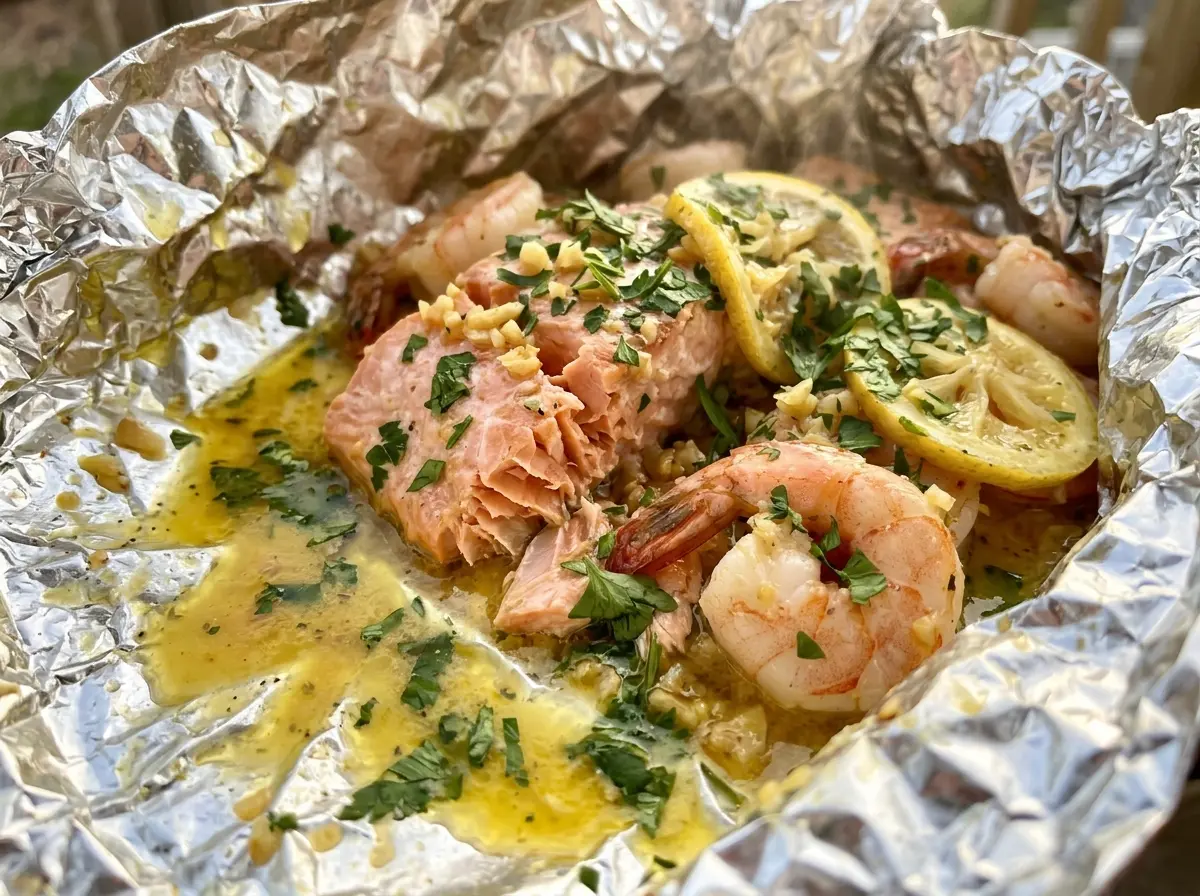
Kitchen Note
Crimp the foil edges securely, but leave a little space above the food instead of pressing the packet flat. That small pocket gives steam room to circulate around the salmon and shrimp.
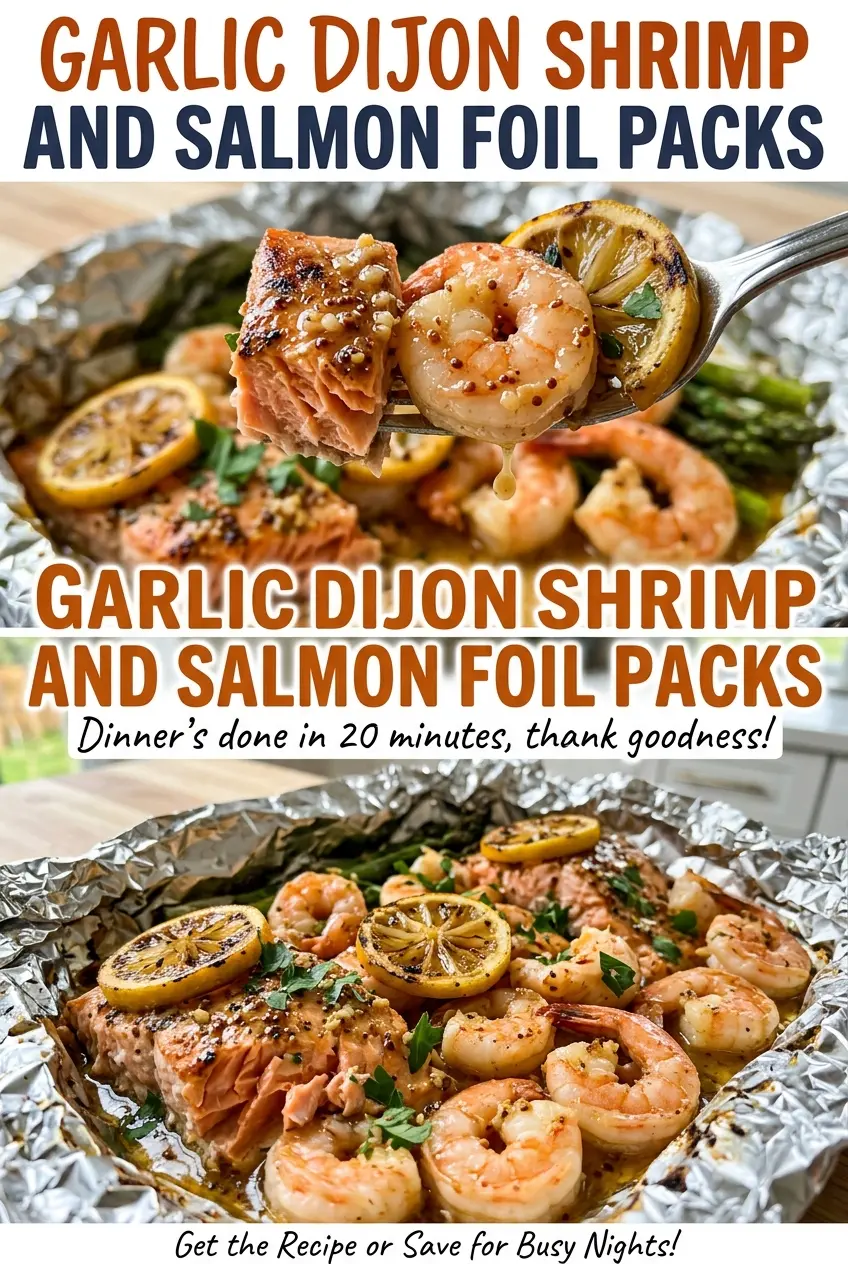
Save these Garlic Dijon Shrimp and Salmon Foil Packs for a hands-off seafood dinner with buttery sauce and tender asparagus.
Why Salmon and Shrimp Can Share One Foil Packet Without Overcooking
Salmon and shrimp cook at different speeds when their sizes are mismatched, but the portions here are chosen to work in the same short bake. Salmon cut about an inch thick gives the shrimp time to cook without leaving the fish in the oven for ages. Large raw shrimp also hold their shape better than tiny shrimp in a hot, steamy packet.
The vegetable prep matters just as much. Thin asparagus is cut into short pieces so it can soften in the same cooking window as the seafood. Thick stalks take longer to turn tender, and long pieces are awkward to divide among the packets. If your asparagus is unusually thick, this isn’t the best place to leave it whole and hope for the same result; trim it into slender pieces so it cooks through alongside the fish.
Each foil packet is its own little cooking space, so divide the asparagus and seafood evenly rather than loading one packet heavily and leaving another sparse. That helps the ingredients cook more consistently across all four servings.
The Ingredients That Keep the Seafood and Asparagus in Sync
- Unsalted butter — Melted butter carries the garlic, Dijon, and lemon juice over the seafood and vegetables. Unsalted butter lets the measured kosher salt do its job without the seasoning becoming unpredictable; a basic supermarket butter works well here. Margarine won’t give quite the same rich coating.
- Dijon mustard — Smooth Dijon brings a sharp, savory note and helps the butter sauce cling to the other ingredients. A standard grocery-store Dijon is plenty; whole-grain mustard changes the texture and gives you little mustard seeds in the sauce.
- Garlic — Mince the cloves finely so the flavor spreads through the butter rather than landing in a few large, raw-tasting pieces. Fresh garlic gives the sauce its clean, direct aroma, and there’s no need for a specialty variety.
- Salmon — Use skinless portions cut to an even thickness, close to the size specified. That makes it easier to check the center and helps the pieces cook at a similar rate. A thinner fillet is more likely to finish before the shrimp.
- Raw shrimp — Large peeled and deveined shrimp are practical to eat and substantial enough to cook with the salmon. Check that they’re raw, not precooked; cooked shrimp can turn tough during the oven time needed for the fish.
- Asparagus and lemon — Thin asparagus fits the quick cook, while lemon juice adds brightness to the butter and slices perfume the packet as it bakes. Fresh lemons are useful here because both the juice and the slices have a job. Trim away the woody ends before cutting the stalks into short pieces.
How to Seal the Packets and Check the Seafood
Whisk the Garlic-Dijon Butter
Whisk the melted butter with the Dijon, minced garlic, lemon juice, kosher salt, and black pepper in a small bowl. Keep whisking until the mustard is distributed through the butter and the garlic isn’t clumped in one spot. If the mixture separates while it sits, give it another quick whisk before spooning it over the packets.
Build Four Even Foil Packs
Heat the oven to 425°F and set a rimmed 18×13-inch sheet pan nearby. Lay out four 18×12-inch sheets of heavy-duty foil, then divide the trimmed asparagus among them. Set one salmon portion and a share of the shrimp in each packet, add the lemon slices, and spoon the garlic-Dijon butter evenly over everything.
Crimp and Bake
Fold the foil over the filling and tightly crimp the edges to close each packet. Keep a little headroom inside; don’t compress the fish and vegetables into a flat bundle. Arrange the packets on the sheet pan and bake for 12 to 15 minutes. A secure seal helps keep the butter and steam with the food rather than leaking onto the pan.
Rest, Open, and Check
Let the packets rest for 2 minutes after they come out of the oven. Open them carefully, directing the opening away from your face because hot steam escapes quickly. Check the salmon in the center with a thermometer; it should reach 145°F, and the shrimp should be opaque and firm or reach 145°F. If either needs more time, reseal the packets and bake for 2 more minutes before checking again.
Small Changes That Keep the Foil-Pack Timing Intact
Keep It Gluten-Free
The seafood, vegetables, butter, and lemon don’t add gluten, so the ingredient to check is the Dijon. Choose a Dijon labeled gluten-free and use it in the same way; the sauce will still have its familiar tang without changing the packet method.
Put the Lemon Where You Want the Brightest Bite
For a more pronounced citrus aroma with the seafood, arrange the lemon slices directly over the salmon and shrimp instead of spreading them across the whole packet. The ingredients stay the same, but the lemon sits closest to the fish as the packets steam.
Prep the Sauce and Asparagus Ahead
Whisk the garlic-Dijon butter and trim and cut the asparagus earlier in the day, then refrigerate them separately. The butter will firm up when chilled, so warm it gently until it’s liquid again and whisk before using. Keep the seafood chilled and assemble the foil packs close to baking time.
Storage and Reheating
- Refrigerator: Refrigerate leftovers in an airtight container within 2 hours and use them within 3 to 4 days. The asparagus softens and the seafood loses some of its just-cooked texture.
- Freezer: Freeze cooled portions in a well-sealed freezer container for up to 2 months. The salmon and shrimp remain usable, though thawed asparagus will be softer.
- Reheating: Reheat covered in a 300°F oven until the center reaches 165°F. Avoid high heat or a long reheat; both can make the shrimp rubbery and the salmon dry.
Questions That Come Up Before the Foil Goes in the Oven
Garlic Dijon Shrimp and Salmon Foil Packs
Ingredients
Equipment
Method
- Whisk the melted butter, Dijon mustard, garlic, lemon juice, kosher salt, and black pepper in a small bowl.
- Preheat the oven to 425°F and set a rimmed 18x13-inch sheet pan nearby.
- Lay out four 18x12-inch sheets of heavy-duty foil and divide the asparagus among them.
- Top the asparagus with the salmon, shrimp, and lemon slices.
- Spoon the garlic-Dijon butter evenly over everything.
- Fold the foil over the ingredients and tightly crimp the edges to seal each packet, leaving a little room inside for steam.
- Arrange the packets on the sheet pan and bake for 12 to 15 minutes.
- Let the packets rest for 2 minutes.
- Carefully open the packets away from your face and check that the salmon reaches 145°F in the center and the shrimp are opaque and firm, or 145°F.
- If needed, reseal the packets and bake for 2 more minutes before checking again.