Garlic Parmesan chicken pasta lands in that sweet spot between comforting and restaurant-worthy. The sauce clings to every piece of penne or fettuccine, the chicken stays tender, and the whole pan comes together with the kind of rich, garlicky finish that keeps people going back for another forkful. It tastes like something you ordered out, but it comes together fast enough for a regular weeknight.
What makes this version work is the order of operations. The chicken gets browned first, which leaves flavor in the pan for the butter, garlic, and cream. Then the Parmesan goes in over a gentle simmer, not a hard boil, so it melts into the sauce instead of turning grainy. A little reserved pasta water gives you control at the end, which matters because cream sauces thicken as they sit.
Below you’ll find the small details that keep the sauce smooth, the chicken juicy, and the pasta coated instead of heavy. There’s also a simple way to adjust the texture if your sauce tightens up before serving.
The sauce turned out silky and coated the pasta perfectly, and the chicken stayed juicy instead of drying out. I added a splash of pasta water at the end like you said, and it made all the difference.
Save this Garlic Parmesan Chicken Pasta for nights when you want a creamy skillet dinner that tastes like it took a lot more effort than it did.
The Reason the Sauce Stays Smooth Instead of Turning Grainy
Parmesan cream sauce can go wrong fast if the heat is too high or the cheese goes in too quickly. The dairy base needs a gentle simmer, not a boil. Boiling tightens the proteins in the cream and can make the cheese separate into little gritty bits instead of melting into a glossy sauce.
The other common mistake is adding the Parmesan to a pan that’s still screaming hot from cooking the chicken. Pull the skillet back for a minute if you need to. The sauce should look smooth and a little loose when you add the cheese, because it thickens as the cheese melts and then tightens again when the pasta goes in.
- Heavy cream gives the sauce enough body to coat the pasta without needing flour. Half-and-half will work in a pinch, but the sauce will be thinner and a little more delicate.
- Freshly grated Parmesan melts cleaner than the shelf-stable kind. Pre-grated cheese often has anti-caking agents that can make the sauce sandy.
- Reserved pasta water gives you a better finish than plain water because the starch helps the sauce cling. A splash is usually enough; too much will thin the sauce past the point of recovery.
- Chicken breast stays tender if you dice it evenly so it cooks at the same speed. Uneven pieces leave you with dry edges and undercooked centers.
What Each Ingredient Is Actually Doing in This Dish
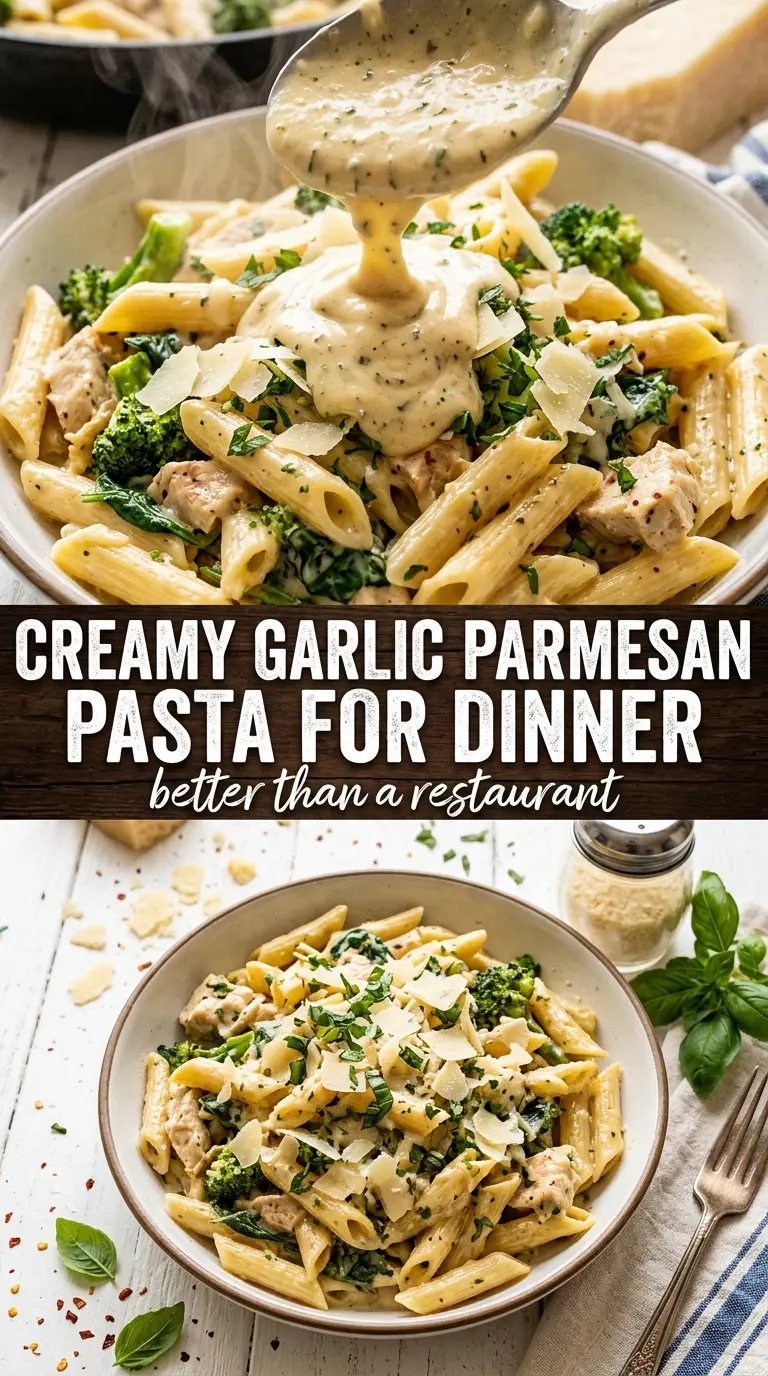
Pasta: Penne holds the sauce in its ridges, while fettuccine gives you a silkier bite. Either one works; just cook it to al dente because it softens a little more once it hits the hot sauce.
Chicken breasts: Boneless, skinless breasts keep the dish lean and fast. Dice them into even pieces so they brown instead of steam. Chicken thighs can replace them if you want a richer result, and they stay forgiving if you cook them a minute longer.
Butter, garlic, and Parmesan: These are the core of the sauce. Butter carries the garlic flavor, garlic gives the dish its punch, and Parmesan adds salt, body, and that nutty finish. Use fresh garlic here; jarred garlic can taste flat in a sauce this simple.
Parsley: This isn’t just for looks. The fresh herb cuts through the richness and keeps the final dish from feeling heavy. If you don’t have parsley, a small amount of basil works, though the pasta will taste sweeter and less classic.
Building the Sauce in the Same Pan You Cook the Chicken In
Brown the Chicken First
Season the diced chicken with part of the salt and pepper, then cook it in olive oil over medium-high heat until the pieces are golden on the outside and cooked through. Let them sit long enough to color before stirring too much, because constant movement keeps the chicken pale. Pull it out as soon as it’s done; overcooked chicken gets dry fast once it’s added back to the sauce.
Wake Up the Garlic in Butter
Melt the butter in the same skillet and stir in the garlic for about 30 seconds, just until fragrant. The garlic should smell sweet and sharp, not browned. If it browns, the sauce will pick up a bitter edge, so keep the heat moderate and move right into the cream.
Turn Cream and Parmesan Into a Sauce
Pour in the cream and bring it to a gentle simmer, then whisk in the Parmesan a little at a time until the sauce looks smooth. If the cheese clumps, the pan is too hot or the cheese went in too fast. Lower the heat and keep whisking until it melts into a glossy sauce.
Finish With Pasta Water
Add the pasta and chicken back to the skillet and toss until everything is coated. If the sauce feels too thick, loosen it with a splash of reserved pasta water. The goal is a sauce that clings to the noodles in a shiny layer, not one that pools in the bottom of the pan.
How to Adapt This for a Lighter Bowl, a Bigger Crowd, or a Dairy-Free Version
Gluten-Free Pasta Swap
Use a sturdy gluten-free pasta and cook it just until al dente. Gluten-free noodles can go soft quickly after they hit the sauce, so drain them a minute early and finish the last bit of cooking in the skillet.
Chicken Thigh Version
Chicken thighs bring a deeper, richer flavor and stay juicy even if they cook a touch longer. They make the dish a little more savory and less lean, which works especially well if you’re serving it as a bigger comfort-food dinner.
Dairy-Light Adjustment
You can replace part of the cream with unsweetened evaporated milk, but the sauce will be a little less rich and more prone to tightening. Keep the heat low and add the Parmesan slowly so it still finishes smooth.
Storage and Reheating
- Refrigerator: Store leftovers in an airtight container for up to 3 days. The sauce thickens as it chills, so expect it to look tighter when cold.
- Freezer: Cream sauces don’t freeze well. The texture can separate after thawing, so this one is best made fresh.
- Reheating: Warm it gently on the stove over low heat with a splash of milk or cream. High heat is what breaks the sauce and dries out the chicken.
Answers to the Questions Worth Asking
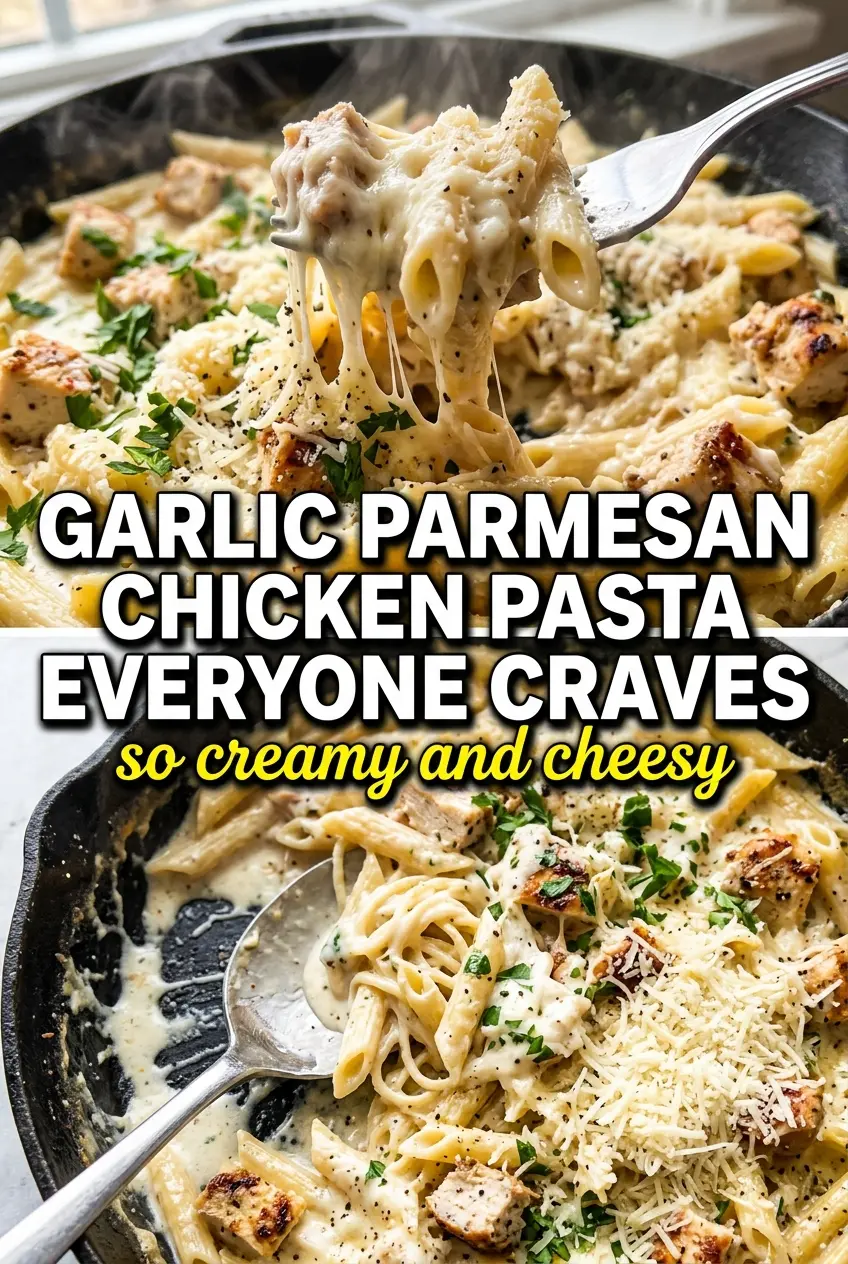
Garlic Parmesan Chicken Pasta
Ingredients
Equipment
Method
- Cook the penne or fettuccine in salted boiling water according to package directions. Before draining, reserve 1/2 cup pasta water.
- Season the diced chicken with half the kosher salt and black pepper. Heat olive oil in a large skillet over medium-high heat and cook the chicken for 6–7 minutes, until golden and cooked through, then remove and set aside.
- Melt the butter in the same skillet and sauté the minced garlic for 30 seconds, until fragrant. Keep the heat at medium-high so the garlic turns aromatic without browning.
- Pour in the heavy cream and bring it to a gentle simmer, then whisk in the grated Parmesan until smooth. Maintain a gentle simmer to prevent the sauce from separating.
- Return the chicken and cooked pasta to the skillet and toss to coat. Thin with reserved pasta water if needed, then season with the remaining kosher salt and black pepper.
- Garnish with fresh parsley and extra Parmesan before serving. Serve hot for the creamiest sauce cling.