At the end of the simmer, the broth looks thinner than the soup you probably want, even though the potatoes are soft enough to break with a fork. That’s the point where German potato soup gets its cozy body: I blend only part of the pot, then stir in cream and return the browned kielbasa. You get a thick, velvety broth with potato pieces still tucked into every bowl.
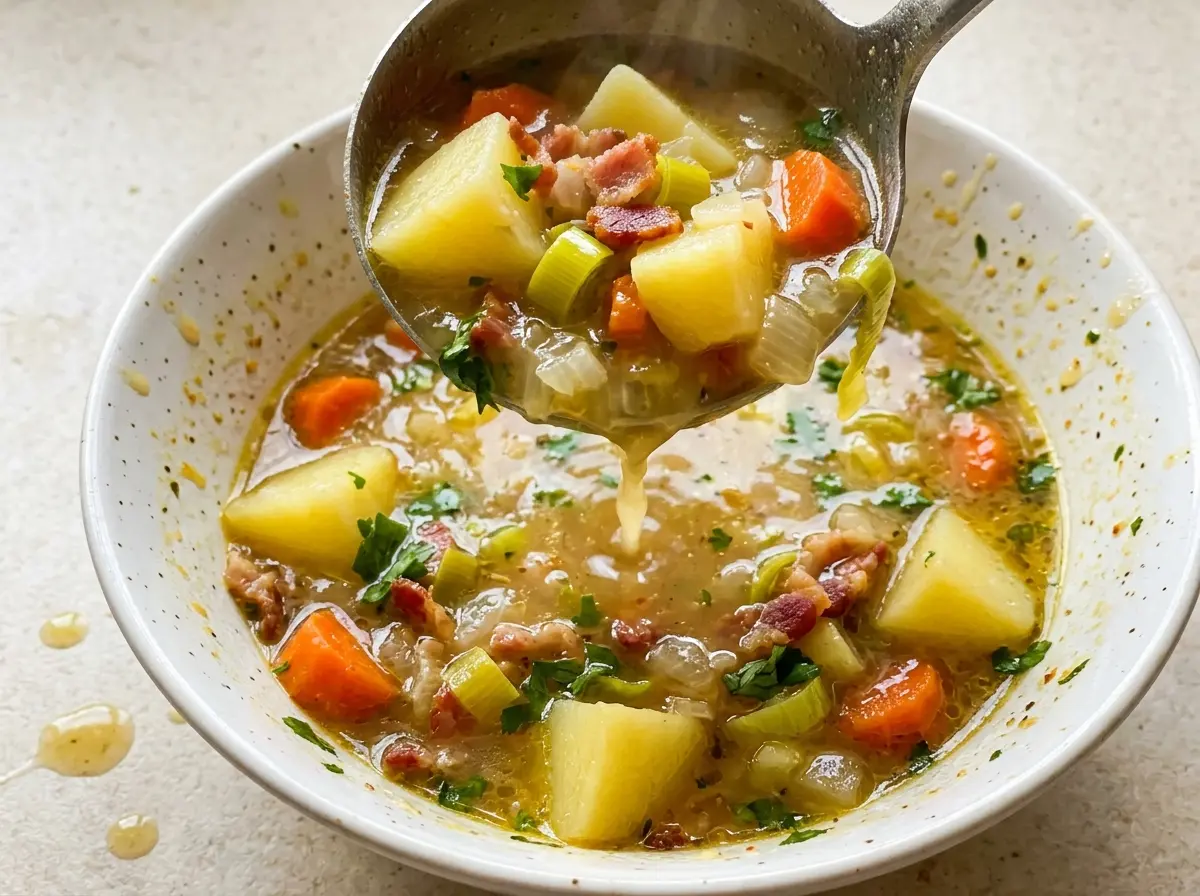
Bacon, kielbasa, and a mix of onion, leek, carrot, and celery give the broth its savory base without a long ingredient list. I like the contrast between the crisp bacon sprinkled on top and the tender vegetables underneath. A little marjoram keeps the soup fragrant without competing with the smoky sausage, and fresh parsley brightens the finish. This is the kind of soup that feels hearty without turning into a completely smooth purée.
Kitchen Note
Leave about a tablespoon of bacon fat in the pot after crisping the bacon. Keeping that little bit gives the vegetables a savory start without making the finished soup feel greasy.
Save this German potato soup for a cold evening when you want a creamy broth, tender potato chunks, and crisp bacon on top.
Why This Soup Is Better Partly Blended Than Fully Puréed
It’s easy to assume potato soup should be blended until it’s completely smooth. Here, that would lose the best part of the texture: soft, distinct potato pieces in a creamy broth. Yukon Gold potatoes release enough starch as they cook to help the liquid feel substantial, and blending just some of them thickens the broth without turning the whole pot into a heavy mash.
Use an immersion blender right in the pot and move it through a few areas, rather than sweeping it across every inch. Stop when the broth looks creamy but you can still spot plenty of intact vegetables and potato pieces. If you keep blending, the potatoes can become pasty, and the sausage and vegetables have less contrast to play against. The finished soup should coat a spoon, with a few chunks settling into it rather than disappearing.
This balance also makes the soup feel generous without needing flour or another thickener. The cream rounds out the blended broth, while the kielbasa and bacon bring smoky, salty notes that stand out against the mild potatoes. It’s a simple technique, but it’s what gives each spoonful more than one texture.
Why Yukon Golds and Kielbasa Matter in This Soup

- Yukon Gold potatoes — Their creamy texture gives the blended portion body while the remaining pieces stay tender and recognizable. Choose firm potatoes without soft spots; peeling and cutting them evenly helps them cook at the same pace.
- Kielbasa and bacon — The bacon provides cooking fat and a crisp topping, while fully cooked kielbasa adds browned, smoky bites. A familiar grocery-store kielbasa works well; browning it briefly gives it more savory depth than adding it straight to the broth.
- Leek and yellow onion — The leek adds a softer, gentler allium flavor alongside the onion. Use only the white and light green parts, and take time to rinse the sliced leek well so grit doesn’t end up in the soup.
- Carrots, celery, and garlic — These vegetables make a savory base that balances the richness of the meat and cream. Fresh garlic is worth using here because it cooks quickly and brings a clean, rounded aroma; stir it in only after the other vegetables have softened.
- Heavy cream and parsley — Heavy cream gives the partially blended broth a smooth finish, while fresh parsley lifts the bowl with a fresh, green note. The parsley is best added at the end rather than simmered with the potatoes.
Build the Soup in Stages for a Creamy, Chunky Finish
Render the Bacon, Then Brown the Kielbasa
Cook the chopped bacon in a 6-quart Dutch oven or soup pot over medium heat for 6–8 minutes, stirring occasionally, until crisp. Transfer it to a paper towel-lined plate and leave about 1 tablespoon of fat in the pot. Add the sliced kielbasa and stir for 3–4 minutes, until lightly browned, then move it to a plate as well. If the pot looks dry after removing excess fat, don’t add more; the vegetables will soften in the remaining bacon fat.
Soften the Vegetables Before Adding Garlic
Add the diced onion, sliced leek, carrots, and celery to the pot. Cook for 5–7 minutes, stirring occasionally, until the vegetables have softened but haven’t browned deeply. Stir in the minced garlic and cook for 30 seconds, just until fragrant. Garlic can turn bitter if it sits on the hot pot too long, so have the broth and potatoes ready to go.
Simmer Until the Potato Centers Are Tender
Add the potatoes, chicken broth, bay leaves, marjoram, salt, and black pepper. Bring the pot to a boil, then reduce the heat and simmer uncovered for 20–25 minutes. The potatoes are ready when a fork slips into the center easily; if you feel a firm spot, keep simmering and check again rather than blending them early. Uncovered simmering lets the soup cook steadily without trapping excess steam under a lid.
Blend Part of the Pot and Finish Gently
Remove and discard the bay leaves before blending. Use an immersion blender to partially blend the soup, leaving some potato pieces whole, then stir in the heavy cream and browned kielbasa. Simmer gently for 3–5 minutes, just until the kielbasa is heated through; a hard boil after adding cream isn’t needed. Stir in the parsley, ladle into bowls, and finish with the reserved crisp bacon.
Three Useful Ways to Adapt German Potato Soup
Make a vegetarian pot
Leave out the bacon and kielbasa, cook the vegetables in a little neutral oil, and use vegetable broth in place of chicken broth. The soup will be lighter and won’t have the same smoky, meaty finish, but the partially blended potatoes still make it hearty and creamy.
Keep it dairy-free
Leave out the heavy cream. The blended potatoes will still give the broth a creamy feel, though the soup will taste less rich and have a little less of the cream’s rounded finish.
Use turkey kielbasa for a milder bowl
Swap in fully cooked turkey kielbasa and brown it in the pot just as you would regular kielbasa. It’s usually leaner and has a gentler smoky flavor, so the finished soup will taste a bit lighter.
Storage and Reheating
- Refrigerator: Store covered for 3–4 days. The potatoes soften and the broth thickens as it sits.
- Freezer: Freeze in airtight containers for up to 2 months. The potatoes may turn softer and the cream can lose some of its smooth texture after thawing.
- Reheating: Warm in a saucepan over low to medium-low heat, stirring often, until hot throughout. Avoid bringing the cream-based soup to a boil, which can make its texture less smooth.
Questions That Come Up While Making German Potato Soup
German Potato Soup
Ingredients
Equipment
Method
- In a 6-quart Dutch oven or soup pot over medium heat, cook the bacon for 6–8 minutes, stirring occasionally, until crisp.
- Transfer the bacon to a paper towel-lined plate and leave about 1 tablespoon of bacon fat in the pot.
- Add the kielbasa and cook for 3–4 minutes, stirring, until lightly browned.
- Transfer the kielbasa to a plate.
- Add the onion, leek, carrots, and celery to the pot and cook for 5–7 minutes, stirring occasionally, until softened.
- Stir in the garlic for 30 seconds.
- Add the potatoes, broth, bay leaves, marjoram, salt, and pepper.
- Bring the soup to a boil, then reduce the heat and simmer uncovered for 20–25 minutes, until the potatoes are very tender when pierced with a fork.
- Remove the bay leaves.
- Use an immersion blender to partially blend the soup, leaving some potato pieces whole.
- Stir in the heavy cream and kielbasa and simmer gently for 3–5 minutes, until the kielbasa is heated through.
- Stir in the parsley.
- Ladle the soup into bowls.
- Sprinkle with the reserved bacon.