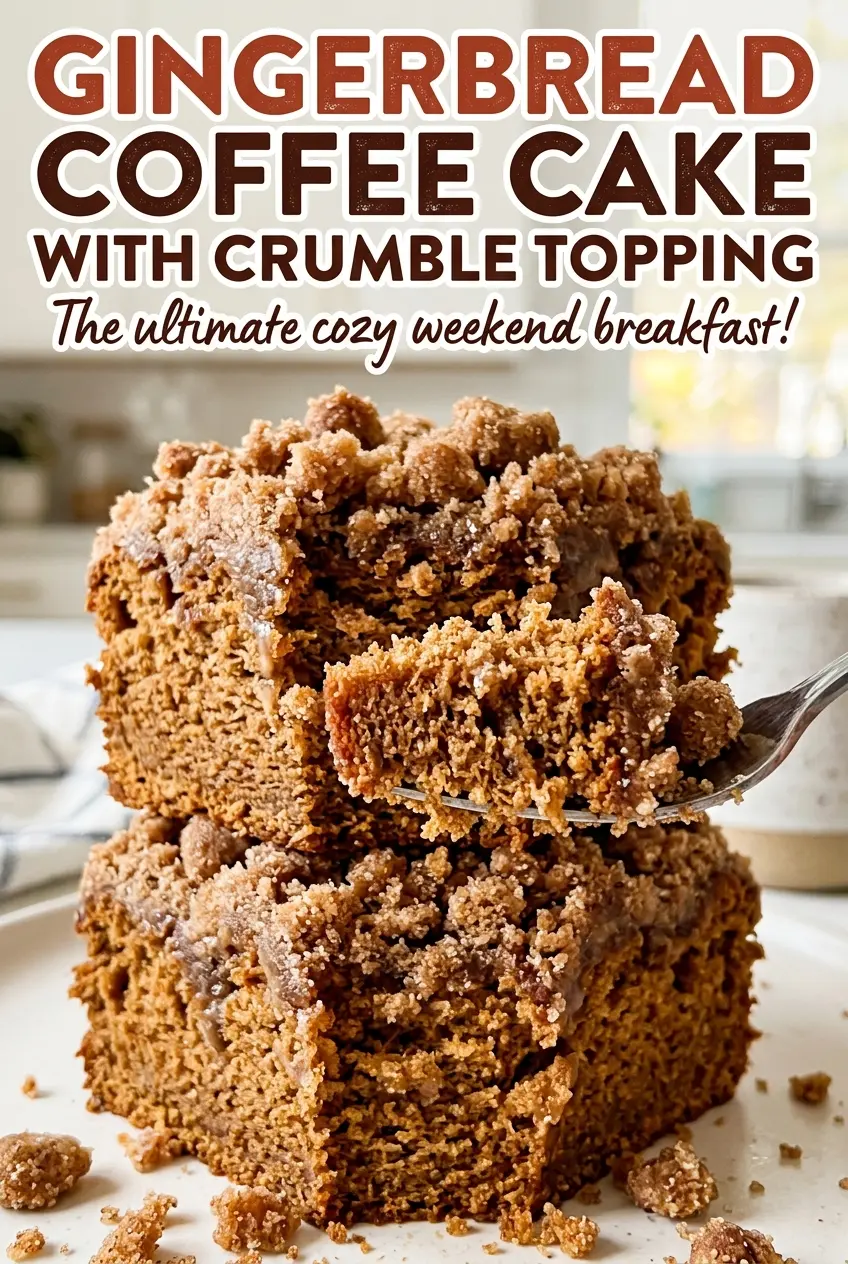
When hot water goes into a bowl of creamed butter, brown sugar, egg, and molasses, the batter loosens up fast. That can look like a wrong turn, but it’s exactly what gives this gingerbread coffee cake its tender crumb. The warm spices come through clearly, and the crumble topping gives each piece a buttery, cinnamon-scented finish.
I add the flour mixture and hot water in alternating additions, starting and ending with the flour. That gradual mixing keeps the batter even instead of leaving pockets of dry flour or a slick layer of liquid at the bottom. The cake bakes in a 9×9-inch pan, so the pieces have a good balance of soft cake and crumbly topping.
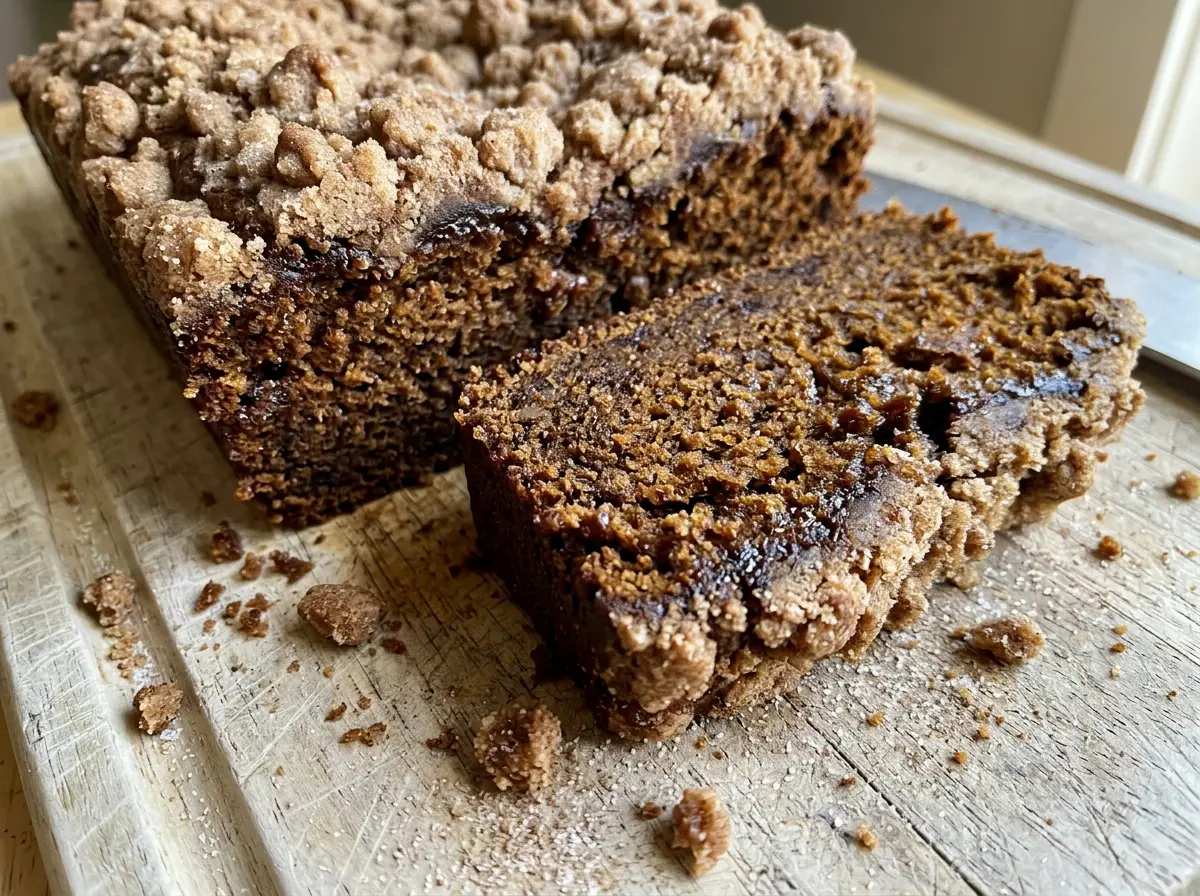
It’s a straightforward cake to mix, but a couple of small details make the texture much better. Let the butter soften before you start, and give the cake time to cool before slicing. The result is warmly spiced gingerbread under a generous, craggy layer of crumble.
Kitchen Note
For the topping, stop mixing when you have coarse clumps, not a smooth paste. Those uneven bits bake into the crumbly top you want.
Save this gingerbread coffee cake for its tender, molasses-rich crumb and buttery cinnamon crumble.
Why the Hot Water Goes Between Flour Additions in Gingerbread Cake
This batter combines creamed butter with molasses, then brings in hot water and dry ingredients. Pouring all the water in at once can loosen the mixture abruptly, making it harder to incorporate the flour evenly. Alternating the two gives each addition a chance to blend into the batter before the next one goes in.
Use three additions of the flour mixture and two of the hot water. Start with flour and finish with flour; that way, the final addition helps bring the batter together rather than leaving a last splash of water to mix in. Scrape the bowl if flour is clinging to the sides, but don’t keep beating once the batter looks uniform. Overworking cake batter after the flour is added can make the crumb tougher.
The batter will be softer than a thick cookie or muffin batter, and that’s expected with the hot water in the mix. Spread it evenly in the pan so the cake bakes to a consistent depth. The topping goes on after the batter is spread, so there’s no need to stir the crumble into the cake.
What Molasses, Butter, and Warm Spices Bring to This Cake
- Unsulphured molasses — This is where the cake gets its deep gingerbread character and a good share of its moisture. Choose ordinary unsulphured molasses; blackstrap has a much more intense, bitter edge that can overwhelm the spices. No substitute will give quite the same flavor.
- Ground ginger, cinnamon, and cloves — Together, these give the cake its familiar warm-spice aroma, with ginger leading the way. Fresh, fragrant spices make a noticeable difference here; if a jar smells faint, the baked flavor will be muted too. The crumble has its own cinnamon, so the top tastes warmly spiced without competing with the cake.
- Softened butter and packed light brown sugar — Softened butter creams properly with the sugar, creating the base for the cake batter. It should give slightly when pressed, but it shouldn’t look melted or greasy. Light brown sugar keeps the molasses flavor rounded; dark brown sugar works in a pinch but makes the cake taste deeper and more caramel-like.
- All-purpose flour — It gives structure to both the cake and its crumble. A cup-for-cup gluten-free baking blend that includes xanthan gum is the most practical replacement; use the same measured amount in both parts, though the crumb may be a little more delicate.
- Egg and baking soda — The egg helps hold the cake together, while baking soda provides lift and works with the acidic molasses. Measure the soda carefully; adding extra won’t make the cake lighter and can leave an unpleasant aftertaste.
Mixing and Baking the Cake Without Losing Its Tender Crumb
Get the Pan and Dry Ingredients Ready
Heat the oven to 350°F and grease a 9×9-inch baking pan. Whisk the flour, baking soda, ginger, cinnamon, cloves, and salt in a medium bowl so the leavener and spices are distributed before they meet the wet ingredients. Break up any visible clumps in the brown sugar while measuring it for the cake. Having the dry mixture ready makes the alternating additions easier to manage.
Cream the Butter, Sugar, Egg, and Molasses
Beat the softened butter and packed brown sugar in a large bowl until creamy, about 2 minutes. If the butter is cold, it won’t blend smoothly; if it’s melted, it won’t cream as intended. Beat in the egg and molasses until the mixture looks evenly combined. The molasses will darken the batter, so judge whether it’s mixed by looking for uniform color rather than expecting a pale mixture.
Alternate the Flour Mixture and Hot Water
Beat the flour mixture into the butter mixture in three additions, alternating with the hot water in two additions. Begin and end with flour, and let each addition blend in before adding the next. The batter should be smooth and spreadable, not stiff like dough. Stop mixing once you no longer see dry flour; prolonged beating at this stage can make the cake less tender.
Add the Crumble and Check the Center
Stir the topping’s flour, brown sugar, cinnamon, and salt together, then mix in the melted butter until coarse clumps form. Spread the cake batter evenly in the pan and scatter the topping over it. Bake for 35 to 40 minutes, until a toothpick inserted in the center comes out with a few moist crumbs. Cool the cake in the pan on a wire rack for at least 20 minutes before cutting, so the tender crumb has time to settle.
Three Easy Ways to Adapt the Gingerbread Cake
Make It Gluten-Free
Replace the all-purpose flour with the same measured amount of a cup-for-cup gluten-free baking blend that includes xanthan gum, in both the cake and the topping. The gingerbread flavor stays much the same, though the cake may be a little more delicate when sliced.
Make It Dairy-Free
Use an equal amount of plant-based butter sticks in place of the unsalted butter. Soften it for creaming into the cake, and melt it for the crumble. The topping may have a slightly different texture depending on the brand, but this swap keeps the buttery role in both layers.
Turn Up the Ginger
For a sharper ginger note, use 2 teaspoons of ground ginger in the cake instead of 1½ teaspoons and leave the cinnamon and cloves unchanged. This keeps the same warm-spice balance while letting ginger come through more strongly.
Storage and Reheating
- Refrigerator: Keep the cooled cake covered for up to 5 days. The crumb firms when chilled, so let a slice sit at room temperature briefly before eating.
- Freezer: Freeze individual pieces in an airtight container or wrap them well, for up to 2 months. Thaw a piece in the refrigerator or at room temperature.
- Reheating: Warm an individual slice in the microwave in short bursts, just until it’s pleasantly warm. Long heating can dry the cake and soften the crumble.
Questions That Come Up When Baking Gingerbread Coffee Cake
Gingerbread Coffee Cake with Crumble Topping
Ingredients
Equipment
Method
- Heat the oven to 350°F.
- Grease a 9x9-inch baking pan.
- In a medium bowl, whisk together the flour, baking soda, ginger, cinnamon, cloves, and salt.
- In a large bowl, beat the softened butter and brown sugar until creamy, about 2 minutes.
- Beat in the egg and molasses.
- Beat the flour mixture into the butter mixture in three additions, alternating with the hot water in two additions and beginning and ending with the flour mixture.
- In a medium bowl, stir together the flour, brown sugar, cinnamon, and salt.
- Mix in the melted butter until coarse clumps form.
- Spread the cake batter evenly in the prepared pan.
- Scatter the crumble topping over the cake batter.
- Bake for 35 to 40 minutes, until a toothpick inserted in the center comes out with a few moist crumbs.
- Cool the cake in the pan on a wire rack for at least 20 minutes before cutting.