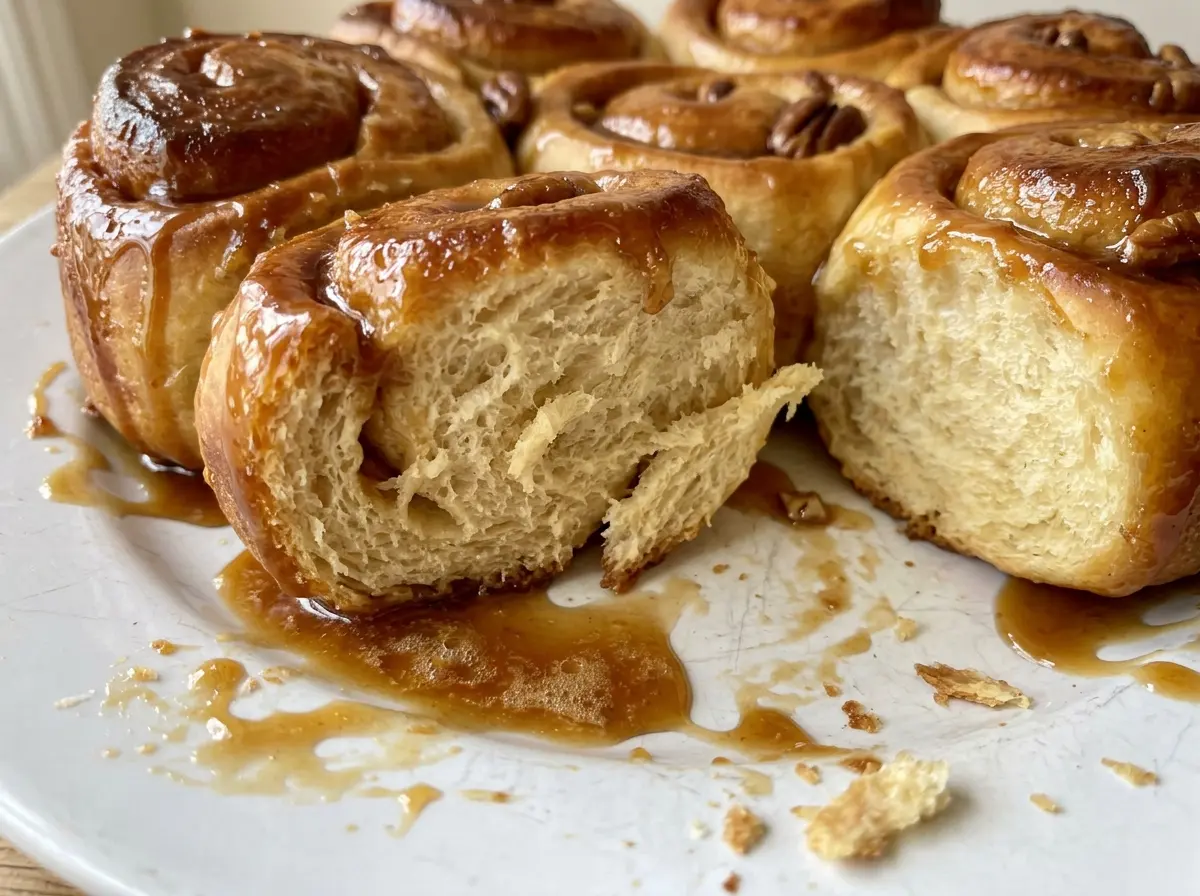
When a pan of caramel buns comes out of the oven, the centers should be baked through even while the edges have turned a deeper gold. That contrast is part of what makes Grandmas Caramel Buns worth the care: each soft spiral sits in a buttery brown-sugar topping, and the pecans end up on top when you turn the pan out. The first time I made them, I was surprised by how much the topping changes during the bake. It starts as a thin sauce and turns into the glossy coating that clings to every swirl.
The dough needs time to rise, but the hands-on work is straightforward. I use a simple cinnamon-and-brown-sugar filling, then bake the rolls over pecans and a quick caramel made with butter and corn syrup. That layering gives you tender, yeasted buns without asking you to make a separate candy or frosting. Served while the caramel is still warm, they’re soft in the middle with a sticky, nutty top.
Kitchen Note
Have the serving platter ready before the buns come out. The caramel is still warm after the short rest, so turn the pan over in one confident motion rather than waiting for the topping to cool and set.
Save Grandmas Caramel Buns for a slow morning: soft cinnamon spirals, pecans, and a warm brown-sugar caramel topping.
Why the Caramel Starts as a Sauce, Not a Hard Candy
The topping needs to stay pourable when it goes into the pan. Butter and brown sugar make it rich, while light corn syrup helps keep the sugar from crystallizing into a gritty layer. The goal isn’t a dark, hard caramel that snaps; it’s a smooth sauce that can flow around the pecans and coat the buns after baking.
That’s why I bring the mixture only to a gentle boil and stop after one minute. Cooking it much longer on the stove would push it toward a thicker candy texture before it even reaches the oven. The buns then bake over the topping, and the butter and sugar continue to heat beneath them. When you invert the pan, that sauce becomes the glossy layer on top instead of a separate frosting that has to be spread later.
The topping also does its best work when the pecans are spread in an even layer on the bottom of the dish. Each bun lands over the same mix of nuts and caramel, rather than leaving a bare patch in one corner and a pile of pecans in another. It’s a small bit of setup that makes the turned-out pan look and serve evenly.
What Makes the Dough Tender and the Caramel Topping Smooth
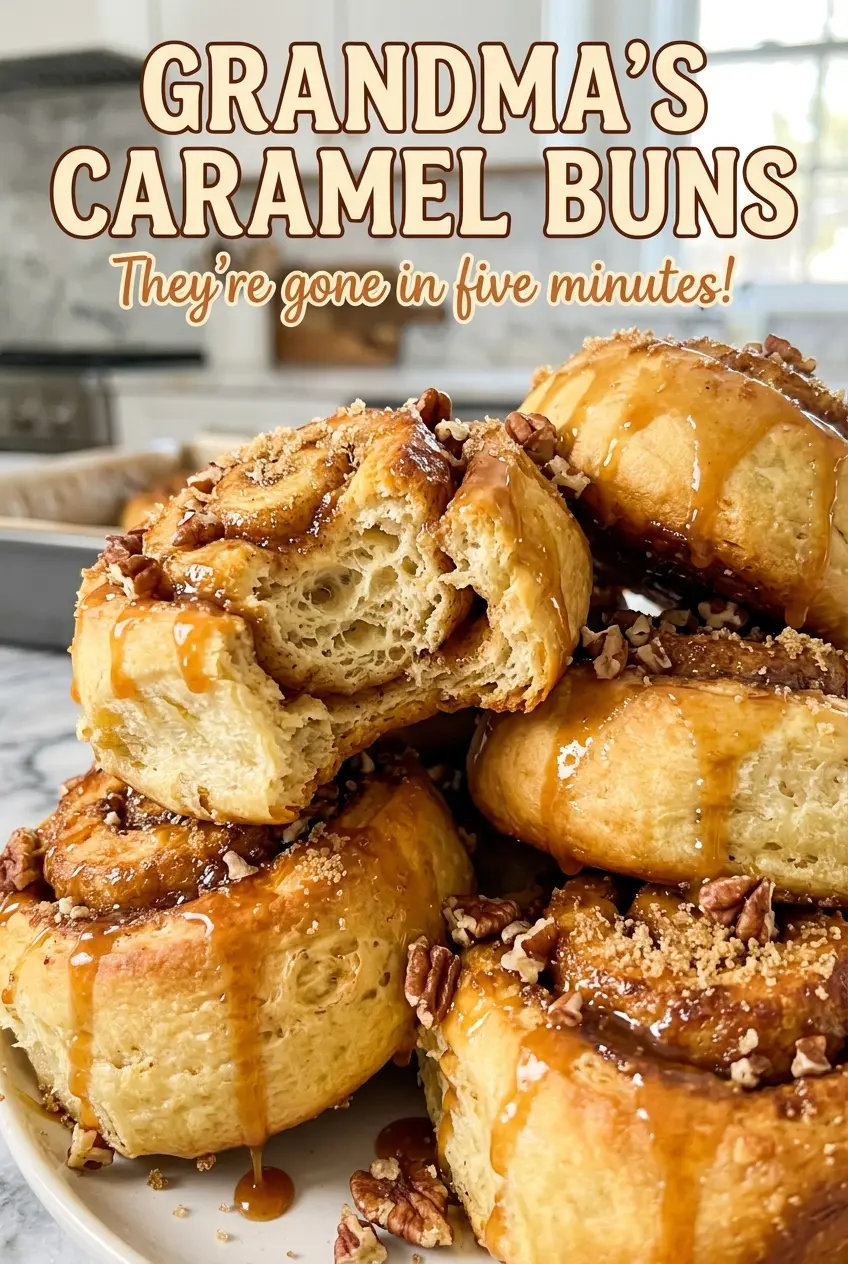
- Whole milk and active dry yeast — Whole milk gives the dough richness, and active dry yeast needs a warm start to foam before you mix the dough. Use a thermometer for the milk if you have one; too-hot milk can keep the yeast from working. I wouldn’t swap in a different kind of yeast here because the proofing cue and timing are written for active dry.
- All-purpose flour — It gives these buns a soft, pull-apart crumb without making the rolls overly chewy. Measure without packing it down; adding extra flour to a dough that’s meant to be kneaded smooth can make the finished buns dense. A standard bag of all-purpose flour works well.
- Eggs and unsalted butter — Eggs enrich the dough, while butter appears in the dough, filling, and topping for three different jobs. Use large eggs and unsalted butter so the salt level stays balanced. A regular store-brand butter is fine; keep the softened butter for the filling spreadable and the melted butter for the dough cooled enough not to feel hot.
- Light brown sugar and light corn syrup — Brown sugar gives the filling its moist, molasses-like sweetness and the topping its caramel character. Corn syrup helps the topping stay smooth instead of grainy. I don’t recommend leaving it out or replacing it with a different syrup; that changes how the topping behaves.
- Pecans and cinnamon — Fresh pecans bring a clean, buttery crunch, but a basic package is all you need if it smells fresh and isn’t stale. Ground cinnamon seasons the filling; there’s no need for a premium brand, though an old jar will taste muted. Keep both ingredients ready before rolling the dough so the filling can be spread evenly.
How to Layer the Dough, Filling, and Caramel for Even Buns
Wake Up the Yeast and Knead the Dough
Whisk the milk, active dry yeast, and granulated sugar together, then leave the bowl undisturbed for 5–10 minutes. Look for a foamy layer on top; a flat mixture isn’t the cue to move on. Add the eggs, melted butter, salt, and flour, then mix until the dough looks shaggy before kneading for 8–10 minutes. It’s ready when it feels smooth and elastic, not rough or floury.
Coat the bowl lightly with cooking spray, set the dough inside, cover it, and let it rise for 1–1 1/2 hours. The dough should double in size rather than merely look a little puffy. A cool kitchen can stretch the rise, so use the change in volume as your guide.
Make the Pecans-and-Caramel Base
Lightly coat a 9×13-inch baking dish with cooking spray, then scatter the chopped pecans evenly across the bottom. In a saucepan over medium heat, stir the remaining butter with the portion of brown sugar for the topping and the light corn syrup. Once the mixture reaches a gentle boil, cook it for one minute, stirring, then pour it over the pecans. Spread the sauce across the base before it cools so the nuts stay evenly distributed.
Roll, Fill, and Let the Slices Rise
Stir the remaining brown sugar with the cinnamon while the dough is ready to shape. Roll it into a 12×18-inch rectangle, spread the softened butter over the surface, and sprinkle on the sugar mixture. Roll the dough up from a long side and cut it into 12 equal slices; arrange the slices cut-side down in the prepared dish. Cover and leave them for 30–45 minutes, until the rolls look puffy.
Bake Until the Center Buns Are Done
Bake at 350°F for 25–30 minutes, watching for golden-brown tops and checking that the center buns are baked through. The edges may color first, so don’t use the outer rolls alone to judge the middle. Let the dish stand for 5 minutes, then carefully invert the buns onto a serving platter while the caramel is warm. Lift the pan slowly so any pecans or sauce that cling to the bottom have a chance to release.
Two Simple Ways to Change These Caramel Buns
Pecan-free caramel buns
Leave the pecans out of the baking dish and pour the caramel topping directly into the prepared pan. You’ll keep the buttery, sticky topping but lose the nutty crunch. For someone with a nut allergy, also prevent cross-contact and check that the other ingredients are safe for them.
Brown-sugar-only filling
Leave the cinnamon out of the filling and use the brown sugar with the softened butter. The buns will still have the same tender dough and caramel-pecan top, but the center will taste more directly of brown sugar and butter instead of warm spice.
Storage and Reheating
- Refrigerator: Cover and refrigerate leftovers for up to 4 days. The dough will firm up and the caramel will thicken when cold.
- Freezer: Once completely cool, wrap the buns tightly and freeze in a sealed container for up to 2 months. The caramel may soften as they thaw, but the buns reheat well.
- Reheating: Warm covered buns in a 300°F oven until heated through. Avoid reheating uncovered for too long; the exposed caramel can get overly dark and sticky.
Questions That Come Up When Baking Grandmas Caramel Buns
Grandmas Caramel Buns
Ingredients
Equipment
Method
- Whisk the warm milk, yeast, and granulated sugar in a large bowl and let stand for 5–10 minutes, until foamy.
- Add the eggs, 1/4 cup melted butter, salt, and flour; mix until a shaggy dough forms, then knead for 8–10 minutes, until smooth and elastic.
- Lightly coat the bowl with cooking spray, place the dough in it, cover, and let rise for 1–1 1/2 hours, until doubled in size.
- Lightly coat a 9x13-inch baking dish with cooking spray and scatter the pecans evenly over the bottom.
- Melt the remaining 1/2 cup butter with 1 cup brown sugar and the corn syrup in a saucepan over medium heat, stirring; bring to a gentle boil and cook for 1 minute, then pour over the pecans.
- Stir the remaining 1/2 cup brown sugar with the cinnamon.
- Roll the dough into a 12x18-inch rectangle, spread with the softened 1/4 cup butter, and sprinkle evenly with the brown sugar mixture.
- Roll the dough up from a long side and cut into 12 equal slices, then arrange them cut-side down in the baking dish.
- Cover and let rise for 30–45 minutes, until puffy.
- Bake at 350°F for 25–30 minutes, until the tops are golden brown and the center buns are baked through.
- Let stand for 5 minutes, then carefully invert the buns onto a serving platter while the caramel is still warm.