Gyoza soup lands in the bowl with that quiet kind of comfort that makes you stop talking for a second. The dumplings stay tender, the broth turns savory and fragrant with ginger and garlic, and the bok choy and mushrooms keep every spoonful feeling fresh instead of heavy. It eats like a full meal, but it never feels fussy.
What makes this version work is the balance in the broth. Chicken broth gives it body, while soy sauce, mirin, and rice vinegar add the salty-sweet-tangy edge that keeps the dumplings from tasting flat. Sesame oil goes in at the end so its aroma stays bright, and the gyoza go straight into the simmering broth so they finish gently instead of tearing apart in a hard boil.
If you’ve ever had dumpling soup that tasted thin or muddy, the fix is in the order. Build the broth first, cook the mushrooms before the dumplings go in, and add the greens at the very end so they stay crisp-tender. That’s what makes this bowl taste clean and layered instead of rushed.
The broth had so much more depth than I expected, and the dumplings stayed intact even after simmering. I added the chili oil at the table and it made the whole bowl taste restaurant-level.
Save this gyoza soup for the nights when you want dumplings, ginger broth, and a fast one-pot dinner that still feels special.
The Trick Is Keeping the Dumplings Tender, Not Tough
Gyoza soup goes wrong when the broth is at a hard boil. That drives the dumpling wrappers apart before the filling has time to heat through, and you end up with cloudy broth and broken pieces floating around. A steady simmer is the sweet spot here. It keeps the soup clear and gives the dumplings enough movement to cook evenly without beating them up.
The other thing that matters is timing. Mushrooms go in before the dumplings so they can soften and release their flavor into the broth. Bok choy waits until the end because it only needs a couple of minutes to wilt, and overcooked greens turn the whole bowl dull. If you season too early with salt, the broth can taste oversalted once the soy sauce and dumplings have finished cooking, so taste at the end and adjust from there.
What Each Ingredient Is Actually Doing in This Bowl
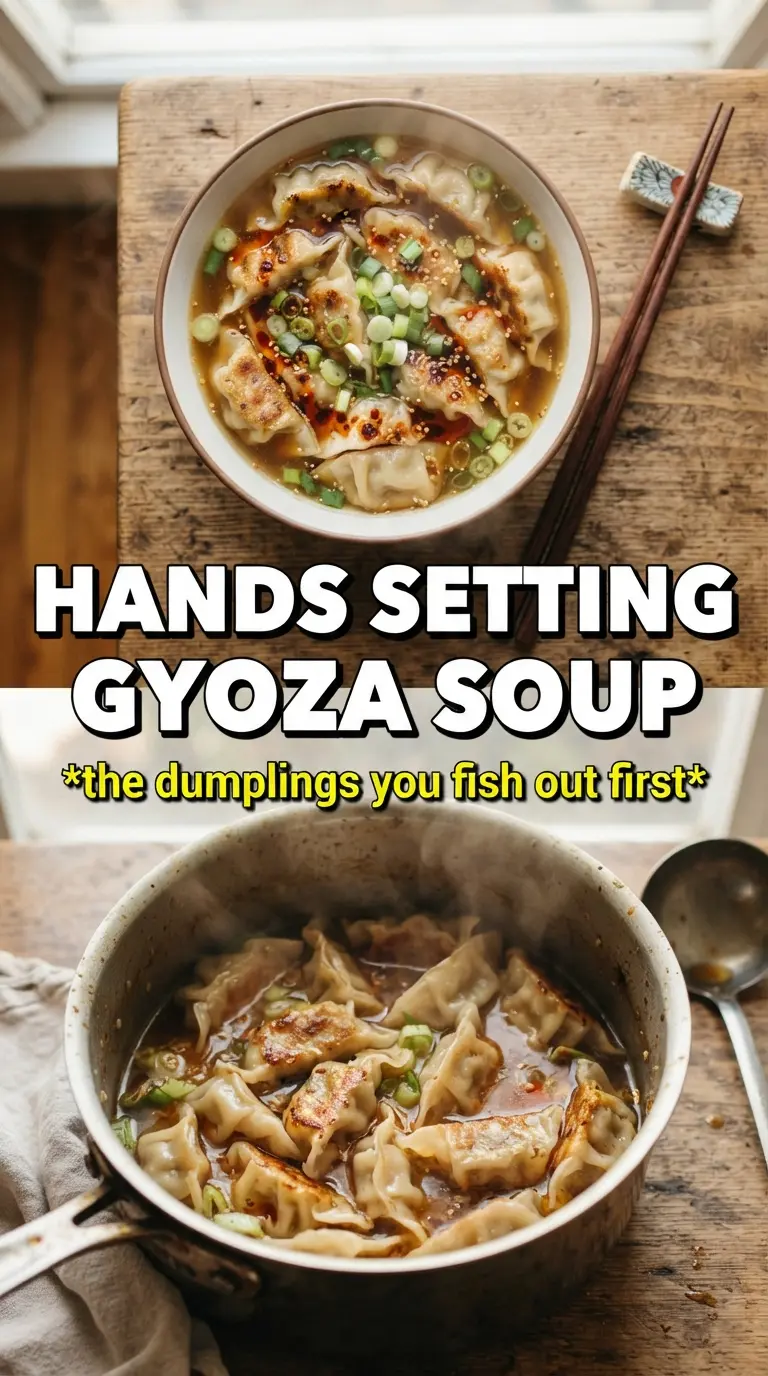
- Gyoza or potsticker dumplings — Frozen dumplings work beautifully here, and there’s no need to thaw them first. Fresh dumplings cook a little faster, so watch the wrapper closely; you want them tender and fully heated, not swollen and split.
- Chicken broth — This is the base, so use one you’d be happy to sip on its own. If you only have low-sodium broth, that’s the better choice because the soy sauce brings plenty of salt. Vegetable broth works too, but the soup will be lighter and less savory.
- Ginger and garlic — These are what keep the broth tasting alive. Fresh ginger makes a big difference here; the powdered version will taste flatter and more one-note. If your ginger is old and fibrous, grate it finely so it melts into the broth instead of hanging around in stringy bits.
- Mirin and rice vinegar — Mirin softens the saltiness and adds a gentle sweetness, while rice vinegar keeps the broth from tasting heavy. You can swap in a small pinch of sugar plus a little extra broth if you’re missing mirin, but the finish won’t be as rounded.
- Bok choy and shiitake mushrooms — Bok choy gives the soup a clean, crisp bite, and shiitakes add a deeper mushroom note than button mushrooms ever will. Sliced cremini can stand in for shiitake if that’s what you have, but the broth will be a little less earthy.
- Sesame oil, chili oil, and sesame seeds — Sesame oil is a finishing oil here, not a cooking oil, so its aroma stays fragrant. Chili oil is the quick way to add heat at the table, and sesame seeds give the bowl a little texture right at the end.
Building the Broth, Then Adding the Dumplings at the Right Moment
Starting with the Aromatics
Set the broth over medium heat and add the garlic, ginger, soy sauce, mirin, and rice vinegar as it comes up to a simmer. You want the broth to look lively but not bubbling hard. If the garlic starts browning, the heat is too high and the broth will pick up a bitter edge instead of a clean savory one.
Softening the Mushrooms
Add the sliced shiitakes and let them cook for 3 to 4 minutes. They’ll darken slightly and release a little of their flavor into the broth, which is what gives the soup depth without needing a long simmer. If the mushrooms are piled high and steaming instead of simmering, give the pot another minute to come back to temperature before moving on.
Cooking the Gyoza Gently
Slide the dumplings into the simmering broth and cook them according to the package directions, usually 5 to 7 minutes. Stir once or twice very gently so they don’t stick to the bottom, but don’t keep moving them around. If the wrappers start to burst, the broth is too hot or the pot is too crowded.
Finishing with the Greens
Add the bok choy during the last 2 to 3 minutes so the stems stay a little crisp and the leaves turn glossy and wilted. Stir in the sesame oil off the heat, then taste the broth and add salt only if it still needs it. Finish with green onions, sesame seeds, and chili oil right before serving so the toppings stay bright and the soup smells fresh at the table.
How to Adapt This When You Want It Lighter, Spicier, or Vegetarian
Vegetarian gyoza soup
Use vegetable broth and vegetable dumplings. Shiitake mushrooms become even more important here because they replace some of the savory depth you’d normally get from chicken broth, so don’t skip them. The soup will still be satisfying, but it will taste cleaner and a little lighter.
Gluten-free version
Choose gluten-free dumplings and swap in tamari for the soy sauce. Check the broth label too, since some packaged broths contain wheat-based additives. The result is still rich and balanced, just with a slightly different seasoning profile.
Spicier, restaurant-style bowl
Add more chili oil at the end or stir in a pinch of red pepper flakes with the ginger and garlic. Heat builds better when it’s layered, so start small and let each bowl finish at the table. That way the broth stays balanced instead of turning aggressive.
Make it more filling
Add extra bok choy, a handful of spinach, or a few more mushrooms. You can also serve it over a small scoop of cooked rice if you want a heartier bowl, though the broth will soak in fast. That turns it from a light soup into a fuller dinner without changing the flavor balance.
Storage and Reheating
- Refrigerator: Store the soup for up to 3 days. The dumplings will soften a bit more as they sit, and the vegetables lose some bite.
- Freezer: I don’t recommend freezing the finished soup because the dumpling wrappers and bok choy turn soft and watery after thawing. Freeze the broth base on its own if you want to get ahead.
- Reheating: Warm it gently over low to medium-low heat until the broth is hot and the dumplings are heated through. Don’t let it boil hard, or the wrappers can break apart and the greens will go limp.
Answers to the Questions Worth Asking
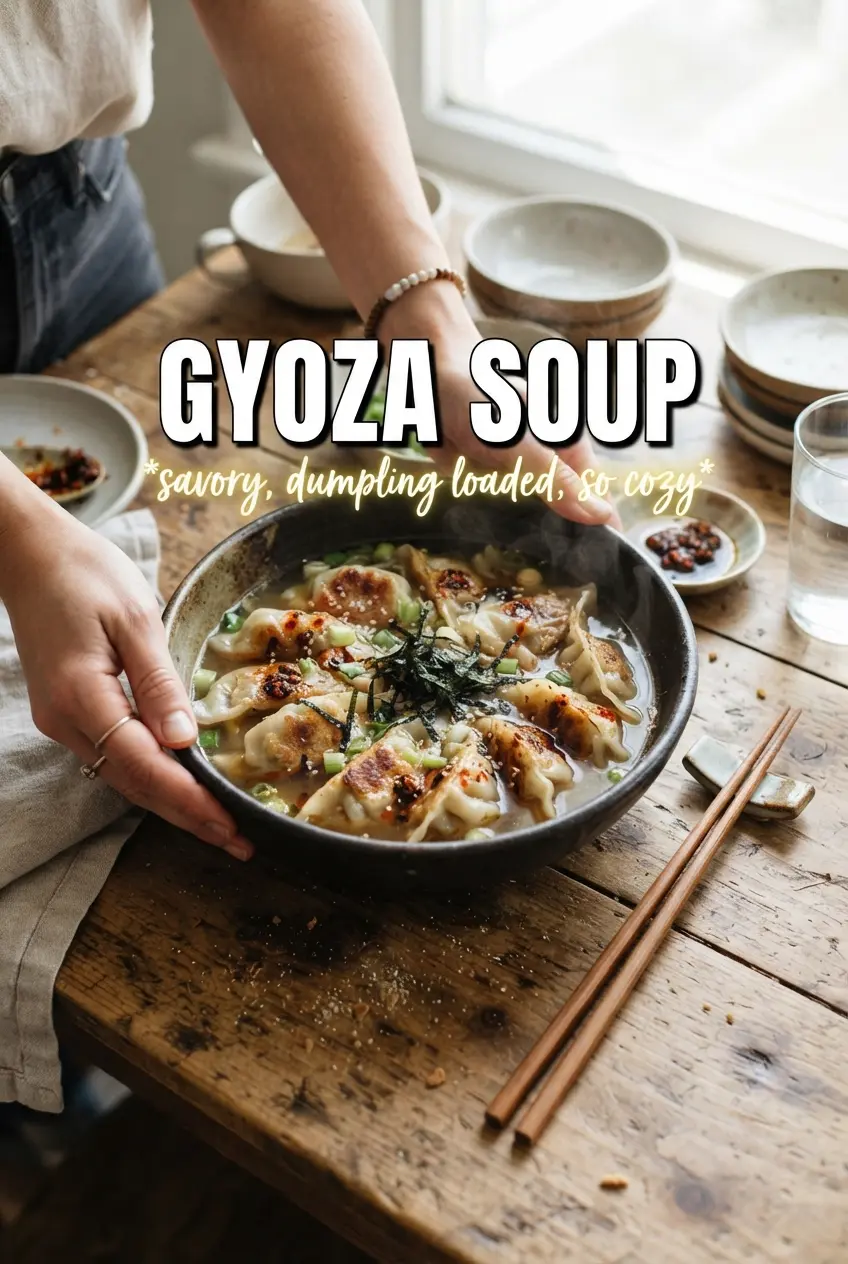
Gyoza Soup
Ingredients
Equipment
Method
- Bring chicken broth to a simmer in a large pot, then stir in garlic, ginger, soy sauce, mirin, and rice vinegar.
- Simmer for 5 minutes so the aromatics mellow, keeping the broth at a gentle bubbling.
- Add shiitake mushrooms and cook for 3 to 4 minutes, until softened and fragrant.
- Add gyoza directly to the simmering broth and cook according to package directions, usually 5 to 7 minutes, until cooked through.
- Add bok choy and cook for 2 to 3 minutes, until wilted and bright green.
- Stir in sesame oil, taste the soup, and season with salt to taste.
- Serve topped with green onions, sesame seeds, and chili oil.