When a knife slides easily into the center of a russet, the potato is ready for the part that makes these High Protein Buffalo Dill Twice Baked Potatoes worth the extra bake: turning the fluffy middle into a tangy chicken filling while keeping the skins intact. I bake the potatoes on a rimmed sheet first, then let them cool until they’re easy to handle before scooping. That short pause makes the halves much easier to work with.
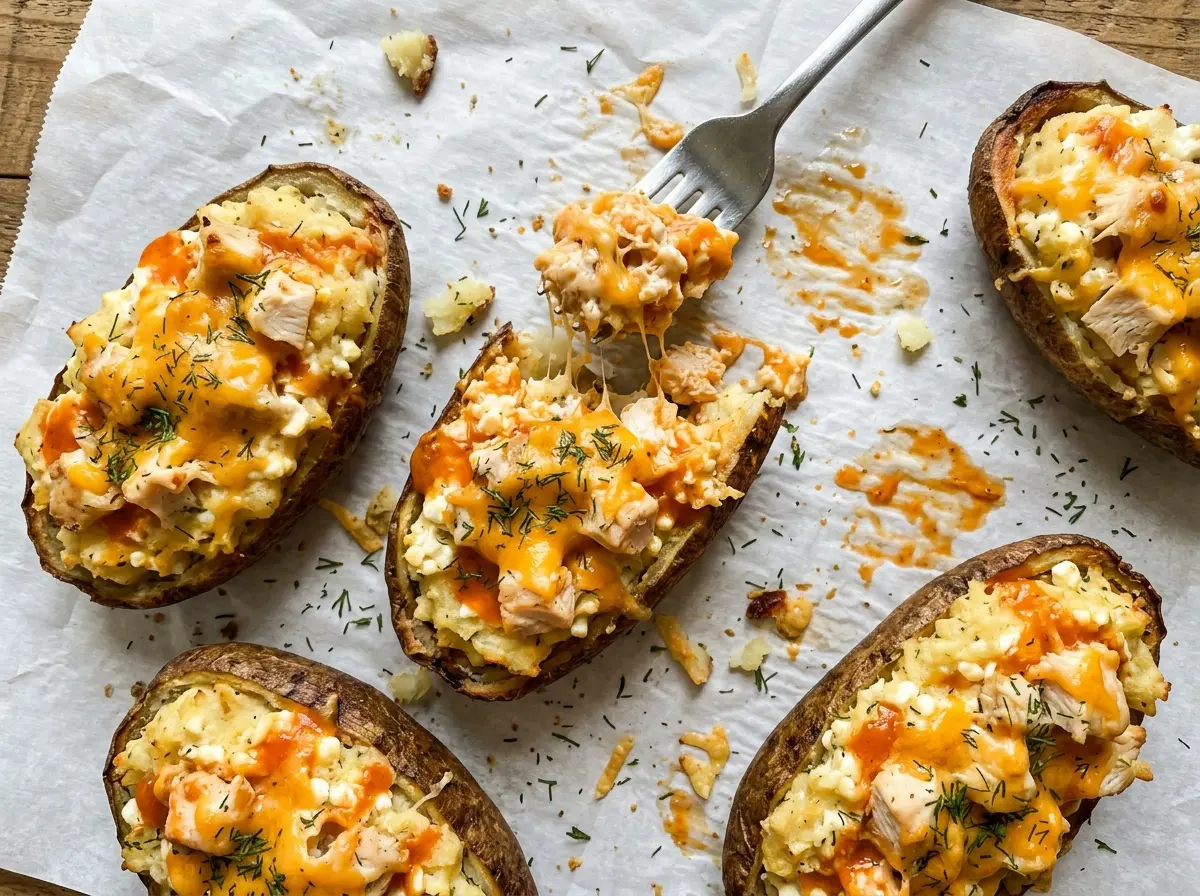
Cottage cheese and plain Greek yogurt give the mashed potato a creamy, bright base, while buffalo sauce brings the heat and fresh dill cools it down. I fold in cooked shredded chicken and sharp cheddar, fill the potato skins, then bake them again until the cheese melts and the filling is hot. Each half has the familiar comfort of a twice-baked potato with a buffalo-chicken center that’s rich but still tangy.
Kitchen Note
I leave about 1/4 inch of potato inside each skin when I scoop. That thin layer helps the shells hold their shape when you fill them, without leaving so much potato behind that the filling feels skimpy.
Save these High Protein Buffalo Dill Twice Baked Potatoes for a hearty meal with a creamy, tangy buffalo-chicken filling and melted cheddar.
Why the Potato Mash Keeps Buffalo Chicken from Eating Like a Dip
Buffalo chicken on its own can be sharp, salty, and a little loose. Here, the potato flesh gives the filling body before the chicken goes in, so the finished center eats like a hearty stuffed potato instead of a scoop of dip tucked into a shell. Mashing the cottage cheese, Greek yogurt, and buffalo sauce with the potato first spreads their tang and creaminess through the base.
That order also gives the chicken a cohesive place to settle. Once the base is mostly smooth, folding in the chicken keeps the filling substantial rather than turning it into a uniform paste. The cheddar goes in with the chicken, where it adds savory flavor throughout, then the remaining cheese melts on top. Each part has a job: potato for body, dairy for a creamy tang, buffalo sauce for heat, and cheese for a sharp finish.
It’s a useful balance for a twice-baked potato because the filling needs to be soft enough to spoon back into the skins but sturdy enough to stay piled in place. The mixture shouldn’t be runny. If the base still has a few small curds, that’s fine; aim for mostly smooth rather than trying to make it perfectly silky.
What the Chicken, Dairy, and Dill Each Bring to the Filling

- Russet potatoes — Their fluffy interior mashes readily, and their skins make a useful sturdy shell for the second bake. Choose medium potatoes that are similar in size so they cook at about the same pace. Waxier potatoes don’t give the same light mash.
- Cooked shredded chicken breast — Breast meat keeps the filling lean and mild enough for the buffalo sauce and dill to stand out. Leftover cooked chicken breast works well; shred it into small pieces so it folds evenly into the potato. Dark meat gives a richer, less delicate result.
- Cottage cheese and plain Greek yogurt — Cottage cheese adds creamy body, while Greek yogurt brings a clean tang that balances the buffalo sauce. Plain Greek yogurt matters here; a sweetened or flavored one would pull the filling in the wrong direction. Sour cream can replace the yogurt in the same amount, though the filling will taste richer and less tangy.
- Buffalo sauce — This supplies both heat and vinegar tang, so its flavor has a noticeable effect on the whole filling. Choose a sauce you already enjoy; milder and hotter brands change the finished potatoes without changing the method. A certified gluten-free buffalo sauce works as a direct swap when needed.
- Fresh dill — Fresh dill gives the filling its cool, herbal note against the spicy sauce. Chopped fresh chives can stand in for it in the same amount, with a more onion-like flavor and less of dill’s distinctive fragrance.
- Sharp cheddar — A sharp cheese gives the filling more character than mild cheddar, and it melts into the potato and across the tops. Monterey Jack is a good swap if you want a milder, softer cheese; keep the same total amount and divide it between the filling and topping as usual.
The Two Bakes That Turn Russets into Stuffed Potato Shells
Bake Until the Centers Give Easily
Heat the oven to 400°F with a rack in the center. Scrub and dry the russets, rub them with olive oil, and sprinkle with kosher salt before setting them on a rimmed baking sheet. Bake for 50 to 65 minutes, checking for a knife to slide easily into the center. A potato that still pushes back needs more time; a clean, easy slide is the cue to move on.
Cool the Potatoes Before Scooping
Let the potatoes cool until they’re easy to handle, about 10 minutes, then cut each one in half lengthwise. Scoop the flesh into a large bowl, keeping the skins intact. If a shell begins to flex while you work, slow down and scoop from the center toward the ends. Set the empty skins aside on the baking sheet for filling.
Mash the Tangy Base, Then Fold in the Chicken
Mash the potato flesh with the cottage cheese, plain Greek yogurt, and buffalo sauce until mostly smooth. A few small bits of potato or cottage cheese are fine; the mixture doesn’t need to look whipped. Fold in the cooked shredded chicken, fresh dill, garlic powder, black pepper, and 3/4 cup of the cheddar. Stop once everything is spread through the filling so the chicken stays in distinct pieces.
Fill the Skins and Melt the Cheddar
Divide the filling among the potato skins, then scatter the remaining 1/4 cup cheddar over the tops. Bake on the baking sheet at 400°F for 15 to 20 minutes. The filling should reach 165°F, and the cheddar should be melted with light brown spots. If the cheese is melted but not browned, give the potatoes a little more time while keeping an eye on the tops.
Simple Swaps for a Different Heat, Cheese, or Main Filling
Use Pepper Jack for a Spicier, Stretchier Top
Swap the cheddar for the same amount of shredded Pepper Jack, keeping the same division between filling and topping. It melts smoothly and adds a gentle peppery heat, though you’ll lose some of sharp cheddar’s savory bite.
Make a Vegetarian Version with Cannellini Beans
Replace the chicken with an equal volume of drained, rinsed cannellini beans, patted dry. Fold them into the filling and lightly crush a few as you mix so the beans nestle into the potato instead of rolling around in large pieces. The center will be softer and more bean-forward, while the buffalo, dill, and cheese still carry the flavor.
Keep the Same Tang with a Gluten-Free Sauce
Use a certified gluten-free buffalo sauce in place of your usual sauce, keeping the same amount. That keeps the defining buffalo flavor intact without changing the filling’s consistency. The other ingredients stay the same.
Storage and Reheating
- Refrigerator: Store leftovers in a covered container for 3 to 4 days. The potato skins soften as they sit, but the filling stays creamy.
- Freezer: Once cooled, wrap the potatoes individually and freeze for up to 2 months. The dairy-based filling may soften slightly after thawing, but the potatoes reheat well.
- Reheating: Warm in a 350°F oven until hot throughout. If the cheese starts browning before the center is warm, loosely cover the tops with foil; microwaving can soften the skins further.
Questions That Come Up When Making Buffalo Dill Potatoes
High Protein Buffalo Dill Twice Baked Potatoes
Ingredients
Equipment
Method
- Preheat the oven to 400°F with a rack in the center.
- Scrub and dry the potatoes, rub them with the olive oil, and sprinkle with the salt.
- Set the potatoes on a rimmed baking sheet and bake for 50 to 65 minutes, until a knife slides easily into the centers.
- Let the potatoes cool until easy to handle, about 10 minutes.
- Cut the potatoes in half lengthwise and scoop the flesh into a large bowl, leaving about 1/4 inch of potato in each skin.
- Mash the potato flesh with the cottage cheese, Greek yogurt, and buffalo sauce until mostly smooth.
- Fold in the chicken, dill, garlic powder, black pepper, and 3/4 cup of the cheddar.
- Divide the filling among the potato skins and sprinkle with the remaining 1/4 cup cheddar.
- Bake on the baking sheet at 400°F for 15 to 20 minutes, until the filling reaches 165°F and the cheese is melted and lightly browned.