Silky tomato soup gets a lot more satisfying when it has some body behind it, and that’s exactly what the white beans do here. The result is still bright, tangy, and smooth, but it eats like a full meal instead of a starter. A swirl of cream or Greek yogurt at the end rounds out the acidity without dulling the tomatoes.
The trick is building the base slowly enough for the onion to soften and the tomato paste to darken a bit before the broth goes in. That little step gives the soup a deeper, cooked-all-day taste even though it comes together fast. Blending the beans straight into the pot keeps the texture velvety while adding protein in a way nobody will clock unless you tell them.
Below, I’ll walk through the part that matters most: how to blend this soup until it’s smooth instead of grainy, plus the small finishing step that keeps dairy from curdling. I’ve also included a few swaps for making it dairy-free or extra rich, depending on what you’ve got on hand.
The white beans made the soup so creamy after blending, and the little swirl of Greek yogurt at the end gave it a smooth finish without tasting heavy. My kids didn’t notice the extra protein at all.
Save this high protein tomato soup for the nights when you want a silky bowl with enough staying power to count as dinner.
The One Mistake That Makes Tomato Soup Taste Flat
Most tomato soups come up short because the tomatoes, broth, and dairy are all fighting for attention instead of building one clean flavor. The fix is to give the onion and tomato paste a real head start. When the onion turns soft and the paste darkens from brick red to something a little rustier, you’ve built sweetness and depth before the liquid even goes in.
The other place people lose flavor is at the end. Tomatoes need a small amount of sweetness to taste round instead of sharp, especially once the beans are blended in. Honey or sugar doesn’t make the soup sweet; it pulls the edges together. If your soup tastes thin, flat, or sour, that last adjustment is usually what’s missing.
What Each Ingredient Is Actually Doing in This Bowl
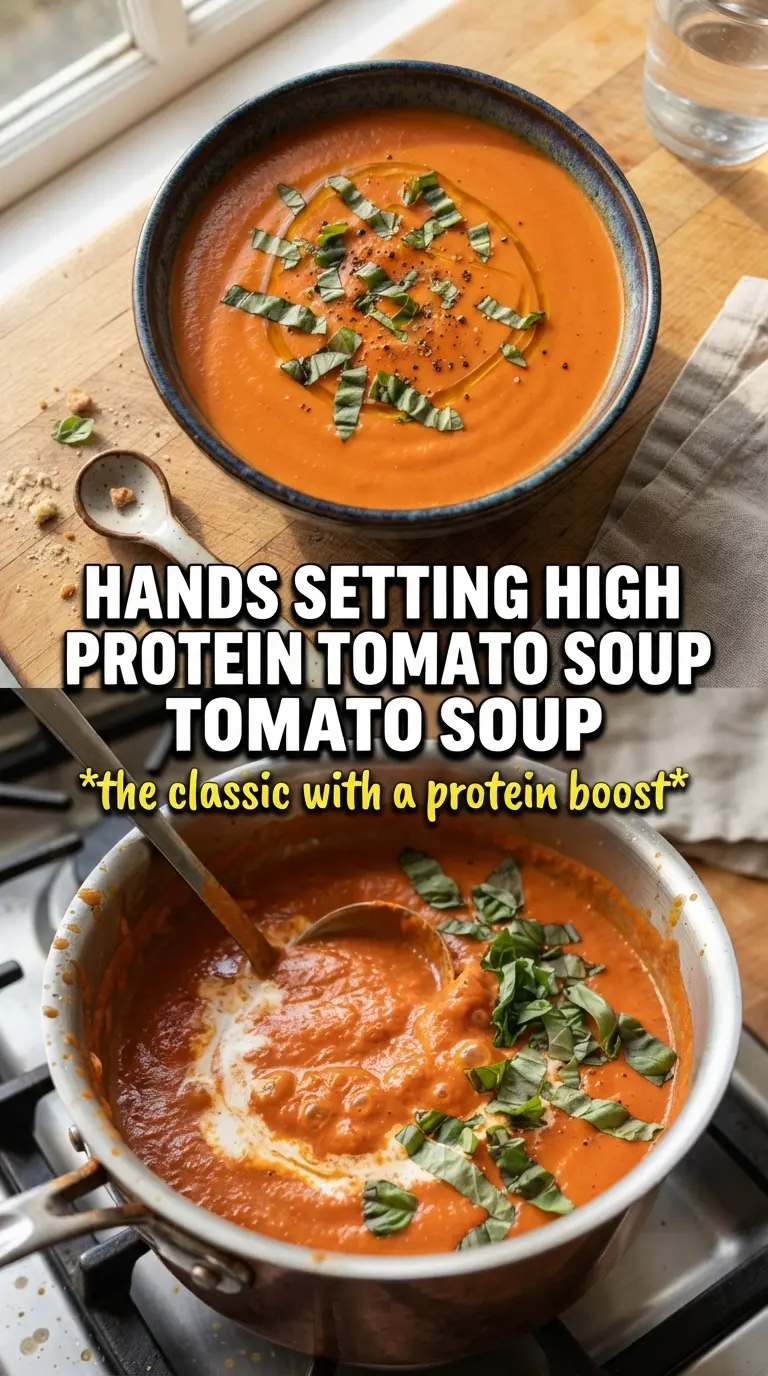
- Whole plum tomatoes — These give you better body and a cleaner tomato flavor than diced tomatoes usually do. Crush them by hand or with a spoon as they go in so the soup doesn’t stay chunky unless you want it that way.
- White beans — This is the protein boost, but they also act like a natural thickener once blended. Cannellini or great northern beans work best because they disappear into the soup without a chalky taste.
- Tomato paste — Don’t skip the short cooking time here. It needs heat to lose that raw, tinny edge and turn into something sweet and concentrated.
- Greek yogurt or cream — Both soften the acidity, but they behave differently. Cream is more forgiving, while Greek yogurt adds a little tang and should go in off the heat so it stays smooth.
- Broth — Use vegetable broth if you want the soup vegetarian, or chicken broth for a slightly fuller savory base. Either way, choose a broth you’d drink on its own, because weak broth leaves the whole pot tasting watery.
Building the Soup So It Blends Silky Instead of Grainy
Softening the Onion and Cooking Out the Paste
Start with the olive oil, onion, and a little patience. The onion should look translucent and smell sweet before you add the garlic, and the garlic only needs about a minute before it starts to turn sharp. Tomato paste goes in next and should be cooked until it darkens slightly and coats the bottom of the pot. If you rush this stage, the soup tastes raw no matter how long it simmers later.
Simmering the Tomatoes and Beans Together
Once the tomatoes, beans, broth, and dried herbs are in, bring the pot to a steady simmer, not a hard boil. A hard boil can make the tomatoes taste harsh and can reduce the liquid too fast before the beans have a chance to soften fully in the broth. After 20 minutes, the onions should be completely tender and the soup should smell mellow and sweet.
Blending and Finishing Off the Heat
Blend until the soup is completely smooth, with no bean skins or tomato bits left behind. An immersion blender is easiest, but if you use a countertop blender, work in batches and vent the lid so steam doesn’t build up. Stir in the honey, then season with salt and pepper before adding the yogurt or cream off the heat. If dairy goes into a boiling pot, it can split and look grainy instead of velvety.
How to Adapt This for Different Kitchens and Different Moods
Dairy-Free Version
Use extra olive oil or a splash of unsweetened oat milk instead of Greek yogurt or cream. You’ll lose a little richness, but the soup stays smooth and bright, especially if you finish with a good drizzle of olive oil and fresh basil.
Extra-Rich, More Classic Tomato Soup
Use cream instead of Greek yogurt and add a little extra at the end. This gives you a smoother, more traditional tomato soup texture, with less tang and a rounder finish.
Vegetarian Version
Use vegetable broth and the soup stays fully vegetarian without losing much depth. If your vegetable broth tastes thin, let the soup simmer an extra 5 minutes before blending so the tomato base has time to concentrate.
Storage and Reheating
- Refrigerator: Store for up to 4 days. The soup thickens as it chills because of the beans, so expect a slightly denser texture the next day.
- Freezer: It freezes well for up to 3 months, but freeze it before adding the yogurt or cream for the smoothest result. Dairy can turn a little grainy after freezing.
- Reheating: Warm it gently over low to medium-low heat and stir often. If it gets too thick, loosen it with a splash of broth; high heat can make the dairy separate and dull the fresh tomato flavor.
Answers to the Questions Worth Asking
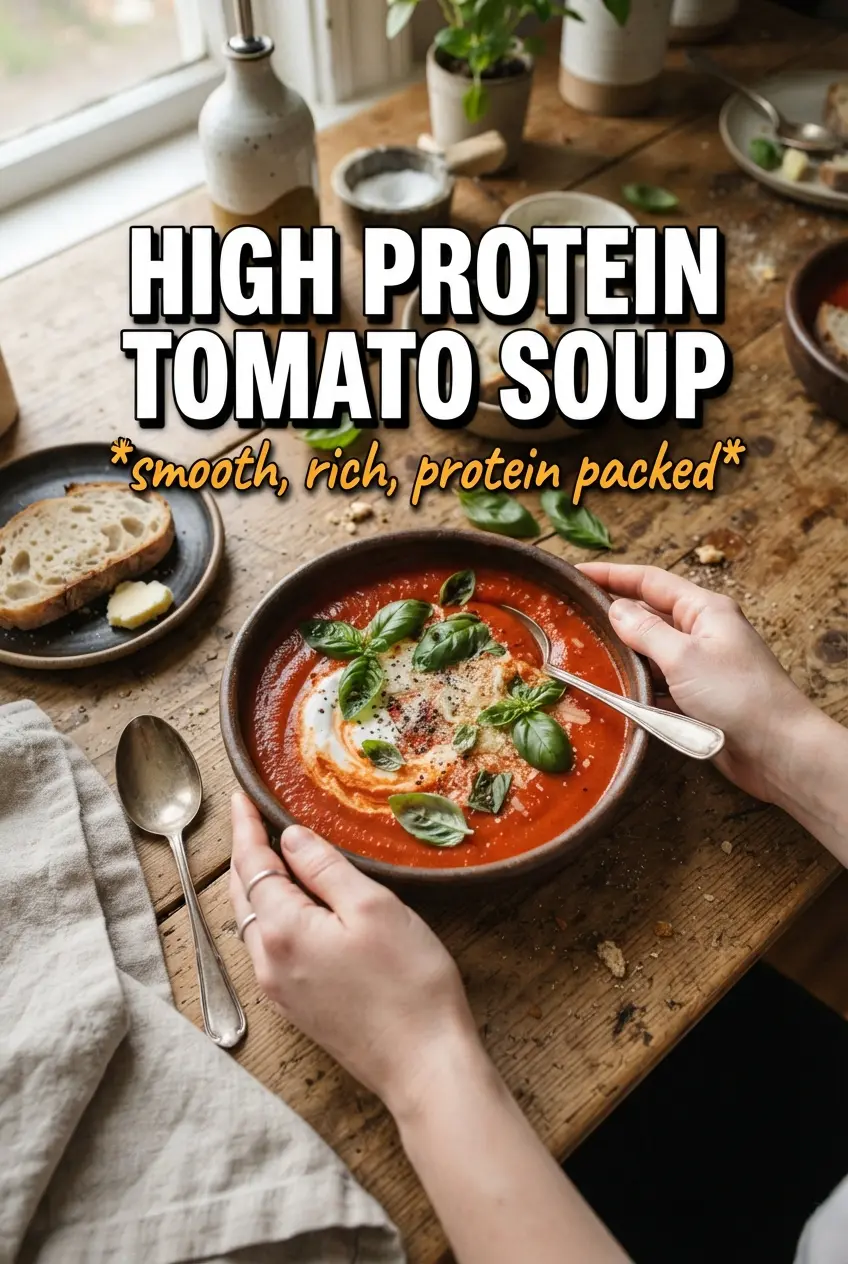
High Protein Tomato Soup
Ingredients
Equipment
Method
- Heat olive oil in a large pot, then sauté the onion for 5 minutes until softened and fragrant.
- Add the garlic and tomato paste, and cook for 2 minutes, stirring, until the paste darkens slightly.
- Add the whole plum tomatoes, drained white beans, broth, dried basil, dried oregano, and red pepper flakes to the pot.
- Simmer for 20 minutes, keeping a gentle bubbling over medium heat.
- Blend completely smooth with an immersion blender, aiming for a silky texture with no visible bean pieces.
- Stir in the honey or sugar, then season with salt and pepper to taste.
- Remove from the heat, then stir in the Greek yogurt or cream until smooth and creamy.
- Serve hot with fresh basil on top for a bright herbal finish.