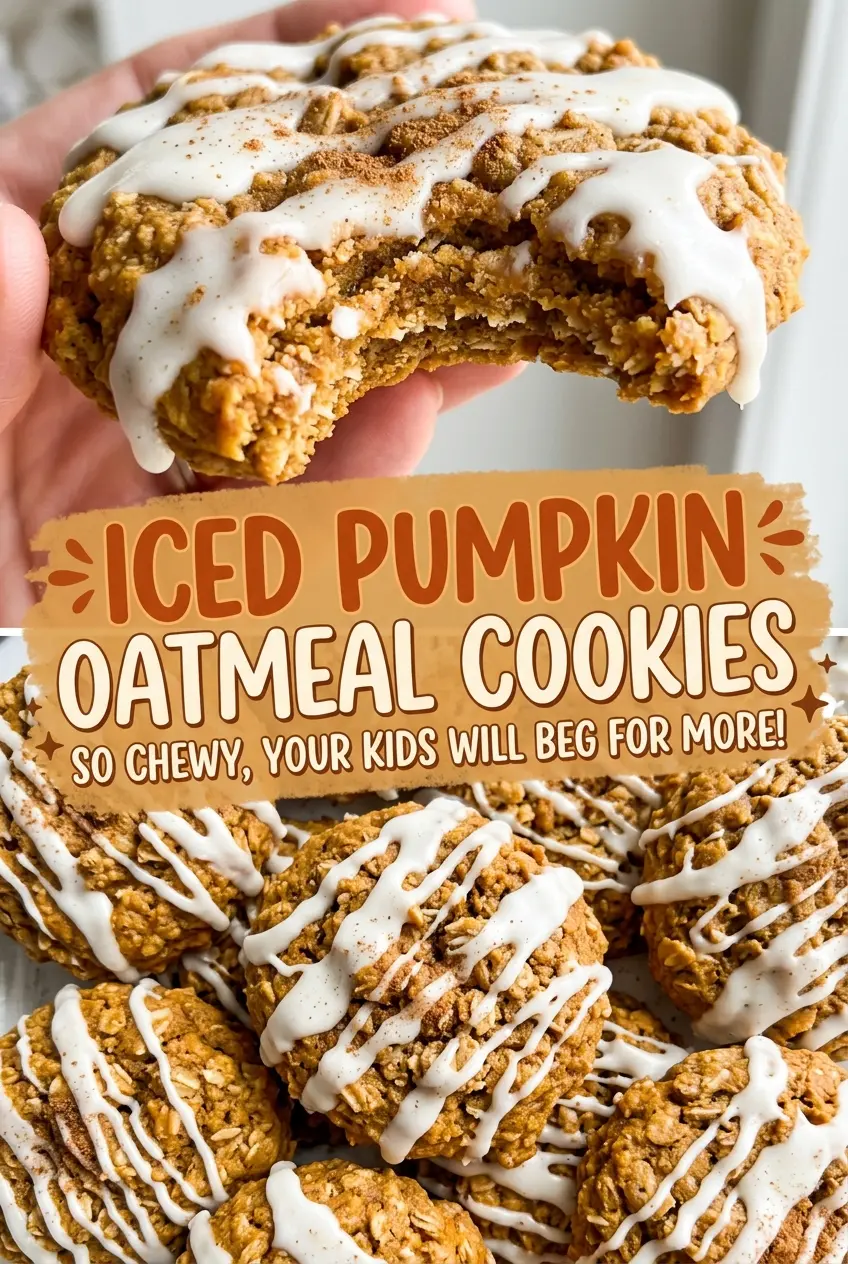
Cinnamon reaches the kitchen before the first tray is halfway through baking. The brown sugar brings a mellow sweetness, while pumpkin gives these iced pumpkin oatmeal cookies their soft, tender bite without hiding the oats. I like that they taste unmistakably like oatmeal cookies first, with pumpkin and cinnamon tucked into every bite.
The thin milk icing adds a sweet finish without covering up the cookie underneath. Old-fashioned oats keep their shape in the dough, so you get a little chew instead of a uniformly soft crumb. Once the icing sets, the cookies are easy to stack and tuck into a tin, though I usually leave a few out where I can see them.
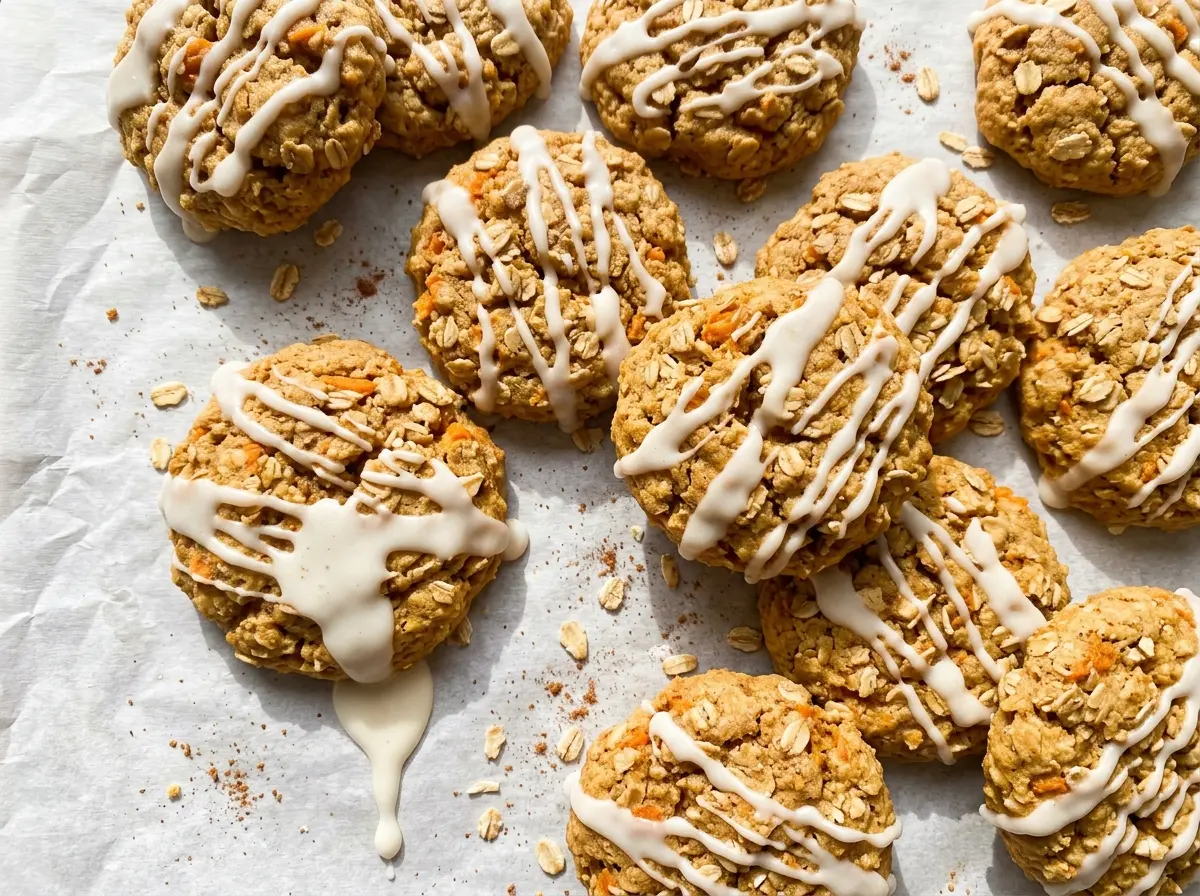
Kitchen Note
I switch the baking sheets’ positions halfway through baking, even when both look evenly spaced in the oven. That quick swap helps the cookies on each sheet bake at a similar pace.
Save these iced pumpkin oatmeal cookies for a cozy bake—the soft oat centers and simple white icing make a lovely pair.
Pumpkin Dough Needs a Rest, Not Extra Flour
Pumpkin puree brings more moisture than a standard oatmeal-cookie dough, so the mixture can look softer and stickier once everything is combined. That’s not a signal to keep adding flour. Extra flour changes the balance and can leave the baked cookies dense instead of tender.
Refrigerating the dough gives the oats time to take up some of that moisture and firms the butter enough to make the dough easier to scoop. It’s a small pause with a clear purpose: the dough becomes more manageable, and the cookies hold their shape better in the oven. Use plain pumpkin puree, not pie filling, which is already sweetened and seasoned and would throw off the balance.
Why Old-Fashioned Oats and Plain Pumpkin Matter Here
- Old-fashioned rolled oats — They give the cookies their distinct oat texture. Quick oats work measure-for-measure if that’s what you have, but they make a more compact, less chewy cookie.
- Pumpkin puree — Plain puree provides the pumpkin flavor and moisture the dough needs. Canned puree is convenient; check that the can says pumpkin puree rather than pumpkin pie filling. There isn’t a direct swap that keeps the same pumpkin character.
- All-purpose flour — Flour gives the dough enough structure to hold the oats and pumpkin together. For a gluten-free batch, use a one-to-one gluten-free baking flour blend; the finished cookies may be a little more tender.
- Butter and sugars — Softened unsalted butter creams smoothly with the sugars, while light brown sugar adds moisture and a gentle molasses note. Dark brown sugar can replace light brown sugar measure-for-measure, with a deeper flavor. Use butter softened enough to press, not melted.
- Egg yolk — The yolk helps bind the dough and keeps it rich without adding the extra moisture of an egg white. Separate it cleanly so no white slips into the bowl.
- Powdered sugar and milk — These make a simple, smooth drizzle that sets on the cooled cookies. For a dairy-free icing, unsweetened plant milk can replace the milk; whisk it in gradually so the icing stays thick enough to drizzle.
How the Pumpkin Dough Goes from Soft to Scoopable
Cream the Butter and Sugars
Beat the softened butter with the packed light brown sugar and granulated sugar in a large bowl until creamy, about 2 minutes. Scrape the bowl if the mixture is clinging to the sides instead of joining the rest. The finished mixture should look cohesive rather than like separate butter and sugar. Starting with softened butter helps it cream evenly without needing to melt it.
Mix in the Pumpkin and Egg Yolk
Beat in the pumpkin puree, egg yolk, and vanilla until the mixture looks smooth. At first it may seem a little loose compared with cookie dough made without pumpkin; keep mixing until there are no visible streaks of yolk or puree. A smooth base makes it easier to distribute the dry ingredients evenly in the next stage.
Fold in the Oats and Chill
Whisk the flour, oats, cinnamon, baking soda, baking powder, and fine salt together in a medium bowl. Stir that mixture into the pumpkin base just until no dry streaks remain; stop there rather than continuing to beat the dough. Cover the bowl and refrigerate the dough for 30 minutes. It should feel firmer and easier to portion after chilling.
Scoop and Bake Until the Edges Set
Heat the oven to 350°F and line two 18×13-inch baking sheets with parchment paper. Scoop rounded tablespoons of dough onto the sheets, leaving about 2 inches between them. Bake for 12–14 minutes, switching the sheets’ positions halfway through, until the edges are set and the centers look just dry. Watch the visual cues near the end of baking instead of waiting for the centers to look deeply browned.
Cool Completely Before Icing
Let the cookies cool on the baking sheets for 5 minutes, then move them to a wire rack to cool completely. Whisk the powdered sugar and milk in a small bowl until smooth. Drizzle the icing over the cooled cookies; warm cookies can make the icing run instead of sitting in a neat ribbon. Let the drizzle set before serving or stacking the cookies.
Three Easy Ways to Adapt These Pumpkin Oatmeal Cookies
Make a Gluten-Free Batch
Replace the all-purpose flour with a one-to-one gluten-free baking flour blend and choose certified gluten-free oats. The cookies keep their pumpkin-and-cinnamon character, though the texture may be a touch more tender than the original.
Use Dairy-Free Butter and Milk
Choose stick-style dairy-free baking butter in place of the unsalted butter, and use unsweetened plant milk in the icing. The cookies may be a little less buttery in flavor, but the dough and drizzle still come together as intended.
Skip the Icing for a Less-Sweet Cookie
Leave off the drizzle and serve the cookies plain once they’re cool. You’ll get a more straightforward pumpkin-oat cookie, and there’s no icing to set before packing them away.
Storage and Reheating
- Refrigerator: Keep the iced cookies in an airtight container for up to 4 days; the oats soften a little as they sit.
- Freezer: Freeze completely cooled, uniced cookies in an airtight container with parchment between layers for up to 2 months. Thaw, then drizzle with icing.
- Reheating: These are best at room temperature, so let chilled cookies sit out until they’re no longer cold. Don’t microwave iced cookies; the drizzle will melt.
Questions That Come Up When Baking These Cookies
Iced Pumpkin Oatmeal Cookies
Ingredients
Equipment
Method
- Heat the oven to 350°F and line two 18x13-inch baking sheets with parchment paper.
- Beat the softened butter, packed light brown sugar, and granulated sugar in a large bowl until creamy, about 2 minutes.
- Beat in the pumpkin puree, egg yolk, and vanilla until smooth.
- Whisk the flour, oats, cinnamon, baking soda, baking powder, and salt in a medium bowl.
- Stir the dry ingredients into the pumpkin mixture just until no dry streaks remain.
- Cover and refrigerate the dough for 30 minutes.
- Scoop rounded tablespoons of dough onto the prepared baking sheets, spacing them about 2 inches apart.
- Bake for 12–14 minutes, switching the sheets’ positions halfway through, until the edges are set and the centers look just dry.
- Cool the cookies on the baking sheets for 5 minutes.
- Transfer the cookies to a wire rack and cool completely.
- Whisk the powdered sugar and milk in a small bowl until smooth.
- Drizzle the icing over the cooled cookies and let it set before serving.