Buttery crumb cake and juicy peaches are a natural match, and this Italian peach crumb cake gets the balance right: tender cake underneath, soft fruit in the middle, and a sandy, golden topping that bakes into little nubs of sweetness. It slices cleanly once cooled, but it still eats like something rustic and homey, the kind of cake that works in the afternoon with coffee and just as well after dinner.
What makes this version work is the layering. The batter stays simple and rich, so the peaches can stay front and center instead of getting buried under too much spice or too much sugar. The crumb topping uses cold butter, which means you get defined crumbles instead of a paste. That matters here because the topping is supposed to stay crisp on top while the fruit underneath turns soft and fragrant.
Below, I’ve included the one step that keeps the crumb from disappearing into the batter, plus a few smart swaps if your peaches are extra juicy or you only have frozen fruit on hand.
The cake stayed tender even after cooling, and the crumb topping baked up crisp instead of sinking into the peaches. I served it with coffee and everyone went back for a second slice.
Keep this Italian peach crumb cake handy for the days when you want a simple fruit dessert with a crisp buttery topping.
The Secret to Keeping the Crumb on Top Instead of Melting Into the Cake
The biggest mistake with crumb cakes is letting the topping turn into one soft layer with the batter. That happens when the butter in the crumb is too warm, or when the crumbs are packed on too tightly. You want distinct little clumps scattered over the peaches so they can dry out and brown before the cake is fully set.
Another thing worth watching is the fruit. Peaches hold a lot of juice, and if they’re piled on thick or cut too thin, they can sink and soak the middle of the cake. A single, even layer of slices gives you the best texture: tender fruit on top, moist cake underneath, and no wet pocket in the center.
- Cold butter for the crumb topping — This is what gives you the classic rough, sandy crumble. If the butter softens too much, the topping turns greasy and blends into the batter.
- Fresh peaches — Fresh fruit gives the cleanest flavor and the best structure. If your peaches are very ripe and soft, slice them a little thicker so they hold their shape in the oven.
- Milk in the batter — It loosens the cake just enough to keep it tender. Whole milk is ideal, but 2% works fine.
- Butter in the cake — This is where the rich, bakery-style crumb comes from. Don’t swap in oil if you want that same flavor and texture.

Building the Batter and Topping in the Right Order
Creaming the Base
Beat the butter and sugar until the mixture looks pale and fluffy, not just blended. That step traps air and gives the cake a lighter crumb, which matters because the peaches and topping add weight. Once the eggs go in, the mixture may look a little curdled for a moment; that’s normal, and it smooths out once the flour and milk are added.
Layering the Peaches
Spread the batter into the pan first, then arrange the peach slices over the top in a single layer. If you press them down into the batter, they’ll disappear and make the center dense. Leave them resting on top so the cake bakes around the fruit instead of swallowing it.
Making the Crumb
Cut the cold butter into the flour and brown sugar until you have irregular crumbs, not a smooth dough. The mix should hold together when squeezed but still break apart easily. Sprinkle it over the peaches without compressing it; loose crumbs brown better and stay crisp.
Knowing When It’s Done
Bake until the top is deeply golden and a toothpick in the cake portion comes out clean or with a few moist crumbs. If the center still looks wet while the edges are already browned, give it a few more minutes and tent loosely if needed. Let it cool before removing the springform ring so the cake sets up instead of collapsing.
Three Ways to Make This Cake Work for Your Kitchen
Frozen Peaches When Fresh Aren’t Available
Use frozen peach slices straight from the freezer and don’t thaw them first. Thawed peaches release too much liquid and can make the middle gummy. The cake may need a few extra minutes in the oven, but the texture stays much better this way.
A Dairy-Free Version That Still Bakes Well
Swap the butter for a plant-based butter that works in baking and use an unsweetened non-dairy milk. You’ll lose a little of the classic buttery flavor, but the crumb and structure still hold up if the butter substitute is firm and not oily.
Making It a Little More Rustic
Leave the peach slices slightly thicker and use a little more coarse crumb on top. The cake will look less polished and more like something from a farmhouse bakery, with bigger pockets of fruit and a more dramatic topping.
Storage and Reheating
- Refrigerator: Store covered for up to 4 days. The crumb softens a bit after day one, but the cake stays moist.
- Freezer: Freeze individual slices tightly wrapped for up to 2 months. Thaw in the refrigerator so the topping doesn’t get soggy.
- Reheating: Warm slices in a 300°F oven for 8 to 10 minutes. The oven brings the crumb back to life better than the microwave, which makes the topping soft.
Answers to the Questions Worth Asking
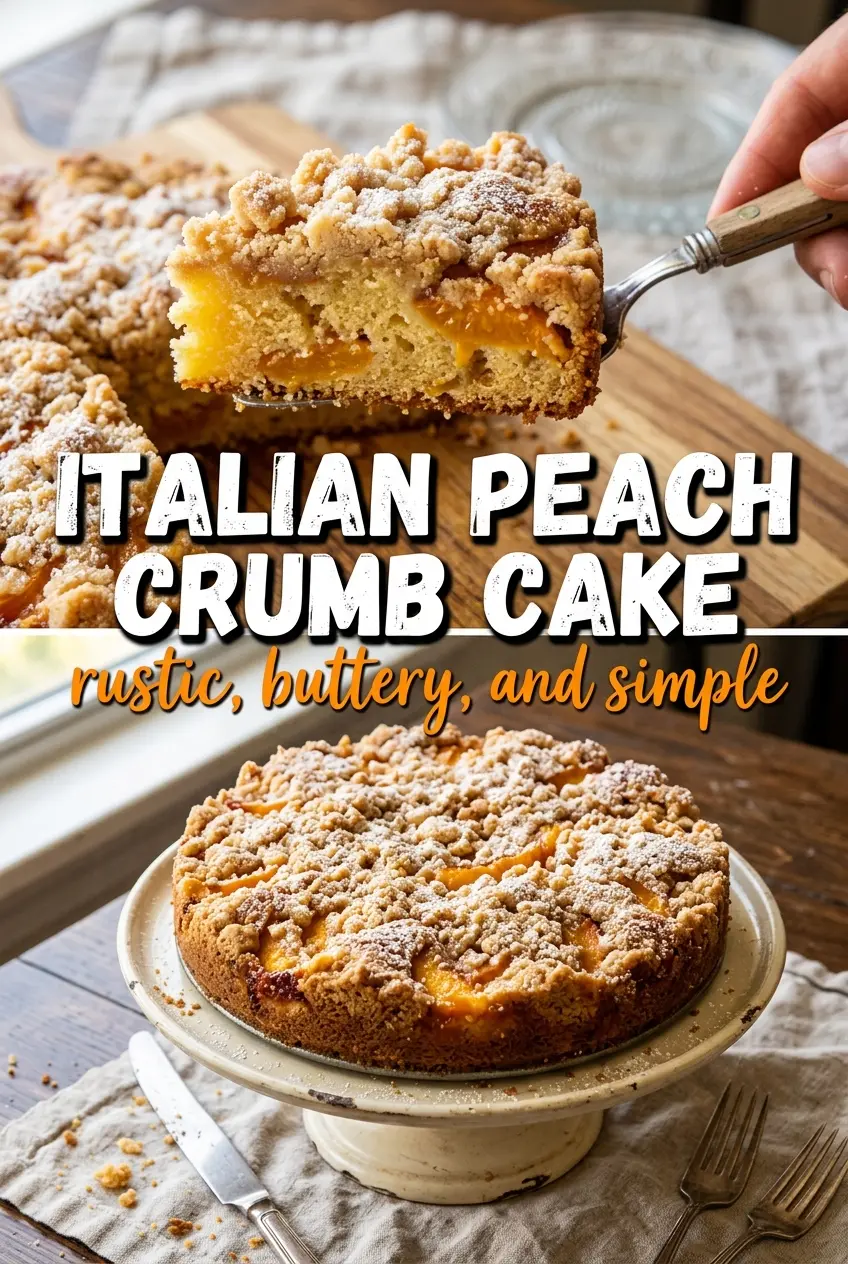
Italian Peach Crumb Cake
Ingredients
Equipment
Method
- Preheat the oven to 350°F and grease a 9-inch springform pan.
- Whisk together the flour, baking powder, and salt in a bowl.
- Cream the butter and sugar until light and fluffy, then beat in the eggs and vanilla.
- Alternate adding the flour mixture and milk, mixing just until combined.
- Pour the batter into the prepared pan and arrange the peach slices over the top.
- Combine the flour and brown sugar for the crumb topping, then cut in the cold butter until coarse crumbs form.
- Sprinkle the crumb topping over the peaches.
- Bake for 45–50 minutes, until golden and a toothpick comes out clean.
- Cool the cake, then dust with powdered sugar before serving.